REVIEW · NEW YORK CITY
Self-Guided Tour of the Museum at Eldridge Street
Book on GetYourGuide →Operated by Museum at Eldridge Street · Bookable on GetYourGuide
You’ll walk in and feel time shift fast. The Museum at Eldridge Street turns the historic Eldridge Street Synagogue into a self-guided experience where architecture, immigrant history, and art sit side by side in one compact, easy-to-do hour.
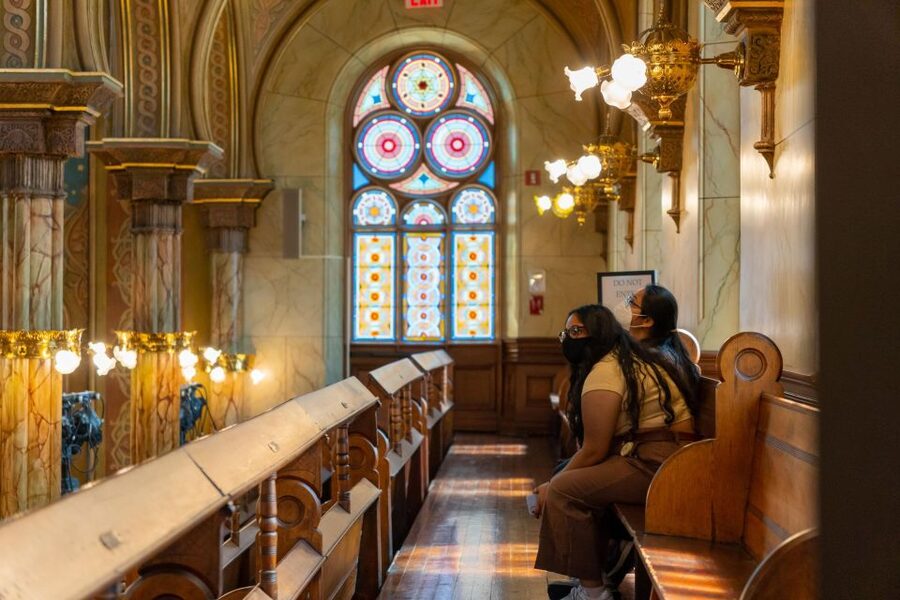
I especially loved the visual wow-factor: the Moorish Revival look and the sheer number of stained-glass windows. I also liked how the museum doesn’t treat this as just a building; it explains how worship, community life, and the push for permanent roots shaped the Lower East Side.
One possible drawback: this is truly self-guided, so if you want a live storyteller guiding every moment, you may have to slow down and read the interpretive materials yourself.
In This Review
- Key points to know before you go
- Stepping into the Eldridge Street Synagogue
- Your self-guided route starts at the left staircase
- Moorish Revival beauty: more than just a style choice
- Learning Lower East Side Jewish life through the museum story
- The comeback: restoration that took 20 years and $20 million
- Modern stained glass: Kiki Smith and Deborah Gans in the same walls
- Photography rules and how to get your best one-hour visit
- Price and value: $7 for a landmark museum hour
- Should you book this self-guided synagogue museum?
- FAQ
- How long is the Museum at Eldridge Street self-guided visit?
- What does the $7 ticket include?
- Is this tour self-guided?
- What languages are available for the self-guided experience?
- Where exactly should I enter the museum?
- Can I take photos inside?
- Is the building wheelchair accessible?
Key points to know before you go
- 60 stained-glass windows: plenty to track, not just a quick glance.
- Moorish Revival architecture: the building’s “look” is part of the story.
- Immigration-era context: you’ll connect personal faith with broader historical forces.
- Modern windows by Kiki Smith and Deborah Gans: past and present share the same walls.
- Done in about an hour: realistic pacing for a first visit.
Stepping into the Eldridge Street Synagogue
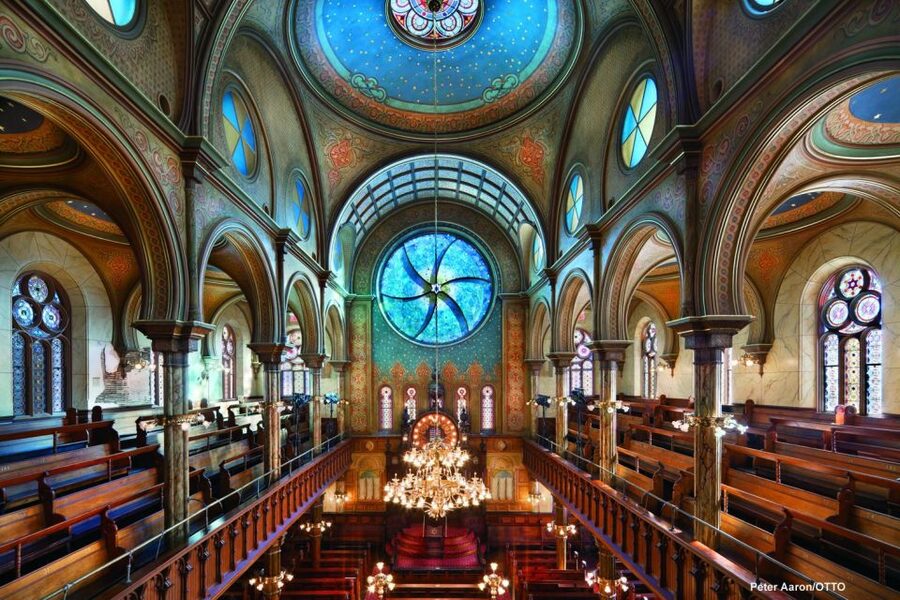
The Eldridge Street Synagogue is the star here. Built in 1887 and recognized as a National Historic Landmark, it was built by Eastern European Jewish immigrants at a time when many newcomers still expected to move again—or hoped they could. When you enter, you’re not looking at a generic museum room. You’re inside the landmark itself, and that matters.
What I like right away is the sense of purpose. This synagogue wasn’t only about prayers. It also acted as a place to build community and a visible sign that families were laying down permanent roots in the Lower East Side.
As you walk through, you get the feeling of how crowded and intense life could be then. The museum frames the synagogue against the reality of surrounding tenements and packed streets, so you understand why a grand, purpose-built space could feel so necessary.
You can also read our reviews of more tours and experiences in New York City.


Your self-guided route starts at the left staircase
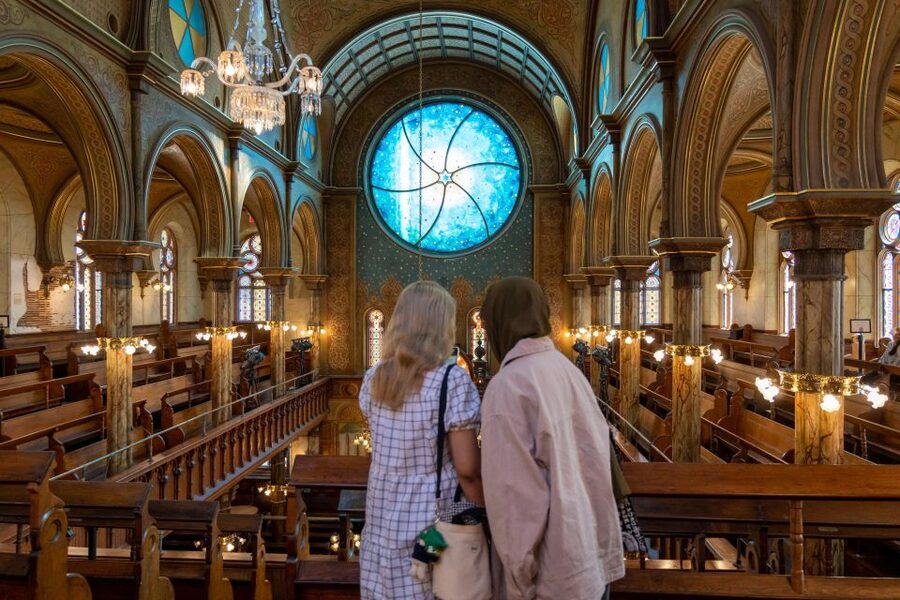
Plan on about 1 hour. That’s long enough to move at a comfortable pace, take in the windows, and read the main story points, but it’s short enough that you won’t feel like you have to power through.
Go to the Main Entrance at the bottom of the left-hand (downward) staircase. When you arrive, you’ll be met by an English host or greeter, and then you’re set loose to explore on your own.
The museum experience includes access to both the permanent collection and the temporary exhibit. Since it’s self-guided, the “itinerary” is really your walking route through the building—plus the way the museum’s interpretation is arranged so you naturally progress through themes like community life, immigration pressures, and preservation.
One practical thing that affects your flow: the museum has rules around belongings. Food and drinks (other than water) aren’t allowed, and strollers and backpacks are searched and checked in on arrival. I’d treat this as a hint to travel light.
Moorish Revival beauty: more than just a style choice
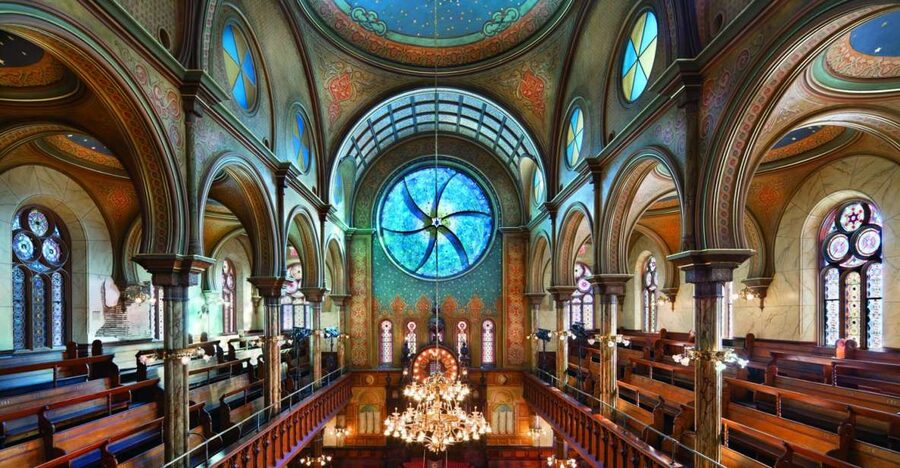
If you’re into architecture, this is where you’ll slow down. The Eldridge Street Synagogue is an architectural marvel with Moorish Revival design elements. You don’t need to be an expert to “get it.” The details create a mood—something ornate, intentional, and meant to inspire.
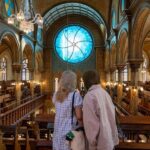
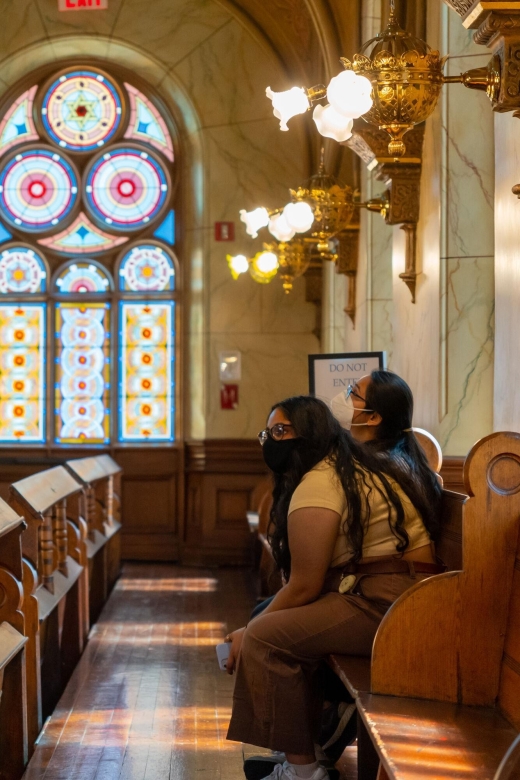
Then come the windows. The museum centers on 60 historic stained glass windows, and that number changes how you experience the space. Instead of one or two photo ops, you’re looking at a whole sequence. I found it helpful to give yourself small goals: pick a window, read what you can, then move on. You’ll notice patterns in color, theme, and craftsmanship that you’d miss if you rushed.
The building’s style also helps explain something emotional: immigrants weren’t just trying to survive. They were trying to belong. A grand synagogue made visible claims about dignity and permanence.
Learning Lower East Side Jewish life through the museum story
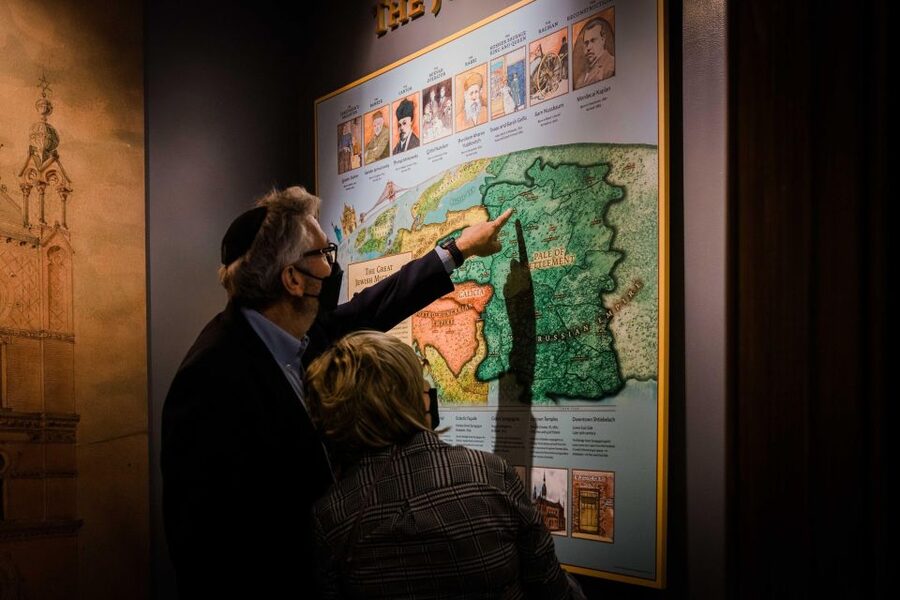
The museum’s interpretation focuses on the turn of the 20th century—a time when immigration reshaped entire neighborhoods. Here, the story isn’t abstract. It connects Jewish immigrant aspirations to real community life, including customs, traditions, and how people supported each other in a crowded urban environment.
I like the way the museum handles the rise, decline, and recovery of this specific place. The synagogue is framed as a symbol of immigrant hopes realized: a house of worship and also a social center. You get the sense that when people arrived, they didn’t just bring religious practice. They brought a way of life that needed space to grow.
Then history takes a darker turn. In the 1920s, strict immigration quotas dramatically affected who could enter and the pace of community change. The building was impacted by neglect and nearly lost—an important reminder that big dreams can be fragile when laws and economic realities shift.
When you reach the restoration story, the building starts to feel like more than old stone. It becomes proof of what communities can do to recover what was nearly gone.
The comeback: restoration that took 20 years and $20 million
This museum doesn’t rely on nostalgia. It tells you what it took to bring the synagogue back to public use. After the building was nearly lost to neglect, a 20-year restoration project with a $20 million budget returned the space to glory and made it accessible again.
That restoration angle is valuable because it changes how you look at the building’s condition today. You stop seeing stained glass and ornament as “just decoration,” and start seeing them as something preserved through real effort. It also makes the museum feel grounded in modern responsibility: history doesn’t survive by itself.
If you’re the kind of person who likes to understand how cultural landmarks are maintained, this section pays off. It’s one thing to admire old architecture. It’s another to realize it took a major, long-term commitment to keep it standing.

Modern stained glass: Kiki Smith and Deborah Gans in the same walls
One of the best surprises in this experience is the modern layer. The museum includes a modern window by artists Kiki Smith and Deborah Gans. That choice is smart. It keeps the museum from being stuck in the past-only mode.
Standing near modern work in a historic synagogue can feel slightly like watching a conversation across time. You’re still surrounded by the older stained glass, the historic building, and the immigrant-era story—but now you’re also seeing how contemporary artists respond to those spaces and themes.
I found this particularly meaningful if you care about how heritage stays alive. It’s not preserved just by freezing it in place. It’s also preserved by letting new interpretations join the dialogue.
Photography rules and how to get your best one-hour visit
You can take photos for personal, non-commercial use, and the museum welcomes personal, non commercial photography. Just note the limits: no flash photography and no professional cameras.
Since you’ll probably want to photograph the stained glass, plan your time around it. This is not a “10-minute look and go” building. Give yourself at least one pass where you don’t shoot anything. Just look. Then make a second pass for photos and details.
Also, because this is an hour-long visit, don’t bring anything that will slow you down at the entrance. Backpacks are checked, and food and most drinks are off-limits (water is okay). If you’re carrying a small bag, keep it simple.
Finally, keep an eye on how you move through floors. The museum says it’s fully accessible, with an elevator reaching all 4 floors. That means you’re not limited to a single level if you want the full experience.
Price and value: $7 for a landmark museum hour
For $7 per person and about an hour, this is strong value—especially in New York, where even “small” museum time can cost a lot more. What you get for that price isn’t just a room with a few objects. You get the synagogue itself, the stained-glass environment, and interpretation that covers immigration-era life and the building’s preservation story.
You’ll also get both a temporary exhibit and the permanent collection. So even if you’re repeating “classic museum visits” in a single day, this one doesn’t feel thin. The building is doing heavy lifting, and the museum content is tied to the spaces you’re standing in.
Is it perfect? No. But it’s priced in a way that makes it accessible for a quick, meaningful stop.
Should you book this self-guided synagogue museum?
If you want an affordable, high-impact New York stop that mixes architecture, immigrant history, and stained glass in one easy hour, I’d say yes. This is a great choice when you like going at your own pace, reading what interests you, and letting the building do the emotional work.
I’d think twice if you’re the type who needs a live guide to connect the dots. This option is self-guided, so you’ll get the most out of it by slowing down and actually reading the museum interpretation as you go. The building is beautiful enough to carry you, but the deeper satisfaction comes from taking the story seriously, not just admiring the windows.
FAQ
How long is the Museum at Eldridge Street self-guided visit?
The experience lasts about 1 hour.
What does the $7 ticket include?
Your admission covers entry to the Museum at Eldridge Street/Eldridge Street Synagogue, plus the temporary exhibit and the permanent collection.
Is this tour self-guided?
Yes. You explore at your own pace with a self-guided museum experience.
What languages are available for the self-guided experience?
Self-guided tours are available in English, Spanish, and Chinese.
Where exactly should I enter the museum?
Look for the Main Entrance at the bottom of the left-hand (downward) staircase.
Can I take photos inside?
You’re welcome to take personal, non commercial photography. Flash photography and professional cameras are not allowed.
Is the building wheelchair accessible?
Yes. The museum is fully accessible, with an elevator reaching all 4 floors.