REVIEW · NEW YORK CITY
A Gilded Age Audio Guide: New York’s Millionaire Row
Book on Viator →Operated by VoiceMap Audio Tours · Bookable on Viator
Millionaire Row, minus the tour-group shuffle. This self-guided GPS audio tour takes you past Fifth Avenue power symbols—private clubs, Gilded Age mansions, and museum stops—while you listen at your pace.
I love the automatic location tracking that cues the stories right when you arrive at each spot. And I really like that it keeps things moving so you get narration the whole way, not long gaps. One thing to consider: you’ll need your own smartphone and headphones to use the audio.
In This Review
- Key things to know before you walk
- Why this Millionaire Row audio walk is such a good fit
- From East 60th Street to the Met: pacing that feels natural
- Starting at the Metropolitan Club: JP Morgan’s opulence opener
- Fifth Avenue proper: world-famous address, grand facades, and luxury boutiques
- The Knickerbocker Club: elite social power as a theme
- A Central Park pause: the oasis edge wealthy residents cared about
- The Arsenal and the Central Park Conservancy: military past, civic present
- Beekman Mansion and the Vanderbilt world: Gilded Age architecture in motion
- The Frick Collection: a mansion that turned into art
- Richard Morris Hunt Memorial: architecture with a named author
- Upper East Side grand houses: Herbert N Strauss House and Edward S Harkness House
- Madison Avenue and the money behind the names: Stuyvesant Fish to James B Duke
- Ending at the Metropolitan Museum of Art: a smart finish line
- Price and value: is $14.99 worth it?
- Tech checklist: headphones, offline maps, and GPS cues
- Who should book this Millionaire Row audio tour?
- Should you book it? My take
- FAQ
- How long is the Millionaire Row audio guide?
- How much does the tour cost?
- Where does the tour start and end?
- What language is the tour offered in?
- Is this a guided tour with a person?
- Do I need headphones and a smartphone?
- Is there offline access?
- Can I listen to it without walking?
- Can I use the tour again after I book?
- What are the Met’s hours for the end point?
Key things to know before you walk
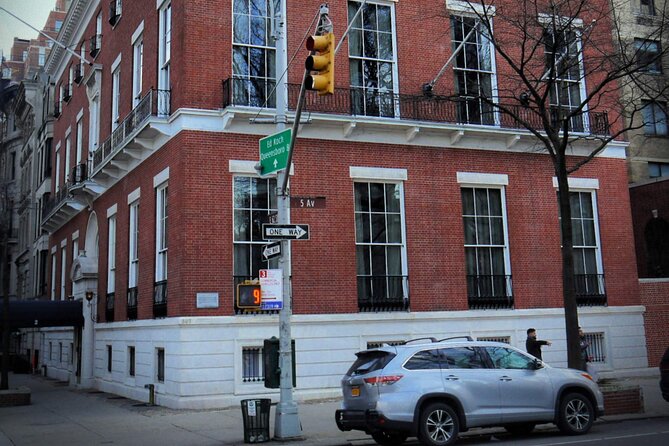
- GPS-guided pacing: the audio cues match where you are, and it even alerts you if you drift off route.
- Gilded Age focus with modern context: you’ll connect robber-baron wealth to what the city still wears today.
- Real stops, real landmarks: from the Metropolitan Club and Central Park edges to the Frick and the Met.
- Offline ready: audio, maps, and geodata are available offline.
- Pause, rewind, repeat: you can stop for pictures, answer a phone call, and resume without falling behind.
- Smart practical extras: the guide includes directions to find the start and mentions restroom stops.
Why this Millionaire Row audio walk is such a good fit
If you’ve ever done a live walking tour in New York, you know the trade-off. You either hear great stories but keep a strict pace—or you slow down and miss the thread. This one flips that. You follow the route, and the audio does the timing.
The theme is also strong: the “Millionaire Row” look isn’t just decoration. The tour frames these addresses as part of the Gilded Age power story—where money, social position, and architecture shaped the city’s upper layers. You’re walking Fifth Avenue, but you’re also learning how these private clubs and grand homes helped define who belonged.
And the technical experience matters. The narration feels built for walking: you don’t get stuck in dead time waiting for the next recording. When the GPS knows you’re there, you hear what to notice—then you keep going.
You can also read our reviews of more tours and experiences in New York City.


From East 60th Street to the Met: pacing that feels natural
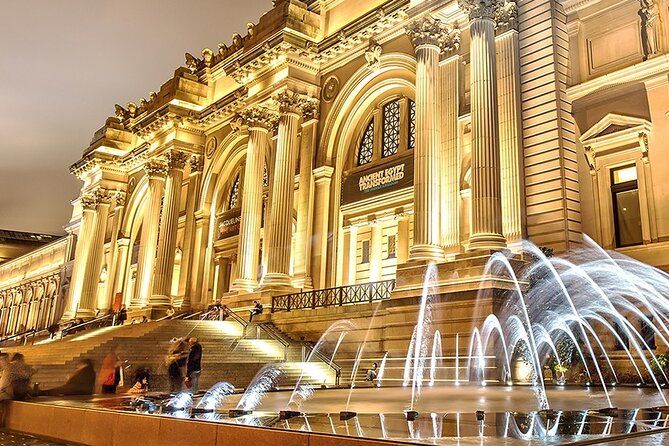
The walk starts outside the Metropolitan Club on East 60th Street and ends at the Metropolitan Museum of Art. The duration clocks in around 1 hour 20 minutes to 1 hour 40 minutes, depending on how often you pause for photos or read facades.
That pace is useful in NYC because it’s long enough to feel like an experience, but short enough that you won’t dread it. If you want a “morning alive” activity on a first trip, this is a decent anchor. If you already planned museum time, it also works as a smart warm-up.
Also, you don’t have to worry about being late to a meeting. This is self-guided, so you’re not locked into an exact walking schedule the way you are with a live guide. You can start when you want on your scheduled day, then move at the speed your attention span demands.
One practical note: the tour includes directions so you can find the right start spot before the audio begins. In Manhattan, that kind of clarity is worth money by itself.
Starting at the Metropolitan Club: JP Morgan’s opulence opener
You begin outside the Metropolitan Club, a private club founded by J. P. Morgan. Starting here sets the tone fast. It’s not “hey, look at beautiful buildings.” It’s a signal that this part of Fifth Avenue grew alongside elite institutions—places where wealth made its own rules.
As you start walking, the audio frames what you’re seeing in terms of influence. That’s the payoff of the Gilded Age angle: you’re not just collecting names of mansions. You’re connecting them to social power that helped shape New York’s built image.
And since you’re starting at a private-club landmark, you get a useful contrast early. You can look at the street bustle and then compare it to the calm, exclusive world these buildings represent.
Fifth Avenue proper: world-famous address, grand facades, and luxury boutiques
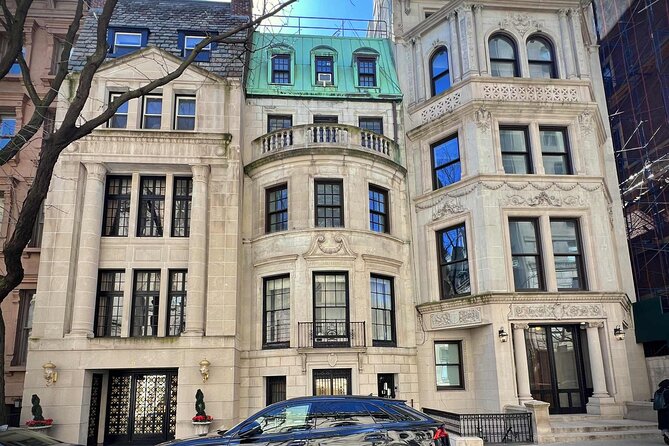
Once you’re rolling along Fifth Avenue, the tour leans into “Millionaire Row” the way you’d hope: by keeping you focused on the buildings and the story behind them.
You’ll pass high-status addresses and luxury storefronts, and the audio helps you interpret the scenery rather than just letting it blur by. Fifth Avenue is famous for a reason, but it can also be a little overwhelming if you don’t know what to watch for. The guide gives you that watch-list—so you’re not just walking and hoping for inspiration.
A nice benefit of going solo with audio: you can linger at the exact facade that grabs you. No rushing. No group picture. No waiting for everyone to catch up.
The Knickerbocker Club: elite social power as a theme
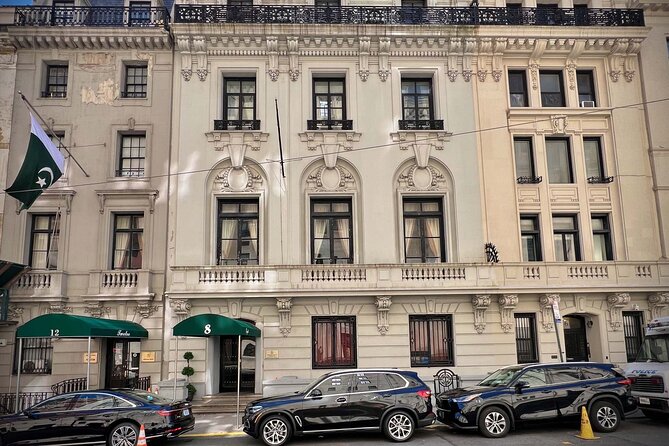
Next up is the Knickerbocker Club. It’s introduced as a private social club tied to New York’s elite. That word—private—matters.
This isn’t just a sightseeing route. The audio keeps returning to the idea that these were not open attractions. They were permission slips to a world of networking, influence, and status. When you watch for that theme, the architecture makes more sense. You stop seeing “big buildings” and start seeing “big signals.”
Even from the sidewalk, you can sense why such clubs were magnets. They helped create the kind of community that turned money into lasting social power.




A Central Park pause: the oasis edge wealthy residents cared about
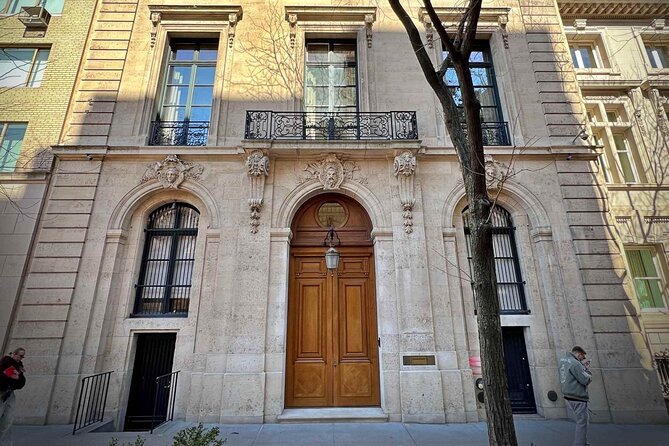
The tour then gives you a glimpse of Central Park from the Fifth Avenue edge. This is a smart storytelling move. Central Park isn’t just a pretty stop. For wealthy New Yorkers, it was a nearby reset button—fresh air, walking paths, and a calmer view line.
You’ll feel the contrast immediately. Fifth Avenue can be loud, busy, and fast. Park-adjacent scenery changes the tempo. The audio uses that shift to underline why these addresses gained appeal beyond the buildings themselves.
This is also a good moment to take a breather—use it if you need a short break before continuing the mansion-heavy stretch.
The Arsenal and the Central Park Conservancy: military past, civic present
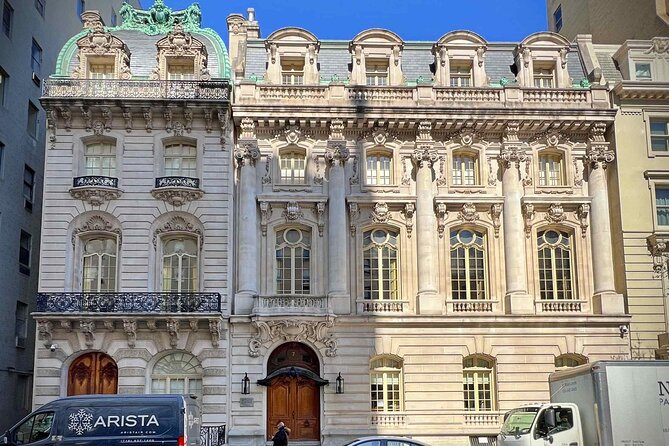
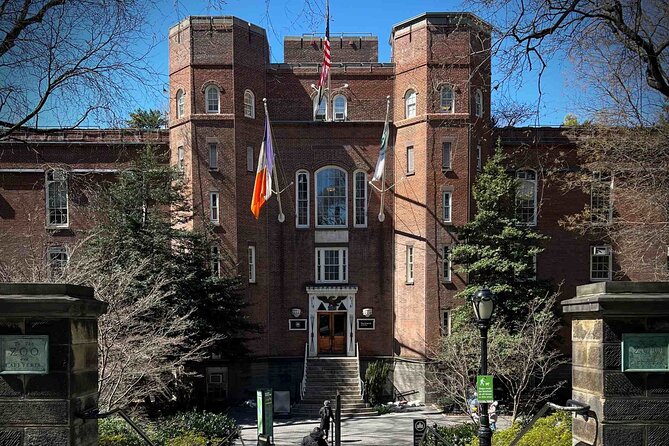
One standout stop is The Arsenal, a historic building that once served as a military arsenal and now houses the Central Park Conservancy. That “then and now” switch is a perfect example of why this route is more than an Instagram walk.
You get a tangible reminder that cities evolve. The same physical space can move from defense to maintenance, from symbol of force to steward of beauty. And that matters in a tour like this because the Gilded Age story isn’t only about old money. It’s also about what survives, what gets repurposed, and how civic efforts keep big places functioning.
When the audio hits this section, slow down for a minute. Even if you don’t go inside, the context changes how you read the building.
Beekman Mansion and the Vanderbilt world: Gilded Age architecture in motion
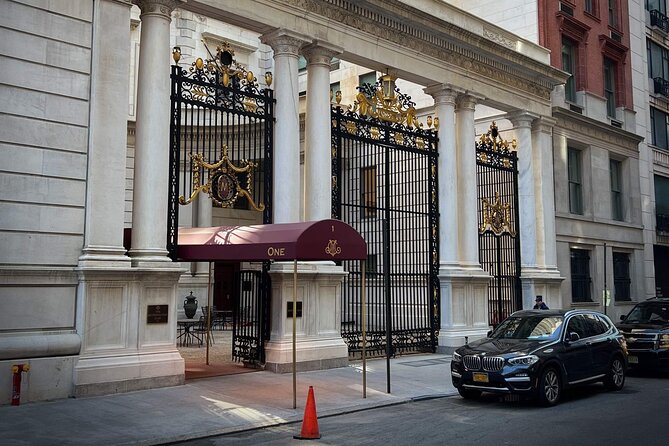
As the route continues, the audio brings you past the Beekman Mansion, introduced as another major example of Gilded Age architecture. Then you’ll see the Emily Thorn Vanderbilt Sloane White Mansion.
These stops are where the tour’s “look closely” value becomes obvious. The narration is guiding you to notice grand design choices and social standing reflected in the scale and style of these homes. You’re walking the exterior story, but the audio connects the dots: status was built into the look.
A practical tip: if you care about photos, keep your phone ready for this stretch. These facades are the kind you’ll want to capture quickly, then revisit with the audio paused so you can read and frame your shots.
The Frick Collection: a mansion that turned into art
Next is The Frick Collection. The audio frames it as an art museum housed in the former residence of industrialist Henry Clay Frick.
This is a great “meaningful stop” in a self-guided format because it offers a natural pause point. You’re not just passing by wealth—you’re seeing what happens when wealth becomes public culture. The Gilded Age legacy doesn’t have to stay locked in private rooms forever.
Even if you only spend a few minutes at the curb, the story helps. It turns the building from “pretty exterior” into “intentional transformation.”
Richard Morris Hunt Memorial: architecture with a named author
You’ll also pass by the Richard Morris Hunt Memorial, dedicated to the renowned architect who helped shape New York’s architectural landscape. If the mansions feel like they all share a certain confidence, this is part of the reason: architects mattered as much as financiers.
This stop is useful for anyone who loves the craft behind the look, not only the name-brand wealth. It gives you a human anchor—someone whose work influenced how elite New York presented itself.
Upper East Side grand houses: Herbert N Strauss House and Edward S Harkness House
The route continues with the Herbert N Strauss House, described as an architectural gem that exemplifies the grandeur and elegance of the Gilded Age era. Then you’ll come to the Edward S Harkness House, noted as a historic landmark showing the architectural splendor of the Upper East Side.
This is where I like the audio format most. With live guides, you might rush through these details. With audio, you can match your pace to your interest: read the story, take a couple photos, then move on.
It’s also where the tour’s overall argument becomes clearer. Fifth Avenue wasn’t just where people bought things. It was where they funded the look of status—and that look still shapes how you experience the neighborhood today.
Madison Avenue and the money behind the names: Stuyvesant Fish to James B Duke
After the mansion run, the tour shifts to Madison Avenue, known for upscale shops and luxury boutiques. It’s a bridge between the “historic power corridor” feeling and the “modern luxury street” reality.
Then you’ll discover the legacy of Stuyvesant Fish, a prominent social and political figure in the Gilded Age era. Finally, the tour passes by the James B Duke House, tied to tobacco tycoon and philanthropist James B. Duke, highlighted for its exquisite Beaux-Arts architecture.
Even without going inside, you get a sense of how wealth built not just homes but influence, and how that influence shows up in architectural styles and neighborhood identity. The audio keeps reminding you that names on buildings are usually shorthand for larger stories.
Ending at the Metropolitan Museum of Art: a smart finish line
You finish at the Metropolitan Museum of Art. Ending here is more than convenient. It’s a payoff that matches the theme. The Met is a huge, long-lived institution, and you’re ending a route about elite patronage and cultural visibility right where major art public life happens.
If you want to keep the momentum going, this finish line gives you a natural next step: museum time. And if you’re done walking, you can break without feeling like you missed the last chapter.
In NYC, a “walk ends at something worth staying for” ending is a rare gift. This one does it.
Price and value: is $14.99 worth it?
At $14.99 per person, this tour sits in the sweet spot for value if you want history without committing to a live guide schedule. The real reason it feels fair isn’t only the price tag—it’s what you get access to.
You have unlimited, lifetime use of the tour before your booking date and after it. That means one purchase can become several outings. You can re-walk it when you come back to NYC, or you can replay sections when a building catches your eye the second time.
You also get offline access to audio, maps, and geodata, plus a virtual playback option so you can listen like an audiobook from anywhere. If you’re the kind of person who likes to review stories on your couch later, or while waiting in an airport line, that extra flexibility is real value.
One more practical point: the app experience works best when you bring your own smartphone and headphones. They are not included, so plan for that. If you forgot, you’ll lose the whole magic trick.
Tech checklist: headphones, offline maps, and GPS cues
This is a self-guided audio experience through VoiceMap Audio Tours. You’ll want to come prepared so you don’t waste time troubleshooting.
Bring:
- Your smartphone (required)
- Headphones (required)
Helpful to know:
- Offline access is included for audio, maps, and geodata.
- The audio uses GPS tracking, and it gives guidance as you move—so it cues the next story when you reach the right area.
- It can warn you if you walk off track.
- The tour mentions restroom stops, which is a thoughtful detail for a city walk.
- Service animals are allowed, and the start point is near public transportation.
A final tip: if you’re doing this on a busy NYC day, keep your phone battery in mind. GPS + audio can be a light drain, depending on your device and signal.
Who should book this Millionaire Row audio tour?
You’ll enjoy this most if you:
- Prefer self-paced walking over marching with a group
- Like architecture, names, and the “why” behind what you see
- Want a history-based route that still feels casual
- Enjoy repeating a route later, since you keep access to the tour
It’s also a good pick for introverts or anyone who doesn’t want to stop and answer questions every few blocks. The audio keeps you moving and talking is optional.
If you hate phone-based experiences or don’t plan to use headphones, this probably won’t feel worth it.
Should you book it? My take
Yes, I think you should book this if you want Fifth Avenue with story. The route hits a solid mix: private-club power, Gilded Age mansion architecture, a repurposed historic site at The Arsenal, and cultural landing at the Met. And the GPS-led narration solves a common NYC problem: you don’t have to guess what you’re looking at or keep up with strangers.
Skip it only if you strongly prefer live, in-person guiding or you don’t want to rely on your own smartphone and headphones.
If you’re planning a first visit to Manhattan—or even a second—this is one of the easier ways to turn a famous street into an actual learning walk without adding stress.
FAQ
How long is the Millionaire Row audio guide?
The tour takes about 1 hour 20 minutes to 1 hour 40 minutes.
How much does the tour cost?
It costs $14.99 per person.
Where does the tour start and end?
It starts at East 60th Street (outside the Metropolitan Club area) and ends at The Metropolitan Museum of Art at 1000 5th Ave.
What language is the tour offered in?
The audio tour is offered in English.
Is this a guided tour with a person?
No. It’s a self-guided GPS audio walk, and only your group participates.
Do I need headphones and a smartphone?
Yes. A smartphone and headphones are not included.
Is there offline access?
Yes. Audio, maps, and geodata are available offline.
Can I listen to it without walking?
Yes. There’s also a virtual playback option that lets you listen like an audiobook from anywhere.
Can I use the tour again after I book?
Yes. You get unlimited, lifetime use of the tour before your booking date and after it.
What are the Met’s hours for the end point?
The tour end point lists hours as open 12:00 AM to 11:59 PM, Monday through Sunday, for the dates shown.