REVIEW · NEW YORK CITY
New York City’s High Line: A Self-Guided Audio Tour
Book on Viator →Operated by VoiceMap Audio Tours · Bookable on Viator
The High Line tells its story in layers. This self-guided audio walk uses VoiceMap-style storytelling to guide you along the park, from the old street-level “Death Avenue” train era to the modern Hudson Yards finish at The Vessel. I like how the commentary feels entertaining and story-first, not a dry script, and I also like that the app is straightforward to start with offline maps.
You’ll pass major landmarks along the way, including the Whitney Museum area, Pier 57, Chelsea Market, and the Hudson Yards zone, with extra pop-culture and design context woven in. The one drawback to keep in mind: the narration timing can be a bit sensitive to your walking pace, so if you stop often or move slowly, you may notice the audio lagging or jumping.
Plan for your own phone setup: the tour includes the VoiceMap app and offline audio, but you supply the smartphone and headphones. If you want a flexible walk where you can linger at viewpoints, it’s a solid match.
In This Review
- Key points before you start
- Starting at Friends of The High Line (820 Washington St.)
- Death Avenue origins and the High Line’s repurposing spark
- Whitney Museum area: art + elevation viewpoints
- Pier 57 and the waterfront mood shift
- Chelsea Market, Food Network filming, and the Standard Hotel stories
- General Theological Seminary to Hudson Yards: the modern finish
- The Vessel: a photo icon with a tragic edge
- VoiceMap app, offline audio, and pacing (what you’ll need)
- Should you book this self-guided High Line audio tour?
- FAQ
- How much does the High Line self-guided audio tour cost?
- About how long does the tour take?
- What language is the audio offered in?
- What’s included with the purchase?
- What do I need to bring?
- Where does the tour start and end?
- Is it self-guided or a guided group tour?
- Do I need transportation or tickets to places along the route?
- Are service animals allowed?
- What is the cancellation policy?
Key points before you start

- Storytelling-led audio that focuses on what makes the High Line dramatic, not just what’s there
- Offline access to audio, maps, and geodata so you’re not stuck hunting for signal
- A full High Line span from the Gansevoort Street end in the Meatpacking District toward Hudson Yards
- Lots of creative “what if” history, including the wild repurposing ideas people pitched for the park
- A strong finale at The Vessel, including the darker side of its real-world reputation
Starting at Friends of The High Line (820 Washington St.)
Your walk begins at Friends of The High Line, 820 Washington St. That matters because the High Line is long and entry points are scattered—starting at a clear meet location helps you get on the right track fast, especially since this is self-guided.
The tour runs about 1 hour 30 minutes. That’s a useful planning number, but give yourself a little breathing room because the High Line is made for stops. If you’re the type who slows down for photos or people-watching, you’ll likely stretch beyond the average pace. Good news: the route is designed to keep you moving between meaningful chapters rather than bouncing you back and forth.
You’ll end back at the same starting point. For a self-guided experience, that loop design is practical. It means you’re not trying to solve transit or “where am I now” logistics mid-walk.
You can also read our reviews of more tours and experiences in New York City.


Death Avenue origins and the High Line’s repurposing spark
The audio tour takes you along the High Line itself, starting on the Gansevoort Street side in the Meatpacking District and continuing toward Hudson Yards. Early on, one of the most memorable chapters is the park’s origin story: in the late 1800s, a street-level train in this corridor caused so many pedestrian deaths that it became known as Death Avenue.
Why that matters for your walk: it changes how you see the elevated green strip. You’re not just looking at a pretty urban promenade. You’re watching New York reframe a space that used to be dangerous and loud into something calmer and slower. The audio ties that transformation to the bigger question the city faced: what do you do with infrastructure once its original purpose is gone?
Then the tour shifts into the idea stage. You’ll hear about 700+ proposals submitted for how to reuse the High Line, including concepts like a mile-long swimming pool and a rollercoaster threading between buildings. Even if those concepts never came to life, they explain how the park you see today didn’t appear from nowhere—it came from debate, imagination, and compromise.
If you like architecture, urban design, and “how cities change,” this is the heart of the walk. If you prefer light sightseeing only, it still works, but you may want to keep your stops brief during the heavier storytelling so it doesn’t feel too intense.
Whitney Museum area: art + elevation viewpoints

A key stop on your route is the Whitney Museum of American Art area. This is one of the moments where the High Line stops being just a connector and starts feeling like a gallery. The elevated path gives you angles on buildings and streets you normally can’t get without climbing or crossing the right blocks.
The tour’s style matters here. Instead of listing facts, it aims to make the setting feel like part of a narrative. That tends to help you notice details you might otherwise gloss over—how the line of the park cuts across the city grid, how nearby architecture frames the view, and how the walkway behaves as a “front row” for street life far below.
Practical tip: the Whitney area is a place where you may feel like taking extra photos or lingering. The audio is designed to keep you moving, but your pace can affect timing. If you’re planning long stops, consider moving deliberately back into walking motion so the narration doesn’t drift too far behind.
Pier 57 and the waterfront mood shift
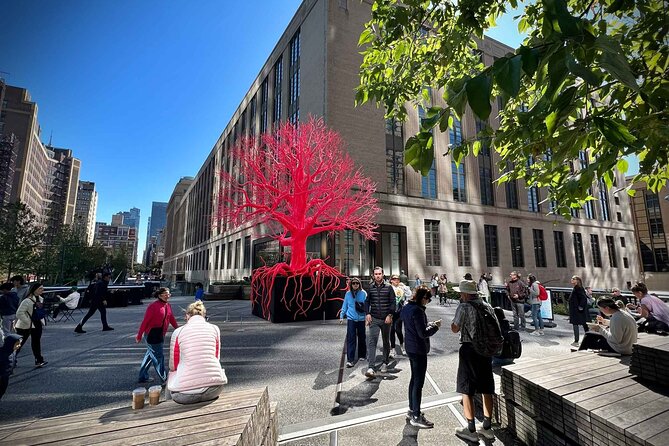
Next you’ll reach Pier 57, which adds a waterfront flavor to what is otherwise an elevated, Manhattan-in-the-air experience. The High Line is often described as a calm strip above the city, but the Pier segment nudges you toward water-level reality. It’s a nice contrast, especially if you’ve been thinking about the park’s transformation from train corridor to public space.
What you’ll likely enjoy here is the sense of geography. The High Line may be above the streets, but New York’s neighborhoods still connect to each other through lines of movement—people, views, and city planning decisions. Pier 57 helps you feel that larger system.
A small consideration: this self-guided approach means you don’t get a live guide to adjust pacing for the day’s conditions. If it’s crowded, windy, or you want a slower, more reflective walk, you’ll have to manage your own rhythm. The good part is that the tour is built around walking chapters, so you can pause and restart without losing the overall storyline.
Chelsea Market, Food Network filming, and the Standard Hotel stories
One of the most entertaining segments is around Chelsea Market. The audio includes a pop-culture angle: it points out that the Food Network films its hit shows there. That makes the area feel more alive than a typical “shopping district” stop, especially if you’re the kind of person who enjoys connecting places to media you’ve actually watched.
This part of the route also plays with contrast. The High Line is elevated and green; Chelsea Market is street-level and bustling by comparison. The audio helps you switch mental gears without breaking the flow—like you’re moving between two New York tempos.
You’ll also hear stories tied to the Standard Hotel, sometimes nicknamed the Eyefull Tower. The tour includes an infamous reputation for what happens between hotel guests and park visitors, and it even references a celebrity incident involving Beyoncé’s sister and Jay-Z in an elevator. I’ll be honest: this is the kind of spicy, tabloid-friendly detail that some people love and others skip past. If you’d rather focus on design and history, just treat these as optional side stories and refocus when you need quieter content.





General Theological Seminary to Hudson Yards: the modern finish
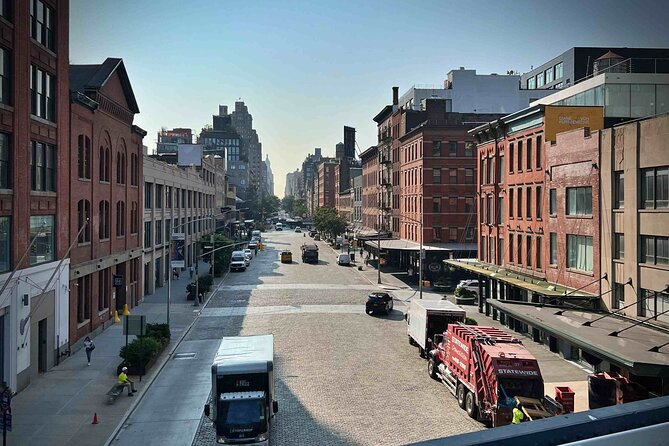
After Chelsea Market, the route continues along the High Line toward the Hudson Yards end. One of the stops in this later stretch is the General Theological Seminary area. This is a good moment to pay attention to long views. As the city gets more modern, the architecture around you can change from older stone massing to newer forms and materials. The audio framing helps you see it as an evolution rather than a random series of neighborhoods.
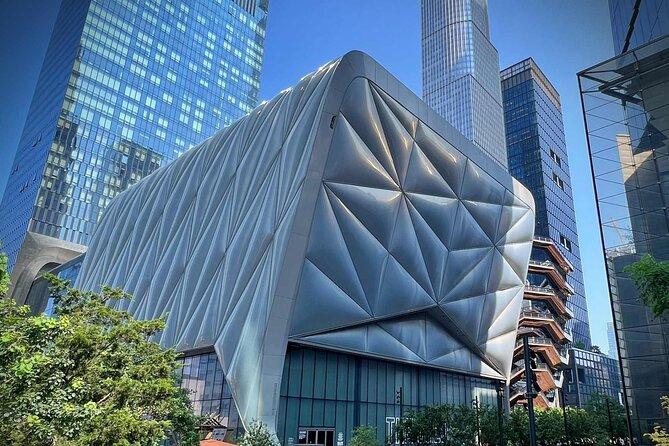
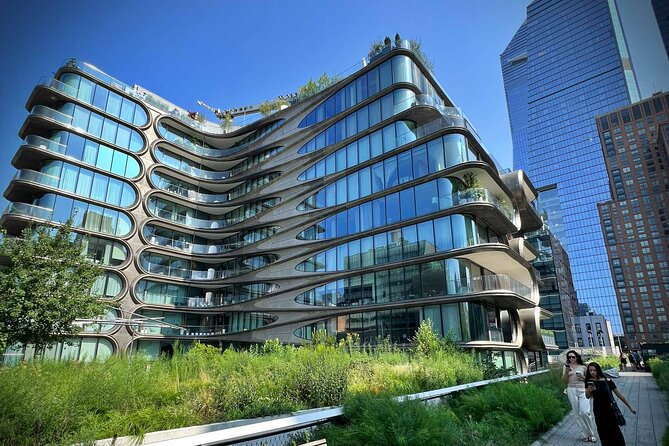
Then you reach Hudson Yards. This is where the park feels like it’s steering you into a different New York mood—more planned, more contemporary, and much more about skyline impact and recognizable landmarks. The tour’s structure works well here because it doesn’t just dump you into big-ticket attractions. It gives you the narrative bridge from the High Line’s origins into the kind of future-forward skyline that defines Hudson Yards.
If you only have time for one “ending chapter” in New York, the High Line-to-Hudson Yards connection is one of the best ways to do it. You get the green corridor story first, then the big symbol finish second.
The Vessel: a photo icon with a tragic edge

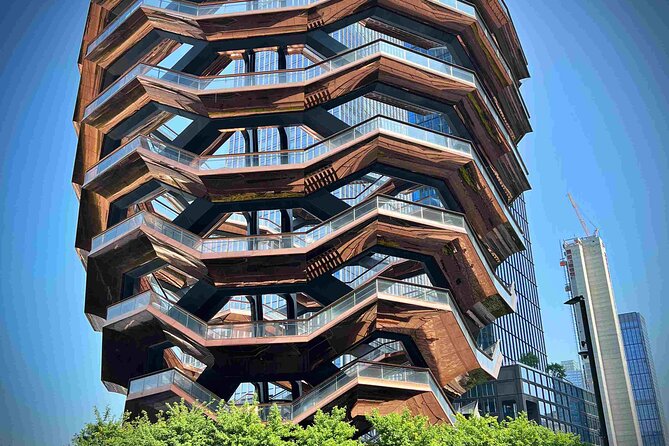
Your walk ends with The Vessel—a sixteen-story structure often called the stairway to nowhere. The audio explains its original intention as a Hudson Yards Instagram icon, and it also brings up its tragic reputation as a suicide magnet.
That mix is a lot for one place, so here’s the practical way to handle it: if the subject matter hits you hard, take your time. Walk the area when you’re ready, then let yourself move on when you feel comfortable. A self-guided tour is helpful here because you control how long you stay in the moment.
What makes The Vessel a fitting finale in this specific tour is the contrast between hope and consequence. The High Line story is about transformation. The Vessel is also about transformation—design that was meant for delight that ended up carrying darker real-world weight. Hearing that shift is part of what makes the ending feel more meaningful than a typical photo stop.
VoiceMap app, offline audio, and pacing (what you’ll need)
Let’s talk about the practical side, because it determines whether the experience feels smooth or annoying.
This tour uses the VoiceMap Application and includes lifetime access to the English audio, plus offline access to audio, maps, and geodata. So you can download and then walk without needing to stay connected. That’s a big deal on the High Line, where signal can vary and where you don’t want your phone battery dying mid-walk.
But you supply the basics: the tour does not include your smartphone and headphones. Bring wired headphones if you prefer distraction-free audio, or use wireless if you know they’ll stay connected during a walk. Either way, plan to keep one ear available for street noise if you’re crossing near busy areas.
Price is $14.99 per person, which is honestly a pretty fair trade when you compare it to paying for multiple paid attractions. The value angle here is not “it covers everything.” It covers narration and navigation for about 90 minutes, and you can reuse it later thanks to lifetime access. For many people, that makes it cheaper than a single paid museum admission—especially if you’re mainly there for the walk and the story.
One caution from real-world use: the audio timing can be sensitive to your walking speed. If you tend to stop for photos, talk to friends often, or move slowly, keep an eye on pacing. If the narration feels out of sync, try taking a slightly more consistent pace during long stretches, then pause once you’re at a viewpoint.
Should you book this self-guided High Line audio tour?
Book it if you want a story-driven walk along one of the most famous urban parks in the US, and you like using your phone as a smart guide. The best match is someone who enjoys history framed through scenes and characters, not just dates and distances. The offline audio and lifetime access make it a “download once, reuse later” type of purchase.
Skip it (or only book with expectations set) if you hate audio tours or if you need a tightly managed schedule. Self-guided means you control everything: your pace, your pauses, and whether timing glitches annoy you. Also, since the experience includes mentions of darker topics tied to Death Avenue origins and The Vessel’s tragic reputation, it’s worth knowing that this walk is not all light and playful.
If you’re heading to New York and want a High Line experience that feels more like a guided narrative and less like a checklist, this one is a strong bet for the price.
FAQ
How much does the High Line self-guided audio tour cost?
It costs $14.99 per person.
About how long does the tour take?
It takes about 1 hour 30 minutes.
What language is the audio offered in?
The tour is offered in English.
What’s included with the purchase?
You get lifetime access to the tour in English, the VoiceMap application, and offline access to audio, maps, and geodata.
What do I need to bring?
You need your smartphone and headphones.
Where does the tour start and end?
It starts at Friends of The High Line, 820 Washington St, New York, NY 10014, and ends back at the meeting point.
Is it self-guided or a guided group tour?
It’s self-guided. It also runs as a private activity for your group only.
Do I need transportation or tickets to places along the route?
Transportation and entry fees to museums or attractions mentioned enroute are not included.
Are service animals allowed?
Yes, service animals are allowed.
What is the cancellation policy?
It is non-refundable and cannot be changed for any reason. If you cancel or request an amendment, you won’t get a refund.