REVIEW · NEW YORK CITY
Lower Manhattan Self-Guided Walking Tour and Scavenger Hunt
Book on Viator →Operated by Tourist Scavenger Hunt · Bookable on Viator
Lower Manhattan can be a lot when you’re staring at a map. This self-guided scavenger hunt turns the grid into a game, with a smartphone app-style route and clues that guide you from Bowling Green up toward the 9/11 Memorial.
I especially like how the tour mixes classic stops (Charging Bull, Trinity Church, One World Trade Center) with frequent “stop-and-think” challenges. It’s also built for independent travel: start when you want, walk at your own tempo, and keep moving without waiting on anyone.
The main drawback to consider is that parts of the route can be affected by real-world construction and blocked access. If the app directions don’t match what you’re facing on the sidewalk, you may lose time or have trouble completing early clues near Battery Park.
In This Review
- Key points before you go
- How this scavenger hunt really plays (and why it’s fun)
- Price and value for a 6-person group
- Timing your 3-hour loop from Bowling Green to Wall Street
- What you’ll do at each stop (and what to watch for)
- Stop 1: Walloon Settler’s Monument
- Stop 2: The Battery
- Stop 3: Korean War Veterans Memorial
- Stop 4: Castle Clinton National Monument
- Stop 5: Governors Island Ferry
- Stop 6: Ellis Island
- Stop 7: The Immigrants
- Stop 8: Netherland Monument
- Stop 9: National Museum of the American Indian
- Stop 10: Bowling Green
- Stop 11: Charging Bull (Wall Street Bull)
- Stop 12: Site of Second Presidential Mansion
- Stop 13: Trinity Church NYC
- Stop 14: FDNY Memorial Wall
- Stop 15: 9/11 Memorial Pools
- Stop 16: One World Trade Center
- Stop 17: The Oculus
- Stop 18: St. Paul’s Chapel
- Stop 19: Woolworth Building
- Stop 20: Jacob Wrey Mould Fountain
- Stop 21: New York City Hall
- Stop 22: Brooklyn Bridge
- Stop 23: Benjamin Franklin Statue
- Stop 24: Federal Reserve Bank of New York
- Stop 25: Federal Hall
- Stop 26: Fearless Girl
- Stop 27: New York Stock Exchange
- Setup on your phone: what to expect and how to avoid headaches
- Construction risk: the real-world challenge on Battery Park
- Who this hunt suits best (and who should skip it)
- Movie and TV film locations: a fun layer on familiar streets
- Should you book this Lower Manhattan scavenger hunt?
- FAQ
- How long is the Lower Manhattan self-guided scavenger hunt?
- Where does the tour start and end?
- How do the instructions work during the tour?
- Do I need internet access on my phone?
- Is there a list of stops and landmarks included?
- What’s included besides the walking route?
- Is this tour private for my group?
Key points before you go

- Smartphone clue system: directions run through a mobile website on your phone, so plan for internet access.
- Over 30 challenges in 2 to 3 hours: it’s active, not a sit-and-read museum tour.
- A strong landmark mix: Wall Street sights, the 9/11 Memorial Pools, Federal Reserve, Federal Hall, and more.
- Movie/TV stop flavor: you’ll see 16 film locations tied to familiar movies and series.
- Good for families with older kids: especially if your group likes puzzles and short tasks.
- Route starts near Bowling Green: then heads north through major downtown corridors.
How this scavenger hunt really plays (and why it’s fun)
This isn’t a guided talk where one person narrates while you listen. It’s a walking route made into a scavenger hunt. Each stop has a challenge, and the game structure pushes you to pay attention to details you’d normally skip—names, monuments, and the little bits of context that make Lower Manhattan feel like more than a skyline.
What makes it work well is the pacing. You’re constantly moving from one landmark cluster to the next, but you also get a reason to slow down long enough to read the prompt and figure out the answer. That makes the 3-hour window feel purposeful instead of “walk, walk, walk.”
And because it’s self-guided, you’re not stuck with a fixed group speed. If you want to pause for photos at the Charging Bull area or take an extra minute near City Hall, you can do it without asking permission.
You can also read our reviews of more tours and experiences in New York City.



Price and value for a 6-person group
The cost is $44.85 per group (up to 6), which is a big deal if you’re traveling with family or friends. For groups, the “per person” feeling is much lighter than most NYC tours because the price doesn’t scale with headcount.
You’re paying for three things: the walking route, the smartphone-based clue experience, and the historical/architectural context woven into the prompts. If you’re the kind of traveler who enjoys mini-challenges—quick questions, short problem solving, and learning through doing—this can feel like good value.
If you only want a casual stroll with minimal phone use, you might feel the hunt pressure. In that case, treat it more like a flexible route and less like a strict checklist.
Timing your 3-hour loop from Bowling Green to Wall Street
This hunt runs about 3 hours, and it’s designed as a northbound downtown walk. It starts at Bowling Green in the Battery area and then moves up toward the National September 11 Memorial & Museum. From there you keep going through the downtown civic zone—City Hall area—then toward the Federal Reserve, Federal Hall, and the New York Stock Exchange corridor.
Because the itinerary includes a lot of well-known points, you should expect steady walking and frequent stops to read and answer clues. It’s not a “sit at a café” kind of outing unless your group is okay with finishing a bit later.
You’ll also want a plan for timing if you go during busy hours. The route runs through major attractions and Midtown-adjacent streets, so crowds can slow your progress even when the app directions are fine.
What you’ll do at each stop (and what to watch for)
Here’s the rhythm you’ll repeat all along the way: you arrive at a named site, the app prompts a challenge, and the game nudges you toward a fact or connection about what you’re seeing. Think of it as a guided lesson without the lecturer.
Stop 1: Walloon Settler’s Monument
This first prompt sets the tone. It’s tied to early-settler themes and helps you get oriented to what the tour considers important downtown “starting points.” I like using an opening clue like this because it makes the rest of the walk feel more connected.






Stop 2: The Battery
The Battery is one of the easiest areas to recognize in Lower Manhattan, but it can also be a place where access changes. If you like a mix of city views and monument-reading, this stop is a good early payoff.
Practical tip: keep your phone charged early. The Battery area is a great place to pause and double-check you’re still on the right clue.
Stop 3: Korean War Veterans Memorial
This is another “story” stop. The value here is that the hunt breaks up the skyline-focused walking and gives you a different lens on the neighborhood.
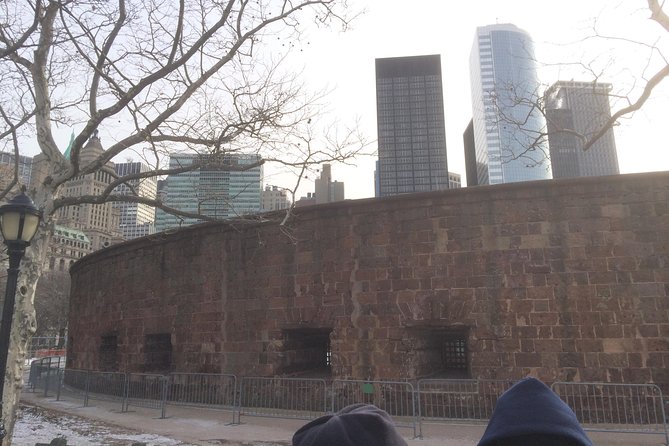
Stop 4: Castle Clinton National Monument
Castle Clinton is exactly the kind of stop that benefits from a scavenger-hunt approach. You’re not just passing by—you’re solving something and learning a connection to the place.
Stop 5: Governors Island Ferry
This is one of those stops that widens your perspective. Even without a long detour, the clue format makes you treat a transportation-related landmark as part of the city’s story, not just a background element.
Stop 6: Ellis Island
Ellis Island is a name that carries weight, and this tour uses that recognition as a jumping-off point for its challenge prompts. If you like learning through short questions, this is a strong mid-early section of the hunt.
Stop 7: The Immigrants
This stop name hints at an emphasis on immigration narratives. I like that the hunt doesn’t keep everything focused only on the financial district; it broadens the “Lower Manhattan story” beyond Wall Street.
Stop 8: Netherland Monument
Monuments can feel repetitive if you rush past them, but the scavenger format gives you a reason to slow down. This stop helps keep the route from turning into a pure-photo parade.
Stop 9: National Museum of the American Indian
This is one of the stops where you’re likely to feel the tour’s “learning through context” approach. The app’s challenge style nudges you to pay attention to significance and names rather than just walking past big institutions.
Stop 10: Bowling Green
You circle back conceptually to the start area. It’s a helpful moment because it reinforces what you’re learning about downtown’s earliest anchors.
Stop 11: Charging Bull (Wall Street Bull)
Charging Bull is a high-energy destination. The hunt challenge here gives you more than a quick photo moment, because you’re looking for an answer tied to the site.
Photo note: this area gets crowded. If you want fewer obstructions, plan to arrive a bit off-peak or be flexible with timing.
Stop 12: Site of Second Presidential Mansion
This stop leans historical. I like these “site markers” because they make you notice how many famous places are connected to less-obvious locations you’d otherwise overlook.
Stop 13: Trinity Church NYC
Another stop where the hunt approach can be more satisfying than just looking. The clue format encourages you to connect the building to the tour’s broader themes.
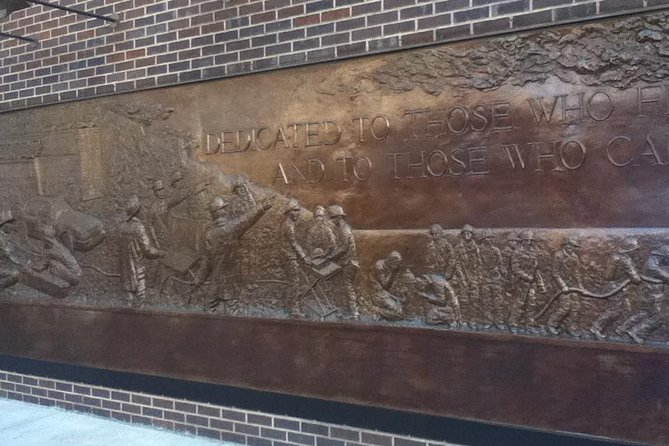
Stop 14: FDNY Memorial Wall
Memorial stops can be emotional, and the scavenger hunt method keeps the experience active instead of purely reflective. It’s a way to slow down without feeling like you’re stuck in one place too long.
Stop 15: 9/11 Memorial Pools
This is the emotional centerpiece. The route places you here after a long stretch of downtown walking, so it often lands as a pause point—walk up, read the prompt, then take a breath before continuing.
Stop 16: One World Trade Center
This is where the skyline comes back into the picture. In a scavenger hunt, it’s more than a view stop—you’re still working through the game, so the site becomes part of your “route story.”
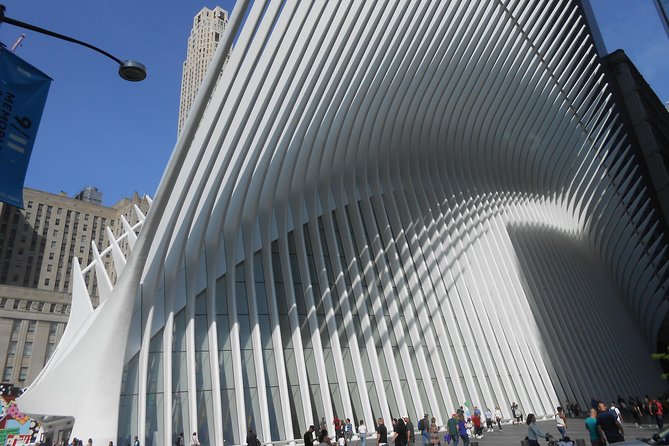
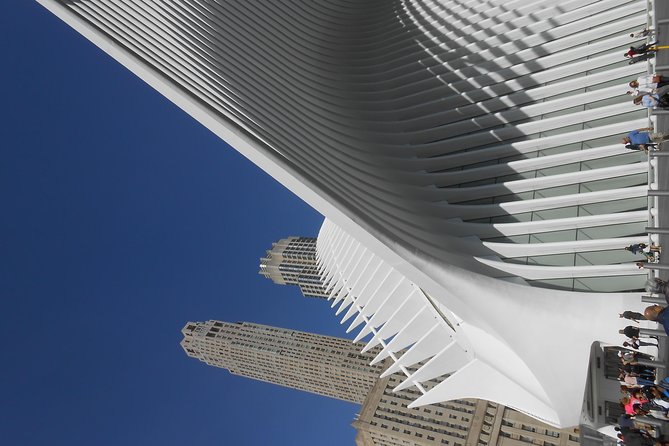
Stop 17: The Oculus
The Oculus is visually distinctive, so it works well as a clue stop. Expect to be walking through a transition zone, which the hunt helps you navigate without getting lost in your own head.
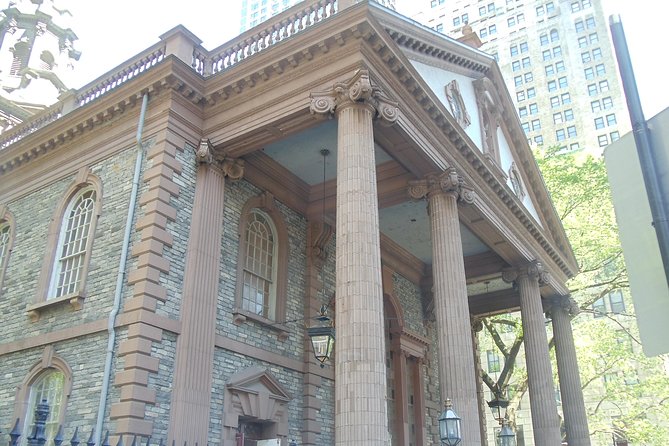
Stop 18: St. Paul’s Chapel
Another historical anchor. The hunt format encourages you to shift from “grand monument” thinking to “small but meaningful site” attention.
Stop 19: Woolworth Building
Big downtown architecture is always easier to appreciate when you’re looking for answers, not just admiring height. This is a good section if your group likes facts tied to recognizable facades.
Stop 20: Jacob Wrey Mould Fountain
This stop adds variety. Water features and sculptures are easy to photograph, but the scavenger challenge gives you a reason to look carefully and not rush.
Stop 21: New York City Hall
City Hall is a classic civic landmark. The hunt makes it feel like part of a route with purpose, not just another “major building” in a city packed with them.
Stop 22: Brooklyn Bridge
This is one of the big “you made it” moments. The hunt keeps you moving as you approach it, so you feel progress instead of finishing late with no sense of where you are.
Stop 23: Benjamin Franklin Statue
A statue stop is perfect for quick challenges because you can spot the relevant details fast. This is a good place to regroup as a group and compare answers.
Stop 24: Federal Reserve Bank of New York
This is the finance-meets-history section. Even if you’re not a banking person, the scavenger hunt format helps you treat major institutions like part of a story you can follow.
Stop 25: Federal Hall
Federal Hall is another named landmark that works well with clue-driven pacing. You’re not just passing; you’re working through questions tied to the stop.
Stop 26: Fearless Girl
Fearless Girl is a fun contrast to the heavier memorial sections. The hunt gives it more meaning than a quick snapshot.
Stop 27: New York Stock Exchange
This is the final “big icon” stop. By the time you reach it, you’ve already been through the Battery-to–9/11 corridor and the civic/finance spine, so finishing here feels like the route’s payoff.
Setup on your phone: what to expect and how to avoid headaches

This experience uses instructions through a mobile website on your smartphone. That means your success depends on having a working connection and being able to load the prompts reliably.
Two practical takeaways stand out. First, the setup can feel confusing at the start if you don’t read carefully and get oriented. Second, the hunt is designed to be completed with internet access, so skipping a data plan is risky.
Before you start, I recommend you:
- Make sure your phone battery is topped up
- Confirm you have internet access (data or reliable connection)
- Give yourself 5 to 10 minutes at the start area before you hit the first clue
Construction risk: the real-world challenge on Battery Park

Lower Manhattan doesn’t stay still. One of the most important considerations is that construction and blocked access can interfere with early parts of the route—especially around the Battery area.
If a clue location is fenced off, you may lose time trying to work around it, and in some cases the hunt may become harder to complete exactly as designed. This is why I treat the tour as a walkable route first and a strict game second.
If you’re the type who hates uncertainty, pick a time when sidewalks are less chaotic, and stay flexible. If you’re okay solving the route with a bit of improvising, the scavenger hunt still tends to be a good way to see downtown.
Who this hunt suits best (and who should skip it)
This works especially well for people who like:
- short tasks and puzzle-style clues
- learning through moving, not sitting
- walking tours that don’t lock you into a group schedule
It’s also a solid option for families with upper elementary kids and older. The challenge format gives kids a job beyond just looking.
On the other hand, if you want a quiet cultural stroll with no phone-based tasks, you might find the experience more like homework than sightseeing.
Movie and TV film locations: a fun layer on familiar streets
The hunt includes 16 film locations from movies and TV series. That adds a playful angle to a city where you’ve probably seen downtown scenes on screen.
I like this element because it gives you a second reason to pay attention. You’re not only reading for facts—you’re also mapping screen memories onto real street corners, which can make the walk more memorable without requiring extra planning.
Should you book this Lower Manhattan scavenger hunt?
Book it if you want a self-paced way to cover a lot of iconic downtown areas in about 3 hours, and if you enjoy solving clue prompts while you walk. The group price up to 6 can make it a strong value, especially for families or friend teams.
Skip it (or be cautious) if you’re planning to rely on the app like turn-by-turn GPS in an area where access may change. Construction can interfere with early clues near the Battery, and the game experience depends on getting to each stop.
If you do book, go in with the right mindset: this is a game-guided walk. If you treat it like flexible exploration plus puzzles, you’ll likely come away feeling you saw Lower Manhattan with more meaning than a quick sightseeing checklist.
FAQ
How long is the Lower Manhattan self-guided scavenger hunt?
It takes about 3 hours, though the tour is described as a 2 to 3-hour experience.
Where does the tour start and end?
It starts at Bowling Green, New York, NY 10004, and ends back at the meeting point.
How do the instructions work during the tour?
You follow instructions through a mobile website on your smartphone.
Do I need internet access on my phone?
Yes. Internet access is required to complete the scavenger hunt, so you’ll want a data plan.
Is there a list of stops and landmarks included?
Yes. The route includes many named locations such as Wall Street’s Charging Bull, the 9/11 Memorial Pools, One World Trade Center, the Oculus, and the New York Stock Exchange.
What’s included besides the walking route?
You get a scavenger hunt with over 30 challenges, a historical and architectural self-guided walking tour, and 16 films locations from movies and TV series.
Is this tour private for my group?
Yes. It’s private, and only your group participates.