REVIEW · NEW YORK CITY
Manhattan’s Famous Artists: Exploration Game and Tour
Book on Viator →Operated by Questo · Bookable on Viator
Follow Manhattan’s artist footsteps, at your speed. This self-guided scavenger hunt turns Greenwich Village streets into a story game, with offline play so you can keep going even when your signal drops. I also like that it’s designed with no physical tour guide, so you’re not tied to a group or waiting for someone else to catch up.
The biggest drawback to plan for: a few key stops are marked as admission not included, so you may want to treat some locations as outside-look only unless you’re willing to pay separately.
In This Review
- Key highlights to look for
- Greenwich Village stories you can play without Wi-Fi
- Price of $5.98 and why it feels fair
- How the self-guided format works (and what you need)
- From Lucille Lortel Theatre to Electric Lady Studios
- Stop 1: Lucille Lortel Theatre (121 Christopher St)
- Stop 2: 1 Sheridan Square (Suze Rotolo and Miki Isaacson)
- Stop 3: Electric Lady Studios (Greenwich Village)
- Washington Square Park and 85 W 3rd St: quick, meaningful stops
- Stop 5: Washington Square Park (audio tour element)
- Stop 6: 85 W 3rd St (Edgar Allan Poe)
- Walking past nightclubs: Bon Soir, Cafe Wha?, Village Gate
- Stop 4: 40 W 8th St (Bon Soir)
- Stop 7: Cafe Wha? (music, comedy, and early breakthroughs)
- Stop 8: Village Gate at 158 Bleecker St
- Finish: The Bitter End (147 Bleecker St)
- The practical 1.5-hour plan: pacing and smart breaks
- Who should book this Manhattan artist game
- Small things that can trip you up
- Should you book Manhattan’s Famous Artists: Exploration Game and Tour?
- FAQ
- Do I need an internet connection to play?
- How long does the experience take?
- What language is the game available in?
- Where do I start and where do I end?
- Are admission tickets included for all the stops?
- Can I cancel for a full refund?
Key highlights to look for

- Offline city-game format: you don’t need an internet connection to play.
- Start anytime, pause anytime: you can fit the game around coffee, snacks, and bathroom breaks.
- A true Greenwich Village artist walk: Lucille Lortel Theatre, Electric Lady Studios, Cafe Wha?, and more.
- Artist-specific details at the door: you’ll get facts like Suze Rotolo’s Sheridan Square home and who lived below her.
- Mix of free stops and ticketed venues: some stops are free; others are marked admission not included.
- Private experience with no human contact: only your group plays, and you avoid crowds.
Greenwich Village stories you can play without Wi-Fi
This is one of those Manhattan experiences that feels built for real life. Instead of following a guide with a megaphone, you walk a small route and play an exploration game at your own rhythm. That matters here because Greenwich Village is best enjoyed when you can stop, look up, and wander for a minute—then keep going.
What makes it especially practical is the offline design. Manhattan can chew through phone plans and data connections fast, especially if you bounce between subway coverage and street level. With this setup, you can stay focused on the neighborhood and not on your signal bars.
And you’re not just doing trivia. The game format includes challenges and prompts that nudge you to notice details in the streetscape, not only read about it later. It’s a simple trick, but it changes how the walk feels.
You can also read our reviews of more tours and experiences in New York City.

Price of $5.98 and why it feels fair
At $5.98 per person for about 1 hour 30 minutes, this is priced like a value add-on—not a heavy, expensive “tour day.” The cost makes sense because you’re paying for an activity format (the game) rather than someone guiding you the whole time.
You also get a few value boosters that matter in New York:
- Start any hour and resume later (so you’re not locked into a narrow time slot).
- Mobile ticket (so you’re not juggling paper).
- Group discounts are offered.
If you like self-guided options, this is a low-risk way to explore deeper without committing to a full-day itinerary. And if you’re traveling with others, the private “just your group” setup can feel like you’re paying for a customized experience without the usual custom price.
How the self-guided format works (and what you need)
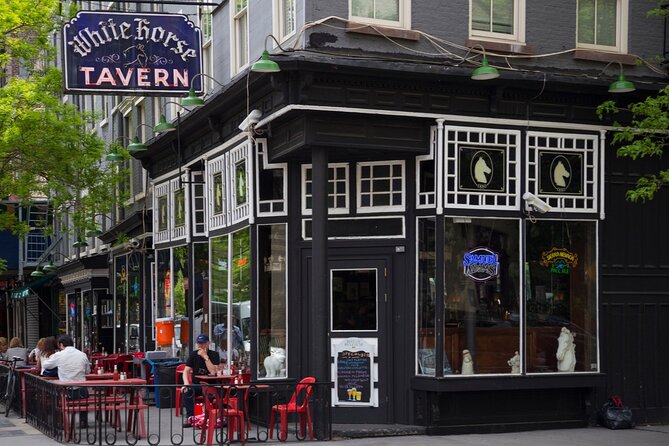
You’ll start at White Horse Tavern, 567 Hudson St, and finish at The Bitter End, 147 Bleecker St. The route is designed so you can play in chunks, which is great if you want to time it around meals.
Here’s the practical reality: since there’s no physical tour guide, you’ll want to be comfortable using your phone as your activity hub. The game is offline, but you still need a working device and enough battery to get through the whole loop. I’d also recommend having headphones handy if you plan to use any audio-based parts.
Also, since this is a private tour/activity, it’s only your group participating. That’s a nice perk if you don’t want crowds around you while you play.
From Lucille Lortel Theatre to Electric Lady Studios
This first stretch leans into performance spaces and music-making—so you get a sense of how artists shaped Greenwich Village long before it became a “must-see” neighborhood.
Stop 1: Lucille Lortel Theatre (121 Christopher St)
Start at an off-Broadway cornerstone in the West Village: Lucille Lortel Theatre at 121 Christopher Street. The building story is the fun part. It was built in 1926 as a 590-seat movie theater called the New Hudson, later known as the Hudson Playhouse. Then, in the early 1950s, it shifted into theater life as Theatre de Lys, opening June 9, 1953.
Why it’s worth stopping: you’re not just looking at a venue—you’re reading a building’s time travel. The interior is described as largely unchanged, which makes this kind of stop feel more real than a plaque-only moment.
Heads up: this stop is marked admission ticket not included, so don’t assume you can walk in and tour the space. Plan for outside viewing, and if you do enter, budget admission separately.





Stop 2: 1 Sheridan Square (Suze Rotolo and Miki Isaacson)
Next you hit 1 Sheridan Square, and the story gets personal. Suze Rotolo lived in the penthouse with her mother, and Miki Isaacson—called the folk den mother—occupied the tiny studio apartment on the floor below.
This is the kind of detail that makes a scavenger hunt click. Instead of broad “folk history,” you get a specific vertical slice of life: penthouse above, small studio below, and a community shaped by artists living close together.
This stop is marked admission ticket free, so it’s ideal if you want zero friction and a quick “aha” moment.
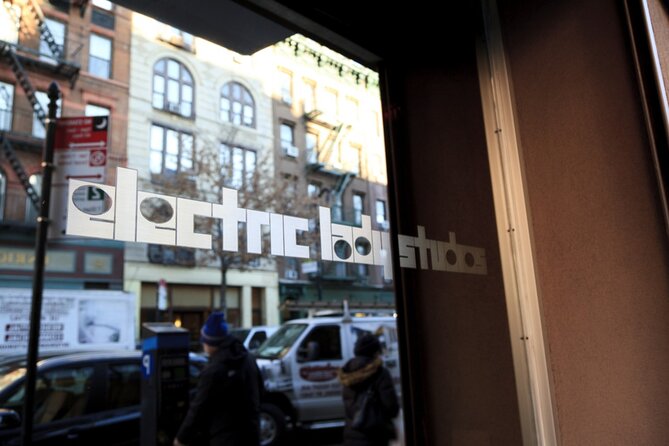
Stop 3: Electric Lady Studios (Greenwich Village)
Now you’re in the orbit of rock history: Electric Lady Studios in Greenwich Village. The studio was commissioned by Jimi Hendrix in 1968 and designed by architect John Storyk and audio engineer Eddie Kramer by 1970.
Why this stop matters even if you don’t tour inside: Electric Lady is a symbol of artistic control—how musicians didn’t just perform, they also shaped the sound and the space. The game helps you connect a name you’ve heard (Hendrix) to the actual neighborhood location where the studio became part of the story.
This stop is marked admission ticket not included, so treat it like a “see what you can, then keep playing” stop unless you plan to pay separately.
Washington Square Park and 85 W 3rd St: quick, meaningful stops
After the studio/performance focus, the route shifts into park space and literature. This is where the walk becomes calmer and more flexible.
Stop 5: Washington Square Park (audio tour element)
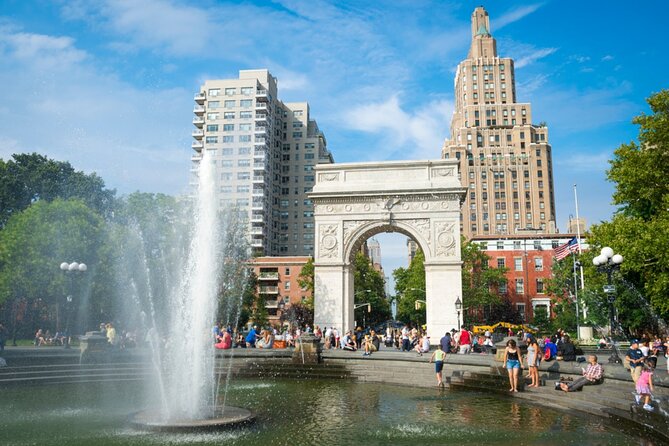
Washington Square Park is right there in the center of Greenwich Village energy, and it’s easy to see why it became a meeting place and cultural hub. This stop includes an audio-tour style component, so you get a chance to slow down and let the sound guide your attention.
Even if you’re not an audio-tour person, this pause is useful. It gives you a mental breather between music history stops.
This stop is marked admission ticket not included, which usually means you can enjoy the park space without extra fees.
Stop 6: 85 W 3rd St (Edgar Allan Poe)
At 85 W 3rd St, you’re directed to Edgar Allan Poe, the writer best known for poetry and short stories, especially the mystery and macabre. He’s described as a central figure of Romanticism in the U.S. and of American literature as a whole.
You might not think of Poe when you picture Greenwich Village, but this is a smart reminder that the Village has long been a magnet for writers as well as performers. The game approach helps you “anchor” the literature connection to a real address.
This stop is marked admission ticket free, so it’s a low-cost way to add variety to the route.
Walking past nightclubs: Bon Soir, Cafe Wha?, Village Gate
These stops lean into late-night creative life—the place where famous performers got their chances, and where the building itself carried a mood.
Stop 4: 40 W 8th St (Bon Soir)
40 W 8th St brings you to Bon Soir, owned by Ernie Sgroi Sr. It was a small Greenwich Village night club where comedians and singers like Phyllis Diller, Kaye Ballard, and Ethel Waters performed.
The most vivid clue comes from a description of the club’s atmosphere: the appeal was tied to feeling distant, almost forbidden. One walk down thirty-one steps led to a square black room—the kind of detail that helps you picture the space instead of just memorizing a name.
This stop is marked admission ticket free, so you can focus on the story and the street setting.
Stop 7: Cafe Wha? (music, comedy, and early breakthroughs)
At Cafe Wha?, the focus is on early chances. The club is linked to young performers like Jimi Hendrix, Bruce Springsteen, Woody Allen, Lenny Bruce, Bill Cosby, and Richard Pryor. It also hosted folk singers, artists, poets, beatniks, and anarchists.
The game highlights a fun detail about the club’s name: it’s a shortening of what, meant to convey incredulity. That kind of wording makes the whole place feel like a real creative hangout, not a polished brand.
This stop is marked admission ticket not included, so you should assume you may be enjoying it from the outside unless you plan to pay on site.
Stop 8: Village Gate at 158 Bleecker St
Your next stop is Village Gate at 158 Bleecker St, on the corner of Thompson and Bleecker. Art D’Lugoff opened it in 1958 in the ground floor and basement of 160 Bleecker Street. The structure is described as a 1896 Chicago School building, originally known as Mills House No. 1 and serving as a flophouse for transient men. In its heyday, the club also had an upper performance space called Top of the Gate.
This is one of the most “layers of the city” moments on the route. You’re not just meeting the arts—you’re seeing how the arts took over a building with a different purpose in an earlier era.
This stop is marked admission ticket free, which keeps the pace easy.
Finish: The Bitter End (147 Bleecker St)
Your game ends at The Bitter End on 147 Bleecker St. It’s a tidy wrap-up because the route is already trained on nightlife and performer culture, so finishing at another club makes the last minutes feel intentional.
The practical 1.5-hour plan: pacing and smart breaks
The whole experience is listed at about 1 hour 30 minutes, but the key word is flexibility. You can start at any hour, take a break, and resume later. That’s not just convenience fluff; it lets you do this in the middle of a bigger NYC day.
Here’s a pacing approach I’d use:
- Do the first theatre/studio stops when you’re fresh (they’re information-dense).
- Treat parks and address-based stops as quick “reframe” moments.
- If you’re hungry, pause after a longer stop like Washington Square Park or the Village Gate area.
Also, because some venues are marked admission not included, you can avoid wasted time by deciding in advance what you’ll do. If you want zero extra costs, focus on outside viewing and let the game carry the education.
The other practical factor: your route goes through busy parts of Greenwich Village. It’s not a marathon, but it’s still city walking. Wear shoes that won’t complain after the second half of the loop.
Who should book this Manhattan artist game
I think this works best for three kinds of people.
1) Music and arts fans on a budget
At $5.98, it’s a low-cost way to learn artist stories tied to real places, without paying for a full guided package.
2) You like self-paced sightseeing
If you get impatient in group tours or you prefer stopping for photos and coffee when you want, this setup matches that style.
3) You want a creative excuse to walk Greenwich Village
The route hits places linked to major names (Hendrix, Springsteen, Poe, and more), but it does it through nearby addresses and specific settings, not generic “tour bus” stops.
It’s also a good pick if you want a private experience with no human contact, since that removes some of the crowd-pressure you can feel on popular NYC routes.
Small things that can trip you up
A few practical notes before you go:
- Some stops aren’t admission-included. Lucille Lortel Theatre and Electric Lady Studios are specifically marked admission ticket not included, and Cafe Wha? is also marked not included. If you need to be fully free-of-fees, plan for outside viewing at these spots.
- Bring a charged phone. Offline play still requires your device to function for the whole game.
- Expect a walking route through West Village/Greenwich Village. It’s short, but it’s still a neighborhood circuit—good footwear helps.
- Language is English. If your group reads English comfortably, you’ll be set.
Should you book Manhattan’s Famous Artists: Exploration Game and Tour?
If you want an easy, affordable way to turn Greenwich Village into an artist trail, I’d say yes. The format is built around self-guided pacing, offline play, and a route packed with specific names tied to actual locations. For $5.98, it’s hard to beat as a “do one smart thing” activity that still feels like a neighborhood walk.
Skip it only if you strongly prefer a live guide, or if you want all stops to be fully accessible without any chance of paid admission. In that case, you might prefer a conventional walking tour with people leading you inside venues.
FAQ
Do I need an internet connection to play?
No. The game is designed so you don’t need an internet connection to play.
How long does the experience take?
It’s listed at about 1 hour 30 minutes.
What language is the game available in?
It’s offered in English.
Where do I start and where do I end?
Start at White Horse Tavern, 567 Hudson St, New York, NY 10014. End at The Bitter End, 147 Bleecker St, New York, NY 10012.
Are admission tickets included for all the stops?
Not all stops are included. Some stops are marked admission ticket not included (for example, Lucille Lortel Theatre and Electric Lady Studios), while others are marked free.
Can I cancel for a full refund?
Yes, you can cancel for a full refund if you cancel at least 24 hours before the experience’s start time.