REVIEW · NEW YORK CITY
Stonewall and Gaslight: A Self-Guided Tour of Greenwich Village
Book on Viator →Operated by VoiceMap Audio Tours · Bookable on Viator
Greenwich Village reads like a script. This app-based tour turns the sidewalks into scenes, linking MacDougal Street’s music roots to the night Stonewall changed the world.
What I like most is how practical it feels day-to-day: you can pause, start, and take breaks when you want. I also love the offline setup—maps, audio, and geodata work without cell service, so you can wander without stressing over signal or battery.
One thing to consider: you’ll be doing this solo (with your app), not with a live human guide. If you want real-time Q&A and spontaneous detours, this format might feel a bit more hands-off than you expect.
In This Review
- Key things I’d plan around
- Price and value for a 90-minute Village story
- How the offline VoiceMap setup changes your walking pace
- Enter Hess Triangle: the Village as a music and myth machine
- OddFather to Patchin Place: acting legends in plain sight
- Jefferson Market Library, Gay Street, and Northern Dispensary
- Christopher Park to Stonewall Inn: when you’re looking at the hinge
- Café Wha?, Cafe Society, and Gaslight Cafe: where songs turned into breakthroughs
- The Cage and basketball pickup magic
- IFC Movie Theater: Rocky Horror, punk style, and movie-night lore
- Provincetown and Bob Dylan’s couch era
- Comedy Cellar: the punchline you can actually picture
- Start smart: how to get the most from a self-guided walk
- Should you book Stonewall and Gaslight?
- FAQ
- How long is the Stonewall and Gaslight tour?
- What language is the tour available in?
- Does the tour work offline?
- Is lifetime access included?
- What’s included with the purchase?
- What do I need that isn’t included?
- Where does the tour start and end?
- Is the tour private?
- Cancellation FAQ
- Is the experience refundable if I cancel?
Key things I’d plan around
- Offline audio, maps, and geodata so you can move freely without data
- Lifetime access included, which makes the price easier to justify
- Start and stop on your schedule, not on a rigid group pace
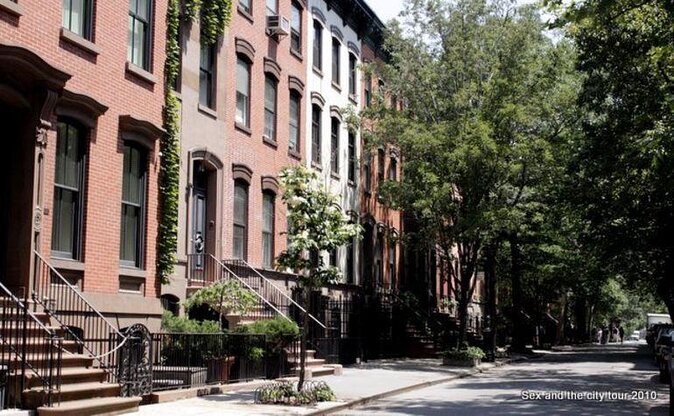
- A story mix that crosses scenes: folk music, gay rights, mafia legends, comedy, and punk
- Lots of “stop-and-look” moments at well-known corners plus surprising side streets
Price and value for a 90-minute Village story
At $14.99 per person for a 1.5 to 2 hour self-guided walk, this is priced like an audio add-on—not a full-on guided tour. The value comes from two things you can actually use: you get lifetime access, and the tour is designed to run offline with maps and audio included.
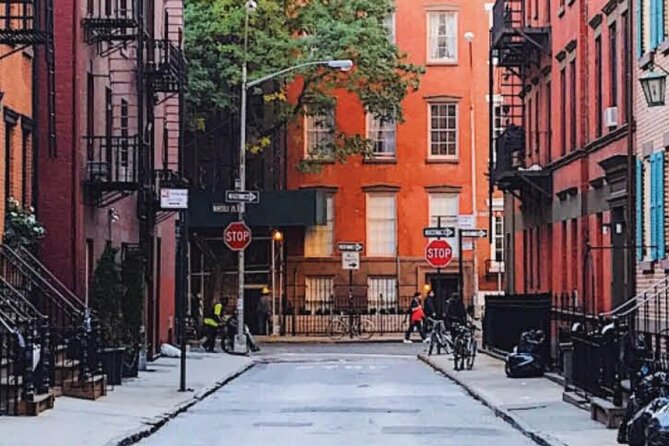
That matters in the Village. You’ll be threading together multiple small streets and iconic blocks. When a tour works without data, you’re less likely to get stuck hunting for the next location. You also tend to linger longer, which helps, because many of the best stories here are about what you’re seeing right in front of you—not just a distant “fun fact.”
Food, drinks, tickets, and museum entries aren’t included. That’s not a downside; it means you’re paying for the walk and the audio storytelling, then choosing your own coffee stop like a local.
You can also read our reviews of more tours and experiences in New York City.


How the offline VoiceMap setup changes your walking pace
This is built on the VoiceMap app (Android and iPhone). Once you’ve got your phone ready with the tour downloaded, you can keep moving. The audio, maps, and geodata don’t depend on your phone constantly phoning home.
For me, that’s the difference between a tour you rush through and a tour you actually enjoy. You can:
- stop for photos without losing your place,
- step into a doorway to hear the next segment,
- or just wait a minute if the street feels crowded.
One practical tip: bring headphones and make sure your phone battery is healthy. The tour doesn’t include a smartphone or headphones, and since it’s self-guided, you’ll want the audio clearly.
The meeting point is 52 Christopher St, and the walk ends on Sullivan Street near City Sweets & Confections. In other words, you’re starting near the heart of Village history and drifting toward a sweet exit.
Enter Hess Triangle: the Village as a music and myth machine
The walk begins at Christopher Street and quickly gets you thinking like a Village insider. One early anchor is Hess Triangle, a small pocket park that often gets passed without a second glance. Here, it works like a stage entrance.
From there, the route leans into the era when MacDougal Street helped give birth to the folk music scene. You’re not just told names—you’re guided to the feeling of it: the sense that the Village was where stories turned into songs and songs turned into movements.
You then weave toward Sullivan Street, where you hear the tale of the OddFather, a mafia boss said to have avoided arrest for decades by faking insanity. This section is a good reminder that Greenwich Village wasn’t only a sanctuary for artists and dreamers. It was also a place where power and deception could hide in plain sight.
If you like tours that connect culture with real-world grit, this part clicks fast.
OddFather to Patchin Place: acting legends in plain sight
From Sullivan Street, the tour slows you down with Patchin Place, described as a hidden alley where Marlon Brando spent time while studying. This is the kind of stop that works best when you’re willing to look around—because an alley can feel like nothing until a story gives it meaning.
What makes this moment valuable is the contrast: one minute you’re thinking about organized crime lore, the next you’re in a quieter, older-feeling passage tied to an acting legend. It’s the Village rhythm—big cultural waves, then a small turn that changes everything.
You’ll also get the sense that the Village story isn’t only about famous landmarks. It’s about the overlooked spaces that let people practice their craft, make plans, and form connections.
Jefferson Market Library, Gay Street, and Northern Dispensary
After the early myth-and-muse sections, the walk turns into a straight line through blocks that many people speed past. The audio guides you to:
- Jefferson Market Library
- Gay Street
- Northern Dispensary
- and Christopher Park
These stops are where the tour starts doing more than pointing. The design is about taking everyday architecture and giving you a lens. A library becomes more than a building; it becomes a marker of the neighborhood’s evolution. A street name becomes less abstract when you understand how people fought for space, safety, and identity.
Also, the way the tour threads these sections matters. You’re building a timeline in your head. Instead of hearing one isolated story, you’re gradually realizing how many different kinds of activism and creativity overlapped here—some loud, some quiet, some hidden in institutions.
This is a tour that rewards attention, but it doesn’t demand a school-like focus. If you like connecting the dots while walking, you’ll feel satisfied.





Christopher Park to Stonewall Inn: when you’re looking at the hinge
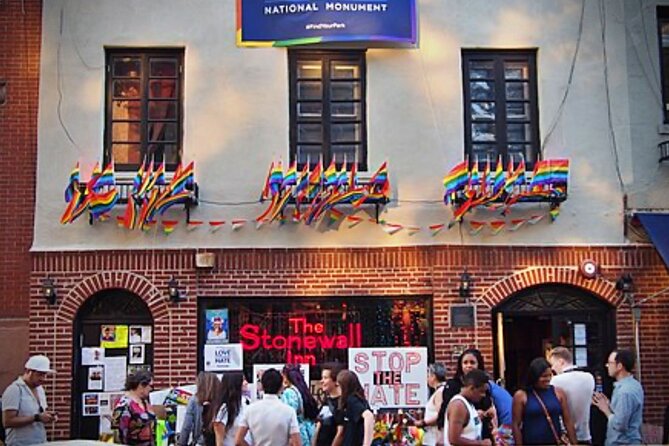
Stonewall Inn is the emotional center of the route. The audio frames it as the moment when riot police faced off against a kickline of drag queens during the Stonewall Rebellion.
If you’ve heard the Stonewall story in broad strokes, this version aims to make it feel more immediate. The key is that you’re not learning history from a screen—you’re standing in the neighborhood where the story happened and hearing it in a way that ties to the surrounding street grid.
One practical note: during busy times, this area can be crowded. The good news is you’re in control of your pace. You can step a little to the side, let a group pass, and still hear the audio as the scene sets.
For me, the payoff is how the tour connects the gay rights story back to the wider Village culture: music venues, protest energy, and the feeling that art and activism were often in the same room.
Café Wha?, Cafe Society, and Gaslight Cafe: where songs turned into breakthroughs
This is where the tour really leans into the Village as a launchpad. You’ll pass by places tied to major performers and early career nights.
You’ll hear about:
- Café Wha?, where Bob Dylan performed on his first night in NYC
- Cafe Society, described as America’s first mixed race nightclub, where Billie Holiday debuted Strange Fruit
- Gaslight Cafe, where unknown musicians Hendrix and Clapton played together for five straight nights
Even if you don’t know every detail, you get the pattern: these weren’t just famous venues. They were working rooms where talent got tested publicly. Hearing this while you’re walking helps. A street corner stops being an address and starts being a place where something risky happened—an early set, a new style, a performance that didn’t ask permission.
This section is also a nice antidote to tours that only focus on one theme. Here, music and social change sit together. You can feel why the Village became a magnet for artists who wanted more than entertainment—they wanted a voice.
The Cage and basketball pickup magic
Next comes the Cage, described as one of the most famous streetball courts in the world and home to a legendary pickup game.
This stop works because it broadens what the Village story can include. Not every iconic neighborhood moment is a stage or a courthouse. Sometimes it’s a court. Sometimes it’s a game that draws people in and keeps them connected.
If you’re the type who loves seeing how neighborhoods shape daily life—not just nightlife—you’ll appreciate this shift. It makes the walk feel less like a museum route and more like a map of how people meet, compete, and belong.
IFC Movie Theater: Rocky Horror, punk style, and movie-night lore
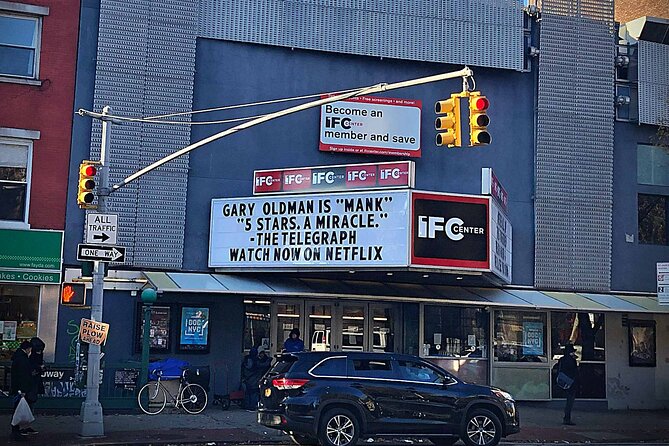
The tour then points you toward IFC Movie Theater, where you’ll hear the story of how Rocky Horror madness began, plus the idea that punk rock’s look was first inspired.
This is a fun pairing: cult midnight culture and a visual style that moved fast beyond music. Even if you’re not a Rocky Horror superfan, the emphasis here is on how pop culture traveled from rooms to streets.
It’s also a reminder that Greenwich Village was a kind of feedback loop. People came for a show, left influenced, and carried that energy into the next creative moment.
Provincetown and Bob Dylan’s couch era
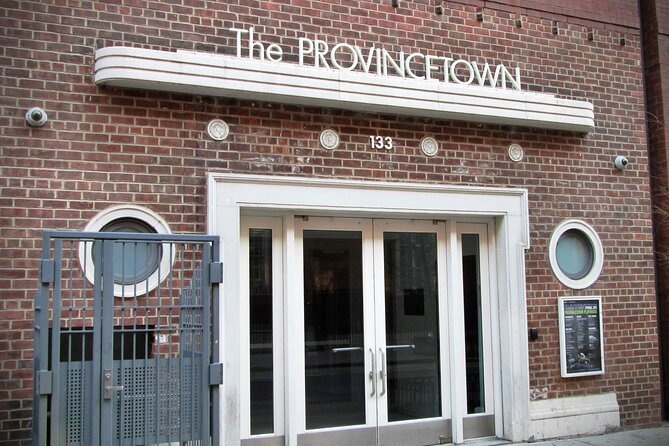
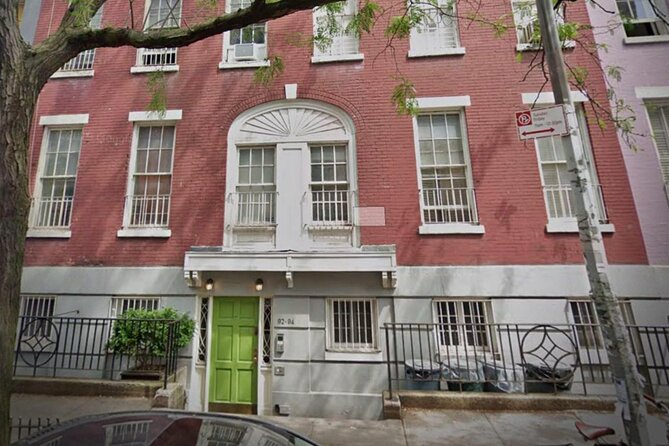
From there, you’ll see Provincetown—described as the birthplace of off-Broadway theatre—and you’ll also hear about a building on the same street where Bob Dylan crashed on couches during a stay in NYC.
This stop is satisfying for two reasons. First, it ties theatre culture to the Village identity. Second, it makes the Dylan angle feel less like a myth and more like the ordinary side of fame: a musician needing somewhere to land, not just an icon arriving fully formed.
It’s the kind of detail that makes the Village feel human again.
Comedy Cellar: the punchline you can actually picture
The route ends with Comedy Cellar, described as the most influential comedy club on earth.
By the time you reach this kind of stop, you’ve already been primed. You’ve heard about protest and performance, music scenes and nighttime culture. So comedy doesn’t feel random—it feels like the logical next step in a neighborhood where people learned to say the bold thing out loud.
Even if you don’t plan to attend a show, it’s useful to understand why these clubs matter. They’re not just entertainment. In a place like the Village, they’re another form of public storytelling.
Start smart: how to get the most from a self-guided walk
A self-guided tour can be either great or frustrating, depending on how you approach it. Here’s how to make it feel smooth.
- Wear shoes for nonstop sidewalks. This walk covers a lot of ground across the Village, and many stops are small street segments.
- Use the “pause and look” moments. When the audio starts describing a specific corner, stop and actually orient yourself. The point is matching story to place.
- Plan your emotional pacing at Stonewall. Let yourself spend a little time there. Crowd flow can be fast, so don’t rush the feeling.
- Bring headphones and keep your volume comfortable. Since smartphone and headphones aren’t included, make sure you’re set before you start.
Because the tour is offline, you won’t be tied to checking your phone screen constantly. That lets you enjoy the walk as a walk.
Should you book Stonewall and Gaslight?
Book it if you want a low-stress, self-paced way to see Greenwich Village with real connections—folk music, drag and resistance, comedy, basketball, and the clubs that helped launch major artists. The offline maps and audio plus lifetime access make the price feel fair, especially if you’ll revisit the route or share it with someone later.
Skip it (or at least reconsider) if you’re looking for a live guide, lots of indoor stops, or ticketed attractions. This is about being outside, following a planned sequence, and letting the stories do the heavy lifting from your phone.
If your ideal NYC day includes walking with purpose, learning along the way, and leaving with a neighborhood that feels more real, this one is a strong fit.
FAQ
How long is the Stonewall and Gaslight tour?
It runs about 1 hour 30 minutes to 2 hours.
What language is the tour available in?
The tour is offered in English.
Does the tour work offline?
Yes. Audio, maps, and geodata are available offline, so you do not need data.
Is lifetime access included?
Yes. This app tour includes lifetime access.
What’s included with the purchase?
You get lifetime access to the tour in English and offline access to audio, maps, and geodata, plus the VoiceMap app for Android and iOS.
What do I need that isn’t included?
You’ll need your own smartphone and headphones.
Where does the tour start and end?
It starts at 52 Christopher St, New York, NY 10014 and ends on Sullivan Street near City Sweets & Confections at 218 Sullivan St, New York, NY 10012.
Is the tour private?
Yes. Only your group will participate.
Cancellation FAQ
Is the experience refundable if I cancel?
No. The experience is non-refundable and cannot be changed for any reason.