REVIEW · MAMERTINE PRISON
Rome: Mamertime Prison Entrance Ticket with Audio guide
Book on GetYourGuide →Operated by OPERA ROMANA PELLEGRINAGGI · Bookable on GetYourGuide
A prison makes you listen differently. With an entrance ticket to Carcer Tullianum (the Mamertine Prison), you walk through Rome’s oldest penitentiary complex and connect the architecture to the stories tied to Peter and Paul. I especially like the multilingual audio guide that points out hidden artistic details, and the fact that you can do it at your own pace without a formal group tour. One catch: the experience depends heavily on the app setup, and the download and phone connection can be a bit fiddly underground.
This isn’t a big museum day. It is a short, intense circuit where stone, symbolism, and Roman names sit side by side.
In This Review
- Key Highlights You’ll Actually Feel
- Carcer Tullianum: Rome’s oldest prison in one tight visit
- Price and ticket value: $11 for entry plus a useful guide
- Audio guide reality check: download the Vatican&Rome App and plan for dead spots
- Arrival and getting in: where to start your visit
- What you’ll see inside: dark halls, cell-like spaces, and art you’ll miss without audio
- The big connections: Rome’s enemies, and the Peter-and-Paul tradition
- How long to plan: a short stop that still needs your attention
- Who should book this, and who might want a different format
- My booking call: should you get the Mamertine Prison audio ticket?
- FAQ
- How much is the Mamertime Prison entrance ticket with audio?
- How long is the visit?
- What’s included with the ticket?
- What languages are available on the audio guide?
- Where do I go to start?
- Do I need a live tour guide?
- How do I listen to the audio guide?
- Is the prison experience suitable for people with mobility impairments?
- Are strollers or large bags allowed?
Key Highlights You’ll Actually Feel
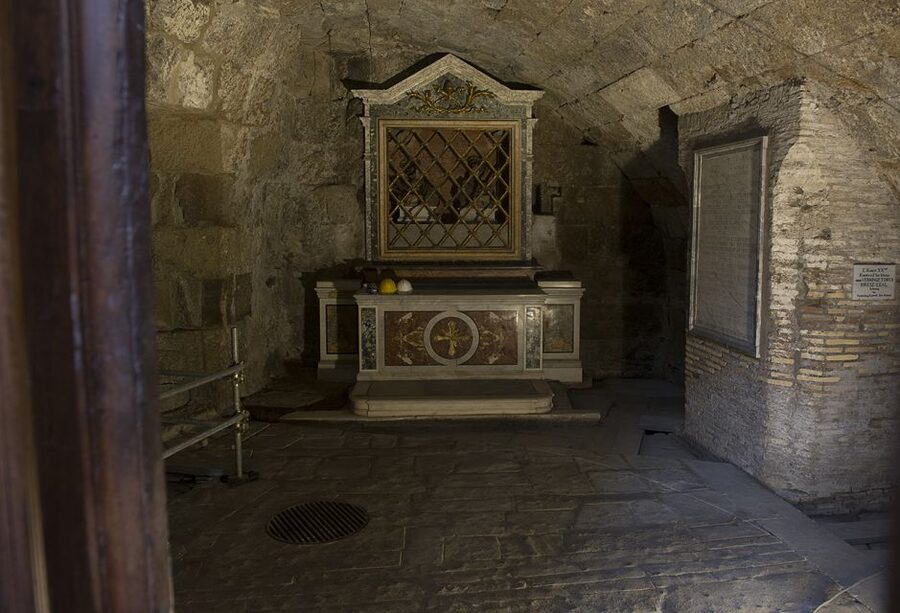
- A meaningful self-guided route through Carcer Tullianum, with entry included
- Multilingual audio (Italian, English, French, German, Spanish, Portuguese) delivered through a smartphone app
- Art + history together: you’re not just reading dates, you’re spotting details in the prison spaces
- Classical and Christian layers: prisoners of Rome and the traditions about Peter and Paul
- A visit that usually stays compact so you can fit it into a busy Rome itinerary
Carcer Tullianum: Rome’s oldest prison in one tight visit
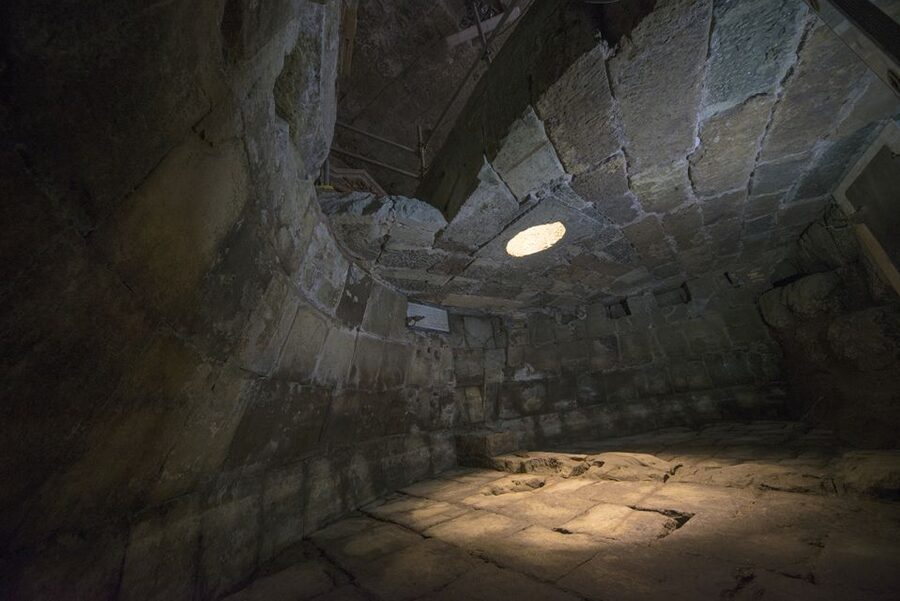
Carcer Tullianum, often called the Mamertine Prison, is a rare Rome stop because it is not trying to be a grand spectacle. It’s a compact, dim, historically loaded place: the idea is that you enter a former maximum-security prison and move through the halls and cells where Rome’s enemies waited.
What makes it gripping is the contrast. Here, you get the visual weight of a jail—cold, enclosed, and plain—then the audio (and the interpretive details you’ll see) ties that physical space to major historical and religious stories. Even if you’re more of a classics fan than a faith traveler, the setting is still unforgettable.
You should also expect a “small footprint” experience. The prison area and the visitor spaces are limited, so it will feel concentrated rather than expansive. That’s part of the appeal for many people, but it also means you won’t be wandering for hours.
Price and ticket value: $11 for entry plus a useful guide
At around $11 per person, this ticket is priced like a straightforward attraction—yet you’re getting more than a simple admission slip. Entry is included, and the multilingual audio guide is included too, which matters because most of the story is best understood when you have context walking through the rooms.
The value also comes from pacing. You are not locked into a group timeline or forced to listen to one style of storytelling. Instead, you can take pauses where you want—especially useful here because the space invites reflection, not speed-walking.
One practical note: a tour guide isn’t included. You’ll rely on the on-site help for check-in and then use the audio guide yourself. If you love having a live person explain the details, you might find the self-guided format less satisfying.
Audio guide reality check: download the Vatican&Rome App and plan for dead spots

The audio guide is not a handheld device you pick up and press play on right away. To listen, you need to download the Vatican&Rome App from the App Store or Play Store on your phone.
Here’s what you can do to make the audio work smoothly:
- Download the app before you go if you can.
- Bring headphones. You’ll be in a quiet, enclosed space, and you’ll want clear sound without disturbing others.
- Have patience with WiFi on-site. Some visitors report that the site WiFi helps with downloading and setup, but connection strength can vary.
A few people have run into the same pain point: once they go down into the prison areas, cell reception or the connection to the audio can become unreliable. When that happens, the audio may stop until you regain a connection. So I recommend treating the audio as “core,” not “guaranteed.” If you’re the type who hates tech friction, bring a charged battery and consider downloading anything possible ahead of time.
Check-in can also include getting help with a code or instructions to log in. If you arrive at the desk early, you’ll reduce stress. And if the app instructions feel confusing in the moment, ask for clarity before you start walking into the prison spaces.
Arrival and getting in: where to start your visit
Your meeting point is Mamertine Prison in Rome, and you’ll want to arrive 15 minutes before the activity start time. The visit runs on specific starting times, so picking a slot with your day’s energy in mind helps.
This is not the kind of attraction where you want to sprint from street to entrance. Some people find it confusing to locate the entry point quickly, so give yourself buffer time. Once you’re there, check in is usually straightforward: the staff can confirm your reservation and help you with the audio access.
Also note the practical rules of the site: baby strollers are not allowed, and luggage or large bags are not allowed. If you’re traveling light you’re fine; if you’re carrying a big daypack or suitcase, plan a different storage setup before you arrive.
What you’ll see inside: dark halls, cell-like spaces, and art you’ll miss without audio
The core of the visit is walking through the former prison spaces tied to Rome’s system of incarceration before execution. The layout is limited, so you’re not going to get the long, multi-building feel of something like a major museum. Instead, you’ll move through a sequence of rooms and cell areas where the physical design tells part of the story.
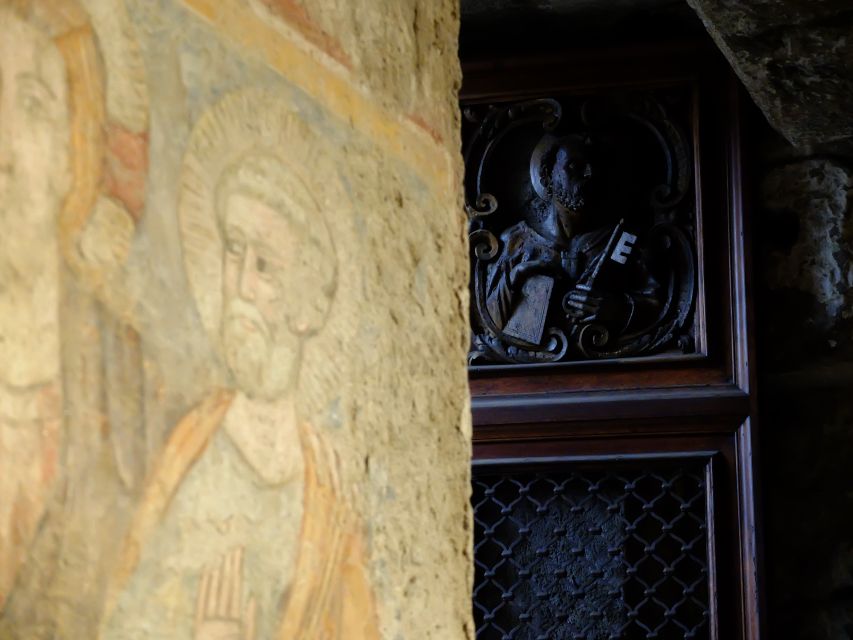
The audio guide is most valuable here because it helps you notice details that are easy to overlook when you’re just looking around. People often describe the experience as short but powerful, which fits the reality of the site: you’re seeing a concentrated slice of history, not a long exhibition trail.
If you’re hoping for a tour guide to explain every condition—food, overcrowding, dampness, daily life in detail—know that this ticket is not built as a live narrative. The audio can give you context, but it won’t feel like a guided conversation. That matters if you want the gritty, daily-operational side of imprisonment. You’ll likely get a more architectural and interpretive experience than a fully forensic one.
And yes, the space is physically intense. It’s described as not suitable for people with mobility impairments, which tells you something about the movement and the underground nature of the visit.
The big connections: Rome’s enemies, and the Peter-and-Paul tradition
Carcer Tullianum is famous for more than one reason, and that’s what makes it more than a routine historical stop. The audio and interpretive focus connect the prison to famous prisoners and to major Christian traditions.
On the classical side, you’ll hear about prisoners such as Jugurtha, king of Numidia, and Vercingetorix, king of the Gauls defeated by Julius Caesar. Those names are not just trivia. They help you picture Rome’s power at its most absolute—people conquered by force ended up here while the empire decided their fate.
On the religious side, the prison is tied to the belief that Peter and Paul were held here. You’ll also encounter references to Christian martyrs and to the idea that followers of Catiline met their end there. The audio helps connect those traditions to the physical spaces you’re standing in, which is what turns a “room” into a “story.”
One balanced way to look at it: this place is emotionally charged, but the prison experience may feel focused on the site’s interpretive themes rather than on guiding you into prayer. If your goal is a strictly spiritual visit, you might find that the museum-style presentation doesn’t give you the quiet space you want. Still, the setting itself can carry enough weight to make it meaningful.
How long to plan: a short stop that still needs your attention
The visit is designed to fit into a day—your ticket is valid 1 day—and the on-site time often feels compact. Many people report around an hour inside, which tracks with the size of the prison and museum areas.
I’d plan for:
- time to find the entrance and check in
- app setup and any download time
- the actual prison walk (short, but don’t rush it)
Because the audio setup can take longer than expected, I recommend treating the “inside time” as the minimum. Your real time block might be closer to 1.5 hours if you hit any app friction.
The good news: the pace is flexible once you’re inside. You don’t need to keep up with a guide or stick to a group bottleneck. That’s a plus in a place where you may want to slow down.
Who should book this, and who might want a different format
This experience is a strong fit if you:
- like sites connected to Roman history and want names tied to real places
- enjoy self-guided travel with multilingual audio
- want a meaningful stop that doesn’t swallow your entire day
- appreciate architecture and artistic details more when someone points them out
You may want to think twice if:
- you dislike phone apps and worry you won’t manage the setup smoothly
- you need a live guide’s constant clarification and pacing
- you have mobility limitations, since it’s stated as not suitable for people with mobility impairments
- you’re traveling with a stroller or large luggage
If you fall into the “I need a human voice” category, you might consider pairing this with another Rome experience that has a live guide. Here, the audio is doing most of the interpretation work.
My booking call: should you get the Mamertine Prison audio ticket?
Yes, I’d book it if you want a compact, powerful Rome stop and you’re comfortable using your phone for audio. The combination of entry included plus a multilingual guide makes it good value, and the prison setting creates a level of atmosphere you can’t replicate from a photo.
I’d hesitate only if you know you’ll struggle with app downloads or if you strongly prefer guaranteed, device-free interpretation. The experience can be impacted by signal and setup steps underground, so go in with a practical mindset: charge your phone, bring headphones, and give yourself time to get the app running before you go down into the prison spaces.
FAQ
How much is the Mamertime Prison entrance ticket with audio?
It costs about $11 per person.
How long is the visit?
The activity is listed as 1 day. On-site time is typically short, with many visitors completing the prison walk in about an hour.
What’s included with the ticket?
You get entry to Carcer Tullianum and a multilingual audio guide.
What languages are available on the audio guide?
The audio guide is available in Italian, English, French, German, Spanish, and Portuguese.
Where do I go to start?
Go to Mamertine Prison in Rome. Plan to arrive 15 minutes before the activity start time.
Do I need a live tour guide?
No. A tour guide is not included. You’ll do it self-guided with the audio guide, with staff support for check-in.
How do I listen to the audio guide?
You need to download the Vatican&Rome App from the App Store or Play Store to access the audio on your phone.
Is the prison experience suitable for people with mobility impairments?
No. It is listed as not suitable for people with mobility impairments.
Are strollers or large bags allowed?
No. Baby strollers are not allowed, and luggage or large bags are not allowed.