REVIEW · COPENHAGEN
The Philosopher’s Last Walk: An audio tour on the life of Søren Kierkegaard
Book on Viator →Operated by VoiceMap Audio Tours · Bookable on Viator
Kierkegaard’s Copenhagen starts with one turn of a corner. This self-guided GPS audio tour on Søren Kierkegaard’s life strings together real streets and famous spots, with English narration delivered through the VoiceMap app. You’ll move at your own speed, and you can revisit it later thanks to lifetime access.
What I like most is the writing style: it feels witty and informative, with details that connect Kierkegaard’s world to the places you’re actually passing. I also really value the practical setup—offline audio plus offline maps and geodata means you’re not stuck hunting for signal. One catch: you’ll need your own smartphone and headphones, since they’re not included.
In This Review
- Key highlights you should care about
- A philosophy walk built for your pace
- Price and value: why $9.99 can make sense
- Getting started at Nytorv 2, then finishing at Kapelvej 2
- The route: from family home to Assistens Cemetery
- Stop-by-stop: what each part adds to the walk
- 1) Starting at Kierkegaard’s family house
- 2) Passing a church on the way
- 3) Rundetårn: a landmark built for perspective
- 4) Copenhagen University: ideas in the middle of the city
- 5) The Cathedral: scale and stillness
- 6) The bridge: moving across the story
- 7) Lakes along the route: a calm stretch
- 8) Entering Assistens Cemetery
- 9) Ending at the burial place
- How VoiceMap makes this work offline
- What I’d recommend based on the writing style
- Who should book this audio tour (and who might not)
- Should you book The Philosopher’s Last Walk?
- FAQ
- FAQ
- How long is the Philosopher’s Last Walk?
- Is the tour offered in English?
- Do I need an internet connection during the tour?
- What does the $9.99 price include?
- Where do I start and where does the tour end?
- What do I need to bring with me?
- Can I cancel for a full refund?
Key highlights you should care about

- 1 to 1.15 hours on foot: enough time to connect the dots without eating your whole day
- Offline audio, maps, and geodata: plan once, then walk without worrying about reception
- English narration: you can follow along without language friction
- A “start where you are” GPS approach: directions help you get going at the right spot
- Stops built around major Copenhagen landmarks: family home to cemetery, one connected route
- Lifetime access in the VoiceMap app: repeat it later, or re-walk parts at a slower pace
A philosophy walk built for your pace
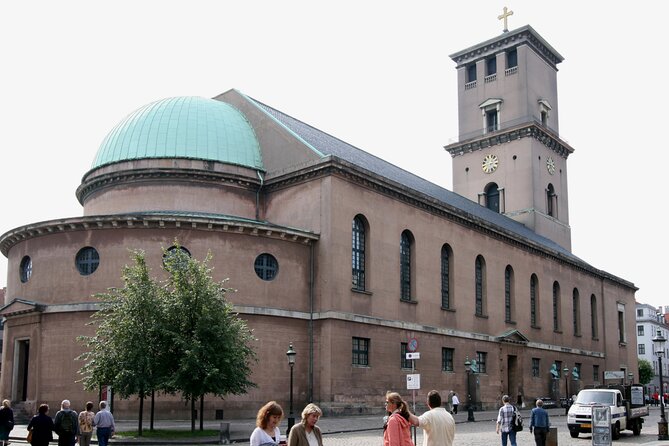
This is not a sit-down audio playlist. It’s a walking route through Copenhagen, designed so you can pause, speed up, or linger without a group schedule calling the shots. The tour runs about 1 hour to 1 hour 15 minutes, which is a sweet spot in a city where you’ll be tempted to keep wandering anyway.
I like that the experience is structured around you moving through the city. Instead of thinking about Kierkegaard as a name on a book spine, you’re hearing him discussed while you physically pass places tied to his life—starting at his family house, then continuing past a chain of landmarks until you finish at his burial place in Assistens Cemetery.
If you’re the type who enjoys learning while walking, this format fits well. If you prefer a live guide or a deep lecture, you might feel the trade-off is more atmosphere than classroom—but the route does give you built-in “chapters” as you reach each new stop.
You can also read our reviews of more tours and experiences in Copenhagen.



Price and value: why $9.99 can make sense

At $9.99 per person, this sits in the low-cost category for a curated city walk. The real value isn’t just the price tag—it’s the package you’re getting with it:
- Lifetime access to the English tour
- VoiceMap app access on Android and iOS
- Offline access to audio, maps, and geodata
- Self-guided GPS flexibility to explore at your own pace
- Directions to the starting point so the tour begins when you’re in the right place
That means you’re not paying just for one outing. You’re paying for something you can return to when you have more time, when you want to re-read the story in your own rhythm, or when you’re back in Copenhagen and want a different walking day without paying again.
The main cost you should factor in is not financial—it’s practical. You’ll want a working smartphone battery and a comfortable set of walking headphones, since those are not included.
Getting started at Nytorv 2, then finishing at Kapelvej 2
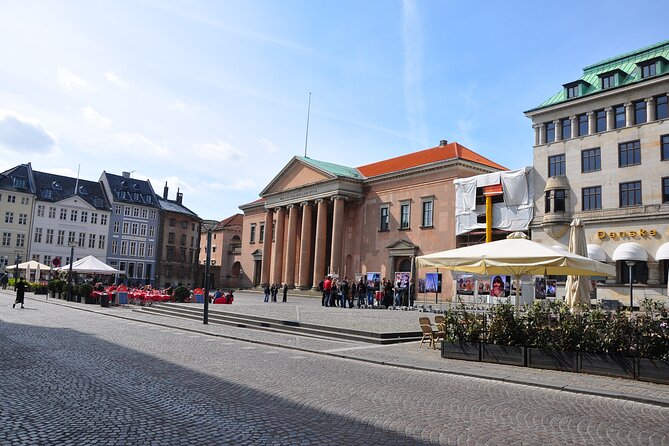
The tour has a clear start and finish, which matters more than people think with audio walking routes.
- Start: Nytorv 2, 1450 København, Denmark
- End: Søren Kierkegaard Gravesite, Kapelvej 2, 2200 København, Denmark
The end point being the gravesite in Assistens Cemetery is a nice “full-circle” way to close the walk. You’re not stopping at a random landmark and walking back—you end at the specific place the tour is built toward.
The tour is listed as near public transportation, so you should be able to plug it into a wider Copenhagen day without a taxi expense. And because it’s set up as private for your group, it works best when you’re not trying to coordinate with a crowd.
Also note the tour end location is listed with opening hours showing 12:00 AM to 11:59 PM for the dates listed. Even if you don’t treat that as a guarantee for all circumstances, it’s a helpful indicator that this is intended to be flexible.
The route: from family home to Assistens Cemetery
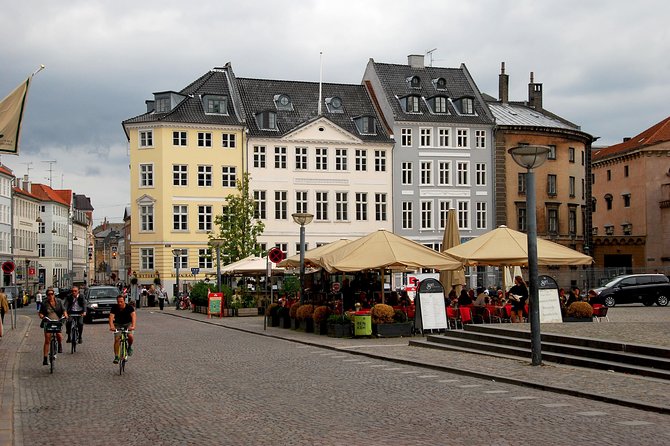
Here’s the flow you can expect as you walk:
1) Søren Kierkegaard’s family house (your first stop)
2) You pass a church
3) You pass Rundetårn
4) You pass Copenhagen University
5) You pass the Cathedral
6) You go along a bridge
7) You pass the lakes
8) You enter Assistens Cemetery
9) You end at Søren Kierkegaard’s burial place
Even without being told every detail in advance, this sequence is smart. It moves you from an origin point, through major city anchors, and then into a quieter final setting. That pacing helps the narration land, because the environment changes as the story does.
The tour also gives you a lot of “visual anchors” to keep your brain engaged. You’re not just walking from one generic street corner to another—you’re moving past recognized Copenhagen landmarks, so each audio segment feels grounded.
Stop-by-stop: what each part adds to the walk
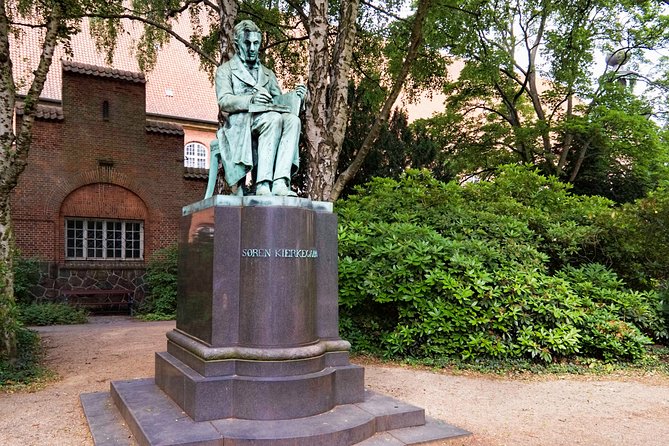
Below is how each stop tends to shape your experience, and what I’d watch for as you go.






1) Starting at Kierkegaard’s family house
You begin at the family house, which is the tour’s emotional and narrative starting line. This matters because it sets expectations right away: you’re not starting in the middle of the story. You get the sense that the city walk is tracing life stages, not just ticking off sights.
Practical tip: take a minute before you start moving. If your headphones are in and the audio is running, you’ll miss less.
2) Passing a church on the way
Next comes a church stop along the route. Even when the exact building isn’t the main focus, churches in Copenhagen often act like time markers in city walks—quiet, distinct, and good for slowing down. Expect the narration to connect this kind of setting to ideas and themes that fit the person the tour is about.
Why this works: audio + architecture is an easy combo. You’ll likely get more out of the segment if you stop walking for 30 seconds and actually look up.
3) Rundetårn: a landmark built for perspective
When the route passes Rundetårn, you’re hitting one of Copenhagen’s strongest visual identifiers. This stop is a natural “big scene” moment. A tower changes how you orient yourself, and it helps the tour feel like a guided walk through the real city, not just audio in your ears.
If you’re prone to zoning out while walking, this is the place to stay present. Look at how the tower sits in the surrounding area, then listen to what the narration ties to this point in the walk.
4) Copenhagen University: ideas in the middle of the city
Passing Copenhagen University shifts the tone from landmarks to learning spaces. The tour’s topic is Kierkegaard, so it makes sense that the route includes a place strongly associated with education and intellectual life.
Even if you only pass by the exterior, you’re still benefitting from the way the story is staged: the walking route links the philosopher’s life to the city’s academic footprint.
5) The Cathedral: scale and stillness
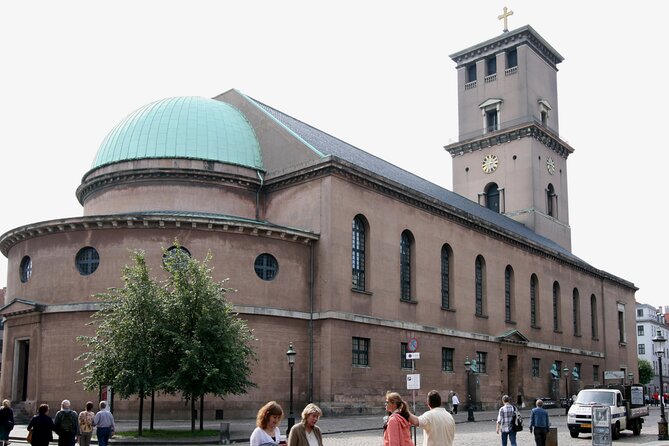
Next, you pass the Cathedral. Cathedrals usually bring scale and stillness, and those are good conditions for listening. If the narration gets more reflective at this stage, the environment supports it.
Practical tip: this is also a good time to check your phone battery level. You’ll want power for the GPS tour and offline playback until the end.
6) The bridge: moving across the story
A bridge is where the walk naturally turns into motion. Bridges are also where you can get satisfying sightlines. Expect this segment to feel like a transition, since you’re literally moving across from one part of the city experience into another.
If you like photos, this is an easy place to snap one—just don’t let the camera interrupt the audio at the exact moment the tour is making its point.
7) Lakes along the route: a calm stretch
You pass the lakes. This is where the tour likely relaxes the pace visually. Water and open space tend to make walking feel lighter, and it’s a great break between the denser landmark moments and the quiet gravestone setting ahead.
Use this part to slow down. If you walk too fast through the calm stretches, you’ll miss some of the mood the narration is trying to set.
8) Entering Assistens Cemetery
Then you go into Assistens Cemetery. This is the tour’s turning point. The setting shifts from sightseeing to stillness, and that changes how you’ll hear the story in your headset.
If you’re sensitive to quiet environments, treat this like an unhurried segment. You’ll probably get more from the audio if you walk gently and avoid rushing through.
9) Ending at the burial place
You finish at Søren Kierkegaard’s burial place. Ending there is powerful because it gives the tour closure. You’re not just learning about someone; you’re ending at the physical end of their story.
It’s also a useful travel tactic: you don’t have to plan what to do afterward in the same area. You can simply step out, take a breath, and decide what the rest of your day holds.
How VoiceMap makes this work offline
This tour is delivered through the VoiceMap app, with:
- Offline access to audio, maps, and geodata
- Directions to the starting point, so you’re ready at the right location
- Self-guided GPS tour that lets you explore at your own pace
For you, the biggest advantage is friction-free walking. If you download ahead of time (and keep your phone charged), you can spend your attention on the city rather than on signal bars.
One more practical point: since you need your own smartphone and headphones, I’d plan to arrive with those ready. Bring a small towel or a phone-protecting case if Copenhagen weather is doing its unpredictable thing.
What I’d recommend based on the writing style
The narration is described as well-written and well-delivered, and it’s also noted for being witty. That combination is exactly what you want for a philosophy walk: it keeps the topic human, and it avoids turning your day into a textbook recital.
You can also use the narration style to your advantage. If you’re the kind of person who forgets details as you move, aim to listen fully at the “chapter turns”—start at the family house, then treat Rundetårn, the Cathedral, and Assistens Cemetery as your main anchor points.
If you’ve heard the name Kierkegaard before but don’t know the basics, this kind of introduction can be the right kind of first contact. It’s structured, so you’re not left wondering where to begin.
Who should book this audio tour (and who might not)
This experience is a good fit if:
- You want a 1-hour Copenhagen walk with built-in storytelling
- You like learning in short segments while moving through real places
- You prefer self-guided flexibility over a fixed group pace
- You want to revisit the tour later thanks to lifetime access
It may be less ideal if:
- You don’t like wearing headphones for long stretches (you’ll need them)
- You strongly prefer live explanations or in-person guiding
- You’re hoping for a tour that includes admission fees or tickets (none are included)
Should you book The Philosopher’s Last Walk?
If you’re spending time in Copenhagen and want a smart, low-cost way to connect a major figure to the city itself, I think this is worth booking. The price is modest, the setup is practical, and the route has a satisfying arc—from beginnings at a family home to closure at the cemetery.
Book it if you value offline audio, GPS-driven pacing, and narration that’s witty and well-written. Skip it only if you don’t want to bring your own phone and headphones, or if you’d rather have a live guide.
FAQ
FAQ
How long is the Philosopher’s Last Walk?
It’s about 1 hour to 1 hour 15 minutes.
Is the tour offered in English?
Yes, the tour is offered in English.
Do I need an internet connection during the tour?
No. You get offline access to audio, maps, and geodata in the VoiceMap app.
What does the $9.99 price include?
Included is lifetime access to the English tour, the VoiceMap app for Android and iOS, and offline access to audio and maps, plus directions to the starting point.
Where do I start and where does the tour end?
You start at Nytorv 2, 1450 København and end at Søren Kierkegaard Gravesite, Kapelvej 2, 2200 København.
What do I need to bring with me?
You’ll need your own smartphone and headphones. Transportation and food/drink are also not included.
Can I cancel for a full refund?
Yes. Free cancellation is available, and you can cancel up to 24 hours in advance for a full refund.