REVIEW · PARIS
Marais self-guided audio tour: the neighborhood that has it all
Book on Viator →Operated by VoiceMap Audio Tours · Bookable on Viator
Le Marais has more than one kind of Paris. This self-guided VoiceMap audio tour turns a simple walk into an hour of local stories, with the freedom to pause, look, and keep going when you feel like it.
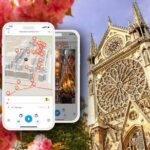
I like that you get offline access to maps and audio, so you’re not stuck hunting for signal. I also like the way the route threads together big sights and everyday Le Marais streets without forcing you into a rigid group schedule.
The one thing to consider: you will need your own smartphone to run the app, and if you prefer a human guide and real-time Q and A, an audio walk may feel too self-directed.
In This Review
- Key things that make this Le Marais audio walk worth your time
- Le Marais, told one stop at a time
- Price and time: what you’re actually buying for $14.99
- VoiceMap offline access: the Paris stress-saver
- Getting oriented fast: start Pont Marie, finish at the Archives area
- Walk the itinerary like a story (and what each stop adds)
- Le Marais itself
- Pont Marie: a bridge with roots in 1635
- Hôtel de Sens: a passing glance with a purpose
- Fontaines Wallace: clean water for anyone
- Le Marais pastries and signature stops
- Saint Gervais and Saint Protais: a church with centuries stacked on one site
- Saint-Paul Saint-Louis: Richelieu’s stamp on a long timeline
- Hôtel de Sully courtyard and garden: the calm side of the Marais
- Place des Vosges: brick and stone symmetry with a central statue
- Maison de Victor Hugo: author history you can walk by
- Historical Library of the City of Paris
- Pletzl and the Agoudas Hakehilos Synagogue: Jewish Le Marais context
- L’As du Fallafel: a practical place to stop for lunch
- Musee des Archives Nationales: ending near big national history
- Who this audio tour suits best (and who might prefer something else)
- Practical tips to make it feel effortless
- Should you book this Le Marais audio tour?
- FAQ
- How long is the Marais self-guided audio tour?
- What does the tour cost?
- What app do I need to use the audio tour?
- Can I download the tour and use it offline?
- Where does the tour start and end?
- Do I need a smartphone to take the tour?
- Are there any entrance tickets included for museums or attractions?
- What is the cancellation policy?
Key things that make this Le Marais audio walk worth your time
- Offline VoiceMap audio and maps so you can wander without connectivity stress
- A one-hour recorded experience that you can stretch out as long as you want
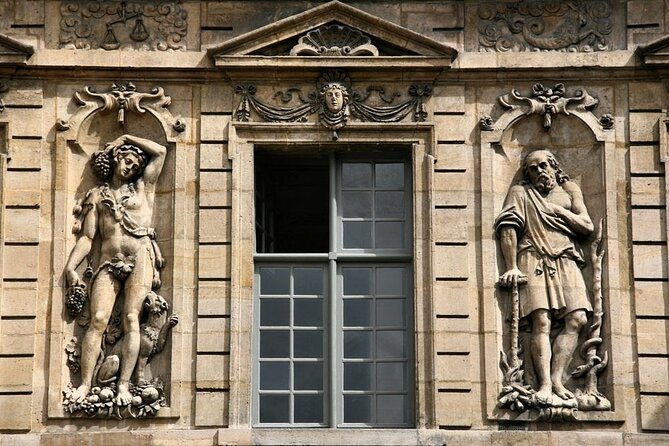
- A route packed with variety: bridges, fountains, churches, courtyards, synagogues, and archives
- You follow the neighborhood like a story instead of bouncing randomly from landmark to landmark
- Clear, walkable stopping points from Pont Marie to the Archives area
- Value pricing that buys history + direction, not museum tickets
Le Marais, told one stop at a time
Le Marais is the kind of neighborhood where you can feel multiple decades just by turning a corner. This audio tour is designed for that. Instead of treating Le Marais like a checklist, it builds a steady rhythm: you walk, you pass a place, and the narration adds context you’d otherwise miss when you’re just trying to get your bearings.
A key benefit is pacing. The recording is about one hour, but the real win is that you control the speed. If you want to linger at Place des Vosges or take extra time near the churches, you can. If you’d rather skim past the shops and keep moving, you can do that too.
The route is also a smart way to avoid the worst “follow the group” feeling. There’s no rush to keep up, and you can pause for photos, coffee, or simply watching street life.
You can also read our reviews of more tours and experiences in Paris.



Price and time: what you’re actually buying for $14.99
At $14.99 per person with an hour of content, you’re not paying for guided interpretation inside a museum. You’re paying for:
- an organized walk with stops you can find
- offline audio that plays on your phone
- history nuggets that turn familiar streets into something to pay attention to
That makes it good value for visitors who like to explore at their own speed. You’re also not spending extra money on entrance fees because the tour doesn’t include museum tickets along the way.
If you only have a small block of time in Paris and you want more than a stroll, this fits. If you want a deep, multi-hour guided lesson with detailed Q and A, you may want a traditional tour. But for a self-guided history and orientation pass through Le Marais, the cost lines up with what you get.
VoiceMap offline access: the Paris stress-saver
Paris is great, but getting directions in the wrong moment can be annoying. This tour helps because the VoiceMap app includes offline access to audio and maps. The idea is simple: download ahead, then walk without worrying whether your signal will cooperate.
Practical tip: do the setup before you head out. Open the VoiceMap app in advance, confirm the download, and give yourself a moment to test audio volume. You’ll thank yourself halfway through when you’re standing near a church façade or staring at the brick and stone balance at Place des Vosges.
Also, because it’s self-guided, you get less pressure. No one is waiting for you, and the story doesn’t reset just because you took a different photo angle.
Getting oriented fast: start Pont Marie, finish at the Archives area
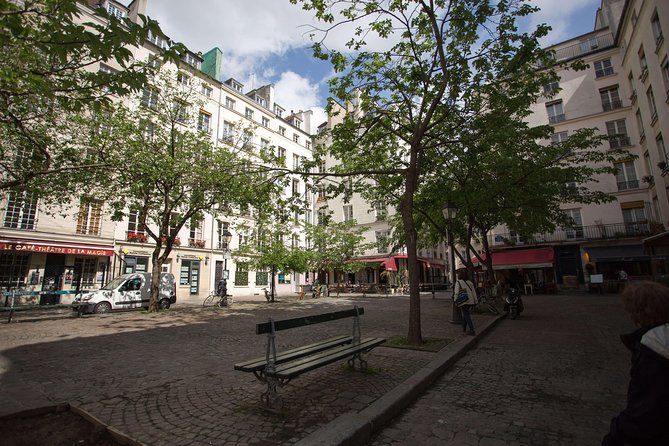
The tour starts at Pont Marie (75004 Paris) and ends at 58 Rue des Archives, 75003 Paris. That end point is a big clue: the walk is built to carry you from the river-crossing world into the more institutional and historical side of Le Marais.
Both spots are convenient for transit access, and the tour is available all day in the sense that the listed opening hours run 12:00 AM to 11:59 PM during the validity period shown. So the best time becomes your decision. If you want calmer streets, go earlier or later in the day. If you want lively storefront energy, go when shops and neighborhoods feel most alive.
Walk the itinerary like a story (and what each stop adds)
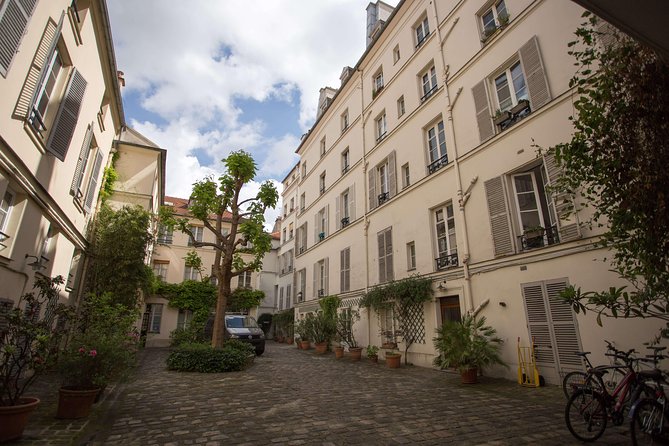
Here’s how the route unfolds, and what’s worth noticing at each point.






Le Marais itself
The tour doesn’t start with a single monument. It starts with the neighborhood, Le Marais. That’s actually helpful. As you begin the audio, you’re primed to notice why this area feels so layered—old streets, old institutions, and daily life happening right alongside major Paris landmarks.
The goal here is mindset: slow down a touch and let the story guide your attention.
Pont Marie: a bridge with roots in 1635
Next you pass Pont Marie. There has been a bridge here since 1635, which makes it one of the oldest bridges in Paris. The interesting detail is that the first versions were made of wood, like almost all bridges at the time.
When you’re at the bridge, look at the street-level view and the way the area channels movement. You’ll feel how the river crossing became a practical lifeline long before cars and metro lines existed.
Hôtel de Sens: a passing glance with a purpose
You’ll also pass Hôtel de Sens. Even when you’re not stopping for a photo, audio tours like this are often most useful when they explain what you’re seeing in plain language—so you don’t just register a fancy façade as decorative and move on.
If you like architecture, this is a good “keep your eyes open” moment.
Fontaines Wallace: clean water for anyone
Then comes Fontaines Wallace. These water fountains were financed by Richard Wallace, an Englishman who wanted clean water available to anyone who needed it.
This stop works well because it reframes street furniture as social history. It’s not just a pretty fountain. It’s an example of someone funding public good in a city that needed it.
Le Marais pastries and signature stops
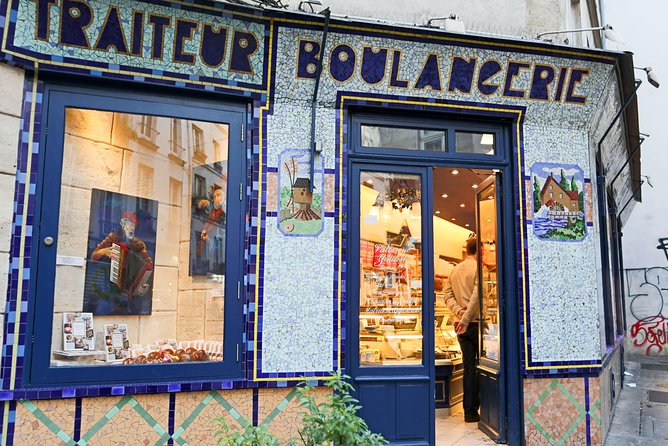
The tour passes by several recognizable food landmarks, including:
- Patisserie Au Petit Versailles du Marais
- Au Bourguignon du Marais
- Aux Merveilleux de Fred
You don’t get a food crawl promise here. But these stops matter because Le Marais is still a working neighborhood. If you’re the type who likes to see how Paris lives between monuments, these pass-bys keep things grounded.
Saint Gervais and Saint Protais: a church with centuries stacked on one site
At Eglise Saint Gervais Saint Protais, you’re dealing with an old parish. There’s been a church at the site since the 500s. The narration also points out that the third version started in 1495, and construction lasted for 150 years.
That’s the kind of timeline detail that changes how you look. You stop seeing one building and start imagining generations returning to worship in nearly the same spot.
If you want a practical tip: use this moment to slow down. Churches reward attention, and you’ll likely want a quick look around the façade before you move on.
Saint-Paul Saint-Louis: Richelieu’s stamp on a long timeline
Next is Eglise Saint-Paul Saint-Louis. The site’s first church was built around 650. A second one followed in 1125, and then another in 1430. The first stone for the current version was laid by Richelieu in 1627.
This stop makes a strong point: religious architecture in Paris is often layered. You’re not just seeing a “current church.” You’re seeing a long chain of rebuilds and decisions.
Hôtel de Sully courtyard and garden: the calm side of the Marais
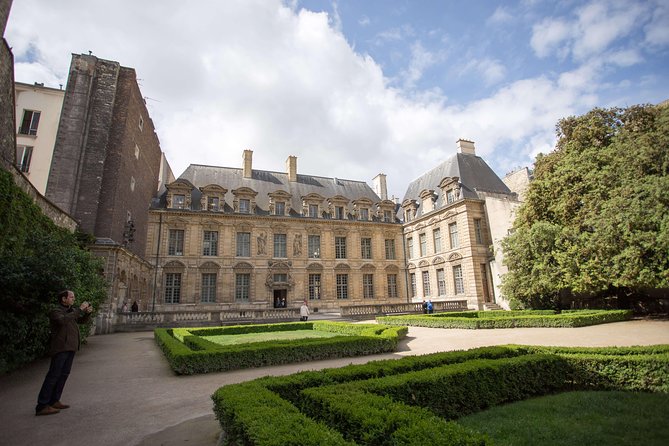
The tour brings you to Cour et jardin de l’Hotel de Sully. The Hotel de Sully was built between 1625 and 1630. The owner, Sully, was a minister of Henri IV, and he spent lavishly to complete the interior.
Even if you can’t fully access or tour every area, the courtyard and garden setting helps you feel what elites valued: controlled calm, clean geometry, and a sense of space.
Pause here if you like quiet breaks during walks. You’ll get a breather before the bigger public squares.
Place des Vosges: brick and stone symmetry with a central statue
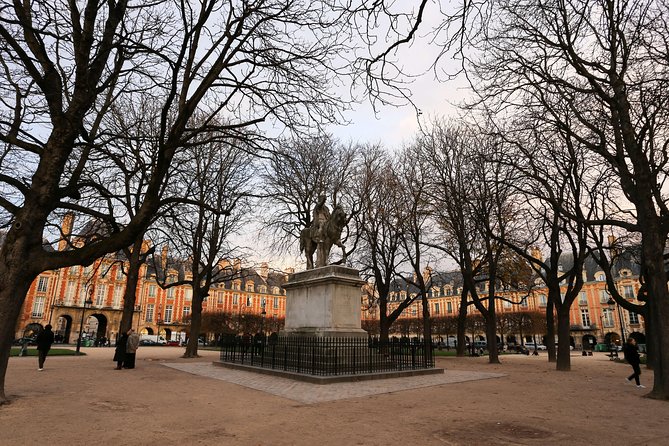
One of the most visually balanced stretches in central Paris is Place des Vosges. It was built between 1605 and 1612 and has always been known for its mixture of brick and stone with stately balance on all sides. In the center stands a statue of Louis XIII.
This is also one of those places where you might naturally stop because the design makes you. The audio context makes it easier to understand what you’re seeing—planned symmetry, not random street growth.
If you’re short on time, you can still do this stop well. Just take a quick perimeter look first, then return to the center for the statue moment.
Maison de Victor Hugo: author history you can walk by
Next is Maison de Victor Hugo. Victor Hugo lived from 1802 to 1885. He published his first novel in 1823 and was prolific throughout his life. His most famous works mentioned here include Les Misérables and The Hunchback of Notre Dame.
This isn’t a museum stop in the audio. It’s a street-level reminder that huge literature came from real addresses, real neighborhoods, and real daily life.
Historical Library of the City of Paris
You pass by the Historical Library of the City of Paris. Even without a detailed stop described, this is a good “slow down and read the building” moment. Libraries and archives buildings are meant to be noticed.
If you like documentary-style culture—maps, city records, and history you can hold—this stretch can feel especially satisfying.
Pletzl and the Agoudas Hakehilos Synagogue: Jewish Le Marais context
The audio then moves through the Pletzl, a historically Jewish part of Le Marais, and passes by Agoudas Hakehilos Synagogue.
This section works best if you’re paying attention to the way neighborhoods preserve identity. The narration doesn’t just name the synagogue; it places you in a particular cultural geography of Le Marais.
Take a minute here. This is not the kind of area you should sprint through if you want the full effect of the audio.
L’As du Fallafel: a practical place to stop for lunch
The tour passes by L’As du Fallafel. That’s useful because it’s a place you can actually use. If you’re walking for an hour and you want one convenient break, this is the kind of stop that can become your meal plan without derailing your route.
Even if you don’t eat right away, it’s a nice landmark for timing. You’ll know you’re around the middle-late portion of the route.
Musee des Archives Nationales: ending near big national history
Finally, you reach Musee des Archives Nationales and the grand entrance to the French National Archives. The archives are housed in an old Hôtel Particulier called Soubise et Rohan.
This end point is a strong finish because archives are the “source material” side of history. You’ve walked through churches, fountains, squares, and cultural streets. Now you end at a place where records matter.
The best move at the end is to take a moment at the entrance area, then decide what you want next—another short walk, a transit hop, or a museum time slot if you choose to go in.
Who this audio tour suits best (and who might prefer something else)
This Marais audio tour works well for you if:
- you like independent exploring and don’t want a group pace
- you want offline reliability
- you enjoy history that’s connected to what you can actually see on the street
- you want a route that mixes monuments with everyday neighborhood life
It might feel less ideal if:
- you want museum ticketing included
- you need a guide to explain on the spot
- you’d rather get one deep topic with lots of Q and A instead of many quick stops
Practical tips to make it feel effortless
A few things help this tour go smoothly.
Wear walking shoes. Le Marais is dense, and the route is meant for strolling rather than museum-carpet pacing. Also, plan one small buffer. Even though the recording is about an hour, real Paris walking always adds a little time.
If you’re the type who likes photos, decide where you’ll pause most: for many people it’s Pont Marie, Place des Vosges, and the church façades. Putting your effort into a few photo moments makes the rest of the walk feel relaxed instead of frantic.
And remember: the best part of a self-guided audio walk is that you can stop when something catches your eye. The itinerary is structured, but your attention drives the experience.
Should you book this Le Marais audio tour?
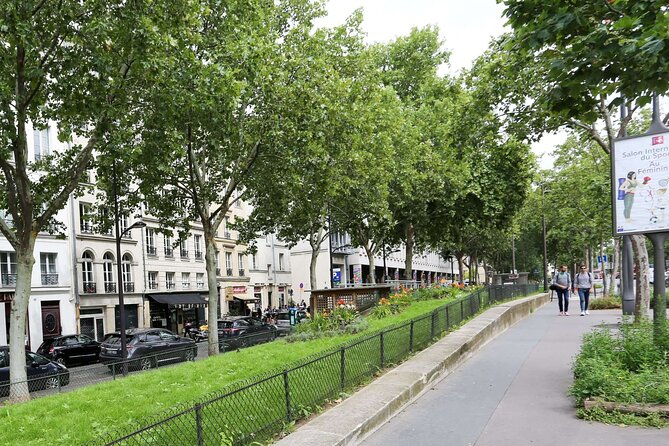
I’d book it if you want a practical, low-stress way to understand Le Marais in about an hour of listening, with the freedom to linger longer. The offline VoiceMap setup makes it easy to explore without checking your phone every two minutes. And the route’s blend—bridge history, public fountains funded by Richard Wallace, long-running church sites, Place des Vosges, and ends at the archives—gives you a wide view without overwhelming you.
Skip it only if you need a live guide for deeper explanations or if you’re looking for a ticket-included museum day. This is a smart street-level story walk, not a full-day guided program.
FAQ
How long is the Marais self-guided audio tour?
The recorded experience is about 1 hour. You can take more time and linger at the stops as you like.
What does the tour cost?
It costs $14.99 per person.
What app do I need to use the audio tour?
You use the VoiceMap app. You’ll receive an online ticket with instructions and a code after you book.
Can I download the tour and use it offline?
Yes. It includes offline access to audio, maps, and geodata.
Where does the tour start and end?
It starts at Pont Marie, 75004 Paris and ends at 58 Rue des Archives, 75003 Paris.
Do I need a smartphone to take the tour?
Yes. A smartphone is not included, and you’ll need it to use the VoiceMap app.
Are there any entrance tickets included for museums or attractions?
No. Tickets or entrance fees to museums or attractions are not included.
What is the cancellation policy?
This experience is non-refundable and cannot be changed for any reason.