REVIEW · VIRGINIA
Old Town Alexandria Tour: A Self-Guided Audio Tour
Book on Viator →Operated by VoiceMap Audio Tours · Bookable on Viator
Old Town Alexandria in one hour. This self-guided VoiceMap audio tour threads together Colonial and Civil War era sights without the hassle of a group schedule.
I especially love how the route moves from “major name” landmarks to smaller, story-rich stops—like the Spite House and the Stabler-Leadbeater Apothecary. You’ll also get a smart sense of place by starting at the Old Town Farmers’ Market and ending at the Torpedo Factory area, where the waterfront feel finishes the story.
One thing to consider: the walking directions can feel vague about whether you’re turning into a side street or staying on a main street, so if you’re not used to Alexandria’s street layout, keep Google Maps handy.
In This Review
- Key highlights you’ll notice fast
- Old Town Alexandria, compressed into a well-paced audio walk
- Price and value: what $8.99 gets you (and what it doesn’t)
- Start at 300 King St: the Old Town Farmers’ Market begins the story
- The John Carlyle’s House stop: a Mount Vernon design connection
- Gadsby’s Tavern: Washington’s Alexandria and 18th-century costuming
- Spite House Alexandria and the Christ Church connection
- Stabler-Leadbeater Apothecary: from drug store to town health
- Captain’s Row cobblestones: millionaires now, sea captains once
- Torpedo Factory Art Center: where your walk ends
- How to make VoiceMap work well on this route
- Logistics that affect your enjoyment (more than you think)
- Who this audio walk suits best (and who might want a different plan)
- Should you book this Old Town Alexandria audio tour?
- FAQ
- How long is the Old Town Alexandria self-guided audio tour?
- Where does the tour start and end?
- What app do I need to use the tour?
- Can I use the tour offline?
- Do I need to bring my own headphones?
- Are museum entrance fees included?
- Is the tour in English?
- Can I pause or control the pace while listening?
- What is the cancellation policy?
Key highlights you’ll notice fast
- Offline audio and maps mean you can walk without constantly hunting for signal
- A tight 1 to 1 hour 15 minute route keeps the pacing efficient
- Big historical moments, plus oddball details like a property built to spite neighbors
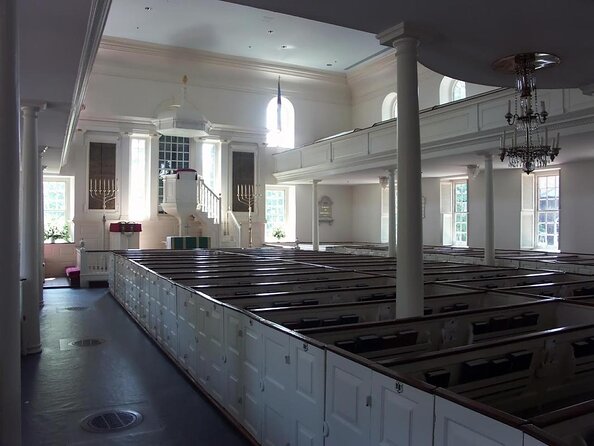
- Washington-linked stops include Gadsby’s Tavern and nearby Christ Church
- Cobblestone walking on Captain’s Row gives you that old-port texture underfoot
- Stops are in a logical flow from King Street toward the waterfront and Torpedo Factory
Old Town Alexandria, compressed into a well-paced audio walk
This tour is built for people who want the “greatest hits” of Old Town Alexandria, but without paying museum ticket prices or waiting for a group. At $8.99, you’re buying an audio guide experience rather than access to attractions—so the value comes from understanding what you’re seeing as you stroll.
The walk is short: about 1 hour to 1 hour 15 minutes. That’s long enough to feel like you covered ground, but short enough that you’re not exhausted by the time you reach the waterfront.
It’s also self-paced in a way that matters. The audio is designed so you can pause and adjust as you need, which is ideal if you want photos, a quick look into a shop window, or just a slower pace.
You can also read our reviews of more tours and experiences in Virginia.



Price and value: what $8.99 gets you (and what it doesn’t)

Let’s be clear about value. You pay $8.99 per person, and you get lifetime access to the audio tour in English. You also get offline access to the audio, maps, and geodata through the VoiceMap app.
What you should budget separately is anything that costs money on-site. The tour does not include food or drink, museum/ticket entrance fees, or transportation. In other words, you can plan it as a walk that teaches you what to look for, and then decide case-by-case whether you want to spend extra time (and money) at any stops.
If you like “just enough” history while still moving, this is a smart buy. If you want long museum time, you may end up wishing the tour covered fewer things and more entry tickets.
Start at 300 King St: the Old Town Farmers’ Market begins the story
The tour starts at 300 King St, Alexandria, VA 22314, and it immediately orients you in the heart of Old Town. Then you move to the Old Town Farmers’ Market, a key anchor for the first chunk of the walk.
Here’s why that matters. Markets are where a town’s daily life shows up, not just its famous moments. This one is described as being as old as the city itself and still busy on Saturday mornings, so even if you don’t go on a Saturday, you can still picture how central this area is.
You’ll use this early stop to build your mental map before the tour shifts into big personalities and historic buildings. The experience flows better when you start with a place that feels like Alexandria’s present-day rhythm.
The John Carlyle’s House stop: a Mount Vernon design connection
One of the stops is John Carlyle’s House, and the tour connects it to the design influence on Mount Vernon. Even if you know Mount Vernon only from schoolbook history, this kind of local architectural linkage gives you a fresh angle.
Instead of treating the story as “Washington lived elsewhere,” you get a sense of how ideas and styles traveled in the region. It’s the kind of detail that sticks when you’re standing on the street and can glance at the building form while the audio explains the connection.
Drawback: since this is audio-led and you’re outside, you’ll want to keep your phone at ready height. If you’re constantly locking and unlocking your screen, you lose some of that “walk, listen, look” rhythm.
Gadsby’s Tavern: Washington’s Alexandria and 18th-century costuming
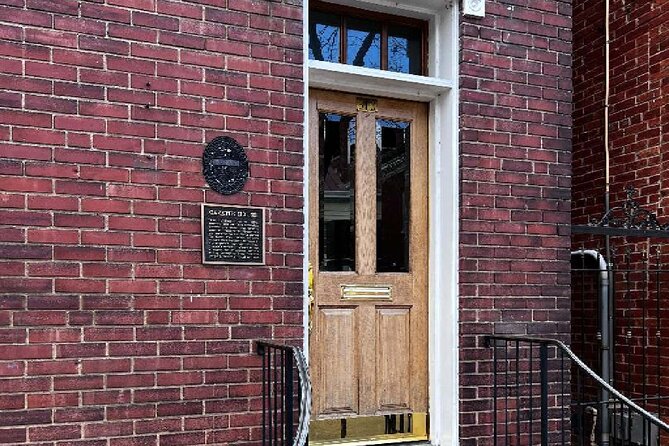
Next up is Gadsby’s Tavern, and the audio ties it to George Washington—he ate there, according to the tour details. You’ll also hear that the staff wear 18th-century costumes, which turns a regular historic site into more of a time-machine feeling.
This is one of the strongest stops for people who like character-driven history. Taverns were where politics, gossip, and news moved around. Even if you don’t go inside for a long visit, the audio sets you up to understand why this building matters.
Practical note: because costumed staff are mentioned, you might see a lively scene depending on timing. Just don’t count on a specific performance schedule. Treat it as a chance to see the “tavern vibe,” not a guarantee of a dramatic moment.
Spite House Alexandria and the Christ Church connection

As you continue along the riverside port area, you’ll see Spite House Alexandria—a property built to spite its neighbors. That’s such an Old Town Alexandria kind of story: human pettiness, architecture, and community drama all folded into one address.
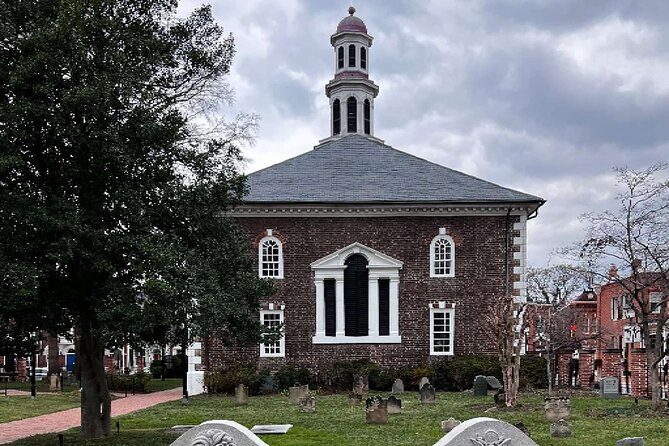
Then the route highlights where Washington visited and worshiped nearby at Christ Church. The tour points you toward the historic location tied to his time in Alexandria, so you’re not just looking at buildings. You’re learning what kind of civic and religious spaces mattered in that era.
This section does two useful things for your brain:
- It balances the big-name historical theme (Washington) with the small, local human theme (spite and neighborhood boundaries).
- It helps you connect streets and buildings to the social life of the period—how people lived, argued, and gathered.
If you want a photo stop here, plan one quick pause rather than standing in the road while you rewind audio. You’ll get better shots and keep the walk smooth.
Stabler-Leadbeater Apothecary: from drug store to town health
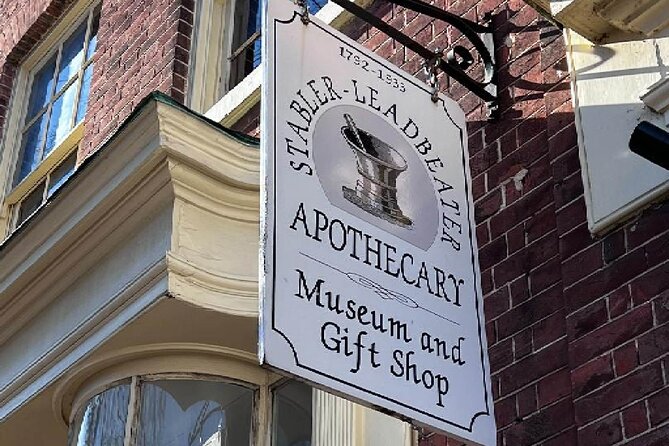
The tour includes Stabler-Leadbeater Apothecary Museum, described as a former drug store that cured residents’ ailments for more than a century. That’s a rare kind of history stop: not about presidents or wars, but about everyday health and care.
Why it’s valuable: it widens the story from politics to survival. In a town like Alexandria, medicines, apothecaries, and local cures were part of daily life just like shipping and commerce. Hearing this while you’re on the move makes it easier to remember that “history” is also about routine needs.
Even if you don’t stop for any interior time, the audio helps you interpret the building’s role. You start seeing the storefront logic—why people would come in, what kinds of services a town needed, and how long that function lasted.
Captain’s Row cobblestones: millionaires now, sea captains once

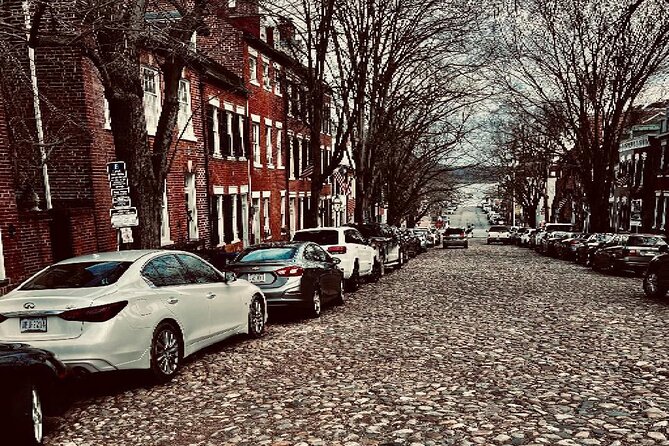
Heading toward the waterfront, the tour points out Captain’s Row and the historical cobblestones. The detail that millionaires live in homes that were once owned by sea captains is exactly the kind of contrast that gives Old Town Alexandria its personality.
This is where the walking experience gets extra physical. Cobblestones slow you down in a good way. Your steps become part of the rhythm, and the waterfront orientation makes the scenery feel wider and more open.
If you have any issues with uneven footing, go slowly here. Cobblestones look charming, but they don’t forgive rushed strides.
Torpedo Factory Art Center: where your walk ends
The tour ends in front of the Torpedo Factory Art Center at 105 N Union St. This finish works because it takes you from “old streets” toward a modern creative waterfront area—so your brain closes the loop between past industry and present-day Alexandria life.
The center lists hours as 12:00 AM–11:59 PM daily. Treat that as the posted window and double-check if you plan to linger, but as a meeting point for ending the audio walk, it’s convenient.
Before you stop the audio, take a beat to look around. The area around the end point gives you a sense of why Alexandria’s port history matters—without needing a ticket to understand it.
How to make VoiceMap work well on this route
This tour runs through the VoiceMap app (Android and iOS), and you get offline access to audio, maps, and geodata. That means you’re not stuck waiting for phone bars every time you turn a corner.
You still need to bring:
- your smartphone
- headphones (not included)
I recommend downloading everything while you still have good signal, then starting the walk with battery to spare. A short tour can still drain your phone if you’re constantly using the screen.
Two more smart habits:
- Use the map view if you get turned around on street types. The tour directions can sometimes refer to side streets versus main streets in a way that’s not obvious if you’re new to Alexandria.
- If you like control, use the pause/stop feature. One of the best parts of the experience is the ability to adjust your pace rather than feeling rushed.
Logistics that affect your enjoyment (more than you think)
Because it’s self-guided, you avoid some common tour problems like waiting at the curb for others. You also get privacy: it’s described as a private activity for your group, which tends to feel calmer even though you’re walking on your own.
Timing matters. With an hour to 1 hour 15 minutes target, you’ll enjoy it most if you don’t stack multiple long museum stops on the same day unless you’re okay extending your total time.
Also, transportation is not included. The meeting point is near public transportation, but your real decision is whether you’ll walk the whole route from where you park or take transit. Plan your start so you’re ready to begin promptly at 300 King St.
Who this audio walk suits best (and who might want a different plan)
This tour is a great match if you:
- want a low-cost way to understand Old Town Alexandria while walking
- like history that includes “how towns worked,” not just monuments
- prefer flexibility over strict schedules
- don’t want to pay multiple attraction tickets
You might want a different setup if you strongly prefer highly precise turn-by-turn directions by street name only. The route can be a little confusing about side streets versus main streets, so having an extra navigation tool can save frustration.
Should you book this Old Town Alexandria audio tour?
Book it if you want value and moment-to-moment context for what you’re seeing. The price is low, the route is short, and the offline audio keeps things smooth. The story mix—Washington sites, a spite-built house, an apothecary focused on health, and Captain’s Row cobblestones—gives you more variety than a typical “one famous landmark” walk.
Skip it (or supplement it) if you’re the type who gets annoyed by directions that don’t clearly label every street type. If that’s you, bring your maps app and you’ll be fine.
Bottom line: this is an easy way to get oriented in Old Town Alexandria and come away understanding the place, not just photographing it.
FAQ
How long is the Old Town Alexandria self-guided audio tour?
It’s listed as about 1 hour to 1 hour 15 minutes.
Where does the tour start and end?
It starts at 300 King St, Alexandria, VA 22314, USA, and it ends in front of the Torpedo Factory Art Center at 105 N Union St, Alexandria, VA 22314, USA.
What app do I need to use the tour?
You’ll use the VoiceMap app on Android or iOS.
Can I use the tour offline?
Yes. Offline access is included for audio, maps, and geodata.
Do I need to bring my own headphones?
Yes. Headphones are not included, and the tour also notes that you bring a smartphone.
Are museum entrance fees included?
No. Tickets or entrance fees to any museums or other attractions en route are not included.
Is the tour in English?
Yes, it’s offered in English.
Can I pause or control the pace while listening?
The experience is designed for you to walk at your own pace, and you can stop and start as needed.
What is the cancellation policy?
It’s non-refundable and cannot be changed for any reason.