REVIEW · WASHINGTON DC
Washington DC Museums self-guided walking tour & scavenger hunt
Book on Viator →Operated by Tourist Scavenger Hunt · Bookable on Viator
Turn the National Mall into a game. This self-guided walk turns a classic route into a 3-hour puzzle loop, with you choosing the start time and pace. National Mall sights come with on-the-go challenges that keep you moving and learning.
I especially like that the format works well for families—kids or teens can tackle clues while adults focus on the landmarks. You’ll also enjoy the sense of progress: you’re looping past major museums and ending at the Washington Monument. One drawback to plan for: the hunt requires internet access, and the clue text can include typos or small inaccuracies that may send you hunting longer than you expect.
In This Review
- Quick takeaways
- Price and time: $44.85 per group for a 3-hour Mall loop
- Meeting point and route shape: Constitution Ave to the Washington Monument
- How the scavenger hunt works (and why internet access matters)
- Stop-by-stop: the east National Mall challenge route
- 1) National Museum of African American History and Culture (your first challenge)
- 2) National Museum of American History
- 3) Andrew W Mellon Auditorium
- 4) Robert F. Kennedy Department of Justice Building
- 5) National Archives Museum
- 6) National Gallery of Art (stop)
- 7) National Gallery of Art (second stop)
- 8) Embassy of Canada to the United States
- 9) Ulysses S. Grant Memorial
- 10) United States Capitol (front of the building loop)
- 11) The National Mall (Mall stretch)
- 12) United States Botanic Garden
- 13) National Museum of the American Indian
- 14) Hirshhorn Museum and Sculpture Garden
- 15) Smithsonian Arts + Industries Building
- 16) Smithsonian Castle
- 17) Washington Monument (the end point)
- Best for: families, teenagers, and anyone who likes solving while walking
- Potential hiccups: typos, inaccurate clue directions, and obscure steps
- Value check: is this worth it versus a plain sightseeing walk?
- When to go and how to set yourself up for success
- Who should skip this and who will love it
- Should you book this National Mall scavenger hunt?
- FAQ
- What’s the duration of the Washington DC Museums self-guided walking tour & scavenger hunt?
- How much does it cost, and how many people can be in the group?
- Where do I start and where does it end?
- Is this a guided tour or self-guided?
- Do I need internet access or WiFi?
- What languages are available?
- What’s included in the scavenger hunt?
- Is free cancellation available?
Quick takeaways
- Self-paced east Mall route: You follow a set order of stops, but you control how long you pause.
- 30+ challenges: Plenty of puzzle moments across the Smithsonian stretch.
- 6 major film-location-style prompts: A fun extra layer if you like movies and settings.
- You choose your start date and time: Handy for fitting the Mall into your day.
- WiFi/internet required: Bring a plan so your phone doesn’t become a paperweight.
- Clues can be specific: Expect to zoom in on details and be ready to re-orient.
Price and time: $44.85 per group for a 3-hour Mall loop

This experience costs $44.85 per group (up to 6), and it runs about 3 hours. That pricing matters in Washington, DC, where guided tours can add up fast. If you split the group cost across multiple people, it becomes a very low-pressure way to “do” the Mall without committing to a timed, instructor-led tour.
It’s also a smart length for the National Mall. Three hours gives you movement and momentum, but it doesn’t force an all-day grind. You can finish, then still have time to wander, snack, or double back to a museum that sparked your interest.
You can also read our reviews of more tours and experiences in Washington DC.


Meeting point and route shape: Constitution Ave to the Washington Monument
The tour starts at 1500 Constitution Ave. NW, Washington, DC 20004, and it ends back at the same place. That’s a practical setup: you don’t need to worry about getting to a second endpoint or timing transit around a finish line.
The route covers the east half of the National Mall. You’ll move from the National Museum of African American History and Culture across to many Smithsonian museums, loop around the front of the U.S. Capitol, pass the Botanic Gardens, and then end at the Washington Monument. In other words, you get the “classic sights” arc, but your attention is guided by tasks instead of just a checklist.
How the scavenger hunt works (and why internet access matters)
This is self-guided, so there’s no roaming guide accompanying your group. You solve the scavenger hunt puzzles independently, stop where the challenge directs you, and work through the next location in the sequence.
Two things are key:
- You’ll need internet access to complete it. If your phone struggles with signal or you forget to plan for data, the experience can stall. I strongly suggest you download anything you can ahead of time and then test your connection right at the start point.
- Follow the clue wording carefully. The experience is designed as a “find and answer” walk, not a casual sightseeing amble. If you take a detour, you might have to backtrack to the right spot to keep the hunt moving.
Stop-by-stop: the east National Mall challenge route

Below is the route order you’ll follow. What makes it work is the mix of big-name museum buildings and landmark anchors, so you’re not just walking in circles—you’re getting a changing view every few minutes.
1) National Museum of African American History and Culture (your first challenge)
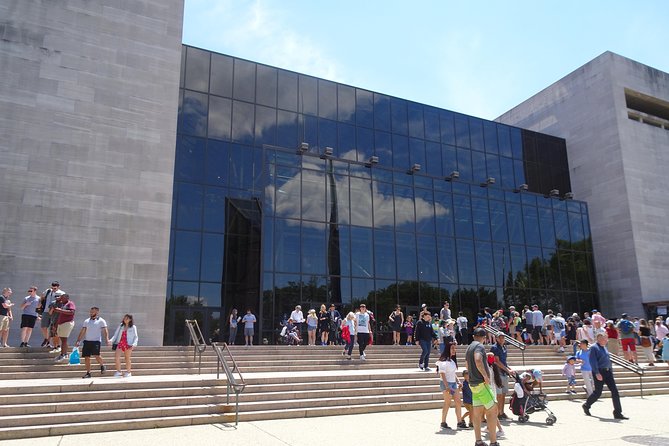
You begin here and complete your first challenge in front of the museum. This is a strong starting point because it’s a clear, recognizable stop with lots of space to figure out your bearings. It also helps you ease into the hunt rhythm before the route gets denser.
2) National Museum of American History
Next up is the National Museum of American History. This stop keeps the pace moving along the Mall side where the Smithsonian cluster starts to feel like a city within a city. Expect your puzzle prompts to nudge you toward details you might otherwise skip during a normal stroll.
3) Andrew W Mellon Auditorium
From the museum grounds, you’ll reach the Andrew W Mellon Auditorium. This kind of stop is useful in a scavenger hunt because it acts like a reset point: you can regroup, check the next instruction, and then continue with less mental load than constantly recalibrating new terrain.
4) Robert F. Kennedy Department of Justice Building
Then comes the Robert F. Kennedy Department of Justice Building. This section of DC can feel like a maze if you’re not used to the grid and the spacing between buildings. If a clue points you in a direction that doesn’t match what you see, give yourself permission to slow down and use the surrounding major landmarks to re-orient.
5) National Archives Museum
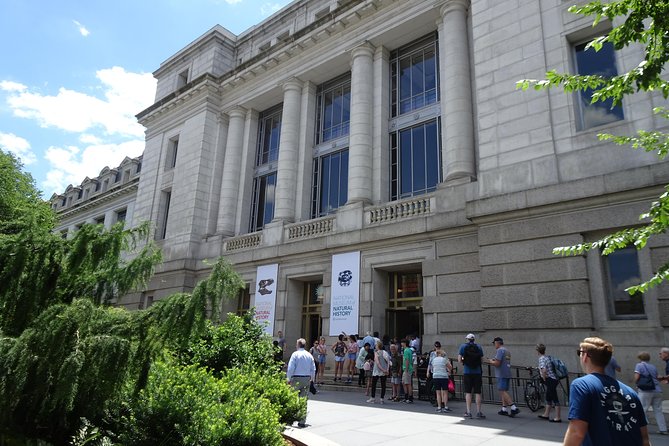
You’ll stop at the National Archives Museum. Here’s where the hunt becomes more than movement—it pushes you to actually notice the civic “Museum Row” feel of the area. Even if you don’t go inside (the tour description doesn’t promise admission), the setting is part of the experience.
6) National Gallery of Art (stop)
Next is the National Gallery of Art. This is one of the most visually calming breaks in the route. In a puzzle format, that matters: you need a few stops that feel like a breather, not just another task.
7) National Gallery of Art (second stop)
You’ll hit the National Gallery of Art again as a separate stop. That may sound repetitive, but in practice it often helps the hunt because it gives you different challenge locations around the same general area. It can also make the route feel longer than a simple “walk by” approach.
8) Embassy of Canada to the United States
The Embassy of Canada stop adds a diplomatic-world texture to your walk. It’s a reminder that the Mall isn’t only museums and monuments; it’s also administration, embassies, and the official face of the city.
9) Ulysses S. Grant Memorial
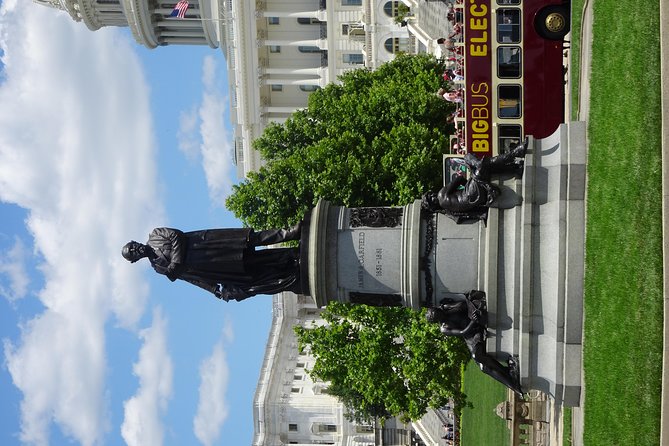
Then you reach the Ulysses S. Grant Memorial. Monument stops are where the hunt really shines because you’re forced to slow down and look at the surroundings. If you’re traveling with kids or teens, this is the kind of moment that can turn a tired “are we there yet?” into real interest.
10) United States Capitol (front of the building loop)
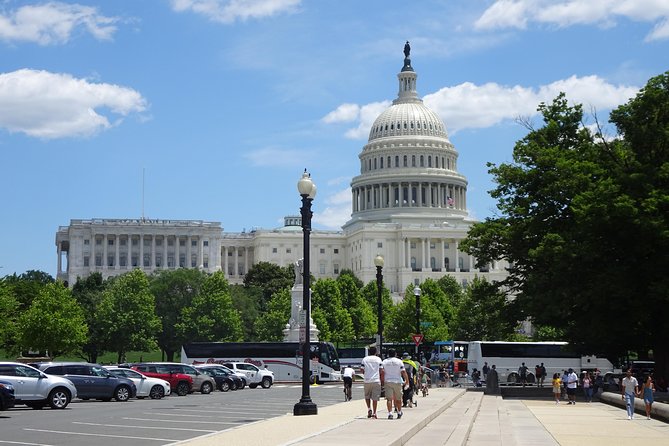
You loop around the front of the U.S. Capitol. This is the big “wow” stretch, even if you’ve seen photos. It’s also where the hunt format helps: instead of staring at the same facade, you’re scanning and deciding which direction to go next.
11) The National Mall (Mall stretch)
This stop is called The National Mall, which basically means you’re getting your long-view moment—the straight-run feeling that makes the Mall so distinctive. It’s a useful checkpoint if your group has split attention between puzzles and sightseeing.
12) United States Botanic Garden
You’ll then reach the United States Botanic Garden. Botanic stops help because they tend to be more comfortable for lingering than a pure monument viewpoint. In a scavenger hunt, a “linger-friendly” stop is gold when you need a quick regroup before the next set of Smithsonian buildings.
13) National Museum of the American Indian
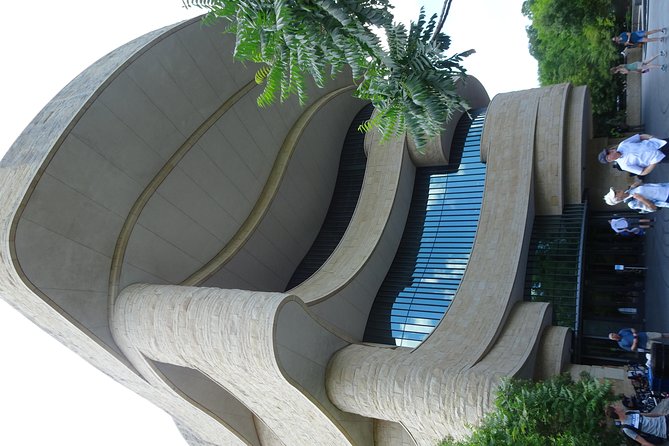
Next is the National Museum of the American Indian. The hunt keeps stacking major institutions, so each stop feels like part of a bigger story about the Mall’s lineup—not just random pins on a map.
14) Hirshhorn Museum and Sculpture Garden
Then you’ll move to the Hirshhorn Museum and Sculpture Garden. Sculpture gardens can be tricky in cold weather because they tempt you to rush. If it’s chilly, I’d plan your pace so you can still complete the challenge without freezing in place.
15) Smithsonian Arts + Industries Building
Your route continues with the Smithsonian Arts + Industries Building. This is a good mid-to-late “moment of variety” stop because it helps break the emotional rhythm of museums-only sightseeing. The hunt context makes you pause, scan, and keep your brain engaged.
16) Smithsonian Castle
You’ll stop at the Smithsonian Castle. It’s a classic landmark shape and a nice visual marker before the final stretch. In a self-guided hunt, having a recognizable anchor near the end makes it easier to finish strong instead of fading out.
17) Washington Monument (the end point)
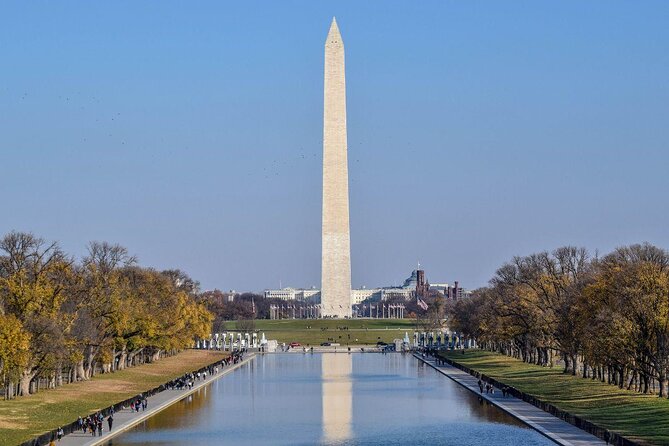
The last destination is the Washington Monument. Finishing at the monument gives the whole scavenger format a satisfying payoff. Even if you’ve seen it before, it feels different when you reach it after completing tasks instead of just walking up to it.
Best for: families, teenagers, and anyone who likes solving while walking
One of the best parts of this tour is that it keeps the group busy. The hunt format is ideal if you’re traveling with a teen who needs something to focus on. When the clues are engaging, the whole walk runs smoother, because everyone has a role: one person reads, another navigates, and someone else keeps the team on track.
It also works well if you like learning in motion. Instead of only standing in front of a building, you’re prompted to notice it and respond. That can help you remember stops later, even if you only spent a quick moment at each one.
Potential hiccups: typos, inaccurate clue directions, and obscure steps
This is where I’d be honest about expectations.
The clue text can have typos and small inaccuracies, including confusing dates and name mix-ups in the information embedded in the puzzles. You might also encounter steps where a direction or clue method doesn’t perfectly match what you see on the ground. When that happens, you can waste time.
Here are the most practical ways to reduce frustration:
- Have a patience buffer. If you see something that looks wrong, don’t force it. Re-read and then use nearby landmark sight lines to get back on track.
- Expect detail-oriented puzzles. Some clues can be quite specific, which is great when you’re engaged and less fun when the weather is cold or you’re tired.
- Bring a plan for navigation. If you get off course, return to the last clearly identifiable stop and restart the clue sequence from there.
- Use the help option if you get stuck. There’s evidence that a phone contact for questions exists and can be helpful when you’re genuinely blocked.
If you’re brand-new to DC, the hunt may feel more challenging than you expect, especially if you want a broad, casual overview rather than a puzzle-first experience. And if it’s freezing, you’ll want to keep your scanning times short so your group doesn’t lose heat while hunting for tiny answers.
Value check: is this worth it versus a plain sightseeing walk?
For most people, the value hinges on your group:
- If you’re two adults only and you want an easy, low-effort Mall stroll, the hunt can feel like extra work—especially if clues are obscure or require close looking.
- If you have teens or kids, the format often feels like a win because it turns sightseeing into participation.
- If your group enjoys puzzles and you’re okay with occasional clue text weirdness, the low per-person cost (split across up to 6) makes this a strong budget-friendly way to cover a lot of ground in a short window.
Think of it as: you’re paying for structure and engagement, not for museum entry or a guided walkthrough.
When to go and how to set yourself up for success
The experience runs in a wide daily window. Per the schedule, it’s generally available Monday–Friday from 8:00 AM to 8:00 PM, and Monday–Sunday from 7:00 AM to 7:00 PM during the listed period. Choose your start time based on the day’s energy level and the weather.
A practical tip: because you must rely on internet access, you should test your phone right before you begin. Once the hunt starts, you want fewer surprises. And dress for walking between museums on the Mall—this route is outdoors and open to the elements.
Booking tends to be popular, with an average of about 22 days in advance. If you want a specific start time, don’t wait until the last minute.
Who should skip this and who will love it
You’ll probably enjoy it if:
- You want to explore the Mall without committing to a guided group pace.
- Your group likes puzzles and getting small rewards as you go.
- You want an easy way to “hit the highlights” along the Smithsonian stretch and still feel like you did more than photo stops.
You might not love it if:
- You prefer museum-focused time rather than puzzle-focused time.
- Your group can’t use internet reliably on foot.
- You want clue directions that always match perfectly, with no typos or mismatches in wording.
Should you book this National Mall scavenger hunt?
I’d book it if your goal is a motivating, self-paced National Mall route that keeps a younger traveler engaged and lets you move through the Smithsonian area in about three hours. The pricing can be a great deal when split across a group, and the film-location-style prompts add an extra layer beyond “look at the building.”
I’d think twice if you hate puzzle hunts that depend on phone access, or if you’re traveling in conditions where lingering outside for detailed searching isn’t realistic. If that describes you, a simple sightseeing plan might be kinder to your time.
FAQ
What’s the duration of the Washington DC Museums self-guided walking tour & scavenger hunt?
It takes about 3 hours (approx.).
How much does it cost, and how many people can be in the group?
It’s $44.85 per group, and the group size is up to 6.
Where do I start and where does it end?
You start at 1500 Constitution Ave. NW, Washington, DC 20004. The activity ends back at the meeting point.
Is this a guided tour or self-guided?
It’s self-guided. Only your group participates, and you solve the scavenger hunt challenges independently.
Do I need internet access or WiFi?
Yes. Internet access is required to complete the activity.
What languages are available?
It’s available in English and French.
What’s included in the scavenger hunt?
You get 30+ challenges and 6 major film locations included.
Is free cancellation available?
Yes. You can cancel for a full refund up to 24 hours in advance of the experience start time.