Vienna’s Schönbrunn can feel huge—until you have the right entry ticket. This experience gives you timed skip-the-line access and an audio guide designed to help you follow the Habsburg story from Maria Theresa’s apartments to the big ceremonial rooms. I especially like the focus on the piano nobile (the main floor where power shows up), and the way the route connects paintings and palace rooms instead of bouncing around randomly. One caution: entry times can be flexible on very busy days, and that can mean some waiting if your planned slot doesn’t match the actual scan.
You’re not just seeing rooms behind glass. You’re walking through the parts people actually care about—private apartments, reception rooms, State Apartments, and spaces once used by Maria Theresa. Then you step out into the imperial park for statues, fountains, and architectural landmarks like the Gloriette.
The audio format is a big part of the value. It’s official audio (or printed descriptions), so you can set a comfortable pace and stop where your curiosity lands—no live guide required. Most travelers can participate, and the site is near public transportation, so you’re not spending your whole day on transit.
In This Review
- Key things that make this Schönbrunn ticket worth your time
- Timed entry into Schönbrunn: how the skip-the-line works in real life
- The piano nobile route: where Maria Theresa’s Vienna comes into focus
- Carousel Room and Hall of Ceremonies: paintings that explain the mood
- The Habsburg story you can follow: Sisi and Maria Theresa
- Schönbrunn’s gardens after the palace: Gloriette, fountains, and Rome hints
- Audio guide that keeps you moving: best ways to use it
- Price and value around $65: what you’re paying for (and how to sanity-check it)
- Who this Schönbrunn audio experience suits best
- Should you book this Schönbrunn skip-the-line audio ticket?
- FAQ
- FAQ
- How long does the Schönbrunn Palace experience take?
- What’s included with the ticket?
- Is there a live tour guide?
- What parts of Schönbrunn can I access?
- Do I need to bring my ticket barcode for entry?
- Is this ticket refundable or changeable?
Key things that make this Schönbrunn ticket worth your time
- Timed entrance built for speed: you skip the long queues and start with less time lost outside.
- Whole piano nobile coverage: private apartments, reception rooms, and State Apartments are part of the route.
- Maria Theresa-focused rooms: you get access to rooms once occupied by her, plus the story context around the Habsburgs.
- Art and ceremony stops: you’re guided toward the Carousel Room and the Hall of Ceremonies.
- Gardens after the palace: statues, fountains, the Gloriette, and references to ancient Rome show up on your walk.
Timed entry into Schönbrunn: how the skip-the-line works in real life
The whole point of a skip-the-line ticket is simple: you lose fewer minutes when you’re standing outside. With this one, you receive a timed entrance and go in when your ticket is meant to be scanned. The tour runs about 2 to 3 hours, which is a sweet spot for a palace visit plus at least a meaningful stroll in the grounds.
Here’s the practical part you should plan around: several visitors have reported that the entrance time shown during booking doesn’t always match the scan time allowed at the gate. On high-demand days, your ticket may be valid within a window that can stretch later than expected. The upside is you still get in without the worst line bottlenecks—especially compared with day-of general admission. The downside is you should build in a little patience, particularly if you’re arriving right on the dot.
Also, don’t treat the ticket barcode like it’s optional. One useful approach that shows up in feedback is this: connect to the free WiFi on site, and take a screenshot of your ticket barcode beforehand. Then go straight to the entrance for the door staff to scan it. That extra step cuts down on last-minute scrambling.
And yes, plan for the practical security stuff. Backpacks aren’t allowed inside, so you’ll need to check them. If you’re traveling with a daypack, keep it manageable so the process doesn’t eat into your palace time.
You can also read our reviews of more tours and experiences in Vienna.

The piano nobile route: where Maria Theresa’s Vienna comes into focus
Schönbrunn’s piano nobile is the heart of the visit. This is the main floor where the palace makes its argument: Habsburg power is displayed through rooms, decoration, and the kind of daily luxury that reads like propaganda. With this ticket, you get access that’s more than a quick highlights loop. You’re walking through private apartments, reception rooms, and the State Apartments, plus rooms connected to Maria Theresa.
Why this matters for you: without a guided structure (even an audio one), a palace can become a blur of doors. You may look at ceilings and move on, but you miss the relationships between rooms—who used them, what the space communicated, and why certain rooms look the way they do.
This route helps you stay oriented because it ties what you see to what you’re hearing. You’ll come across details like gold-adorned ceilings in Maria Theresa’s apartments, which is exactly the kind of visual clue that becomes easier to interpret when the narration connects the room to the people and politics behind it.
A fair consideration: because you’re moving through a lot of spaces in a limited window, the palace may still feel fast if you’re a slow reader. If you like to linger over furniture details, you might want to accept that this won’t be a museum lecture you can take at your own perfect speed.
Carousel Room and Hall of Ceremonies: paintings that explain the mood
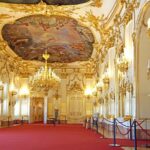
Schönbrunn isn’t only about rooms—it’s also about what those rooms are designed to frame. This experience points you to standout interior art stops, especially the Carousel Room and the Hall of Ceremonies.
I like these stops because they do two jobs at once:
- They show you the kind of painting and display style the Habsburg court favored.
- They help you understand the emotional tone of the palace—how it wants you to feel small, impressed, and orderly.
If you’ve ever visited royal residences and felt like everything blended together, this is where the visit gets sharper. You’re not just touring architecture; you’re seeing how visual storytelling reinforces authority.
One more tip: when you’re in rooms like this, don’t rush the center view. Stand back for a moment and let your eyes catch the overall composition. Even if your audio points out specifics, your brain reads the room better once you’ve got the big picture.
The Habsburg story you can follow: Sisi and Maria Theresa
One of the best reasons to pick an audio-guided ticket in Vienna is that it gives you context while you’re standing in the exact place the story happened. Here, the narration focuses on the Habsburg dynasty, including Maria Theresa and Sisi.
That connection is more useful than it sounds. Without context, Sisi can feel like a distant pop-culture figure. In a palace visit, the real value is translating those names into spaces: where Maria Theresa’s rooms are, how reception and ceremony spaces fit the court’s rhythm, and why the palace is laid out the way it is.
The same goes for how the audio guide helps you connect the rooms you see to the characters tied to them. You’re not only looking at gold trim or formal paintings; you’re building a timeline in your head—who mattered, and what kind of life their court demanded.
If you care about European royal history even a little, you’ll get more out of the visit because the audio doesn’t treat the palace as a static building. It treats it like a stage.
Schönbrunn’s gardens after the palace: Gloriette, fountains, and Rome hints
The palace is only half the story. After you’ve worked through the main interior rooms, you get time in the imperial park and gardens. This is where Schönbrunn changes your pace from indoor looking to outdoor wandering.
You’ll see features designed for formal walking: majestic statues, cascading fountains, and architectural landmarks like the Gloriette. There are also remnants of ancient Rome referenced within the grounds, which gives you a satisfying change of scenery. Instead of being trapped in “palace = gold and rooms,” you get “palace = power expressed through landscape design.”
Why this part feels good in the real world: many big palaces have a hard stop at the doors. Here, the gardens act like a natural buffer. When you’re done with the interiors, you can reset your senses and still feel like you completed the experience.
Practical tip: wear shoes you can trust on garden paths. Some areas are smooth, but you’re still walking on outdoor surfaces for long stretches. If you plan a tight schedule in Vienna, gardens can be what makes the day feel full instead of rushed.



Audio guide that keeps you moving: best ways to use it
This ticket includes an official audio guide (or printed descriptions, depending on what you receive). Either way, you’ll be able to follow a guided path without needing a live guide.
Here’s how to get the most out of it:
- Start listening at the first major room you enter. Don’t wait until you feel lost.
- When the audio mentions a room purpose (ceremony, reception, private use), pause for a minute and look around. It helps you connect the details you’re hearing to what your eyes see.
- If your phone battery is a concern, consider downloading what you can before you get to the site. (The tour info doesn’t spell this out, but it’s a common sanity saver for audio-based experiences.)
One thing I’d treat as non-negotiable: have your ticket ready in a screen-friendly way. People have found the free WiFi helpful and recommend having a screenshot of the ticket barcode. That keeps you from getting stuck while you’re trying to prove you paid.
Also, remember the backpack rule. Having your stuff sorted before you arrive at the entrance prevents delays that can make your audio run start feeling shorter than you expected.
Price and value around $65: what you’re paying for (and how to sanity-check it)
At about $65.01 per person, this ticket sits in the “reasonable if it saves time” category. You’re paying for two main things:
- the convenience of a timed, skip-the-line entry,
- and the structure of an audio-led route through high-demand rooms and key highlights.
The value is strongest if you’re visiting during busier hours, because time saved outside is time you can spend inside (and the inside is the best part here). The value also makes more sense if you don’t want to puzzle out where to go alone once you’re at Schönbrunn.
That said, it’s smart to sanity-check pricing on the palace’s own online ticket options. Some people report seeing a big gap between third-party skip-the-line pricing and the palace site price. If you’re traveling on a strict budget and you’re fine waiting, a self-booked ticket might work. But if you’d rather reduce friction and follow a planned route, this kind of package can feel worth it.
Also, don’t ignore the time flexibility reality. If you’re booking for a very specific moment in your day, be prepared that the actual allowed entrance scan might shift on crowded days. Since this is non-refundable, you’ll want your schedule to have breathing room.
Who this Schönbrunn audio experience suits best
This is a great pick if you:
- want skip-the-line convenience without paying for a live guide,
- like palace visits where you can follow a story at your pace,
- care about Maria Theresa and the Habsburg dynasty and want to connect names to rooms,
- plan to spend time in both the interiors and the gardens.
It’s less ideal if you:
- hate any kind of time-window uncertainty (some visitors have waited when the entrance time didn’t match what they expected),
- have a tight schedule and no buffer time,
- prefer totally self-directed wandering without any timed structure.
Should you book this Schönbrunn skip-the-line audio ticket?
If you want the cleanest way to see Schönbrunn’s big rooms and then unwind in the gardens, I think booking makes sense—especially because the visit is designed to last 2 to 3 hours and hits the rooms people actually search for, like Maria Theresa-related spaces and the key ceremonial art rooms. The audio guide format is also a good match for travelers who want context without the pressure of a human guide keeping everyone on one rhythm.
But book with your eyes open. Have a backup plan for timing if crowds change your scan window, and don’t travel with an oversized backpack. If you do those things, you’ll avoid the two most common “why didn’t this feel smooth” problems.
FAQ
FAQ
How long does the Schönbrunn Palace experience take?
The duration is listed as about 2 to 3 hours.
What’s included with the ticket?
You get a timed entrance ticket to Schönbrunn Palace and an official audio guide (or printed descriptions).
Is there a live tour guide?
No. A live tour guide is not included.
What parts of Schönbrunn can I access?
You’ll have access to the entire piano nobile, including private apartments, reception rooms, State Apartments, and rooms once occupied by Maria Theresa. The route also includes highlights such as the Carousel Room and the Hall of Ceremonies, plus time in the palace gardens and park.
Do I need to bring my ticket barcode for entry?
You should have your ticket barcode ready to show for scanning at the entrance. One practical tip is to take a screenshot of your barcode before you go.
Is this ticket refundable or changeable?
No. It’s non-refundable and can’t be changed for any reason.