REVIEW · VIENNA
Vienna Walking Tour with Audioguide on Your Smartphone
Book on Viator →Operated by TouringBee · Bookable on Viator
Skip the group rush and follow the route.
This smartphone audioguide turns central Vienna into an easy walk, with 29 recordings by a professional historian guiding you past big landmarks and a few quieter surprises. It’s built for an English experience with a mobile ticket and a route you can use any day and any time during checkout (times are approximate).
I really like two things about this setup. First, the offline map with GPS navigation makes it simple to keep your bearings, with illustrations that help you spot each stop. Second, you can take the walk at your tempo, including quick pauses for photos or coffee without waiting for a group.
One thing to plan for: this is self-guided. There’s no human guide on-site, you need your own headphones, and if your phone GPS is stubborn (it happens in old-city streets), you may need a moment to confirm you’re at the right spot before the next narration.
In This Review
- Key highlights worth knowing before you go
- Vienna at your tempo: how the smartphone audio guide really works
- Start at Stephansplatz: the walk loop and why it matters for timing
- St. Stephen’s Cathedral: Gothic height, stained glass, and a tower view
- Church of the Teutonic Order: baroque comfort in a calmer corner
- Pestsäule (Plague Column) and Peterskirche: history written in stone
- Café Demel and the nearby squares: when a break is part of the route
- Imperial Crypt and the Memorial against War & Fascism: a moment that hits harder
- Albertina, State Opera, and the Mozart Monument: art and sound in one arc
- Hofburg, Sisi, Rathaus, and the university district: imperial Vienna in blocks
- Beethoven’s House, Café Central, and the Art Nouveau clock: a satisfying finale
- Price and value: why $8.40 can be a bargain for the right person
- Common app issues and how to prevent the same headaches
- Who should book this and who should skip it
- Should you book this Vienna smartphone walking tour?
- FAQ
- Is this a guided tour with a person leading the group
- Do I need headphones
- How do I navigate between stops
- How long is the walk
- What is included in the price
- Where does the tour start and end
Key highlights worth knowing before you go
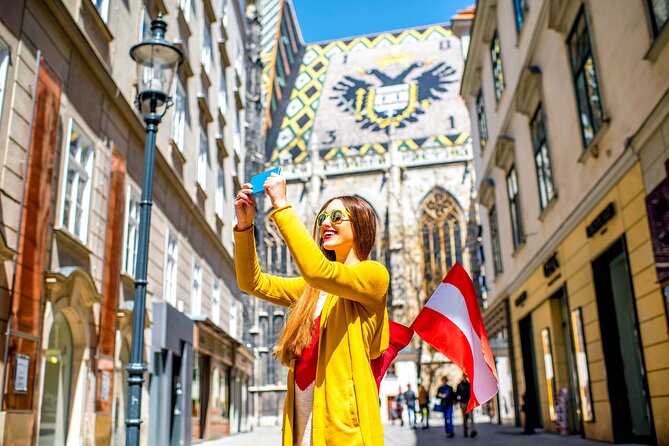
- 29 historian-narrated recordings designed for an independent walk through central Vienna
- Offline map + route GPS so you can track where you are without constant cell service
- Illustrations to identify landmarks, helpful when signs are small or easy to miss
- Built-in flexibility: pause, slow down, or skip stops when your legs say enough
- Mostly major sights, not just random streets, so you get real orientation in one go
- Max 20 people on the tour listing, even though you walk at your own pace
Vienna at your tempo: how the smartphone audio guide really works
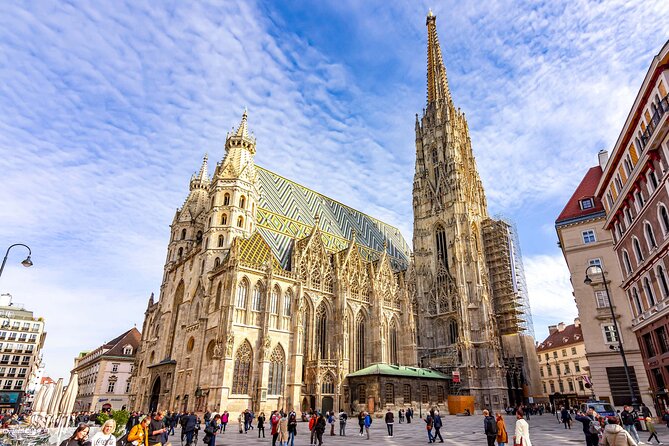
You start at Stephansplatz and follow a walking route you control. After booking, you download the TouringBee audio guide app for iPhone or Android, activate your purchase, and follow the route using the app map.
What you’re actually buying for $8.40 per person is not museum entry or transportation. You’re paying for narration (29 tracks), landmark visuals, and navigation support—so you can spend your time seeing, not waiting.
You’ll get 1 year access to the tour in your chosen language, which matters if you want to split the route across two mornings or return to a specific area later.
Two practical notes. Bring your own headphones (not included), and make sure you have battery life for a couple hours of phone map + audio.
You can also read our reviews of more tours and experiences in Vienna.


Start at Stephansplatz: the walk loop and why it matters for timing
This tour is set up as a central loop. A common way to think about it is that it covers a lot of ground—one of the provided comments references about a 7 km circuit, and the walk can easily stretch longer than the “2 hours 30 minutes” target if you stop often.
That’s why this format works so well if you’re jet-lagged, traveling solo, or simply don’t want to be marched. You can pause for coffee, take photos, or adjust the order by skipping ahead and coming back later.
The meeting point and end point both return you to the Stephansplatz area. That is convenient if you want a natural “home base” for transit afterward.
St. Stephen’s Cathedral: Gothic height, stained glass, and a tower view

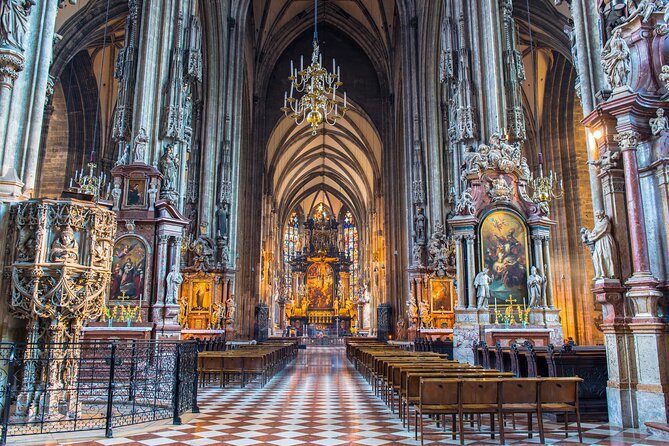
St. Stephen’s Cathedral is the emotional starter pistol for the whole walk. You get time to admire the soaring spires and the richly detailed façade, then step inside for the ornate High Altar and stained-glass atmosphere.
The cathedral also includes a chance to visit the catacombs, and the stop is designed to make sure you don’t miss the structure’s “wow factor.” If you want the best payoff, plan your schedule so you can handle the South Tower ascent for views over Vienna.
This stop is marked with about 15 minutes, and admission is noted as free for the basic visit and experience on the itinerary.
Church of the Teutonic Order: baroque comfort in a calmer corner
Next is the Church of the Teutonic Order, where the vibe shifts from dramatic cathedral scale to baroque elegance. You’re meant to notice the architecture and then look for details inside, including frescoes and intricate sculptures.
The main advantage here is pacing. After St. Stephen’s, it’s a nice change of texture—less “everything at once,” more “slow looking.”
This stop is timed at around 10 minutes, and admission is noted as free on the itinerary.
Pestsäule (Plague Column) and Peterskirche: history written in stone
The Pestsäule is a powerful story in baroque form. It was erected as gratitude for surviving the plague, and the design uses sculptures and a soaring column to turn grief and resilience into public art.
Then you move to Peterskirche, Vienna’s Baroque church with a majestic dome and a richly decorated interior. The key is to treat it like a pause for quiet attention—let the art and architecture do the work.
Both stops are marked at about 10 minutes each, with admission noted as free in the itinerary notes.
A practical tip: if you’re the kind of person who reads every label, keep your phone volume slightly lower and your eyes busy, because these are the moments where you’ll want to slow down even if the audio is moving on.




Café Demel and the nearby squares: when a break is part of the route
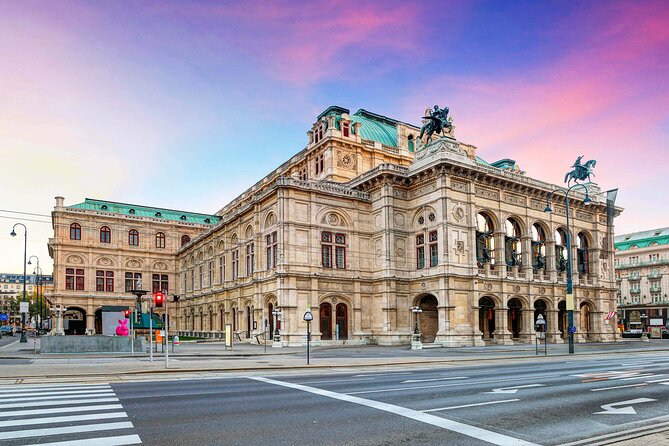
Café culture is not just dessert here. Café Demel, founded in 1786, is a classic stop where you can refuel with pastries, cakes, and coffee, and (if you’re curious) try a slice of Sachertorte.
Right after that, the route heads toward Michaelerplatz, giving you a view toward Hofburg Palace and the Michaelerkirche, plus the intrigue of archaeological excavations beneath the square.
Then comes a cluster of exterior sights that make the walk feel like Vienna instead of just a checklist. You’ll see the Emperor Joseph II Monument at Josefsplatz, and later the Donnerbrunnen fountain at Neuer Markt—worth lingering at for the mythological sculptural scenes.
These are quick stops, each roughly 10 minutes (with Café Demel also listed at about 10 minutes). That timing is good for keeping energy up, especially if you plan to walk the whole loop.
Imperial Crypt and the Memorial against War & Fascism: a moment that hits harder
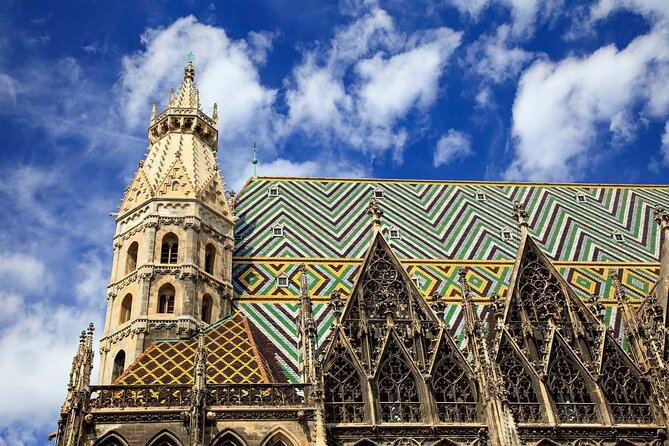
At some point the route turns more serious. The itinerary includes Vienna’s Imperial Crypt, a final resting place tied to the Habsburg dynasty, with opulent tombs and artwork you’ll want to look at carefully instead of rushing through.
Right near that theme is the Memorial against War & Fascism, featuring a sculpture of a shattered column as a symbol tied to the destruction caused by war. It’s the kind of stop where the audio’s framing matters, because the point isn’t to check a box—it’s to reflect.
This memorial stop is marked at about 10 minutes, while the crypt is listed as part of the route without a specific duration in the details provided.
If you want a tip: after the crypt, give yourself a minute outside to reset. The emotional weight is real, and you’ll enjoy the art-and-music section more afterward.
Albertina, State Opera, and the Mozart Monument: art and sound in one arc
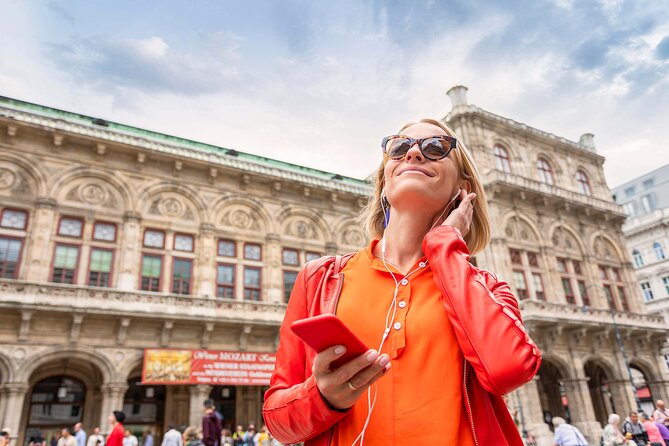
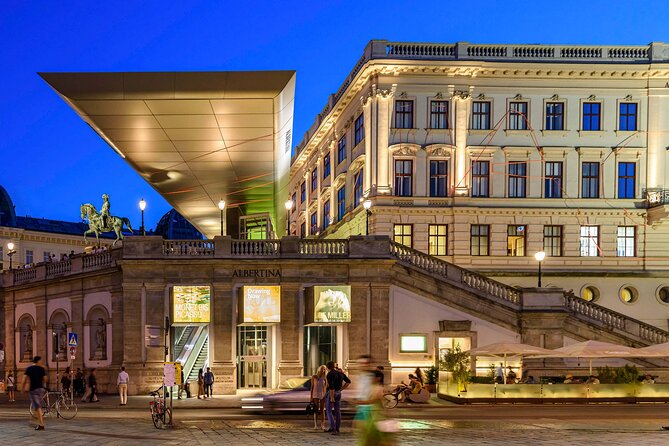
The walk keeps momentum while shifting into culture mode. Albertina Gallery is presented as a major art stop, with a collection spanning from Renaissance to contemporary, and highlights like works by Dürer, Monet, and Picasso.
Then you reach the Vienna State Opera, which is as much about the building as it is about performances. Even if you’re not buying tickets on this route, it’s a strong “you are in Vienna” landmark.
The cultural finish to this arc is the Mozart Monument in Burggarten Park. Plan to step into the garden atmosphere around the statue—it’s a calmer setting than the surrounding streets, and the audio framing is designed to connect the monument to Mozart’s legacy.
These stops are listed as free on the itinerary notes, though the opera and gallery can still have independent entry rules not included in your ticket price. The price here is for the audio and navigation, not guaranteed museum admission.
Hofburg, Sisi, Rathaus, and the university district: imperial Vienna in blocks
Now you get the big imperial skyline feel. You’ll visit Maria Theresien Square, known for the statue of Empress Maria Theresa and the mix of grand buildings and open space.
Then the route highlights Hofburg Palace, including references to the Sisi Museum, Imperial Apartments, and cultural institutions like the Spanish Riding School and the National Library. Hofburg is one of those places where it helps to know you’re not seeing it all in a single walk—this tour gives you orientation and key exterior context.
You also stop at the Monument to Empress Elisabeth (Sisi) in Volksgarten, a quieter green spot for a small but meaningful pause.
From there, head to Vienna City Hall (Rathaus), a Gothic Revival building with tower spires and an ornate façade, plus a famous figure called the Rathausmann.
Finally, the route reaches the University of Vienna, described as an academic center since 1365, with attention to the Main Building and the University Library.
All of these are marked around 10 minutes each in the itinerary notes, and admission is listed as free for the stops shown.
Beethoven’s House, Café Central, and the Art Nouveau clock: a satisfying finale
You end with a “music and everyday life” blend. Beethoven’s House is included, with the composer living there from 1804 to 1815, plus museum-style displays tied to his life and work.
Then it’s Café Central, founded in 1876, a long-standing meeting place associated with intellectuals and artists. This is another chance to slow down and make the walk feel like a day in Vienna rather than a march.
A couple of shorter exterior stops come after. Collalto Palace is flagged as a baroque-style aristocratic site, followed by the Marriage Fountain (Vermahlungsbrunnen) in the courtyard setting of Schönbrunn Palace.
You finish with the Ankeruhr Clock, an Art Nouveau clock on Hoher Markt where the design and figures are meant to catch your eye, especially if you time your arrival near an hourly moment.
Several of these are listed at about 5 minutes, which is perfect if you saved your energy for the end.
Price and value: why $8.40 can be a bargain for the right person
The headline price is $8.40 per person, and the best way to judge value is to separate what’s included from what isn’t.
Included:
- 29 audio recordings by a professional historian
- Audio guide app for iPhone and Android
- Illustrations to identify landmarks
- 1 year access in your language
- Offline map with route for GPS navigation
Not included:
- Human guide
- Smartphones and headphones
- Transportation
- Entrance fee/tickets
So yes, it’s cheap. But it’s cheap because you’re also doing more of the work yourself: carrying your phone, following the route, and planning around entrances if a site requires them.
If you like independence and you’re comfortable using a map app, this is a very good deal for “see the highlights with context.”
Common app issues and how to prevent the same headaches
From the real-world usage notes in the details you provided, the biggest problems are navigation friction and unclear next-stop guidance at certain points.
Here’s how I’d reduce the odds:
- Download and load the tour before you start walking, not mid-route.
- Turn on GPS and allow location permissions so the blue-dot style tracking works as intended.
- Use your phone outdoors at full brightness; audio tours fail when you’re squinting at tiny street markers.
- If a stop is hard to find, use the app’s illustrations and pause audio briefly while you confirm the landmark.
- Bring a small power bank if you’re doing photos and navigation heavily.
If you hit a real malfunction, restarting the app or reloading the tour can help, but you’ll avoid most issues by starting clean and giving your phone a stable connection to GPS signals.
Who should book this and who should skip it
This is a good fit if:
- You want major sights in central Vienna without joining a big group
- You prefer flexibility, including stopping for coffee and continuing later
- You’re okay being your own “guide brain” and following a route on-screen
- You can handle a longer walk if you stop for photos and look-inside moments
You might want to skip it if:
- You dislike phone-based navigation or you rely on staff directions
- You’re traveling with limited battery or you hate troubleshooting apps
- You only want a short, guided highlights loop and don’t want to cover a lot of ground
Should you book this Vienna smartphone walking tour?
I’d book it if you want a low-cost orientation walk through central Vienna, and you value context as you go. The combination of historian narration, offline route mapping, and landmark visuals is exactly what makes a self-guided walk feel smooth instead of random.
I’d think twice if you want a “show up and be taken care of” experience. This tour works best when you’re comfortable using your phone and you’re willing to adjust on the fly.
If you do book it, go in with a simple plan: headphones ready, phone charged, and a mindset that you’ll control the pace.
FAQ
Is this a guided tour with a person leading the group
No. It is a self-guided walking tour using an audio guide app, with no human guide included.
Do I need headphones
Yes. Headphones are not included, so bring your own to listen on your smartphone.
How do I navigate between stops
You use the audio guide app map with an offline map and GPS navigation to follow the route and identify the next landmark.
How long is the walk
The duration is listed at about 2 hours 30 minutes (approx.). The actual time can vary if you pause often.
What is included in the price
You get the audio guide app with access to 29 historian-narrated recordings, landmark illustrations, and 1 year access in your preferred language. Entrance fees and transportation are not included.
Where does the tour start and end
It starts at Stephansplatz, 1010 Wien, Austria and ends back at the meeting point.