REVIEW · OUTER BANKS
Cape Hatteras National Seashore Self-Guided Audio Driving Tour
Book on Viator →Operated by Travel with Action · Bookable on Viator
Cape Hatteras has a way of grabbing you fast. This self-guided drive uses location-triggered audio so the Outer Banks stories roll in as you pass each landmark, from Oregon Inlet shipwreck tales to Cape Hatteras Lighthouse history. It also has real practical value: you can stop for photos, sand time, or a quick look at the water, without needing a schedule.
I especially like two things. First, the tour is built for hands-free listening: audio plays on its own based on where you are, so you can focus on driving and the view. Second, the app’s offline setup matters on the Outer Banks, where signal can be spotty, and the tour is designed to keep working even without cellular or Wi‑Fi.
One thing to plan for: you must download the tour on strong Wi‑Fi or cellular before you head out, since the experience then relies on offline playback. If your phone battery is low or your connection is weak during download, you’ll want to handle that early.
In This Review
- Key Highlights You’ll Actually Feel While Driving
- Cape Hatteras By Car, With Stories That Match the View
- Where it fits best
- Price and Value: $14.99 per Group Can Stretch Farther Than You Think
- Setup: Download the Tour First, Then Let It Run Offline
- How playback works on the road
- Best way to listen
- Route Basics: From Nags Head to Hatteras, With a Big Story Mile Track
- Oregon Inlet to Coquina Beach: The Outer Banks Starts With Storms and Luck
- Stop 1: Oregon Inlet, and the ship that survived the wrong kind of day
- Coquina Beach and Bodie Island Lighthouse: clams, wrecks, and a leans-like-it-wants-to-fall tower
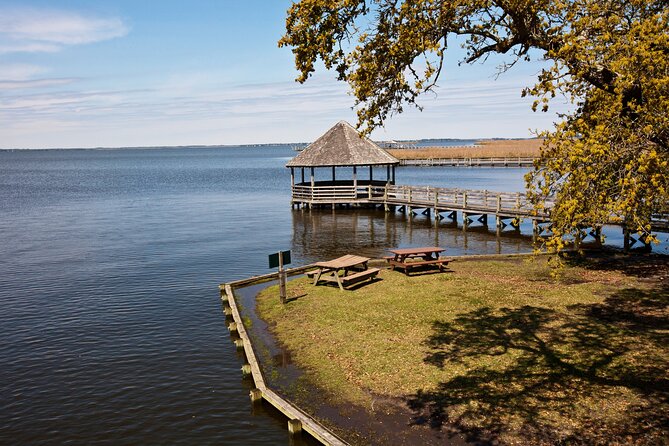
- Herbert C. Bonner Bridge and Pamlico Sound: A Shallow Sea That Matters
- Stop 2 and Stop 4 combined in your head: Pamlico Sound’s real stats
- Oregon Inlet Life-Saving Station and Chicamacomico: How Rescue Worked Before Modern Tech
- Stop 3: Oregon Inlet Life-Saving Station (1874)
- Stop 8: Chicamacomico Life-Saving Station Historic Site & Museum
- Consideration
- Pea Island National Wildlife Refuge and Pea Island Beach: Birds on the Atlantic Flyway
- Stop 5: Pea Island National Wildlife Refuge
- Stop 6: Pea Island Beach
- Jug Handle Bridge and the Wind: How the Coast Gets Loud
- Stop 7: Jug Handle Bridge
- Kite Point near by: Stop 10 brings the action
- Roanoke Island’s Mother Vine: Proof That Time Can Keep Producing
- Stop 9: The oldest grapevine on the continent still producing grapes
- Cape Hatteras Lighthouse and Teach’s Lair Marina: The Big Finale
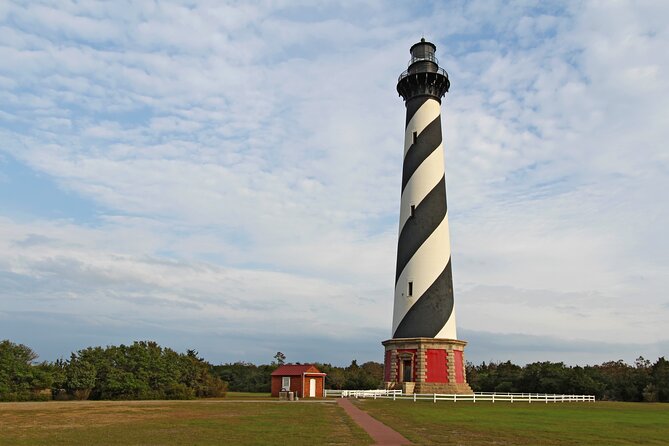
- Stop 11: Cape Hatteras Lighthouse
- Stop 12: Teach’s Lair Marina and Blackbeard energy
- Should You Book This Cape Hatteras Self-Guided Audio Driving Tour?
- FAQ
- How much does the Cape Hatteras National Seashore audio driving tour cost?
- How long does the tour take?
- Do I need a cellular signal to use the tour?
- What do I need to do before I start driving?
- Will the audio play automatically?
- Can I start and stop whenever I want?
- Where does the tour start and where does it end?
- Is there a language option?
- Are entrance tickets or attraction reservations included?
- Do I listen through my car speakers?
Key Highlights You’ll Actually Feel While Driving
- GPS-triggered audio plays automatically as you reach each stop
- Offline maps and offline listening help in low-signal areas
- Start anytime, pause anywhere, so you’re not trapped by a group timetable
- Stories everywhere: more than 49 audio stops along a route that can take 4–6 hours
- Value for groups: $14.99 per car (up to 4 people), not per person
- Great for variety: lighthouses, life-saving stations, wildlife refuge, kitesurfing spots, and one famous grapevine
Cape Hatteras By Car, With Stories That Match the View
This tour turns a long stretch of coastline into a moving set of lessons and legends. The driving portion is the main event, and the audio keeps it grounded in place. As you go, you get context for what you’re seeing: inlets, shallow sounds, migratory birds, and the human side of storms and shipwrecks.
I like that the experience is designed to be flexible. If you want to linger at a beach overlook, you can. If you’d rather keep rolling to the next landmark, you can. There’s no appointment clock built into the stories—your pace sets the rhythm.
You can also read our reviews of more tours and experiences in Outer Banks.



Where it fits best
This is a good match if you like to drive, pull over when it makes sense, and learn without feeling like you’re in a classroom. It’s also ideal for families who want a mix of history and outdoor stops, since the audio keeps things varied.
It’s less ideal if you need someone to physically guide you, herd you between stops, or handle parking. This is truly self-guided: you start it, follow the route, and listen as you go.
Price and Value: $14.99 per Group Can Stretch Farther Than You Think

At $14.99 per group (up to 4), this isn’t priced like a traditional guided tour. Instead, you’re buying a car-friendly way to get a guided-feeling route. For a family or a small group, that math can work out very well compared with paying per person for a bus or a live docent.
A useful detail: the tour has lifetime access with no expiry. That means you’re not paying just for one afternoon. If you revisit the Outer Banks later—or if you want a refresher year after year—you can reuse it on the next trip without buying again.
Setup: Download the Tour First, Then Let It Run Offline
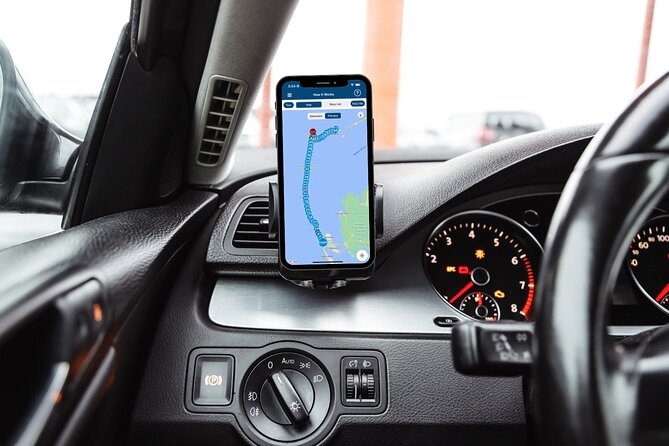
You’ll use the Action’s Tour Guide App on your phone. After booking, you get an email and text with setup instructions and a password. Then you download the tour while you’re on strong Wi‑Fi/cellular, because once downloaded, it works offline.
How playback works on the road
Once you’re at the start, you open the app and select the correct tour version (if more than one exists for your starting point). Then you go to the first story’s point. After that, the audio plays automatically as you reach each location—so you’re not constantly tapping the screen.
Best way to listen
If you’re in the car most of the time, connect your phone to the stereo using Bluetooth, USB, or AUX. For walking spurts—like beach edges or lighthouse viewpoints—headphones can help, since you can listen without background noise from the car.
Route Basics: From Nags Head to Hatteras, With a Big Story Mile Track
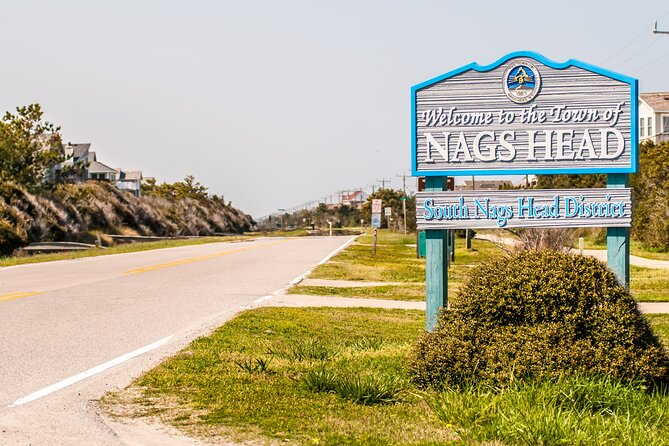
The tour starts at Cape Hatteras National Park Road, Nags Head, NC and ends at 59200 Museum Dr, Hatteras, NC. The experience is available daily, and the site lists hours from 6:00 AM to 9:00 PM.
Timing is flexible in practice. The listing gives 2 to 3 hours approximate, but there’s also a note that the full route covers 59 miles with more than 49 audio stories and typically takes 4–6 hours. What I’d do: if you want the best pacing, plan on the longer side and treat the shorter time as what you’ll get if you skip breaks or move quickly between stops.
Oregon Inlet to Coquina Beach: The Outer Banks Starts With Storms and Luck
You begin at the Cape Hatteras National Park area in Nags Head and soon reach the first big story moment: crossing Oregon Inlet.
Stop 1: Oregon Inlet, and the ship that survived the wrong kind of day
Oregon Inlet is described as the waterway uniting Pamlico Sound and the Atlantic Ocean. The audio uses a hurricane story tied to a ship named the Oregon. The tale goes that during a massive hurricane in 1846, rough seas lifted the ship and deposited it safely on a sandbar. It’s the kind of story that makes the coast feel alive in a very real way: storms aren’t just weather here—they shape the coast and its history.
Practical tip: when you cross and reach the first pull-off, take a minute to orient yourself. Even from a road view, you’ll start noticing how inlets change everything—wind, water color, and how the coastline is built.
Coquina Beach and Bodie Island Lighthouse: clams, wrecks, and a leans-like-it-wants-to-fall tower
The next audio segment brings you to Coquina Beach and the Bodie Island Lighthouse area. Coquina Beach gets its name from coquina clams, and the story focus shifts to the wreck of an old ship. Then the tour connects that theme back to lighthouse building—because later, you’ll hear why the Bodie Lighthouse is known for leaning, described in the audio as leaning like the Tower of Pisa.
Possible drawback: if you’re short on time and want beaches only, this section may feel story-heavy before you get your first real walk. But that setup pays off once you reach the life-saving stations and lighthouse later.
Herbert C. Bonner Bridge and Pamlico Sound: A Shallow Sea That Matters
Next up is the Herbert C. Bonner Bridge, built in 1963. The audio points out the big water body to the right: Pamlico Sound.
Stop 2 and Stop 4 combined in your head: Pamlico Sound’s real stats
You’ll hear that Pamlico Sound measures about 80 miles long and 18 miles wide, but it never gets deeper than 26 feet. The tour also explains that rivers from the mainland flow into the sound, creating the second largest estuary in the US, after Chesapeake Bay. And since it’s shallow and rich, it’s a working-water story too: the audio says 90% of North Carolina’s commercial fishermen catch crabs, oysters, and clams in the Pamlico Sound.
This is one of those segments where the audio adds value fast. Instead of just seeing water, you start understanding why people make livelihoods here and why the coast has a reputation for shipwrecks.
Oregon Inlet Life-Saving Station and Chicamacomico: How Rescue Worked Before Modern Tech
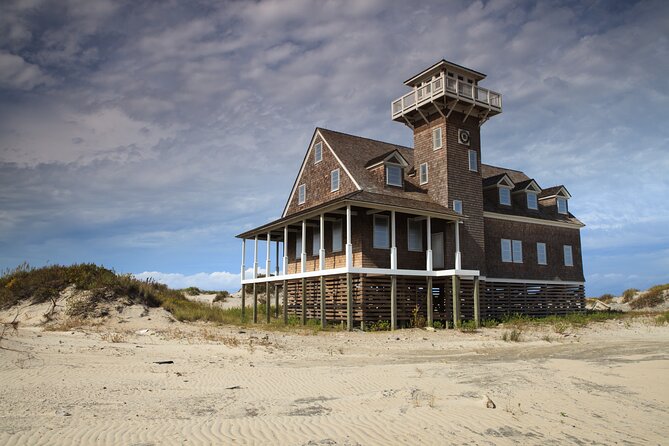
Now you get a darker, more human stretch of coastline: life-saving stations built for a world where ships often couldn’t avoid trouble.
Stop 3: Oregon Inlet Life-Saving Station (1874)
The Oregon Inlet Life-Saving Station from 1874 is highlighted as the only structure you’ll see when the bridge meets land again. The audio makes the challenge vivid: imagine being at sea in darkness, with no radar, GPS, or sonar. The Outer Banks nickname Graveyard of the Atlantic comes up for a reason—shipwrecks were incredibly common.
If you’re the type who likes stories with practical details, this one delivers. You’re not just hearing that rescue existed; you’re learning why the coast demanded it.
Stop 8: Chicamacomico Life-Saving Station Historic Site & Museum
Later, you pass the Chicamacomico US Life-Saving Station historic site and museum. The audio compares it to Oregon Inlet, describing it as a hub where rescue crews lived and trained while observing the coast.
You’ll also hear about a specific training device referred to as a beach apparatus—the kind of detail you’d never guess from the road unless you were told.
Consideration
This portion can be emotionally heavy if you’re sensitive to shipwreck stories. Still, it’s also one of the most educational segments, and it makes the lighthouse stops feel less like postcards and more like survival landmarks.
Pea Island National Wildlife Refuge and Pea Island Beach: Birds on the Atlantic Flyway

The tour then leans into nature, and it does it in a way that stays tied to location.
Stop 5: Pea Island National Wildlife Refuge
You’ll drive through 13 miles of nature preserve connected to the Atlantic Flyway. The audio describes this as a migratory corridor—like a highway in the sky—where birds use beaches as pit stops.
If you visit in cooler months, you’ll likely notice the emphasis on migration more. Even if you don’t spot birds at every moment, the story makes the refuge feel purposeful rather than just scenic.
Stop 6: Pea Island Beach
Then comes Pea Island Beach, described as popular but so wide you wouldn’t guess it. The advice is simple: even if you don’t get in the water, sit on the sand and watch the coastline breathe.
Jug Handle Bridge and the Wind: How the Coast Gets Loud
Stop 7: Jug Handle Bridge
The tour notes that you’re not really traveling from one island to another, yet you drive along Jug Handle Bridge. That sets you up to notice the way the Outer Banks is shaped by water channels and shifting access points.
Kite Point near by: Stop 10 brings the action
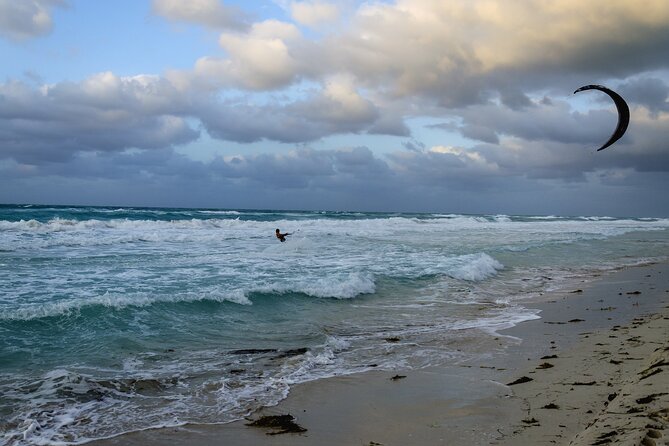
A little later, Kite Point becomes your payoff for coming this far. You’ll hear why locals call it that: it’s become a spot where kitesurfing happens, and the nearby beaches have been popular with windsurfers since the 1970s. This is also presented as a good place to watch high-speed sport in action.
Practical tip: if the wind looks good, give this one extra time. The audio makes it clear this is a place driven by wind energy, not just aesthetics.
Roanoke Island’s Mother Vine: Proof That Time Can Keep Producing
Not all the stops are coastal. You also reach a history marker that feels almost unreal: The Mother Vine.
Stop 9: The oldest grapevine on the continent still producing grapes
The audio identifies it as the oldest grapevine on the continent still producing grapes. It’s said to be about 400 years old, though the exact origin date isn’t certain.
This stop changes the mood of the route. After storms, rescue stations, and shifting sands, you get something that’s steady and living. It’s a reminder that the Outer Banks isn’t just a place of loss—it’s a place where life keeps going.
Cape Hatteras Lighthouse and Teach’s Lair Marina: The Big Finale
You end with two landmarks that basically sum up the region’s themes: navigation, weather, and myth.
Stop 11: Cape Hatteras Lighthouse
The audio points you toward the Cape Hatteras Lighthouse and ties it back to earlier lighthouse frustration. It says you’ll see a lighthouse that had a tough time starting out too—after hearing that the Bodie Lighthouse leaned due to poor building.
The takeaway here is practical: these towers weren’t decorative. They existed because people needed help finding safe passage in difficult coastal conditions.
Stop 12: Teach’s Lair Marina and Blackbeard energy
Finally, the tour reaches Teach’s Lair Marina, where boats sit off to the right. The audio connects the name to Edward Teach, better known as Blackbeard.
Even if you’re not a hardcore pirate fan, the story adds flavor to the coastline. It makes sense, too. Coastal towns always collect legends, and the Outer Banks has plenty of reasons.
Should You Book This Cape Hatteras Self-Guided Audio Driving Tour?
If your idea of a great day is driving with freedom—pull over, listen, and learn at your own pace—this is a strong yes. The biggest reasons are value and format. $14.99 per group can cover a whole car, and the offline, location-triggered audio setup makes it practical for a remote-feeling coastline.
You should also book it if you want a route that covers more than one kind of interest. This isn’t only lighthouses. You get life-saving stations, Pamlico Sound’s fishing significance, the Pea Island refuge and Atlantic Flyway, kite-surfing at Kite Point, and the oddball marvel of The Mother Vine.
Skip it only if you hate self-guided experiences. If you want a person to answer questions, direct you to parking, or build in a fixed plan, you may find the freedom a little too much.
FAQ
How much does the Cape Hatteras National Seashore audio driving tour cost?
It costs $14.99 per group, up to 4 people.
How long does the tour take?
The tour is listed as about 2 to 3 hours, and there’s also a note that the full route is about 4–6 hours with 59 miles and 49+ audio stories.
Do I need a cellular signal to use the tour?
No. You download it first, then it works offline, with offline maps designed to handle no signal situations.
What do I need to do before I start driving?
After booking, you’ll receive email and text setup instructions and a password. You must download the tour while you have strong Wi‑Fi/cellular, then you can use it offline.
Will the audio play automatically?
Yes. You drive to each story’s point, and the audio begins automatically and continues based on your location cues.
Can I start and stop whenever I want?
Yes. You can start anytime, pause anywhere, and continue later. The app is designed for self-paced use.
Where does the tour start and where does it end?
It starts at Cape Hatteras National Park Road, Nags Head, NC 27959, and ends at 59200 Museum Dr, Hatteras, NC 27943.
Is there a language option?
The tour is offered in English.
Are entrance tickets or attraction reservations included?
No. Attraction passes, entry tickets, or reservations are not included.
Do I listen through my car speakers?
You can. The audio setup supports connecting your phone to your car stereo using Bluetooth, USB, or AUX. Headphones can help if you walk between stops.