REVIEW · ISTANBUL
Basilica Cistern Skip-the-Ticket-Line Entry with Audio Guide
Book on Viator →Operated by Istanbul Tourist Pass® · Bookable on Viator
Down in the dark, history feels close. The Basilica Cistern is a cathedral-size underground water tank, built in the 4th century and reshaped in 532 AD under Emperor Justinian I, and the audio guide turns the weird Medusa stone carvings into a story you’ll actually remember. I especially like the practical 1-hour plan (it’s long enough to feel it, not long enough to drag) and the way the Medusa head mystery is explained as you walk. One caution: this is not a full bypass of entry rules, and you can still hit mandatory security lines, plus online QR delivery can cause hassles if you do not check your email early.
If you only have a small window in Istanbul, this is a smart stop. You descend 52 stone steps, cool off fast, and see 336 marble columns holding up a ceiling that once supported palace life above. The site is also packed with details that make you look twice, like the two Medusa heads (one upside down, the other sideways). The main drawback is simple: you’ll want your phone ready and your QR codes sorted, because getting in depends on the emailed codes.
In This Review
- Key things to know before you go
- Basilica Cistern at a Glance: What You’re Really Buying
- Price and Value for a Skip-the-Line Cistern Tour
- Getting In: QR Codes, Email Timing, and the One Thing Not to Ignore
- The 52-Step Descent: What the Underground Space Feels Like
- The Justinian Water Story: From Black Sea Reservoirs to Palace Life
- Medusa Heads and the Myth Behind the Stones
- Your 1-Hour Plan: How to Pace the Cistern Without Feeling Rushed
- Audio Guide Experience: Best Way to Use It
- Getting There and Practical Logistics Around Sultanahmet Area
- Who This Tour Fits Best (and Who Might Skip It)
- Should You Book This Basilica Cistern Tour?
Key things to know before you go

- 52 stone steps down: plan for a short, real descent (and an easy climb back up).
- Justinian I water system: this cistern held up to 80,000 cubic meters of water for the Great Palace.
- 20 kilometers of aqueducts: you’re not just looking at columns; you’re stepping into infrastructure.
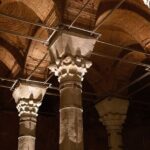
- 336 marble columns: it’s visually dramatic, even when you are not a architecture nerd.
- Medusa head carvings: one upside down, one sideways, plus the mythology context via audio.
- Skip-the-ticket-line, not security: entry can still include mandatory checks.
Basilica Cistern at a Glance: What You’re Really Buying
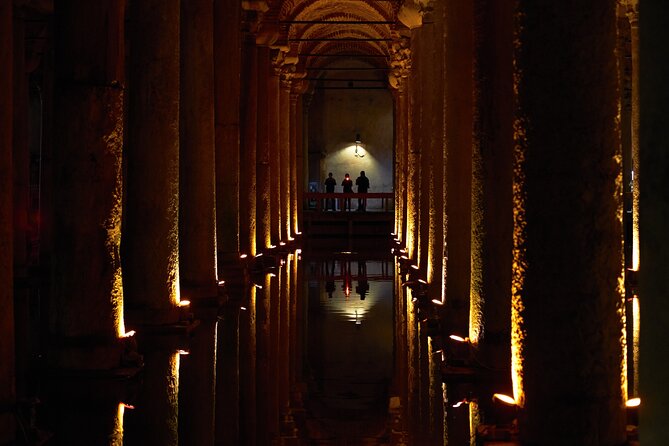
You’re paying for a smoother entry flow and a story-led visit to one of Istanbul’s most atmospheric spaces. The Basilica Cistern is old-school impressive: built in the 4th century, enlarged in 532 AD, and used as a water storage site during Byzantine times. Under Justinian I, it was expanded to feed the Great Palace, with water delivered from a reservoir near the Black Sea via aqueducts totaling about 20 kilometers.
What makes this experience worth it is the combination of timing and context. Skip-the-ticket-line entry helps you avoid one common headache—queue time—while the audio guide explains what you’re seeing, including the Medusa heads tied to Greek mythology. A cistern sounds odd on paper. Under the ground, it becomes a mood: cool air, echoes under stone, and columns that make you slow down.
Still, keep your expectations grounded. The tour name emphasizes skipping the ticket line, but the info also makes clear you cannot skip security lines. So think of this as a “reduce the waiting” plan, not a “no lines ever” magic wand.
You can also read our reviews of more tours and experiences in Istanbul.



Price and Value for a Skip-the-Line Cistern Tour
At $55.61 per person, this is not the cheapest way to see the Basilica Cistern. But you’re buying two things that matter when you travel: time and reduce-risk planning.
First, the visit is about 1 hour. For a site like this, that’s a solid sweet spot. It gives you enough time to walk the main viewing areas, take in the scale (336 columns is not a quick glance kind of number), and still listen to the audio guide without feeling rushed.
Second, the value is in how the audio guide turns a visual stop into an interpretive one. The Medusa heads can feel like random spooky decoration if you do not get the story. With the audio guide, they become a thread that connects mythology to Byzantine-era fascination with symbols.
Here’s the real value equation: if you’re the type who wants to know what you’re looking at and you want to avoid wasting time in queues, the price starts to make sense. If you’re fine wandering without explanations and you do not mind potentially handling tickets on the spot, you might decide differently.
Getting In: QR Codes, Email Timing, and the One Thing Not to Ignore
The biggest practical factor is your QR ticket setup. Your QR Ticket and audio guide link are sent by email prior to your tour date. The important detail is that you receive your entry ticket QR codes & audio guide link via separate e-mails from the supplier (Istanbul Tourist Pass) and/or the activity provider—so it’s not always one simple message.
I strongly recommend doing this the day before (or earlier):
- Search your email for anything from the provider and from Istanbul Tourist Pass.
- Check spam and promotions folders, just in case.
- Have your phone charged and your QR codes easy to access.
Also note this clearly: you cannot skip security lines. The info says there could be a line at the entrance, and security is mandatory for all visitors. So even with skip-the-ticket-line entry, you should still build a bit of cushion into your schedule.
There’s a second reason this matters. If your QR code is missing or your email is hard to find, you might end up trying to sort it out at the counter. Having everything ready beforehand is the easiest way to keep the visit smooth.
The 52-Step Descent: What the Underground Space Feels Like
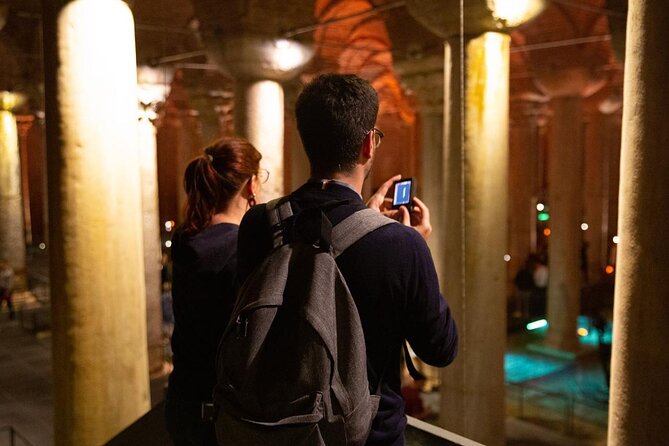
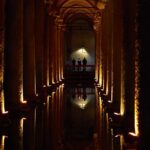
The Basilica Cistern visit starts the moment you descend. You take 52 stone steps down into the cistern entrance, and that alone changes your experience. It’s not just a historical site; it’s a physical one. The air cools quickly, and the sound of your footsteps changes as you get deeper.
Once inside, you’re in a massive underground hall that once stored water for the Great Palace of Constantinople. It’s a cathedral-size space, built during Emperor Justinian I’s reign in the 6th century (532 A.D.) to supply water needs. The cistern stored up to 80,000 cubic meters of water—an almost unbelievable scale that helps explain why the columns feel so numerous.
This is where the stop becomes more than photos. As you walk, you can feel the “engine room” purpose of the place. It looks decorative, but it was built for function: water storage and delivery. If you’re the kind of traveler who likes turning landmarks into stories of daily life, you’ll get a lot out of that.
Practical note: if you’re sensitive to stairs, the descent and return are your only real physical challenge in this 1-hour visit. Plan comfortable shoes.
The Justinian Water Story: From Black Sea Reservoirs to Palace Life
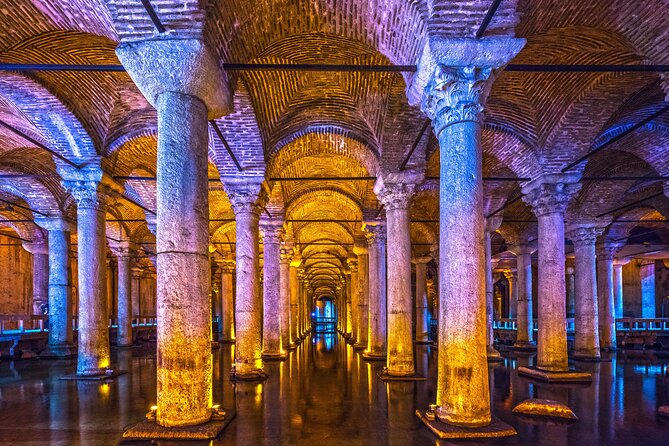
One of the most interesting parts of the experience is that you’re not just looking at ancient stone. You’re learning about a real water system.
Here’s what the audio guide framing adds: during Justinian I’s expansion, water was delivered from a reservoir near the Black Sea through aqueducts totaling about 20 kilometers. That water made its way into this underground cistern, which could hold enormous volumes for the palace above.
In plain terms, the cistern was a buffer. When you think about palace life, you think food, servants, courts, festivals. Behind the scenes, you need reliability—water that doesn’t disappear the moment demand spikes. This cistern was part of the solution.
This context changes how you look at the columns and the space. They are not random architecture flourishes. They’re structural support in a system designed to keep water available. You’ll likely find yourself scanning the hall differently, as if you’re following how water flows—even though you can’t see it moving.


Medusa Heads and the Myth Behind the Stones

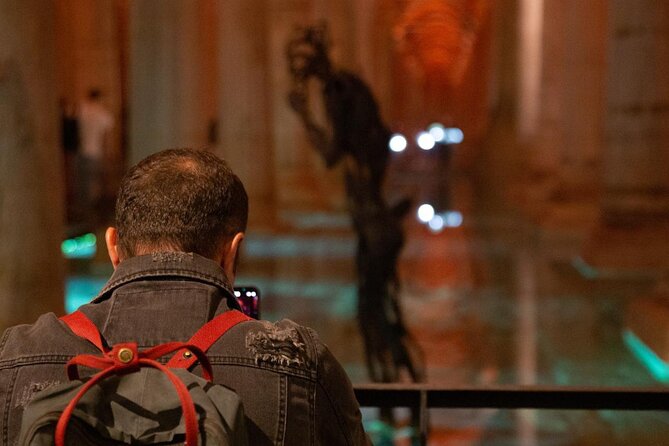
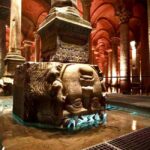
If you only remember one thing from the Basilica Cistern, make it the Medusa heads. The site includes two ancient stone carvings of Medusa. One is placed upside down, and the other is sideways. That odd presentation is exactly why the story matters.
With the audio guide, you get the mythology context—Greek mythology, the Medusa connection, and how the carvings became part of this underground space’s “mystery.” Without that context, it’s easy to treat the Medusa heads as just spooky decoration. With it, you start to notice why they feel deliberately strange.
I like this part because it gives you a focal point. The cistern is big and visually consistent. The Medusa heads break that up into something you can track: you look, you listen, you rotate your perspective, and suddenly the whole hall clicks into place as a designed environment rather than a random maze.
And since it’s an audio guide, you can pace yourself. Pause if you want. Walk on if you’re ready. This is one of those places where moving slowly helps you see the details.
Your 1-Hour Plan: How to Pace the Cistern Without Feeling Rushed
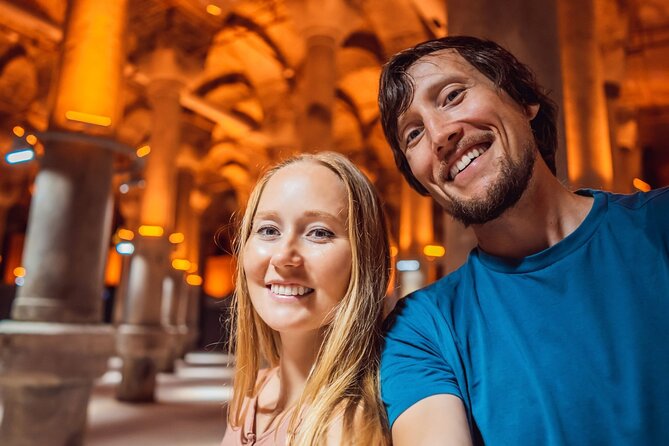
The tour runs about 1 hour. That’s a manageable length, and it works well for a site like this because you’re balancing three things: walking the main routes, taking in the sheer number of columns, and listening to the audio guide.
In practice, I’d plan to do it like this:
- Spend your first minutes adjusting to the temperature and lighting.
- Use the audio guide while you walk, so you’re not stuck trying to read details while listening.
- When you reach the Medusa head columns, slow down and focus on both carvings’ orientation.
Even though it’s “just one hour,” you’ll probably feel as if you did more. That’s because the space is visually layered. You’re never looking at one flat scene; you’re looking down multiple sightlines at once—columns receding, ceiling height, shadows shifting as you move.
One more timing tip: the site is open from 12:00 PM to 6:00 PM on January 1st. If you’re traveling around the New Year period, double-check your day so you don’t plan your cistern stop only to find the hours have shifted.
Audio Guide Experience: Best Way to Use It
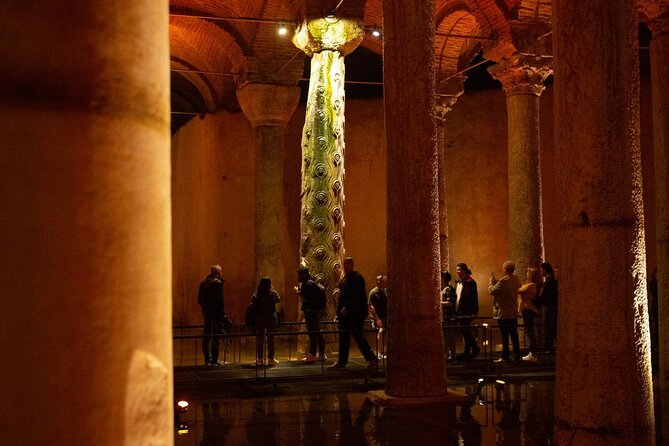
The audio guide is included. You’ll receive it along with your entry info, and it’s designed to walk you through the story as you explore.
Here’s how to get more from it:
- Listen while you’re standing in front of key features, not while you’re walking at full speed.
- Use the audio guide as a checklist for what to look for: the Justinian water system, the cistern’s purpose, and the Medusa heads.
- If you like photos, take them—but don’t let the phone replace the listening. The story will make your photos less random.
The main value of audio here is interpretation. The cistern has a peaceful, cool atmosphere, and that’s great for a calm visit. The guide adds the context that makes the calm feel meaningful instead of quiet-for-quiet’s-sake.
If you want a smoother, lower-stress visit, this is one of the best ways to do it. You won’t be guessing what you’re seeing.
Getting There and Practical Logistics Around Sultanahmet Area
This stop is near public transportation, which matters in Istanbul. You’ll likely be combining it with other nearby sites, and easy transit reduces the chance of late arrival stress.
You also should plan around entrance timing. The info says you cannot skip security and there could be a line at the entrance. That means arriving a little early is smart, even if you bought skip-the-ticket-line entry.
And since your ticket is QR-based, your phone becomes part of the travel kit. I’d keep it accessible and not buried under other apps you have to scroll forever through.
Who This Tour Fits Best (and Who Might Skip It)
This is a great fit if you want:
- A focused 1-hour visit to one of the most atmospheric Istanbul interiors.
- A guided story for the Medusa heads so the carvings feel connected to meaning.
- Reduced queue stress through skip-the-ticket-line entry (while still accepting security is mandatory).
You might reconsider if you:
- Hate dealing with QR codes and email dependencies the day before travel.
- Prefer a completely DIY visit where you do not want to rely on an audio guide.
For most visitors, though, this strikes a sensible balance: structured enough to help you see what matters, flexible enough to move at your own pace inside.
Should You Book This Basilica Cistern Tour?
I’d book it if you care about getting oriented quickly and you like having a story attached to what you’re seeing. The Basilica Cistern is worth visiting even without a guide, but the audio guide and themed Medusa focus make it easier to feel like you understood the place, not just photographed it.
I’d also book it if your schedule is tight and you want to reduce waiting time, knowing that security will still apply. The one reason to hesitate is the QR/e-mail setup. If you’re organized and you’ll check your email ahead of time, this is a smooth way to experience one of Istanbul’s most unusual underground spaces.