REVIEW · VIENNA
Vienna Scavenger Hunt and Highlights Self Guided Audio Tour
Book on Viator →Operated by World City Trail · Bookable on Viator
Scavenger hunts make Vienna easy to master. This one is self-guided and uses observation-based riddles to get you moving between major sights without paying for entry tickets. The only real drawback is how much it relies on your phone setup and internet, so a login or connection hiccup can spoil the flow.
You can start anytime, pause as much as you want, and finish on your own terms. The core walk is about 3.5 km, and you get 24/7 chat support, which matters when you’re doing it at odd hours.
In This Review
- Key Highlights You’ll Feel Right Away
- A Vienna “hunt” that works when you don’t want a rigid tour
- How the app-guided scavenger hunt actually gets you around
- The route: a loop through Vienna’s big names (without extra entry tickets)
- Stop-by-stop: what to look for at each landmark
- 1) Old University Quarter
- 2) Johann Strauss Monument
- 3) Ankeruhr Clock
- 4) Peterskirche
- 5) The Hofburg
- 6) Naturhistorisches Museum Wien
- 7) Albertina
- 8) St. Stephen’s Cathedral
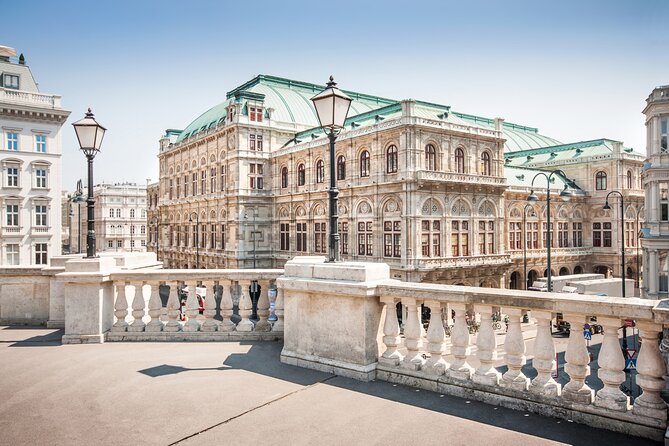
- 9) Vienna State Opera
- 10) Johann Strauss Monument (final)
- Price and value: why $9.61 can work in Vienna
- Best timing, pacing, and weather reality
- Support when the app acts up (and what to do first)
- Who this scavenger hunt suits best
- Should you book Vienna Scavenger Hunt and Highlights?
- FAQ
- Is this Vienna scavenger hunt guided by a person?
- Where does the tour start?
- How long is the experience?
- What distance will I walk?
- Do I need tickets or pay entrance fees?
- What do I need on my phone to run the tour?
- What languages are available?
- How do I get help if something goes wrong?
- Can I cancel and get a refund?
Key Highlights You’ll Feel Right Away
- Start 24/7 with a flexible route so you’re not chained to a fixed departure time
- Riddle-driven sightseeing that nudges you to notice details you’d otherwise rush past
- Outdoor-only stops tied to the sights’ exterior areas, so you avoid extra entry fees
- Audio + GPS via the World City Trail app with multiple language options
- Pause-and-resume freedom with no time limit on access for up to a year
- Affordable group pricing at about $9.61 per person for a solid chunk of time walking
A Vienna “hunt” that works when you don’t want a rigid tour

Vienna can feel like a museum with traffic lights. This experience takes that museum feeling and turns it into motion: you’re walking a planned loop of famous places, but you’re solving the pace yourself. That’s the heart of the value here. It’s not just a list of landmarks. It’s a game that uses the city as the set.
What I like most is that the experience is 100% self-guided. No one waits for you, no group herds you along, and no one stands there with a clipboard. If you stop for photos, duck into a café, or want to linger at one building, you can.
The second big win is the design choice to keep everything outdoor-only. You’re linked to the exterior areas of major attractions, so the activity stays practical even if you’re not in the mood to buy timed tickets. In a city full of paid entrances, that’s a real money-saver.
One thing to keep in mind: since it’s app-based, you’re leaning on your own tech. You’ll want a charged phone, mobile data, and a plan for where you’ll stand to get GPS working before you start.
You can also read our reviews of more tours and experiences in Vienna.


How the app-guided scavenger hunt actually gets you around

You start by downloading the World City Trail app and using your 10-digit booking reference to log in. Then you pick where to begin. The suggested starting point is the University of Vienna area, but you can start and finish anywhere, which is helpful if you’re already near the center.
From there, you’re guided by audio and GPS inside the app. The experience uses prompts that mix text and audio at the stops, with stories and tips along the way (including local restaurant and shop suggestions). It’s available in six languages: EN, DE, FR, NL, IT, ES.
Two practical points can make or break this kind of tour:
- You’ll need an active mobile data connection. If you’re trying to rely on spotty Wi‑Fi, it can get frustrating.
- Avoid VPNs and city Wi‑Fi, because the app can malfunction or disconnect. That’s specific, but it’s exactly the kind of detail that saves your time on the day.
You also have control over your progress. You can pause the hunt, take breaks, and resume right where you left off. There’s no time limit for the activity, and access lasts for a full year—handy if your schedule changes.
If you’re the kind of person who likes to write things down, I’d copy a useful tip from the reviews and bring pen and paper. The hunt is designed for observation and thinking, and having a notepad makes it easier to track clues without stressing your battery life.
The route: a loop through Vienna’s big names (without extra entry tickets)
The tour is built around roughly 10 stops along a walk of about 3.5 km (around 43 minutes of walking time). In real life, expect closer to 2.5 hours because you’ll spend time at puzzles, reading prompts, and taking breaks.
Here’s the flow, in plain English:
1) Old University Quarter
2) Johann Strauss Monument
3) Ankeruhr Clock
4) Peterskirche
5) The Hofburg
6) Naturhistorisches Museum Wien
7) Albertina
8) St. Stephen’s Cathedral
9) Vienna State Opera
10) Johann Strauss Monument (yes, again)
That last repeat matters. It means you’re not just doing a one-way stroll. You’re looping back to a familiar landmark to close the hunt. If you’re short on time, it can also be a built-in “easy exit” because you’ll pass a landmark you already met earlier.
The big benefit of a loop is less decision fatigue. You don’t have to map a route after the hunt starts. You also don’t have to commit to a precise schedule beyond choosing a time to begin.
Stop-by-stop: what to look for at each landmark
Because the activity is tied to outdoor areas, each stop works best when you slow down and use your eyes. The riddle prompts are meant to make you notice something you’d otherwise overlook, like a particular detail on the building or a feature near the landmark. Entrance fees aren’t part of the plan because the puzzles don’t require getting inside.
1) Old University Quarter
This is a great opening stop because it sets the tone: Vienna’s academic district has a calmer feel than the main tourist hubs. It also gives you an easy early win. The first clues tend to feel like orientation, so you get used to how the app asks questions before you hit the bigger icons.
Practical tip: start here if you want the route to feel smooth. A first-time hunt works better when you aren’t solving logistics at the same time.





2) Johann Strauss Monument
You’ll hit this landmark early, then again at the end. That loop structure is why it’s included: it anchors the walk and gives you an obvious point of reference while you’re moving through the middle of the route.
If you like humor in a walking game, this stop is likely to keep you smiling, since the hunt style leans into creative observation rather than strict trivia.
3) Ankeruhr Clock
A clock is a built-in “look here” object. The riddle format is likely pushing you to pay attention to what the clock is showing or how it’s presented from where you’re standing. Either way, it’s a good mid-route break from reading long prompts, because there’s a clear visual focus.
4) Peterskirche
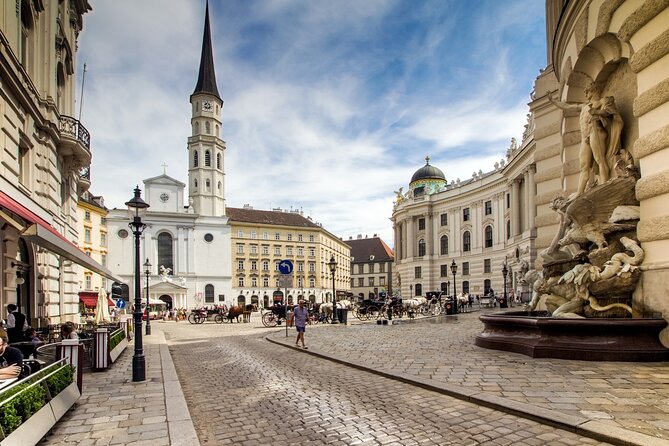
This is your church stop, which usually means you’re moving through a different visual atmosphere than museums or government buildings. For the hunt, it’s less about entering and more about noticing exterior elements while the audio/text guide you to the next clue.
Consideration: religious architecture can make some people want quiet, so keep your phone volume reasonable if you’re near others.
5) The Hofburg
The Hofburg is the palace segment of the route. In a walking hunt, palace-like buildings are perfect because they reward close looking—symmetry, scale, and decorative elements give the app plenty to work with for outdoor puzzles.
If you’re the type who thinks you hate sightseeing tours, this is the stage where the format often wins people over. Instead of staring at a façade passively, you’re solving something with your eyes.
6) Naturhistorisches Museum Wien
Museums can be tricky in an outdoor-only format. The trick here is that the hunt helps you treat the exterior as the clue. You’re not forced into ticket lines, but you still get a “visit” feeling because the riddle points you toward what to notice outside.
It’s also a good stop if you want a moment that feels more structured, like you’re on a planned city walk rather than wandering.
7) Albertina
Albertina is another cultural anchor in the middle of the route. If you’re trying to get a sense of where Vienna’s art and culture clusters, this stop helps connect the dots between the palace zone and the famous cathedral/opera area later in the hunt.
Value angle: since the activity is designed to avoid entrances, you can keep moving even if your time or energy for museums is limited.
8) St. Stephen’s Cathedral
This is the big cathedral stop and usually the moment where the walking game switches from “learning the route” to “seeing the city.” Cathedral areas tend to be surrounded by lots of visual distractions, so the riddle format is helpful. It gives your attention a job.
Practical tip: if you’re visiting during a busier time of day, take a minute to pick a spot where you can safely stand and read the prompts without blocking others.
9) Vienna State Opera
The opera house stop is a classic Vienna photo moment, but the hunt turns it into more than a postcard. Audio and text prompts guide you to the next step, so you don’t just pass by the building—you interact with it.
This is also a nice pacing shift. After the cathedral, you’re heading into a more formal, performance-style landmark, which helps the route feel like a series rather than random stops.
10) Johann Strauss Monument (final)
Ending on a repeat stop is a smart design choice. It makes the finish feel connected to the beginning. You also get a built-in sense of accomplishment: you’re back at a familiar landmark, and the hunt closes the loop.
If you don’t finish all clues, that can still be okay. The whole format is meant to be flexible, and many people are happy taking what they completed rather than treating it like a test.
Price and value: why $9.61 can work in Vienna

At about $9.61 per person for roughly a 3-hour activity window, the value comes from three things:
1) You get a guided narrative structure (audio + GPS) without needing a live guide.
2) You walk a compact set of major sights in a single plan.
3) You avoid entrance fees because the puzzles focus on outdoor areas.
That doesn’t mean it’s a replacement for a deep museum tour. It’s not. This is a city-walk experience that helps you get oriented and entertained while you’re already in Vienna.
I’d also think about your day. If you’ve got limited time and you want the highlights without spending the day in lines or ticketed attractions, this format fits nicely. If you already plan to visit multiple paid interiors, you may still like it as a fun “add-on” that helps you connect the dots outside.
One reviewer critique is worth noting: some people felt the experience is a bit like using another app rather than a fully integrated guided circuit. If you’re sensitive to that, you might want to treat this as a fun, low-cost way to add story and structure—not as a replacement for a traditional guided tour.
Best timing, pacing, and weather reality
The hunt runs from 12:00 AM to 11:30 PM, so you can start at a time that fits your itinerary. That’s especially useful in Vienna, where mornings can be calmer and evenings can be lively.
Timing-wise, you can expect:
- About 43 minutes of walking time
- Around 2.5 hours for the whole activity on average, depending on your pace and breaks
There’s also a weather and illness promise: if bad weather or an illness keeps you from going, you can do it on another day. You can even switch to a different city via their support process. Since the tour is outdoor-only, that backup matters.
Practical gear advice is simple: wear weather-appropriate clothes and comfortable walking shoes. The activity is built for walking, and Vienna’s sidewalks can be uneven depending on where you stand for puzzles.
Support when the app acts up (and what to do first)
This experience offers 24/7 live support via chat. It’s good to know this upfront because app-based tours can run into real-world issues: weak GPS, a full cache, a login problem, or connection drops.
One negative review described a login failure and a long back-and-forth process, which led to missing the tour. The response they received pointed to using the 24-hour support chat. The practical lesson is clear: if your login fails, don’t wait until you’re already tired and standing in Vienna. Use the chat support fast and try basic fixes like clearing cache or re-downloading only if support tells you to.
Also note there’s no phone support, only the chat link. If you hate chat-based troubleshooting, that’s something you should weigh before booking.
Who this scavenger hunt suits best

This works well if you want:
- A fun intro to Vienna that doesn’t require a live guide
- A self-paced walk where you can stop and go
- A low-cost activity that mixes big landmarks with observation
- An experience that’s easy to fit into a travel schedule thanks to the 24/7 start window
It may be less ideal if you:
- Don’t want to rely on mobile data or GPS
- Are uncomfortable troubleshooting app logins
- Expect long, lecture-style storytelling at every stop
- Prefer a traditional guided tour with deeper explanations
In one review, the hint about enjoying the medium-easy difficulty level suggests this is approachable even if you’re not into puzzle games. The structure is designed so you can still enjoy it if you finish fewer clues than planned.
Should you book Vienna Scavenger Hunt and Highlights?

I’d book this if you want a practical, budget-friendly way to stitch together Vienna’s most famous sights into one walking day. The outdoor-only format, the GPS/audio structure, and the ability to pause and resume make it feel like freedom with rails.
I’d skip it or reconsider if you’re traveling with a weak phone setup, limited data, or you’re the type who hates app-based logistics. Since the tour depends on the World City Trail app and mobile connection, it’s best when you’re ready to trust your phone.
If you do book it, do one thing before you leave your hotel: check that your app can log in and that you’re able to load the experience without a VPN. Then bring comfortable shoes, and consider a small notebook for clues. That’s the difference between a smooth treasure-hunt stroll and a frustrating tech exercise in the center of Vienna.
FAQ
Is this Vienna scavenger hunt guided by a person?
No. It’s 100% self-guided. No one meets you, and you can start anytime.
Where does the tour start?
The suggested start is the University of Vienna at Universitätsring 1, 1010 Wien, Austria.
How long is the experience?
It’s about 3 hours approximately, with around 2.5 hours typical for the activity, depending on your pace.
What distance will I walk?
The walk is about 3.5 km, with walking time around 43 minutes.
Do I need tickets or pay entrance fees?
No. The puzzles relate to outdoor areas of the attractions, and there are no entrance fees needed for the activity.
What do I need on my phone to run the tour?
You need a fully charged smartphone and an active mobile data connection. Disable any VPN and avoid city Wi‑Fi, since the app can malfunction or disconnect.
What languages are available?
The tour is available in EN, DE, FR, NL, IT, and ES.
How do I get help if something goes wrong?
You can contact 24/7 live support via worldcitytrail.com/chat. Phone support is not available.
Can I cancel and get a refund?
Yes. You can cancel for a full refund if you cancel at least 24 hours in advance of the experience start time.