REVIEW · NAPLES
Naples: Herculaneum Entry Ticket with Digital Audio Tour
Book on Viator →Operated by Vox City International Ltd · Bookable on Viator
Herculaneum feels like time paused. This fast-track entry gets you into the Parco Acheologico di Ercolano, where Roman homes and streets were sealed by the 79 AD eruption of Mount Vesuvius. I like that the ticket is self-paced with a digital map and multilingual audio, so you can spend extra time where your interests pull you in, whether that’s opulent villas or the markets of everyday city life. The main drawback: the audio app and GPS can be hit-or-miss, and some areas may not get as much guidance as you’d hope.
I also like the preservation story here. Unlike its louder neighbor Pompeii, Herculaneum’s higher level of preservation can make the site feel intimate—doors, papyrus, and even food survived under volcanic ash. The audio is offered in English, French, Italian, and Spanish, but because this isn’t a guided tour, you’ll want to be comfortable navigating on your own if the app doesn’t sync perfectly with the markers.
If you hate troubleshooting on your phone, plan for Plan B: download the audio correctly before you arrive and keep your own curiosity in motion even if the guide is uneven in coverage.
In This Review
- Key highlights worth your time
- Herculaneum in Naples: why this ruined Roman city feels different
- Fast-track entry and the self-guided approach (what you’re really buying)
- Where you enter: the park address and how to get in smoothly
- What you’ll see at Parco Acheologico di Ercolano
- The self-guided pacing: a real plus for independent walkers
- Digital audio tour reality check: when GPS or sync is shaky
- How long should you plan for? (and how to avoid feeling rushed)
- Best match: who should book this ticket
- Price and value: is $29.04 a good deal?
- Should you book the Herculaneum digital audio entry ticket?
Key highlights worth your time
- Fast-track entry to the Parco Acheologico di Ercolano, so you spend less time waiting and more time walking the ruins.
- Multilingual digital audio (English, French, Italian, Spanish) that you access on your own device.
- A preserved Roman town, where volcanic ash protected everyday details like doors, papyrus, and even food.
- More intimate than Pompeii, with a calmer scale and often better preservation in key areas.
- On-site navigation support via a digital map and marker-based stops—useful when you’re moving between houses and streets.
Herculaneum in Naples: why this ruined Roman city feels different
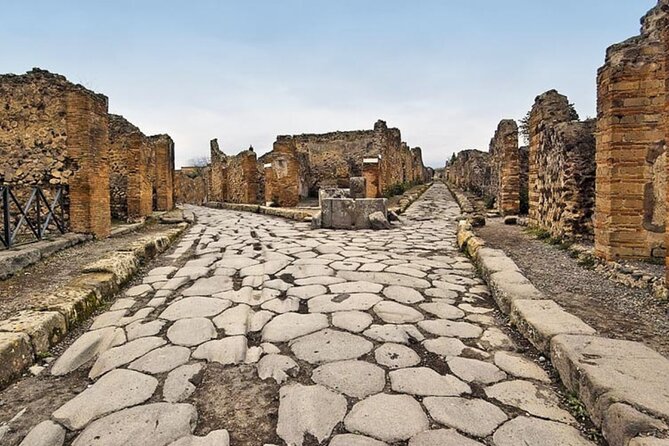
Herculaneum isn’t just another stop on a Vesuvius itinerary. It’s a snapshot of daily life with unusually strong preservation. The eruption of Mount Vesuvius in 79 AD smothered the city in volcanic ash, freezing buildings and objects in place far more than at many other archaeological sites.
That matters for what you experience. You’re not only looking at big ruins from a distance—you’re walking through a city where stone-slab roads, house layouts, and the feel of neighborhood structure still come through. Many areas remain unexcavated, which adds a practical reality check: you’re seeing what’s been uncovered so far, and that can shape your expectations about completeness.
If Pompeii is like a huge, dramatic open-air textbook, Herculaneum is more like a smaller one with pages that didn’t get torn out. And because it includes more glimpses of wealth alongside more everyday spaces, you get a wider sense of Roman life in one visit. The result is a site where you can stay focused for the full 2 hours without it feeling repetitive.
You can also read our reviews of more tours and experiences in Naples.

Fast-track entry and the self-guided approach (what you’re really buying)
This ticket includes admission and a digital audio guide. It does not include a live guided tour. That’s an important value call.
You’re paying for:
- Entry to the park
- A digital audio experience in multiple languages
- Your own pace, plus map-based navigation prompts
You’re not paying for:
- A person standing next to you to explain everything in real time
- On-site audio support staff who can fix your device while you’re there
So for value, the ticket works best when you’re ready to do light tech work. You’ll download audio (via a QR code) and use your mobile phone for playback and e-ticket presentation. If your phone battery is shaky or you hate apps, you’ll want to plan extra care.
The upside is flexibility. With self-paced audio, you can slow down for a quieter room, speed up through sections that don’t grab you, and spend your time where your brain says yes. With a guided tour, you’re usually pulled along at someone else’s speed.
Where you enter: the park address and how to get in smoothly

Your redemption point is at the Archaeological Park of Herculaneum, Corso Resina, 187, 80056 Ercolano NA, Italy. This is inside Ercolano (Herculaneum), right at the park entry area.
A few timing details make a real difference here:
- Hours run 8:30 AM–7:30 PM (from 03/16/2025 to 10/14/2025)
- Hours run 8:30 AM–5:00 PM (from 10/15/2025 to 03/15/2026)
- Last entry is 90 minutes before closing
That last point matters because many self-guided tours “feel” shorter than they are. If you arrive late, you can lose the best part of the walk without noticing until you’re already turning back.
When you arrive:
- Show your e-ticket on your mobile device to staff at the park
- Scan the QR code on-site to download the audio guide prior to arrival (this is the key step you don’t want to skip)
Also, e-tickets are available for download within 24 hours before your travel date, and they’re delivered via WhatsApp within that same window by Vox City. Keep that message handy—seeing the QR code and verifying your ticket before you get there can prevent last-minute stress.
What you’ll see at Parco Acheologico di Ercolano
You’re spending about 2 hours at the park, and that’s typically enough time to follow the main flow without sprinting.
The overall story is the same wherever you start: this is an ancient Roman city preserved after Vesuvius’s eruption. But what you experience is broken into spaces—roads, houses, and public areas—connected by movement through the site.
Here’s what the digital audio and map are designed to highlight:
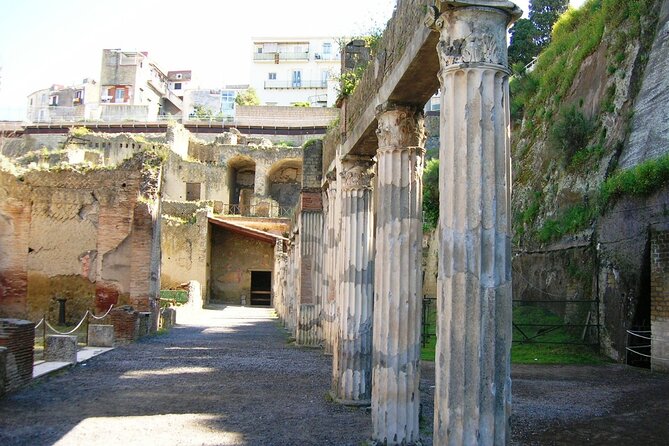
- Ancient roads lined with stone slabs (the walk itself is part of the story)
- Opulent villas (where wealth shows up in layout and preserved features)
- Historic markets (where you can get a sense of daily commerce)
- Different neighborhoods that illustrate Roman life in a way that can feel more personal than a bigger, busier site
And yes, the preservation theme is not just marketing language. Herculaneum is known for objects surviving under volcanic ash, including:
- Doors
- Papyrus
- Food
Even if you don’t spend time reading every label, knowing that these everyday items survived changes how you look at the houses and spaces. You’re not just viewing architecture—you’re imagining what people touched and used.
The self-guided pacing: a real plus for independent walkers
The audio tour is meant to carry you along at your own speed. Practically, that means:
- You can pause for photos without guilt.
- You can revisit an area if it clicks after you hear the explanation.
- You can skip sections if the audio isn’t matching where you are.
That last point leads to the main caution.




Digital audio tour reality check: when GPS or sync is shaky
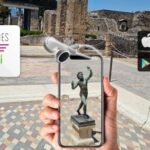
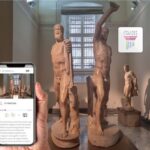
This experience depends heavily on your phone and on the audio app behaving well. The park is not a flat parking lot; it’s a complex ruin layout with markers. If the app doesn’t find GPS reliably, your audio stops may not align cleanly with what you’re standing in front of.
In plain terms, you might face one or more of these issues:
- The app may struggle to lock onto your exact location.
- Audio stops may not match the Herculaneum markers in the way you expect.
- Some parts of the site may feel like they get less coverage than you’d like.
And the consequence is easy to understand: you may finish the walk quicker than the audio intends, or you might want to look up extra context while you’re on-site.
If that sounds annoying, you still can have a great visit, because the park itself does the heavy lifting. The audio is a bonus layer, not the foundation. I’d just treat the audio like a helpful companion, not like a perfect guided narrative.
Practical ways to reduce friction:
- Download everything you can before you step inside.
- Bring a fully charged phone and a compact charging option if you have one.
- If your location isn’t updating, switch to reading signs and following your own route until GPS catches up.
How long should you plan for? (and how to avoid feeling rushed)
You’re scheduled for around 2 hours. That’s a good match for Herculaneum because the site is substantial but not as overwhelming as the larger sites.
Here’s a simple way to plan:
- Give yourself time for at least one slower circuit through the main highlights.
- Expect breaks for looking at preserved details and reading labels.
- Remember last entry is 90 minutes before closing, so don’t start too late in the day.
A 1-hour visit can happen if you move quickly and the audio coverage doesn’t slow you down. If you want deeper context, plan closer to the full two hours, or even a bit under if you’re okay with skimming the explanations.
Best match: who should book this ticket
This ticket fits best if you:
- Like self-guided travel and want control over your pace
- Want a low-stress way to access multilingual audio without joining a group
- Are comfortable using your phone for tickets, maps, and audio playback
- Appreciate Roman sites for the day-to-day details—streets, houses, and preserved objects
It’s less ideal if you:
- Want a human guide to explain everything on the spot
- Expect the audio app to function flawlessly with perfect GPS
- Don’t want to bring a mobile phone into the mix
Because the tour doesn’t include a guided tour and doesn’t provide a mobile device or headset, you’ll need your own phone—and earbuds/headphones if you want audio at a comfortable volume.
Price and value: is $29.04 a good deal?
At $29.04 per person, you’re paying for entry plus a digital audio experience, and you’re avoiding some friction of figuring out the site from scratch. Fast-track entry is especially valuable in peak seasons because it can reduce waiting time.
The value equation depends on your style:
- If you’ll actually use the audio guide and digital map, it’s a solid add-on. The multilingual commentary helps when you don’t want to rely on your own research in advance.
- If you’ll likely struggle with GPS syncing or you’re the type who wants deeper explanations from a live guide, then you may feel like the audio isn’t enough for the price.
My practical take: treat this as a good, cost-controlled way to access the site well. If you want a more guided, teacher-style narrative, you’d probably prefer a guided tour format instead. But for many independent travelers, the combination of preserved ruins and self-paced audio is exactly the right pairing.
Should you book the Herculaneum digital audio entry ticket?
Book it if you want an efficient entry into one of the most fascinating Vesuvius-era cities and you like exploring on your own timeline. The preservation details (doors, papyrus, even food under ash) are the real star here, and the ticket gives you the structure to find them without needing to hire a guide.
Skip or switch options if you hate phone-based navigation, because this experience relies on the app. And if you want heavy, highly specific coverage house-by-house, know that the audio range and marker sync may not feel complete.
If you do book, do one thing that improves your odds: download the audio via the QR code and make sure your phone is ready before you arrive. Then walk slowly enough to let the ruins do their work. Herculaneum is at its best when you’re not rushing.