REVIEW · PALM SPRINGS
Death Valley National Park Self-Guided Audio Driving Tour
Book on Viator →Operated by Adventures with Action · Bookable on Viator
Death Valley can feel like another planet. This self-guided drive adds offline audio GPS so you’ll hit the big sights and understand what you’re seeing. You get 80+ miles of route, 55+ story stops, and a 4–5 hour plan that you can pause whenever you want.
I especially like the value per car: it’s $16.99 per group (up to 4), so four people can split one purchase. I also like that the audio plays hands-free based on your location, which makes the drive calmer and lets you focus on the views instead of fumbling with your phone.
One thing to plan for: this works best when you download the tour on strong wifi/cellular first. Death Valley can have spotty service, and a couple of buyers reported tech or entry-point confusion, so you’ll want to match the app version to where you start.
In This Review
- Key things I’d plan for
- Why an Audio-First Drive Makes Sense in Death Valley
- What You Get: 80+ Miles, 55+ Stories, and Real-Time Pacing
- Getting Started at the Right Entry Point (This Matters)
- Stop-by-Stop: Death Valley Junction to Borax
- Death Valley Junction
- Borax
- Dante’s View and Twenty Mule Team Canyon: Big Photos, Short Time
- Dante’s View
- Twenty Mule Team Canyon
- Zabriskie Point: Erosion You Can Read
- Furnace Creek Visitor Center and Golden Canyon: The One Walk
- Furnace Creek Visitor Center
- Golden Canyon Trail (Out and Back)
- Mars Hill, Artist’s Palette, and Devils Golf Course
- Mars Hill
- Artist’s Palette
- Devils Golf Course
- Badwater Basin: The Lowest Point in North America Moment
- Price, Value, and Why $16.99 Per Car Changes the Math
- Offline Download, Car Stereo Setup, and Common Snags
- Who This Tour Fits Best (and Who Might Feel Frustrated)
- Should You Book This Death Valley Audio Driving Tour?
- FAQ
- How long is the Death Valley National Park self-guided audio driving tour?
- How much does the tour cost?
- Do I need a Death Valley National Park entrance ticket?
- Will it work if there is no cell service in the park?
- Is the tour hands-free while I drive?
- What language is the tour offered in?
- What are the tour operating hours?
- How do I start the tour on site?
- Can I pause and resume during the drive?
Key things I’d plan for
- Offline audio that runs without signal after you download the app and tour
- Hands-free GPS playback that starts the next story as you move
- Per-car pricing (up to 4) keeps the cost down versus per-person tours
- A smart mix of viewpoints and short walks, including Golden Canyon
- Some drives involve rugged/unpaved roads, so drive slow and watch for changes ahead
- Multiple starting-point versions in the app, so pick the one that matches your entry
Why an Audio-First Drive Makes Sense in Death Valley
Death Valley is not a place where you want to be constantly checking your phone. Heat, long distances, and long stretches between landmarks make navigation stressful. This format solves that with location-triggered stories, so you can keep your eyes on the road and your attention on the scenery.
I also like that the tour is designed to work even when you’re away from cell towers. The instructions are straightforward: you download the tour while you have strong wifi/cellular, then you’re good for offline use. That’s a big deal in a park where service can be hit-or-miss.
The route is long enough to feel like a real “tour day,” but not so rigid that you’re trapped. You start anytime, pause anytime, and follow the audio cues at your own pace. That flexibility matters because timing here is everything—sun angle changes fast, and you may want extra time at Badwater Basin or to get a second photo at Dante’s View.
You can also read our reviews of more tours and experiences in Palm Springs.



What You Get: 80+ Miles, 55+ Stories, and Real-Time Pacing
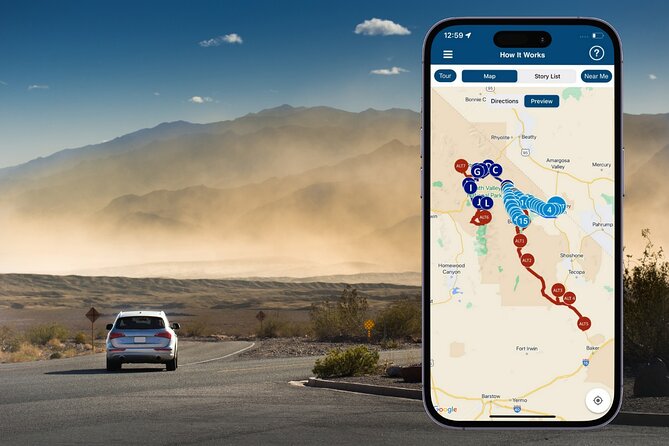
The tour covers an 80+ mile drive and is built around 55+ audio stories. The full loop is about 4–5 hours, which lines up well with how people actually experience Death Valley: lots of short stops, a few iconic viewpoints, and one walk that stretches your legs.
Instead of bombarding you with a single long lecture, the audio is split into manageable chapters tied to specific locations. The value is practical: you learn what you’re looking at without needing to research each pullout. And because the stories play automatically, you don’t miss the next stop while you’re parked trying to read a sign.
There’s also a “you can go at your pace” rhythm built in. If you want a snack break, you can take one. If you want a longer look at the Panamint Mountains at sunset, you can do that too. Just follow the tour route and posted speed limits for the smoothest experience.
Getting Started at the Right Entry Point (This Matters)
This tour is private and self-guided—no ranger or guide meets you at the start. You go to the starting point and the audio begins automatically when you enter the first story point.
Here’s the important part: the app includes multiple versions depending on where you start. The support notes mention options like:
- East Entrance (Death Valley Junction)
- Furnace Creek Visitor Center
- North Entrance (Beatty’s Entrance)
- West Entrance (Towne Pass)
So before you roll out, make sure you launch the version that matches your planned starting point and direction. If you don’t, you can end up trying to “catch up” with story timing, which is exactly the kind of frustration you can avoid with 30 seconds of checking.
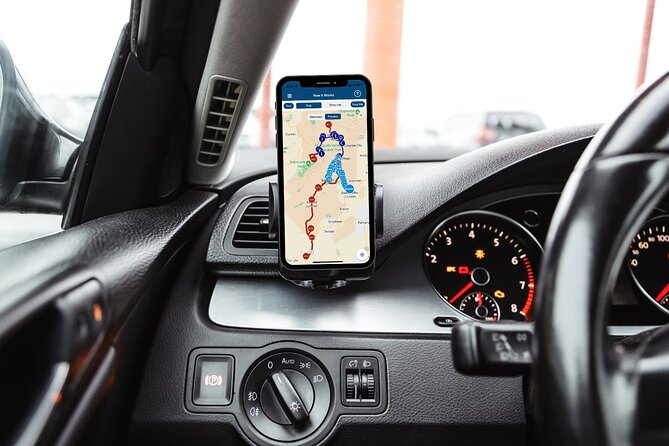
Also note the audio setup tip: connect your phone to the car stereo using Bluetooth, USB, or AUX. If you prefer headphones while walking, that’s compatible with the experience style, and it can keep audio crisp when you’re out of the car.
Stop-by-Stop: Death Valley Junction to Borax
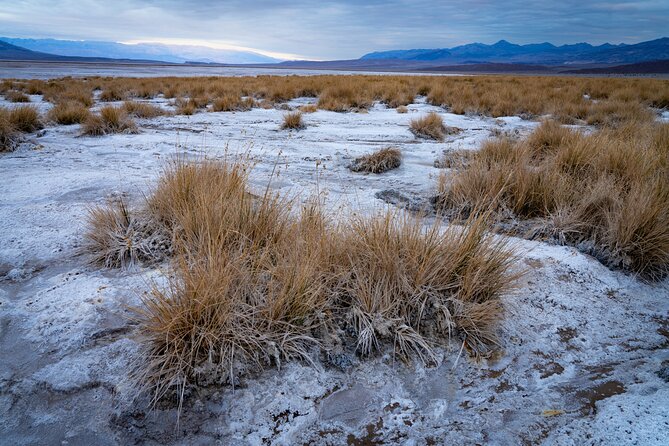
Death Valley Junction
Even with the ominous name, Death Valley Junction is the place to orient your brain. The audio starts here by framing what makes the valley so extreme and why that matters for what you’ll see next. It’s a quick kickoff stop—about 5 minutes—so you’ll be back in your car fast.
This is a good point to confirm two things: your audio is playing and your phone is mounted where you can glance quickly between story points (without becoming a hazard). If something feels off, solve it immediately here, not after you’ve already been driving for 30 minutes.

Borax
Borax is the story behind why Death Valley became famous in the Gold Rush era. The audio explains how miners chased metal dreams and ended up discovering borax instead—something just as valuable for industry and trade at the time.
This stop is short (also around 5 minutes). The “value” here isn’t a long museum visit. It’s the context that helps the rest of your route make sense, especially when you’re seeing the rock color changes and the mining-era naming tied to later viewpoints.
Dante’s View and Twenty Mule Team Canyon: Big Photos, Short Time
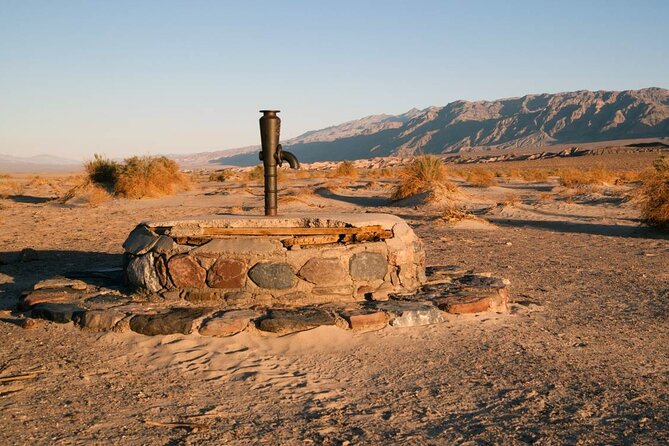
Dante’s View
Dante’s View is where you go for height and scale. The audio guides you to a viewpoint over 5,000 feet above Badwater Basin, on the edge of the Black Mountain Range. It’s phenomenal for photos, but it’s also one of those places where you’ll want 10 extra minutes to just watch light change.
The “how it feels” tip: the view is wide, and the colors shift as the sun angle drops. If you’re thinking about sunset, this is one of your best candidates on the route.
Twenty Mule Team Canyon
After you’ve soaked in the big panorama, this winding road takes you through dramatic desert scenery. The canyon is named for the famous wagon teams that hauled borax—so the audio ties the geography to that real labor.
The road style here can be a speed trap for your imagination. Because the canyon twists between saffron-colored hills and colorful badlands, it’s easy to miss that you’re moving. Go slowly enough to enjoy it, but remember: this is a driving tour and you’ll want to keep a steady pace to stay on story timing.
For color, the audio plan hints that early morning or around sunset can turn rock faces orange. If you’re chasing photos, treat this as a lighting-dependent stop, not just a checkbox.
Zabriskie Point: Erosion You Can Read
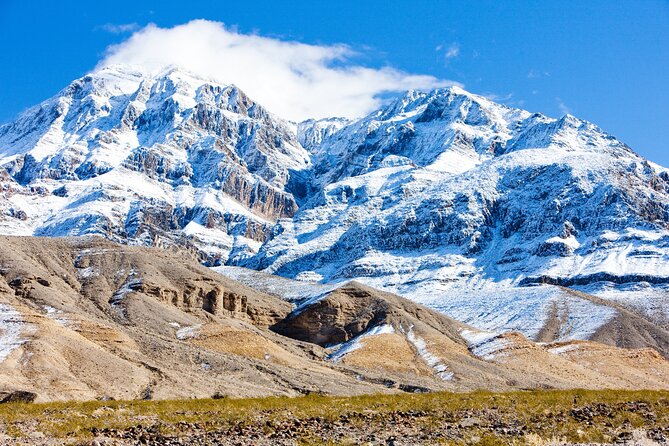
Zabriskie Point is one of Death Valley’s classic photo perches, and the audio gives you a way to “read” the geology. From the Amargosa Mountain range, you can see the badlands below, the salt flats beyond, and the heavy silhouette of the Panamint Mountains in the distance.
This is the kind of viewpoint where the story adds a lot. Without it, you see color and erosion. With it, you start noticing how the valley was shaped over time—so your photos come out better because you’re aiming at patterns, not just pretty colors.
The practical drawback: viewpoints can be windy and bright. Bring sunglasses, and expect glare. Don’t plan on long walks here—this is mostly a park-and-look stop.
Furnace Creek Visitor Center and Golden Canyon: The One Walk
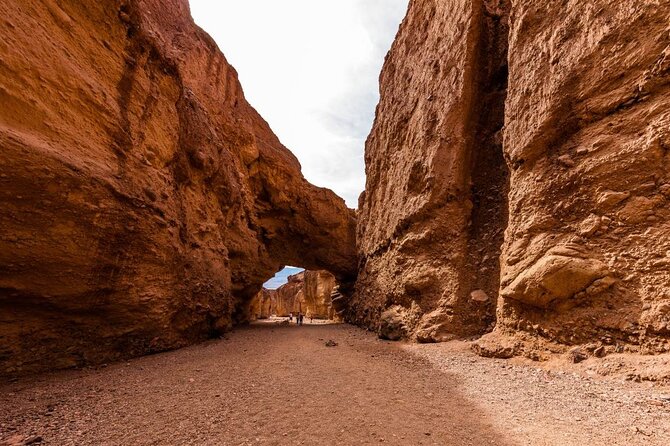
Furnace Creek Visitor Center
At the Furnace Creek Visitor Center, the tour becomes more than just sightseeing. The audio cues you here for practical reasons: snacks, water, and restrooms are available, plus there’s a large thermometer outside that shows the current temperature. It’s an easy photo moment, and it also helps you wrap your head around the “how hot is this place really” reality.
This is also a smart moment to reset. If your day is running long, this is where you can decide whether to push for the hike now or come back later depending on energy and heat.
Golden Canyon Trail (Out and Back)
From Furnace Creek, you can access the Golden Canyon trail. The out-and-back route is about 3 miles total and takes around one hour to complete. The tour notes it’s popular, so you’ll likely run into other hikers.
What you’ll enjoy here is the balance: after a bunch of short viewpoint stops, you get a real walking segment that still fits within the overall 4–5 hour plan. The terrain is part of the experience, and the one-hour timeframe makes it manageable even if you don’t love long hikes.
My practical advice: start early in the day if you can. In Death Valley, heat makes a “normal” hour feel longer.
Mars Hill, Artist’s Palette, and Devils Golf Course
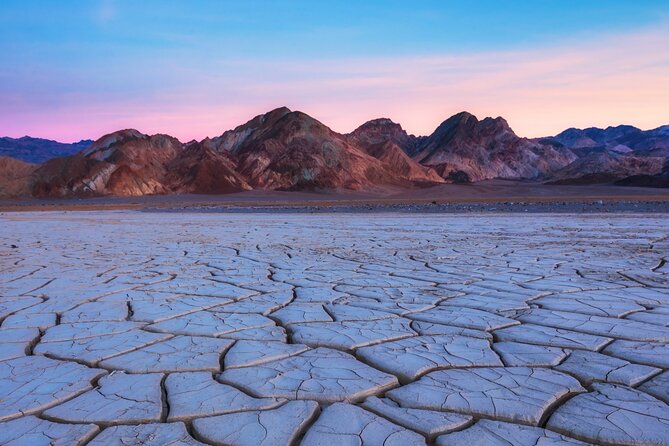
Mars Hill
Mars Hill is a gentle hill that plays with your sense of place. The audio leans into the “this doesn’t belong on Earth” feeling, pointing out how the deep ochre stones and strange formations resemble what people imagine on Mars.
This stop is a great break from driving straight from one major viewpoint to the next. It’s short, but it gives your eyes a new kind of pattern to look for.
Artist’s Palette
This is where color becomes the main event. The audio explains that the canvas look comes from volcanic deposits of iron oxides and chlorite. It contrasts with other areas where colors are shaped by sedimentary deposits, so you learn that not all “pretty rocks” got their colors the same way.
Artist’s Palette is also a good example of why audio is useful here. It helps you understand why the rocks look the way they do, so you don’t just stare at color—you learn what created it.
Devils Golf Course
This is a rugged, unpaved road leading to Devils Golf Course. The audio treats the stop like a joke on our expectations: when you think golf, you expect green and birds. Here, you get nothing of that—just eerie desert shapes that look like they were designed for something completely different.
Practical note: drive carefully. Unpaved roads can mean rough footing, dust, and sudden changes in surface. Slow down, watch your tires, and keep an eye out for where you can safely park.
Badwater Basin: The Lowest Point in North America Moment
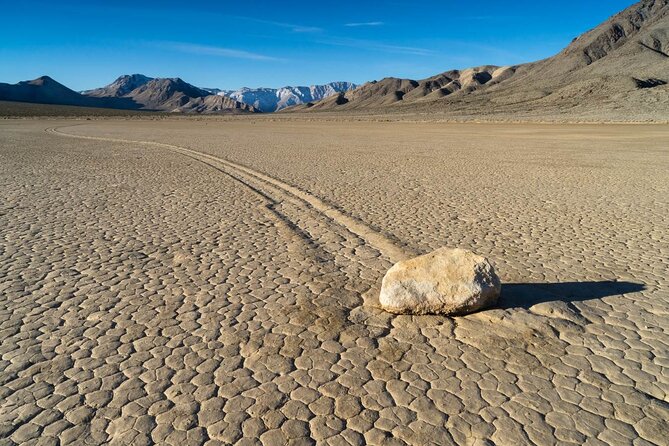
Badwater Basin is the star finish for many Death Valley drives. It’s home to salt flats that spread out across the desert for about 200 square miles. The audio highlights that it sits 282 feet below sea level, making it the lowest point in North America.
The stop is about 5 minutes in the planned rhythm, which means you’ll likely want to adjust your time. If you care about photos, you’ll probably spend more than five minutes just watching the salt shine and the light change. If you’re tired, the short story-driven stop keeps the tour from dragging when you’re ready to move on.
It’s a satisfying end because it ties together the themes you heard earlier: extremes, geology, and how landscapes can look different depending on what the sun is doing.
Price, Value, and Why $16.99 Per Car Changes the Math
At $16.99 per group (up to 4), this is priced like a budget add-on that can still feel like a major upgrade. The key is the per-group structure. If you’re traveling solo, it’s still fair for an offline, auto-playing audio plan. If you’re traveling as two or four people, it can be a bargain because you’re not paying per person.
You also get lifetime access with no expiry. That means you can use it on a future return trip without buying again. It’s not a one-and-done ticket; it’s more like a tool you keep.
Two value thoughts to keep you realistic:
- A park entrance fee is required to visit Death Valley National Park and isn’t included with the tour.
- If the app download wasn’t done well on a strong connection, you might have audio trouble later. In other words, the product can be great, but it depends on you doing the one tech step correctly.
Offline Download, Car Stereo Setup, and Common Snags
The core workflow is simple, but it’s strict in the way it matters. After booking, you’ll get an email and text with setup instructions and a password. You then download the separate tour app by Action. You must download the tour while you have strong wifi/cellular, then it works offline afterward.
Once you’re onsite:
- Open the Action’s audio tour guide app
- Launch the correct version for your starting point
- Enter the password from your email/text
- Go to the starting point; the first story starts automatically
If you want audio in your car, connect your phone via Bluetooth, USB, or AUX. Audio playback is compatible with Apple CarPlay, with navigation features coming soon. Android Auto support is noted as on the way.
If you face audio issues, support is available. And if you had trouble once, lifetime access gives you another shot on a future day without repurchasing.
One more heads-up: government shutdowns may temporarily affect national parks and some attractions. Recent flooding has closed Badwater Road, North Highway, and Bonnie Clare Road, and pedestrian/bicycle access may be limited during repairs. Conditions can change fast, so check official park alerts on your travel day.
Who This Tour Fits Best (and Who Might Feel Frustrated)
This is a great fit if you:
- Want the major sights without paying for a guided group
- Like learning as you go, in short story segments
- Plan to drive between viewpoints and keep breaks flexible
- Need something that works with no cell signal once downloaded
It might feel less ideal if you:
- Want a long, guided museum-style experience at every stop (this is not built like that)
- Have trouble with phones, app setup, or downloads in advance
- Start at the wrong entry version in the app and have to fight timing cues
From the feedback I’ve seen, the most loved parts are how easy the download is, how well offline works, and how smoothly the GPS starts and follows the route. The most common complaints are repetition, tech glitches for some devices, and confusion at entry points if the wrong tour version launches.
Should You Book This Death Valley Audio Driving Tour?
I’d book it if you want a smart Death Valley drive that teaches you while you explore—without the pressure of a group schedule. The offline design is the big selling point, and the per-car price makes it easier to justify than most “organize my day” options.
Skip it—or at least think twice—if you don’t want to do the up-front download step, or if your phone setup is unreliable. In that case, you might prefer a more traditional guided tour or a day plan that doesn’t depend on your device.
If you’re planning a Death Valley first-timer route, this is a strong way to hit the must-see stops like Dante’s View, Zabriskie Point, Artist’s Palette, and Badwater Basin—while still getting time for the one longer walk at Golden Canyon.
FAQ
How long is the Death Valley National Park self-guided audio driving tour?
It typically takes about 4 to 5 hours to complete.
How much does the tour cost?
It costs $16.99 per group, up to 4 people.
Do I need a Death Valley National Park entrance ticket?
Yes. Park entry fees are required and are not included with the tour.
Will it work if there is no cell service in the park?
Yes, as long as you download the tour while you have strong wifi/cellular. After download, it works offline.
Is the tour hands-free while I drive?
Yes. The audio stories play on their own based on your location.
What language is the tour offered in?
The tour is offered in English.
What are the tour operating hours?
The opening hours are 8:00 AM to 5:00 PM, Monday through Sunday.
How do I start the tour on site?
After downloading and launching Action’s Tour Guide App, enter the password from your email/text, then go to the starting point. The first story begins automatically and you follow the audio cues to the next stop.
Can I pause and resume during the drive?
Yes. The tour is designed for you to start and pause whenever you like and go at your own pace.