REVIEW · PALM SPRINGS
Palm Springs and Joshua Tree Self-Guided Driving Audio Tours
Book on Viator →Operated by Adventures with Action · Bookable on Viator
Palm Springs and Joshua Tree feel like two different worlds, and this self-guided audio tour helps you connect the dots while you drive. I love the hands-free, location-based narration that keeps moving as you reach each stop, and I also like that it’s priced for groups: $24.99 per group up to 4. The only thing to watch is that some houses and attractions are partly blocked by walls and gates, so you’ll learn the stories more than you’ll get perfect views.
You’ll also get real value in how the tour is built for your time. There are more than 35 audio stories over a 25+ mile route in Palm Springs, with shorter roadside stops plus optional hikes, so you can skim highlights or slow down where you care most. The drawback is simple: if you try to do every hike listed, the day will run long.
In This Review
- Key highlights you’ll actually use
- How this self-guided driving audio tour works (and why it matters)
- Price and value: $24.99 per group is the whole point
- Palm Springs start point: the Visitor Center parking lot cues the whole route
- Mid-century modern moment: the Kaufmann Desert House story
- Movie Colony drive: Sinatra, Dinah Shore, and the hotel that pulled it together
- Robolights and the Walk of the Stars: playful stops with quick payoff
- Coachella Valley and the airport: how Palm Springs got its setup
- Desert Memorial Park: Sinatra’s goodbye (including the odd details)
- Two trailhead options: Willis Palm Trail and Pushawalla Palms
- Thousand Palms Oasis Preserve: the visitor center is closed, but the trails stay open
- Forever Marilyn and the question of the Marilyn house
- The Frey House II: desert modernism even when you can’t go inside
- Easy hikes inside Palm Springs: Palm Canyon, Andreas Creek, and plant lovers
- Palm Springs Aerial Tramway and Pioneertown: big views and movie-set weirdness
- Joshua Tree: park entrance, towns, and icon stops
- Samuelsons Rock, Willow Hole, and Hemingway Buttress: choose your intensity
- Hidden Valley Nature Trail and the climbing-heavy icons
- Lost Horse Valley, Queen Valley, and the story behind the rocks
- Sky’s The Limit and the visitor centers: stars and wrap-up options
- Best way to schedule it: 3-5 hours doesn’t mean 3-5 full hikes
- Should you book this Palm Springs and Joshua Tree self-guided audio tour?
- FAQ
- Where does the Palm Springs audio tour start?
- How long is the Palm Springs and Joshua Tree driving audio tour?
- Does the tour include offline use?
- What should I do to connect the audio to my car?
- Are park passes included?
- What if I miss a part or the audio doesn’t play correctly?
- Is this tour group-based or private?
Key highlights you’ll actually use
- Start fast at the Palm Springs Visitor Center parking lot (2901 N. Palm Canyon Dr.) with automatic audio playback as you reach each cue
- Offline-first touring: download on strong Wi-Fi or cellular, then the route works without signal
- Mid-century modern architecture content including the Kaufmann Desert House story (plus optional detour routes)
- Desert walking options ranging from short, easy loops to longer hikes with elevation gain
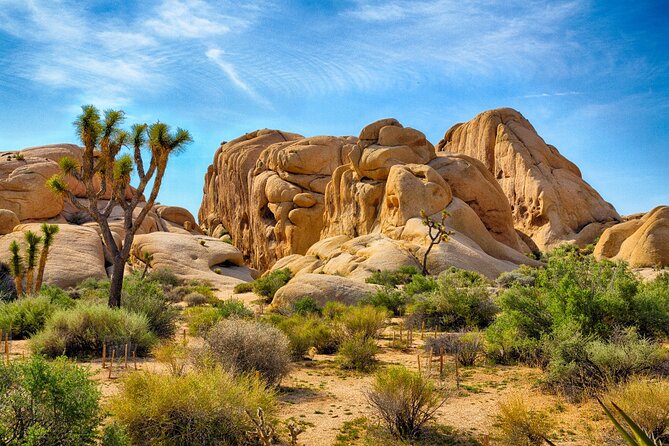
- Joshua Tree viewing and star-stuff with observatory and nature center stop plus roadside icons like Skull Rock
- Group-friendly pricing: buy once per car for up to four people
How this self-guided driving audio tour works (and why it matters)
This is a private, self-guided experience, so you drive your own schedule. Once you download the audio in advance, the app plays stories automatically based on where you are, and it’s designed so you can pause, snack, take photos, and restart whenever you want.
Before you leave, you’ll receive setup instructions and a password by email and text, then you’ll use the Action’s Tour Guide app. You must download the tour while you’re on strong Wi-Fi or cellular; after that, it works offline. If you want audio through your car speakers, connect your phone to the stereo via Bluetooth, USB, or AUX.
One practical tip: location-based audio is fantastic until you go off-script. If you take offshoot paths or detour far from the planned route, the prompts can lag or feel “sideways,” so the best experience comes from staying near the tour route and speed limits.
You can also read our reviews of more tours and experiences in Palm Springs.
Price and value: $24.99 per group is the whole point
At $24.99 per group (up to 4), you’re paying for your car, not per person. That can be a big deal in Palm Springs and Joshua Tree, where parking, tickets, and guided tours can add up quickly.
Also, this is new, lifetime access with no expiry. That means you can use it across multiple trips instead of treating it as a one-and-done activity. If you’re the type who wants flexibility—especially with desert driving—this format tends to be the best match.
Do note what isn’t included: park passes aren’t included. Some individual trail entrances can cost extra too, so plan on small add-ons depending on which hikes you choose.
Palm Springs start point: the Visitor Center parking lot cues the whole route
Your Palm Springs tour begins in the parking lot of the Palm Springs Visitor Center at 2901 N. Palm Canyon Dr. If you’re not already there, head there first so the audio starts at the right place.
A key mindset for this part of Palm Springs: yes, there are famous celebrity homes here, but many are hidden behind walls, hedges, or fences. This tour is still worth it because it tells you what you’re seeing—or not seeing—and why those buildings matter.
If you want a classic Palm Springs architecture payoff, there’s an optional detour. You’ll get the chance to see the Kaufmann and Liberace Houses area; the detour takes about five minutes, and it’s a good call if you’re not racing against time. If you’d rather keep straight-on momentum, you can continue past the detour.
Mid-century modern moment: the Kaufmann Desert House story

The Kaufmann Desert House is described as one of the finest mid-century modern examples in the United States. You’ll learn about Edgar Kaufmann, the Pittsburgh department store businessman, and his ties to major architecture names like Frank Lloyd Wright, who designed his Pennsylvania home Fallingwater.
The Palm Springs connection comes through architect Richard Neutra, known for adaptable, open-design homes that feel modern without feeling cold. Even if the home itself is not fully visible from every angle, the narration helps you “read” the architecture as you look at what’s accessible from the street—especially the iconic gate-and-fence perspective.
Movie Colony drive: Sinatra, Dinah Shore, and the hotel that pulled it together
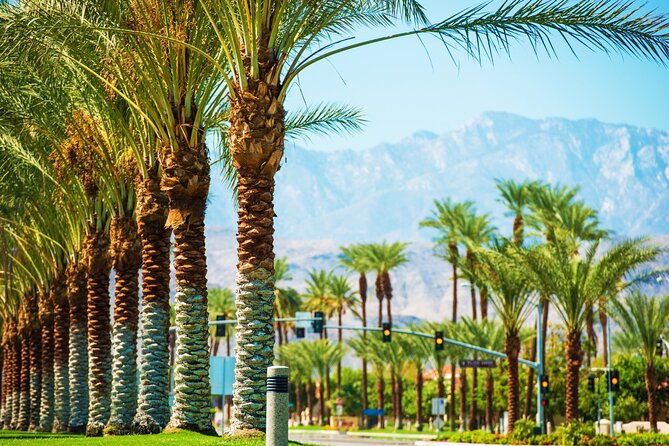
After the early architecture segment, you roll through the Movie Colony, a neighborhood where big Hollywood names moved in during the early 1900s. The audio ties the star factor to place: Frank Sinatra, Dinah Shore, Cary Grant, David O. Selznick, Jack Benny, and Tony Curtis are all mentioned as residents.
This stop isn’t just name-dropping. It explains how the El Mirador Hotel opened in 1928 with features like an Olympic-size pool, tennis courts, stables, and a bell tower that became a Palm Springs landmark. The story then connects that “peace and quiet” desert allure to the architects who built permanent homes, including Richard Neutra, Albert Frey, and Donald Wexler.
If you’re an architecture person, this is one of the most fun parts because it gives context for why Palm Springs looks the way it does.
Robolights and the Walk of the Stars: playful stops with quick payoff
Next up is a colorful sculpture moment: Robolights. The instructions are straightforward—pull over, park, then look for the sculptures peeking out behind trees on the corner of East Granvia Valmonte and North Arquilla Road.
Then comes the Walk of the Stars Palm Springs. This is not only about movie stars. You’ll see 450 stars honoring people tied to Palm Springs as humanitarians, architects, artists, soldiers, athletes, and city pioneers. The audio framing helps you spot names that are larger than Hollywood.
These two stops are ideal if you’re traveling with a mix of interests, because you get variety without losing much time.
Coachella Valley and the airport: how Palm Springs got its setup

When the tour leaves downtown, it shifts to the broader Coachella Valley story. The name Coachella connects to the music festival you probably already know, but the audio keeps it grounded in place and geography rather than just festival hype.
Then you’ll hear about Palm Springs International Airport. In 1939, the U.S. Corps of Engineers looked for space to build an Army Air Corps landing field, and Coachella Valley’s weather and mountains’ wind protection made it practical. After the war, it became a civilian airport, and the story connects modern Palm Springs to its wartime roots.
Desert Memorial Park: Sinatra’s goodbye (including the odd details)
At Desert Memorial Park, the tour brings up Frank Sinatra’s passing in 1998 and mentions items he was buried with. You’ll hear about a bottle of Jack Daniels whiskey, a zippo lighter, Camel cigarettes, and dimes.
It’s the little, specific details that make this stop memorable. Even if you don’t care about celebrity culture, it gives you a sense of how Palm Springs traditions and public memory work.
Two trailhead options: Willis Palm Trail and Pushawalla Palms
Palm Springs isn’t just sightseeing from the road. The tour includes trailhead cues for Willis Palm Trailhead and Pushawalla Palms Trailhead, both presented as moderate hikes with elevation gain.
- Willis Palm Trailhead: about a 4-mile hike with roughly 500 feet of climbing, taking around three hours for a full loop. Spring is highlighted for birds, wildlife, and wildflowers.
- Pushawalla Palms Trail: about 4.5 miles with about 700 feet of elevation gain. You’ll walk on the ridge of the San Andreas Fault and pass palm tree oases where water seeps up from deep below.
Here’s the honest planning note: your overall Palm Springs tour time is listed as about 3 to 5 hours, so doing either hike end-to-end may dominate your schedule. The audio makes these hikes easy to treat as optional add-ons. If you’re short on time, do a partial walk and turn back with the audio still in your pocket.
Thousand Palms Oasis Preserve: the visitor center is closed, but the trails stay open
You’ll reach the Thousand Palms Oasis Preserve, described as magical with walking trails, wildlife, and lush scenery. The visitor center is closed due to storm damage, but the trails are open from sunrise to sunset.
This is a good example of why a self-guided audio tour can feel “smarter” than a rigid itinerary. You can adjust on the fly: use the narration for the meaning of the place, then rely on current conditions for access.
Forever Marilyn and the question of the Marilyn house
The tour includes Forever Marilyn, a huge 26-foot statue designed by sculptor Seward Johnson in 2011. The story notes it was first put up in Chicago for a year, then came to Palm Springs through sponsorship, toured internationally, and later moved to Australia.
Then you get a more complicated local detail: a house at 1326 North Rose Avenue is sometimes treated as Marilyn Monroe’s home on bus tours and maps, but locals say it may not have been hers. This is the kind of reality-check that makes the tour feel more useful than just repeating tourist lore.
The Frey House II: desert modernism even when you can’t go inside
You’ll also be directed toward the Frey House II at 686 Palisades Drive. It isn’t open to the public, but the Palm Springs Museum hosts guided tours of the property.
The audio story focuses on Albert Frey, often called the father of desert modernism. You’ll hear his European training path and that he moved to the United States, then eventually settled in Palm Springs after World War II when the population was booming and people needed homes.
If you’re the kind of traveler who likes design theory, this stop is more satisfying than it sounds. Even from the outside, you’ll understand what to look for and why it matters.
Easy hikes inside Palm Springs: Palm Canyon, Andreas Creek, and plant lovers
The tour then includes two more hike options and a botanical garden.
Palm Canyon Trail is described as pretty easy at 2 miles out and back with about 200 feet elevation gain, typically around an hour. There’s a warning though: there’s an entrance fee. The tour notes you pay at the Trading Post building in the parking lot.
Andreas Canyon Trailhead is an easy mile loop with around 175 feet of gain, typically about half an hour. The audio highlights that you can see over 150 plant species within a half mile, plus palm trees, rock formations, Andreas Creek, and dents in the rock said to be linked to Cahuilla people food prep.
Then comes Moorten Botanical Garden, a must if you like desert plants. Chester Cactus Slim and Patricia Moorten started it in the 1940s, and the story ties his acting background and a Howard Hughes stand-in role to his health journey, including how he needed the dry desert air to breathe.
Palm Springs Aerial Tramway and Pioneertown: big views and movie-set weirdness
The tour calls out the Palm Springs Aerial Tramway, described as the world’s largest rotating tram car. It travels 2.5 miles along Chino Canyon and climbs up to Mount San Jacinto State Park, with the car slowly rotating 360 degrees for views back over the valley. At the top you’ll find restaurants, a gift shop, and hiking trails.
If you’re thinking about time, pair this with a shorter Palm Springs day plan. A tram ride can eat a chunk of your day, but it’s one of the easiest ways to get height and perspective without a strenuous climb.
Then comes Pioneertown, a town created by Hollywood to imitate the Wild West. In 1946, Dick Curtis, Roy Rogers, Dale Evans, and others invested in turning 32,000 acres into a working movie set where films could be shot, and where people could vacation and even build second homes.
If you like places that explain themselves, this is a fun mental switch from Palm Springs modernism.
Joshua Tree: park entrance, towns, and icon stops
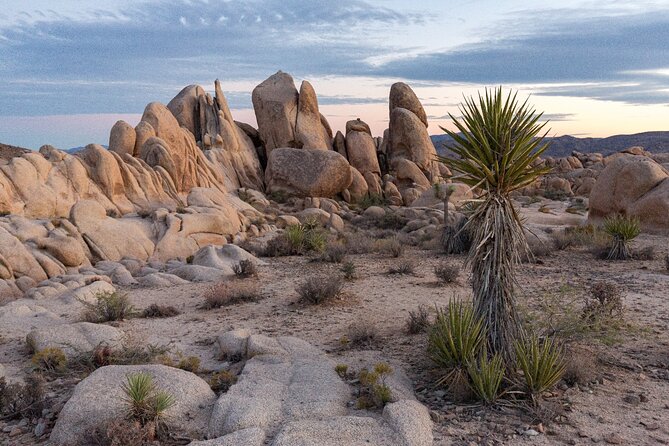
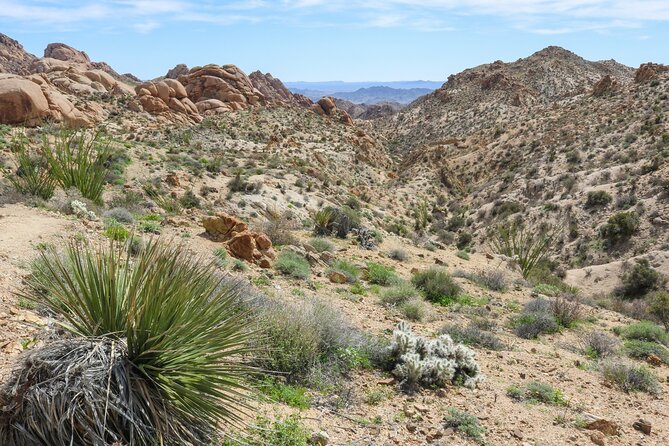
Your Joshua Tree tour begins at the Joshua Tree Visitor Center, then it moves you through the park where two deserts meet. The audio cues are built around what you’ll actually notice: Joshua trees, dramatic scenery, hikes, and the kind of sunset people talk about for weeks afterward.
Before you go deep, you’ll pass through the town of Joshua Tree, with quaint shops and restaurants. It’s a practical place to grab a snack or pick up something small before or after your drive through the park.
From there, the tour includes a mix of short stops you can do in minutes and longer trail options where you’ll want shoes, water, and time.
Samuelsons Rock, Willow Hole, and Hemingway Buttress: choose your intensity
Samuelsons Rock can be accessed via a moderate 3.3-mile trail. The audio tells a strange story: John Samuelson etched musings and declarations onto the rocks decades ago, and they remain as a mystical landmark.
Willow Hole is the long one. The audio says it’s a 7-mile trail to an oasis surrounded by willow trees, described as so surprising that people often mistake it for a mirage. This is not a quick stop, so treat it like a main event if you plan to do it.
Hemingway Buttress is a popular climbing spot with a dramatic rock face that juts up from the earth. The audio mentions boulders that are fun to scramble on and that climbers of different skill levels can find enjoyment here. Even if you’re not climbing, it’s one of those places where the scenery feels active.
Hidden Valley Nature Trail and the climbing-heavy icons
The Hidden Valley Nature Trail is described as an easy, about one-mile trek, including a Wild West gang hideout as part of the story. This is a great “stretch your legs” stop that still fits into a fast-paced driving day.
Then the tour hits Intersection Rock, a hub-like formation visible from far away and featuring climbing routes with named routes. It’s a good reminder that Joshua Tree is popular for more than hiking.
Next, Cap Rock is highlighted as a small boulder perched on a larger rock formation. The audio also points out a quick quarter-mile trail with information about local flora.
Lost Horse Valley, Queen Valley, and the story behind the rocks
Lost Horse Valley gets its name from the McHaney Gang’s misdeeds in the Wild West era. As you drive through, the audio includes story details about a miner trying to recover stolen horses.
Queen Valley is another stop tied to an abandoned mine and the darker history around it, including that the gold found there was a motive behind at least one murder and other events. The tour keeps it grounded in what the valley suggests, even if you’re just moving through by car.
Then comes an iconic roadside formation: Skull Rock. It looks uncannily like a human skull, is easily accessible from the roadside, and is also a trailhead for an easy 2-mile hike. This is a perfect stop when you want photos plus a walk that doesn’t require a full-day commitment.
Sky’s The Limit and the visitor centers: stars and wrap-up options
At Sky’s The Limit Observatory and Nature Center, the audio focuses on both flora and fauna and the sky above. Joshua Tree is a dark sky area, so the narration encourages you to stick around after dark if you can.
Finally, the tour reaches the Oasis Visitor Center in Twenty-Nine Palms area. It’s described as the last stop along the main tour route. If you want to keep going deeper south, there’s a detour route that proceeds south through the rest of the park and exits out the southern gate.
There’s also the General George S. Patton Memorial Museum, described as connected to Camp Young, part of the World War II Desert Training Center. The museum houses historic artifacts, including actual tanks.
Best way to schedule it: 3-5 hours doesn’t mean 3-5 full hikes
Your listed Palm Springs duration is roughly 3 to 5 hours, and Joshua Tree drives plus stops can stretch beyond that if you do longer trails. So plan like a realist.
If you have a half-day:
- Pick the scenic roadside stops you care about most.
- Choose one easy hike or botanical stop, not multiple full loops.
- Keep the longer hikes like Willow Hole or the 4-mile trail options as either early-day goals or next-trip goals.
If you’re traveling with different activity levels, this setup works because you can park, listen, and do a quick loop while the carmates enjoy the drive-to-next-story rhythm.
Should you book this Palm Springs and Joshua Tree self-guided audio tour?
Yes, I’d book it if you want flexible, offline audio help for a desert road trip without hiring a guide every step. It’s especially worth it for couples and small groups since the price is per car, and for anyone who likes architecture, desert ecology, and roadside stories that make the landscape feel less random.
I’d think twice if you need turn-by-turn map visuals all the time or if you’re planning to do every listed hike back-to-back. The experience is best when you’re okay with audio cues and occasional map checking, and when you treat the hike list as options, not mandatory homework.
If that sounds like you, this is a solid way to get a lot of meaningful stops into one drive.
FAQ
Where does the Palm Springs audio tour start?
It starts in the parking lot of the Palm Springs Visitor Center at 2901 N. Palm Canyon Dr., Palm Springs, CA 92262.
How long is the Palm Springs and Joshua Tree driving audio tour?
The experience is listed as about 3 to 5 hours (approx.).
Does the tour include offline use?
Yes. You download the tour while you have strong Wi-Fi or cellular, and it works offline afterward.
What should I do to connect the audio to my car?
After you open the Action’s Tour Guide app, connect your phone to your car’s stereo using Bluetooth, USB, or AUX for the best experience.
Are park passes included?
No. Park passes are not included.
What if I miss a part or the audio doesn’t play correctly?
There’s support available if you face audio issues. The tour works best when you stick to the tour route and speed limit for location-based prompts.
Is this tour group-based or private?
It’s private. Only your group will participate, and the pricing is per group up to 4 people.