REVIEW · CARCASSONNE
Medieval Carcassonne: Interactive Ghost Story & City Game
Book on Viator →Operated by Questo · Bookable on Viator
Carcassonne turns into a phone game maze. I like the hands-on puzzle format that makes you look closely at medieval details you’d otherwise rush past, and I love that it’s private and contactless, so you can move at your own pace. One heads-up: the experience depends on getting the Questo app and quest start working smoothly, so bring a charged phone and plan a little extra time at the beginning.
You’ll walk a roughly 3 km route around the walled city, solving about 10 interactive puzzles while you pick up local stories tied to real sites—Square Gambetta, Notre Dame de la Santé, Porte de l’Aude, and the Cathedral/Château Comtal finish. The tone is not all campfire spooky either: the story includes plague-era suffering and medieval persecutions, so it can be intense in places, especially with kids.
In This Review
- Key things to know before you start
- Price and value: $6 for a self-paced citadel mission
- How the ghost-story city game really works (and what to do before you walk)
- Start at Square Gambetta: La Bastide de Saint Louis and your first search
- Notre Dame de la Santé chapel: plague history in a tight passage
- Pont-Vieux area and the Manufacture Royale connection
- Saint-Gimer Church: Viollet-le-Duc’s modest design puzzle
- Porte de l’Aude: your cinematic river view moment
- Inquisition Museum stop: serious content, clear context
- Cathedral + Château Comtal finish: from Romanesque beginnings to Trencavel power
- Who this is best for (and who should think twice)
- Should you book this Medieval Carcassonne ghost story game?
- FAQ
- How long does the Medieval Carcassonne phone game take?
- Can I start at any time and pause during the game?
- About how long is the walking route?
- What language is the experience in?
- Are monument entry tickets included?
- Is this a guided tour with a person leading the group?
- What should I do if the game won’t start properly in the app?
- FAQ
- What’s the cancellation window for a full refund?
Key things to know before you start
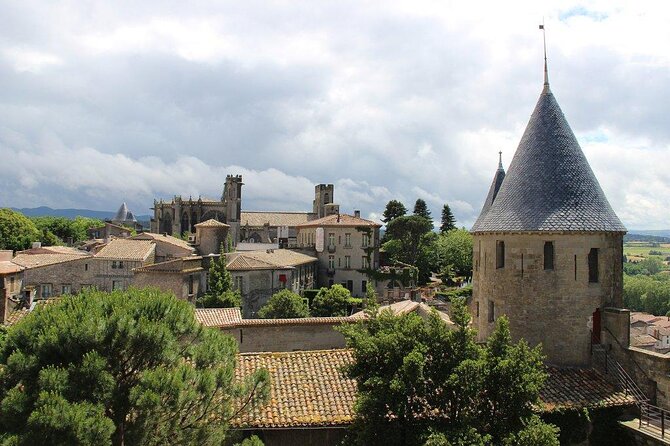
- Phone-led by design: step-by-step directions inside the Questo app guide you between stops.
- 10 puzzles over ~3 km: you’ll answer challenges by looking around at each location.
- Full flexibility on your schedule: start any hour, and pause/resume whenever you want.
- No physical guide: it’s just your group and the app, with a self-paced flow.
- Monument content, not monument tickets: entry tickets to attractions aren’t included.
- Some heavy themes: plague and Inquisition-era material show up in the story stops.
Price and value: $6 for a self-paced citadel mission
At $6 per person for about 1 hour 40 minutes, this is one of those rare “cheap but smart” ways to explore Carcassonne. You’re paying for a structured route, 10 interactive puzzles, and story content delivered right when you need it (standing in front of the building). That’s the real value: the city becomes a scavenger hunt with context.
Two practical things to keep your expectations straight:
- Entry tickets to monuments or attractions aren’t included. The game takes you to places tied to the story, but you might still need to pay separately if you want full museum/castle access.
- Because it’s phone-based, you should treat your setup like part of the tour. If your app launch goes sideways, you can lose time fast.
You can also read our reviews of more tours and experiences in Carcassonne.


How the ghost-story city game really works (and what to do before you walk)
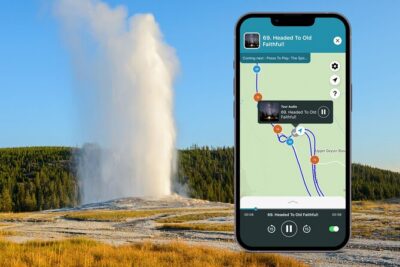
This is an interactive “escape game” style experience through the Questo app. You’ll use the app to get step-by-step guidance from Square Gambetta to Château Comtal, and you’ll move from stop to stop by solving challenges.
The format is simple:
- You arrive at a stop.
- The app gives you a challenge.
- You look around to find the answer in the scene.
- You submit the answer in the app to advance to the next location.
That sounds straightforward, but the small details matter. A few reviews point to common friction:
- Starting can feel confusing if your phone is low on battery or your app isn’t ready.
- Some people struggled with the quest start process tied to their email/QR access.
- One limitation you’ll want to plan for: it’s offered in English, and there’s no mention of Spanish.
My advice: do a quick “pre-flight” check.
- Download the Questo app before you arrive.
- Make sure you know which email was used for your booking (since access may tie to it).
- Charge your phone fully. If you’re the type who never fully charges before a trip, this is where that habit costs you.
Start at Square Gambetta: La Bastide de Saint Louis and your first search
Your route begins in Square Gambetta, on the side of the river Aude opposite the famous Cité. This is a good choice for a self-guided game because it gives you orientation fast. From here, you’re stepping into the bigger story of Carcassonne as a walled power—starting with the older city built by King St. Louis of France (La Bastide de Saint Louis).
Expect your first puzzle to make you slow down rather than sprint. The game nudges you to scan the surroundings for a detail you can actually spot in the real world. Even if you’re not “into puzzles,” you’ll still benefit, because it trains your eyes for architecture and layout—exactly what you want in a city like Carcassonne.
Practical tip: take a moment at the start to re-orient yourself using the app directions. In this kind of city game, one wrong turn early can snowball into wasted time.
Notre Dame de la Santé chapel: plague history in a tight passage
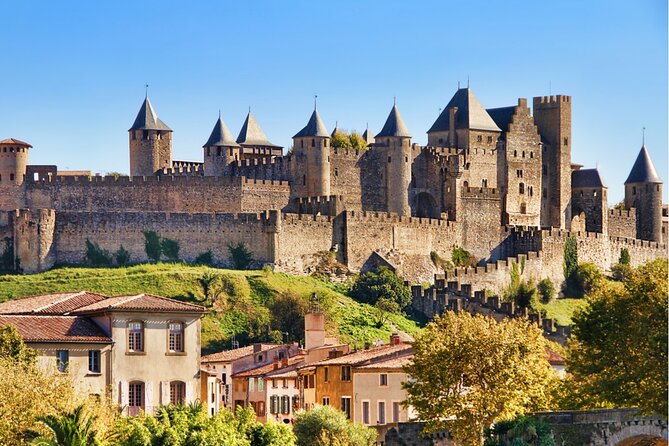
Next up is Notre Dame de la Santé, a small chapel tied to 1527 and built using money from the legacy of Jean de Saix. It wasn’t just a chapel—it served as a hospital for plague sufferers. The app frames it as a “faithful guard” because the chapel sits in a strategically narrow passage between fortified buildings.
This is one of the most meaningful stops because the architecture is small, but the story is large. You’ll feel the reason the chapel mattered: when spaces are tight and movement is controlled, the people inside those spaces are vulnerable in a hurry.
For families: you’ll want to judge the tone here. The subject matter isn’t “children’s spooky.” It’s historical illness and survival, told through story beats and place-based clues.
Pont-Vieux area and the Manufacture Royale connection
As you head toward the Pont-Vieux area, you’ll find a facade that points to Carcassonne’s prosperous phase. The game brings you to a former home of a noble Carcassonnaise family, bought in 1694 by someone close to Colbert. That buyer founded a cloth factory there, which later took the title Manufacture Royale in 1696.
What I like about this stop is that it shifts the mood from defense to industry. Carcassonne wasn’t only walls and battles—it was also work, production, and money.
The practical payoff: you learn to notice that “old facades” can hide specific time periods. The stop description even flags that this building is one of the only ones still visible from that particular prosperous era, which makes it easier to connect what you see to when it happened.
Saint-Gimer Church: Viollet-le-Duc’s modest design puzzle
You then reach Saint-Gimer Church, built between 1854 and 1859 by architect Eugène Viollet-le-Duc. One of the stated goals was modesty, and the church design reflects that: a nave with two aisles and a polygonal apse, set on two vestries, with a porch in front.
This is a helpful pause in the game’s pacing. If your route so far has been heavy on medieval survival stories and city defenses, this stop adds a different kind of reading—how the city rebuilt itself later, with an architect who’s famous enough that people travel to see his work.
The puzzle here likely works the same way as the others: look around for the detail the app wants you to identify. Either way, you’ll come away with a clearer mental model of how Carcassonne isn’t one single time period.
Porte de l’Aude: your cinematic river view moment
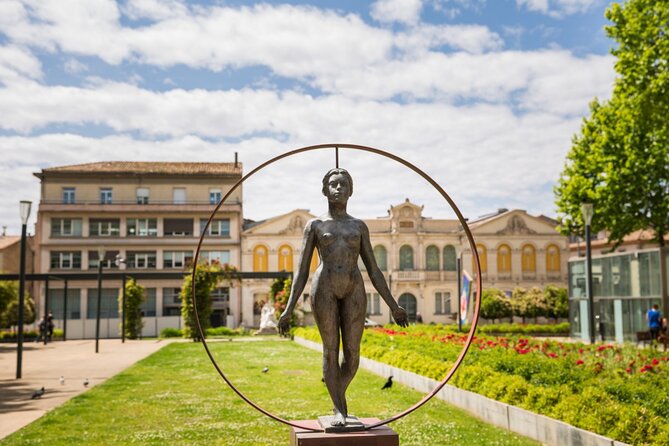
Now for one of the postcard angles: Porte de l’Aude. It’s part of the preserved medieval walled city and overlooks the river. As a game stop, it’s smart because the setting gives you a natural “check your answer” moment—you look at the gate structure, then glance across the water so you actually understand what the gate controlled.
If you like photography, this is the point to slow down. Even though you’re playing, you’ll still want a minute to take in the river view the way the original builders would have experienced it: as a boundary and a route.
Inquisition Museum stop: serious content, clear context
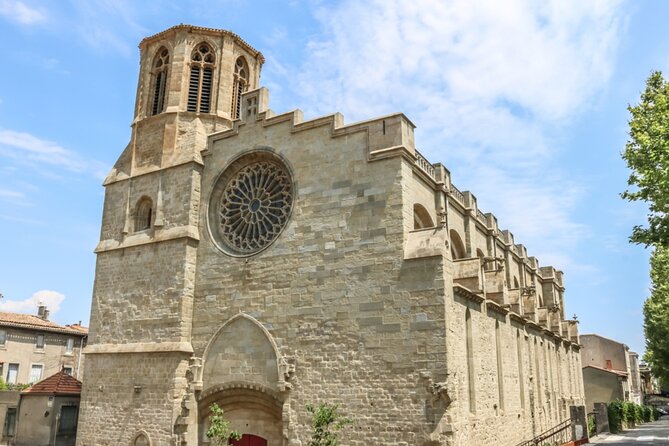
The game makes a stop at the Inquisition Museum, located in a large 17th-century building. This section focuses on the museum’s collection of instruments of torture, described as ranging from the 12th century to the French Revolution. The story element includes characters tied to the period and biographies, plus connections to the Cathar castles as part of that broader history.
This is where you should check your own comfort level. The theme is not light, and the subject matter can be graphic in spirit even if you’re just reading captions and solving a phone challenge.
My practical recommendation:
- If you’re traveling with kids, decide whether this stop is a “skip or skim” moment for your family.
- If you’re sensitive to torture-related history, know that the museum stop is a major part of the narrative track.
The good news is that the story is tied to a museum context (not shock value). You’re not just being told scary facts—you’re being guided to a place where the details are framed historically.
Cathedral + Château Comtal finish: from Romanesque beginnings to Trencavel power
The finale brings you to the heart of the city’s layered architecture.
First, you’ll reach the Romanesque cathedral: building began in June 1096. A Lady Chapel was added in the early 15th century. You’ll also see connections to earlier church functions, including an infirmary and chapel built by Bishop Radulph in the 1260s.
Right after that, the route ends at Château Comtal. It was built in the 12th century by Bernard Aton Trencavel over the western part of Roman walls. That’s a strong ending for a city game: you start with a medieval-city foundation idea, and you finish at a fortress built on even older foundations.
What you’ll likely feel at the end: the walk has a shape. It’s not random wandering. It’s a route that moves you through Carcassonne’s power centers—religion, defense, and the controlling institutions tied to those eras.
Who this is best for (and who should think twice)
This experience is ideal if you:
- like solving puzzles that force you to look carefully at details
- want a self-paced format without waiting for a group
- enjoy historical stories tied to real streets and real buildings
- want a low-cost option that still covers key areas of the walled citadel
It’s a weaker match if you:
- hate troubleshooting apps or rely on a phone for everything
- need a classic audio-guide experience (this is a game/quest format, and one review complaint was about expecting an audio-guide)
- are traveling with someone who gets upset by torture or persecution-related history
Also, because the experience is English, it helps if your party can follow the app text. You can use translation tools, but plan on it slowing your pace a bit.
Should you book this Medieval Carcassonne ghost story game?
If you want a fun, low-cost way to see Carcassonne’s major story sites while staying flexible, I’d book it. The combination of 10 puzzles, a guided-by-app route, and a format that lets you start any hour and pause/resume makes it a solid fit for independent travelers and families who enjoy interactive tasks.
Before you go, do one thing that prevents most headaches: test your phone setup early and charge up. If you show up with a full battery and your access details ready, the experience is exactly the kind of clever, self-guided city play that makes the stones feel alive.
FAQ
How long does the Medieval Carcassonne phone game take?
It’s listed at about 1 hour 40 minutes.
Can I start at any time and pause during the game?
Yes. You can start at any hour, take a break, and resume later. It also says you can play anytime with pause and resume.
About how long is the walking route?
The route is about 3 km, with 10 interactive puzzles.
What language is the experience in?
It’s offered in English.
Are monument entry tickets included?
No. Entry tickets to monuments or attractions are not included.
Is this a guided tour with a person leading the group?
No. It’s private and contactless, with no physical guide. The app provides step-by-step directions.
What should I do if the game won’t start properly in the app?
If you can’t access the quest in the app, the provider support channel is available by chat 24/7/7, and they also list contact options by email for help starting the game.
FAQ
What’s the cancellation window for a full refund?
Free cancellation is available up to 24 hours in advance for a full refund. If you cancel less than 24 hours before the start time, the amount paid isn’t refunded.