REVIEW · PALM SPRINGS
Self-Guided Driving Audio Tour in Joshua Tree National Park
Book on Viator →Operated by GuideAlong (GyPSy Guide) · Bookable on Viator
A long desert drive, with story cues at the right turn. This self-guided Joshua Tree National Park driving tour uses location-based audio so your phone plays commentary as you reach each spot, letting you shape the day to your pace.
You’ll also get an easy route plan with suggested timing, so you’re not guessing when to park, hike, and grab a view.
I love how the guide works offline, so you can keep driving without worrying about cell service. I also like the way the narration seems built for the road—stories, directions, and what’s coming next tied to where you are.
That mix makes the drive feel like you’re traveling with a calm, witty co-pilot rather than staring at your screen.
One key drawback to plan around: you’ll need to set up and run the app correctly, and keep your phone charged. If your battery dies, you lose the GPS-triggered audio that makes the whole thing click.
In This Review
- Key Highlights Worth Planning Around
- How This GPS Audio Drive Works in Joshua Tree
- Price and Value: $19.99 Per Group Plus the Real Park Fee
- Before You Start: Download Offline Audio and Keep Your Phone Alive
- Stop-by-Stop: Joshua Tree Icons from Arch Rock to Split Rock
- Joshua Tree National Park (Core Drive + Big Views)
- Arch Rock Nature Trail (White Tank Area) with Heart Rock
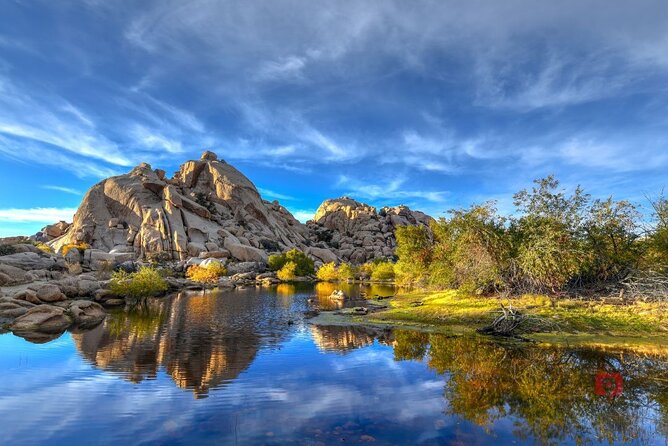
- Barker Dam Trail (Water Story + Easy Loop)
- Cholla Cactus Garden (Teddy Bear Look, Spines Up Close)
- Hall of Horrors (Scrambling Area + Hidden Corridor Feeling)
- Hidden Valley Nature Trail (Easy Loop, Big Rock Walls)
- Keys View (Panorama from the Highest Road)
- Skull Rock (Angle-Dependent Face Shape)
- Split Rock (Short Walk + Picnic Energy)
- The Trails and Scrambles: How Hard Is This, Really?
- Who This Audio Tour Fits Best in Joshua Tree
- Should You Book This Joshua Tree Audio Tour?
- FAQ
- How long does the self-guided driving audio tour take?
- What is included in the $19.99 per group price?
- Is Joshua Tree National Park admission included?
- Does the audio tour work without internet or cell service?
- Can I start and end anywhere along the tour route?
- What language is the tour available in?
- Do I need to download the tour before I arrive?
Key Highlights Worth Planning Around
- GPS-triggered narration: audio plays automatically as your phone detects your location
- Works offline: download ahead of time and tour without cell service
- Free entry for the stops once you’re in: trails and viewpoints are listed as admission-free, but park entry isn’t included
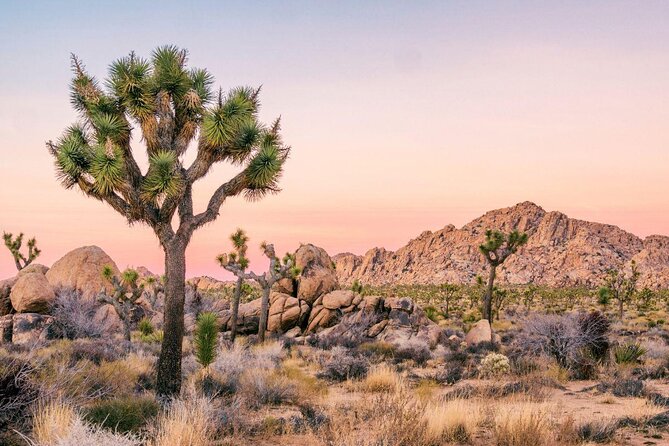
- Sunset-friendly icons: Arch Rock and the Cholla Cactus Garden are at their best when the light starts to soften
- Short hikes with real payoff: from a 1.4-mile out-and-back to loop trails like Hidden Valley and Barker Dam
- Scrambling optional, but real: Hall of Horrors is a bit of an adventure compared to the easier loops
How This GPS Audio Drive Works in Joshua Tree
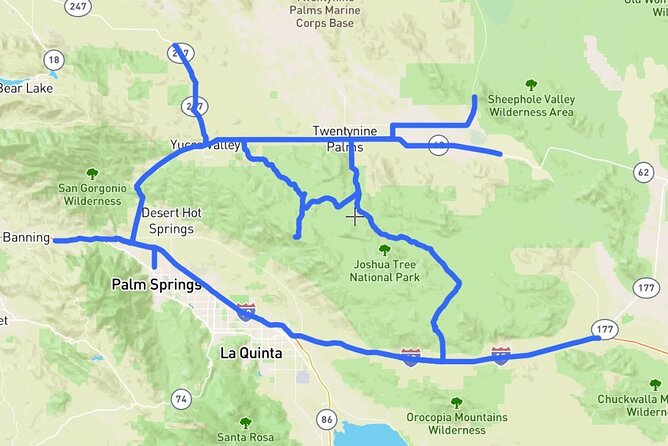
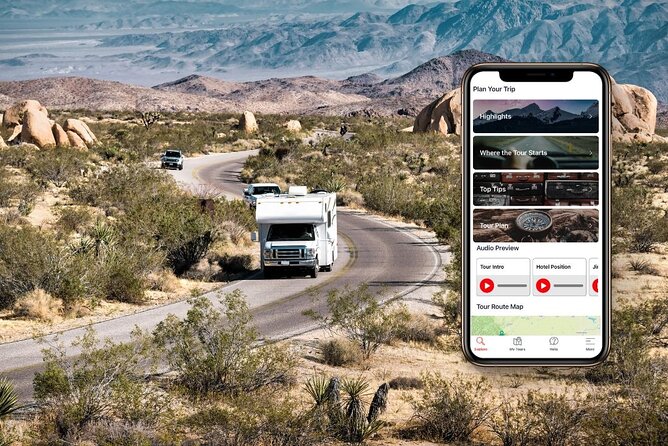
This is a self-guided driving tour through Joshua Tree National Park with 185+ audio points. The app plays stories, tips, and directions automatically based on your GPS position—so you don’t have to press play or guess what to do next.
You’ll still feel flexible. The tour is designed with suggested routes and trip planners, but your day stays yours: you can pause, walk a trail, return to the car, and continue. That matters in Joshua Tree because your best timing often depends on heat, crowds, and light.
You’ll also get an offline setup option. The guide is meant to run after you download the tour, and the audio should keep working even if service vanishes. That’s huge in the park, where coverage can be spotty.
You can also read our reviews of more tours and experiences in Palm Springs.


Price and Value: $19.99 Per Group Plus the Real Park Fee
The tour cost is $19.99 per group (up to 8 people). That’s a smart pricing model if you’re traveling with family or friends in one vehicle, because the audio is paid once for the whole car rather than per person.
One thing to budget separately: park fees are not included. The data lists a $15.00 per person admission fee. So your total cost will be the $19.99 group price plus that park entry.
When I think about value, I weigh what you’re really buying: time savings, better route flow, and on-the-spot interpretation. Joshua Tree is easy to drive through, but harder to understand in a single day. This audio tour helps you slow down in the right places—without needing a formal guide.
Also, the tour is described as a “buy once, use forever” option with free updates, and that’s worth considering if you might return someday.
Before You Start: Download Offline Audio and Keep Your Phone Alive
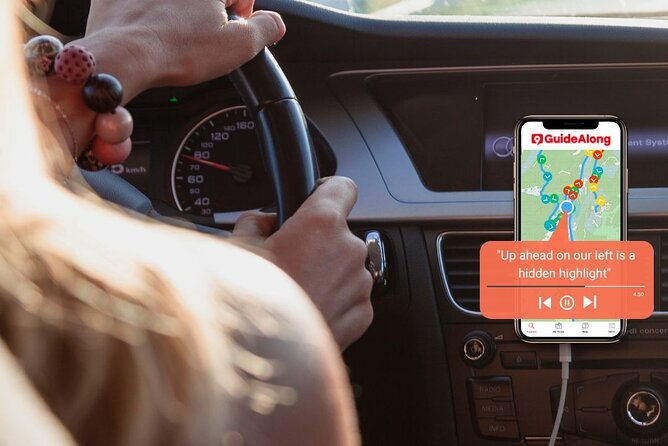
Plan a little tech time before you roll into the park.
- Download the GuideAlong app and sign in with your Apple or Google account.
- In the app, download the tour under My Tours.
- Start the tour inside the app so it can connect the audio to your GPS route.
Once you’re out there, you can tour without internet or cell service because the audio should run offline after download. Still, your phone needs power. The instructions specifically suggest bringing a USB/C car charger, and it’s good common sense: audio + GPS can drain a battery fast.
If you’ve had app setup trouble in the past, give yourself a buffer. One review in the provided information notes some initial difficulty finding the tour in the app, then a quick fix after contacting customer support. That’s a good reminder to test the app before you’re stuck on the shoulder with no signal.
Stop-by-Stop: Joshua Tree Icons from Arch Rock to Split Rock
The tour’s structure is built around about 16 hours total. The schedule is heavy on the classic stops, with one long core block at the park itself (listed as 8 hours) and then a sequence of short hikes and viewpoints. Each stop has its own audio content, so you can treat the day like a guided playlist with breaks.
Below is how I’d think about each part—what you get, why it’s worth your time, and what to watch for.
Joshua Tree National Park (Core Drive + Big Views)
This is the longest block on your schedule (listed as 8 hours). It’s where the park’s mix of desert scenery, rock formations, and wildlife energy sets the tone.
What I like about starting here: you don’t get forced into just one “must-see” hike. You can let the audio cue you to keep an eye out for the park’s bigger story, then spend your energy on the stops that genuinely match your mood that day—more hiking, more photos, or more just driving slow.
Practical note: if you’re visiting during hot weather, you’ll want to time your walking sections and lean on views when the sun is harsh. Since you control your pace, you’re not stuck in a tight group schedule.
Arch Rock Nature Trail (White Tank Area) with Heart Rock
Arch Rock is a top photo stop for a reason. You’ll hike to a 30-foot granite arch tucked into the surrounding formations near White Tank Campground.
The hike is short but not “just stroll” short: it’s a 1.4-mile out-and-back. The tour notes that it looks spectacular any time, but it’s especially iconic around sunset when the sky turns pastel and the granite holds that warm glow.
Here’s a smart tweak the tour recommends: tack on Heart Rock. Even though it’s described as a bit lopsided, it really does resemble its name, and it’s an easy add-on compared to the payoff you get.
What to watch for: since this is a hike to a rock feature, you’ll want shoes with decent grip. Bring water. The tour doesn’t call out gear, so think desert-proof basics: hat, sunscreen, and a full water bottle.
Barker Dam Trail (Water Story + Easy Loop)
Barker Dam is listed as a 1.3-mile nature loop, and it’s one of those “you’ll enjoy it even if you’re not a hardcore hiker” stops.
The key story is how it worked in ranching life. Barker Dam is described as a natural basin that was walled in 1902 to improve water storage for cattle ranchers. That turns the landscape from a pretty picture into an actual survival story—water engineering in a dry place.
The trail also passes the southern edge of the backcountry area called the Wonderland of Rocks. The loop is described as having some easy scrambling and interpretive panels, which means you’re not just walking for views—you’re picking up context as you go.
Cholla Cactus Garden (Teddy Bear Look, Spines Up Close)
This stop is built for your camera. Cholla Cactus Garden is described as surreal, with hundreds of cacti that look like furry teddy bears in the right light.
The tour’s warning is important: you shouldn’t touch them. The “fuzzy” look comes from a thicket of spines on the stems. They look harmless from a distance; up close, they’re not.
Timing tip: the description calls out silver and gold tones in the fading daylight. That’s a great cue to visit during late afternoon or toward sunset if your schedule allows.
Hall of Horrors (Scrambling Area + Hidden Corridor Feeling)
Hall of Horrors is a different vibe. It’s an area with multiple rock formations you can explore on dirt paths, and it’s noted as popular for scrambling and rock climbing.
The highlights here are both visual and a bit of exploration. The namesake “hall” is reached by circling around the right side of the first formation you see. Then you find a narrow dark corridor in the second formation back from the road. It takes some effort to locate, and that’s part of the fun.
What to watch for: this is not the same as a smooth loop trail. If you’re cautious on uneven rock, you may prefer staying at easier viewpoints around the area and skipping the more adventurous corridor hunt.
Hidden Valley Nature Trail (Easy Loop, Big Rock Walls)
Hidden Valley is described as an easy one-mile loop on dirt and rock trail. You get a valley feel—an enclosed space framed by rock-enclosed walls and granite domes.
This is also a history stop. The tour notes the valley was isolated enough to serve as a hideout for the McHaney Gang, plus outlaws and cattle rustlers active in the 1870s and 1880s. That adds a layer to what might otherwise feel like just another rock garden.
Because the hike is short, it’s a great “reset” stop after more intense scrambling. You get movement without committing to a big climb.
Keys View (Panorama from the Highest Road)
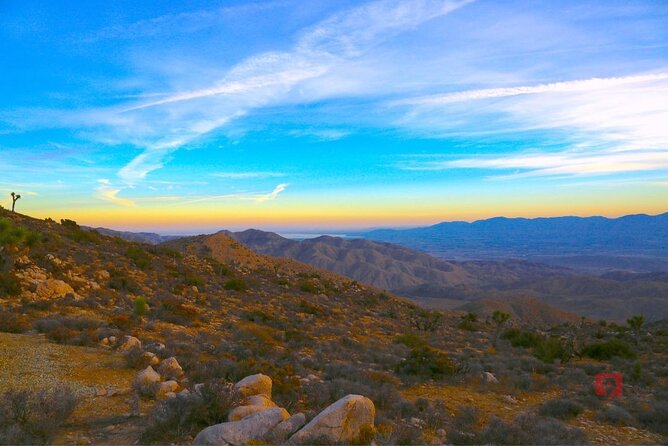
Keys View is a viewpoint that sits high on the Little San Bernardino Mountains. The tour notes a drive up to an elevation of 5,185 feet, and that it’s the highest road in the park.
You’ll get panoramic views of the Coachella Valley—and the tour points out several landmarks. From this vantage, you can look toward the San Andreas Fault, the distant Salton Sea, Palm Springs, and even the snowcapped peaks of San Jacinto Peak and Mount San Gorgonio (when they’re visible).
This is one of those stops that’s worth it even if you don’t hike. If your legs are tired, you still get your payoff from the viewpoint.
Skull Rock (Angle-Dependent Face Shape)
Skull Rock is another classic Joshua Tree image. The tour explains how erosion and water accumulation carved out hollows that become “eye sockets,” making the rock resemble a skull.
The fun here is that it doesn’t look identical from every angle. The skull’s appearance and mood change with the sun’s position. That means you’ll probably want to step around a bit and check it from different sides.
If you’re the type who likes photos but hates rushing, this stop gives you time to play with angle and light without needing a long hike.
Split Rock (Short Walk + Picnic Energy)
Split Rock is described as a gigantic boulder split into two halves, with a short hike to the rock and a lovely picnic area where you can stop.
You can enjoy this stop two ways: as a quick scenic walk and as a break. If your day has been hike-heavy, picnic time here can keep the whole route from feeling like a checklist.
The Trails and Scrambles: How Hard Is This, Really?
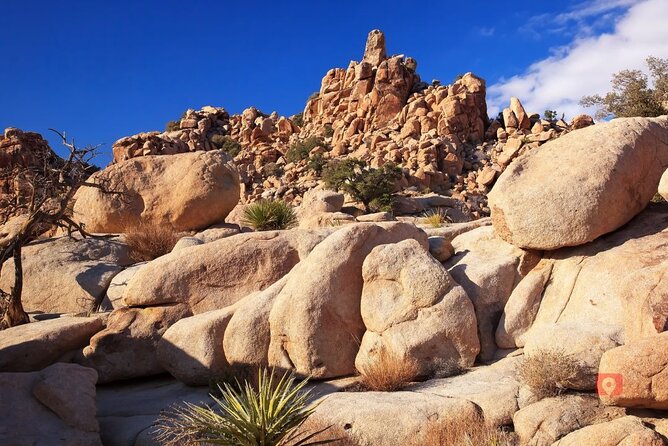
Most stops are short. Arch Rock and Barker Dam are roughly in the “stretch legs” category, and Hidden Valley is a straightforward one-mile loop.
The main harder elements are concentrated in a couple places:
- Hall of Horrors: scrambling and rock climbing popularity suggests uneven footing and more active exploration.
- Barker Dam: the loop is described as having some easy scrambling.
If you plan for moderate walking only, you’ll still have plenty to do. But I’d treat Hall of Horrors as optional. You can enjoy surrounding formations and not feel pressured to chase the corridor.
Also, since this is self-guided, you can match your route to weather and your comfort level. That’s one advantage of audio-based GPS cues: you’re not tethered to a group pace.
Who This Audio Tour Fits Best in Joshua Tree
This tour is especially good if you want:
- a flexible day plan rather than a fixed bus tour
- interpretation on demand as you reach each rock formation and trailhead
- offline audio so you can ignore cell coverage
It also fits well for groups traveling in one car, because the $19.99 per group pricing helps you spread the cost. Up to 8 people is a strong sweet spot if you have a family or a small friend crew.
If you’re a solo traveler, it still works, but the per-group price advantage becomes smaller in your mind. Still, the GPS narration value doesn’t change—you’ll still get better “what am I looking at?” context.
The audio approach is also a good match for people who like humor in their learning. The description in the reviews points out a good sense of humor, and that tends to make long desert drives more fun rather than just informative.
Should You Book This Joshua Tree Audio Tour?
If you want a day in Joshua Tree that feels guided but not rigid, I’d book it. The strongest reason is the GPS-triggered narration—it turns a self-driven route into a running story tied to real stops, and the ability to go offline is exactly what you want here.
Book it if you can do two basics well: download ahead and keep your phone powered. If you’re okay with that, you’ll enjoy both the iconic features—Arch Rock, Cholla Cactus Garden, Keys View, Skull Rock, Split Rock—and the smaller trail stories like Barker Dam and Hidden Valley.
Skip or reconsider if you hate app-based experiences, or if you expect to wander without using your phone for navigation at all. Since the commentary is location-based, the tour’s magic depends on your device staying on and set up correctly.
FAQ
How long does the self-guided driving audio tour take?
The duration is listed as approximately 15 to 16 hours.
What is included in the $19.99 per group price?
It includes the GuideAlong (GyPSy Guide) audio tour with 185+ GPS-based points, plus trip planners in app, web, and PDF formats, offline functionality, and support by phone, chat, and email.
Is Joshua Tree National Park admission included?
No. Park admission fees are not included and are listed as $15.00 per person.
Does the audio tour work without internet or cell service?
Yes. Once the audio tour is downloaded, it’s described as working offline, so you should not need internet or cell service during the drive.
Can I start and end anywhere along the tour route?
Yes. Commentary plays automatically based on your location, so you can start and end anywhere along the route.
What language is the tour available in?
The tour is offered in English.
Do I need to download the tour before I arrive?
Yes. After booking, you’re instructed to download the GuideAlong app and download the tour in the app before starting.