REVIEW · ROME
Rome Colosseum, Roman Forum & Palatine Hill Audio Tour
Book on Viator →Bookable on Viator
Three arenas. One audio app.
This tour connects the Colosseum, the Roman Forum, and Palatine Hill into one smooth historical story using an English audio guide you can control at your pace. You get timed entry options and enough structure to focus on the big moments without feeling rushed.
I especially like the built-in rhythm: you start at the Colosseum for the arena and architecture, then you walk through the Forum’s key religious and political ruins, and finally you climb onto Palatine Hill for those wide open photo views. One thing to keep in mind is that this is app-based and ticket/voucher matters, so if your phone audio glitches or your digital entry doesn’t work cleanly, you will want a backup plan and to arrive prepared.
In This Review
- Why this Colosseum–Forum–Palatine Hill combo makes sense
- Price and what you actually get for $47.82
- Entering the Colosseum: arena views and the hypogeum from above
- Roman Forum highlights: temples, Senate House, and public speaking spots
- Palatine Hill: imperial palaces, Romulus and Remus, and photo views
- Audio guide app reality check: how to avoid losing your place
- Timing, timed entry slots, and how the day flows
- The main downside: when digital entry or audio fails
- Who this tour fits best
- Should you book this Colosseum, Roman Forum & Palatine Hill audio tour?
- FAQ
- What is the duration of the Colosseum, Roman Forum & Palatine Hill audio tour?
- How much does it cost?
- Is the audio guide available in English?
- What is included in the ticket package?
- What is not included?
- Where does the tour start and end?
- How large is the group?
- What happens if the weather is poor?
- Can I cancel for a full refund?
Why this Colosseum–Forum–Palatine Hill combo makes sense
Rome is crowded. The Colosseum alone can eat up your whole morning if you get stuck waiting, and the Forum can feel like a pile of stone if you do not know what you are looking at. The value of this tour is that it stitches the three sites into one narrative arc, so each stop answers the next question.
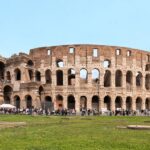
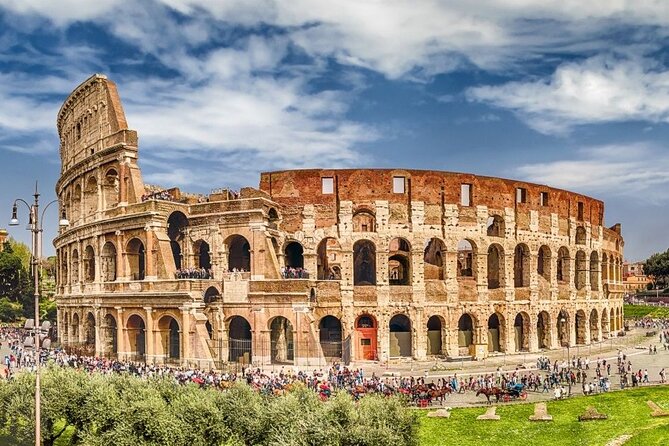
At the Colosseum, you are in the entertainment center of ancient Rome: the arena, the grand arches, and the underground staging world behind the spectacle. Then the tour moves you to the Roman Forum, which was the political and religious engine of the city. Finally, Palatine Hill gives you the “where it all started” angle, plus the vantage points that make ancient Rome look like it is still spreading out in front of you.
The pacing is also built for real-world visitor flow. The tour runs for about 3 hours, with roughly 1 hour at each stop, and it uses timed entry slots so you are not rolling the dice on peak lines.
Price and what you actually get for $47.82
At $47.82 per person, you are paying for more than the romance of seeing the Colosseum. Your ticket package includes entry to the Colosseum, the Roman Forum, and Palatine Hill, plus Colosseum reservation fees. The stated value for the Colosseum entry ticket and reservation fee is €18 + €2 per person, which helps explain why this price is not just a generic guided walk.
You also get an English audio guide. That matters because these ruins are huge. Even with good photos and a strong guidebook, it is hard to catch the “why this matters” details while you are dodging crowds and reading stone at walking speed.
The tradeoff is clear: there is no personal guide, and there are no radios or provided headphones. You are in charge of your device and your listening. For many people, that is fine. For others, it means you need to be a little more tech-ready than on a traditional guided tour.
You can also read our reviews of more tours and experiences in Rome.


Entering the Colosseum: arena views and the hypogeum from above
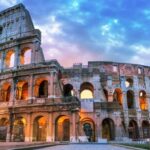
Your visit starts at Piazza del Colosseo, 1, right by the Colosseum. This is the part of the day where first impressions matter most, because the building is so iconic that your brain wants to sprint ahead. The audio guide helps you slow down and look where it counts.
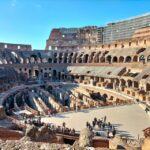
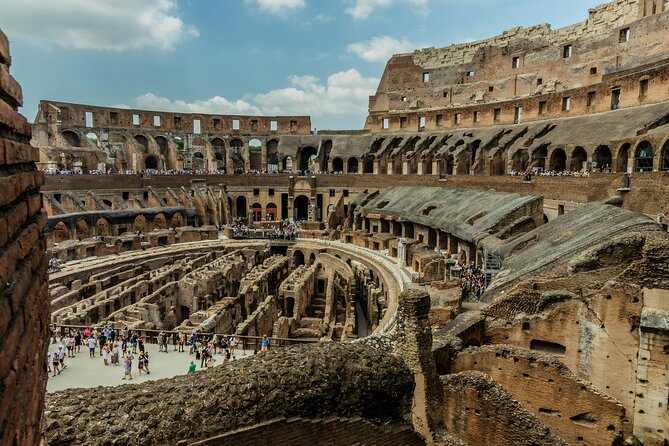
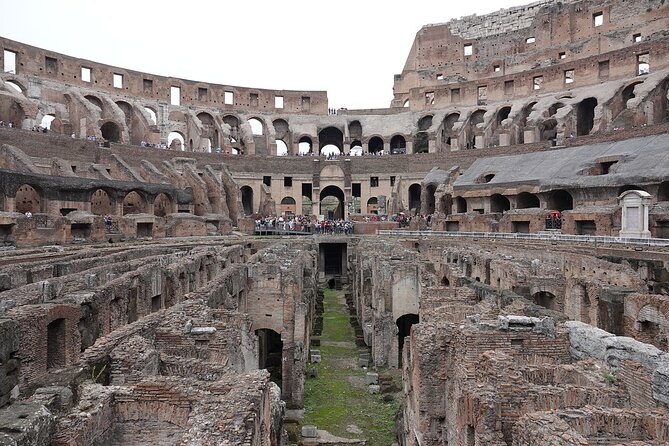
Inside, you are guided to the arena views, which are the closest you will get to standing where thousands watched gladiator battles and big public shows. The tour also points out the hypogeum area from above—the under-level tunnels and waiting spaces where fighters and animals were staged. You are not meant to feel like you missed something; you are given a way to understand the spectacle even from vantage points available during your entry.
What I like about this approach is that it treats the Colosseum like a machine, not just a monument. You hear about multiple levels and crowd design that were built long ago, and you also get the story of how the Colosseum changed over time—from entertainment to later reuse, including a medieval fortress phase, and its modern role as a symbol of Rome.
Practical bonus: you also get hints for city views of the Roman Forum from the upper levels. That matters because it makes your next stop feel less random. When you later walk through Forum ruins, you already have a mental map.
Roman Forum highlights: temples, Senate House, and public speaking spots
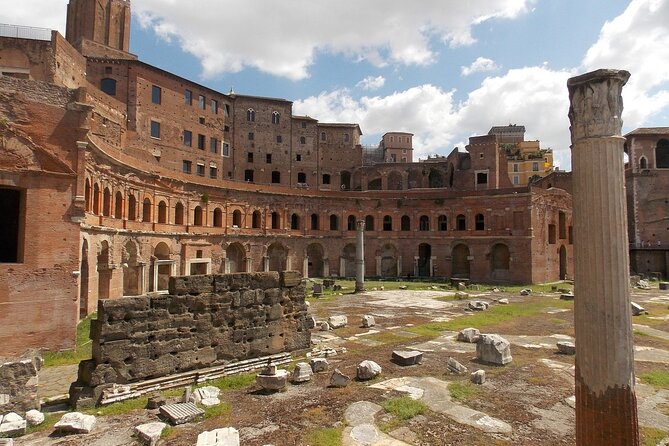
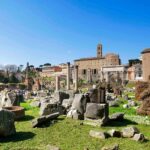
After the Colosseum, the tour shifts from spectacle to power. The Roman Forum is where laws, religion, business, and public life overlapped. With an audio guide, you can target the most important ruins instead of hoping to guess what you are seeing.
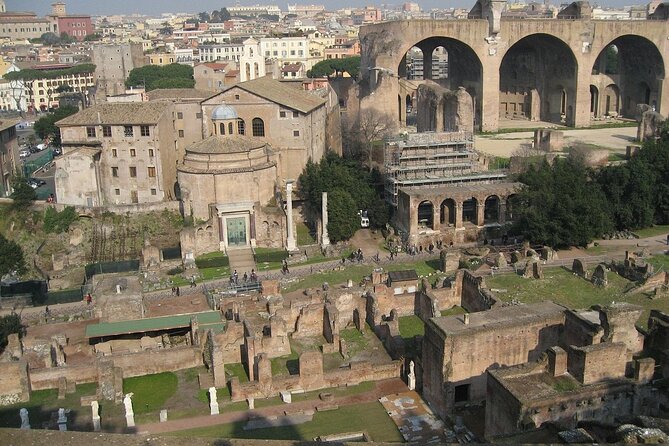
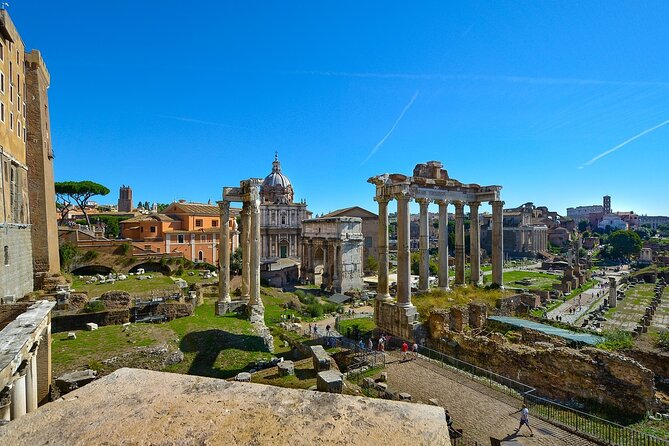
You are guided through iconic temples and ruins, including the remains of the Temple of Saturn and the Temple of Vesta. These spaces are not just scenic. The audio framing helps you understand why they mattered in everyday Roman life.
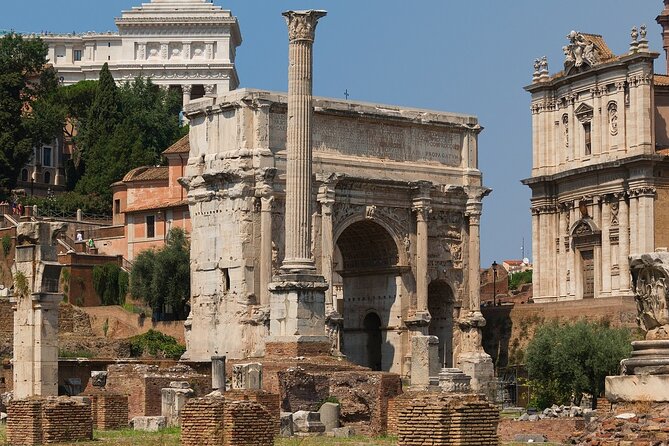
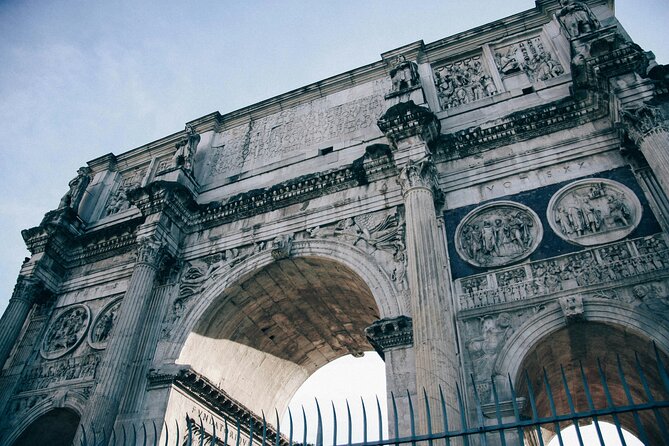
Then you hit one of the Forum’s strongest visual landmarks: the Arch of Septimius Severus, known as one of the best-preserved monuments here. Even without expert knowledge, you can feel the solidity of it. The audio context helps you connect that “big stone arch” with the political message behind Roman victory celebrations.
A standout stop is the Curia (Senate House). You step inside where laws were debated and major decisions were made in the Roman Republic. It is one of those places where a calm pace pays off, because you can actually imagine the room function rather than just looking at ruins.
The tour also includes the Rostra, the speakers’ platform tied to public life. You are guided to stand where major speeches happened, with the audio mentioning figures like Caesar. Even if you are not a Roman politics buff, this “public speaking” angle turns the ruins into a living stage for ideas and persuasion.
Finally, you are directed to sacred sites such as the House of the Vestal Virgins and the Regia. That gives you a more complete sense of the Forum as a spiritual as well as political center.
Palatine Hill: imperial palaces, Romulus and Remus, and photo views
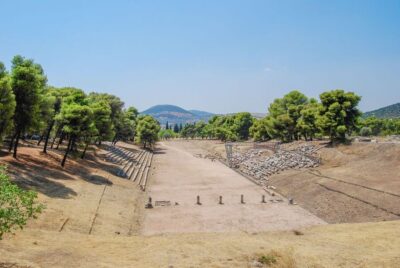
If the Colosseum gives you the show and the Forum gives you the city’s brain, Palatine Hill gives you the city’s myth and home life. It is also the easiest place to win on photos, because the views open out toward the Roman Forum and Circus Maximus.
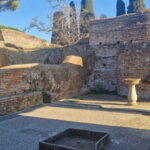
You walk through imperial palaces, including ruins associated with the Domus Flavia and Domus Augustana. The audio guide helps you read the remains as residences and power centers, not just random walls.
Then comes the legend angle. You hear the story of Romulus and Remus, framed as Rome’s mythical founders. This is one of those times when audio is actually better than a printed sign, because it can shape what you see around you into a timeline you follow step-by-step.
For a more relaxed break, the tour includes Farnese Gardens, where you can shift gears from grand power ruins to terraced paths and shaded walking areas. It is a nice change when your feet have already done plenty of Rome’s stone-to-stone work.
And yes, you also get the “wow” factor at the end: big viewpoints that make the Forum feel like a landscape of layers. Even if you only take a handful of photos, the viewpoint is worth it.
Audio guide app reality check: how to avoid losing your place
This tour’s main tool is your English audio guide on an app. That is a smart match for three large sites, but it does create a few real-world “watchouts.”
First, the tour does not include a personal guide. So you are not going to be able to ask someone where you are in the story. You will need to manage your own playback and timing.
Second, since no radio and headphones are provided, you will rely on whatever audio setup you have. If your phone speaker is too quiet or your sound cuts out, you will feel it immediately.
One other practical tip: keep a close eye on battery life. If you are out in the open between stops, the Colosseum and Forum walking time adds up fast, and you do not want to be hunting for power while also trying to stay on narrative. If your device does time out or reload, you may need to log back in and then find your spot in the audio file. That is fixable, but it can cost time and focus.
The best way to reduce stress is simple: before you start, check that the app is working and that you can hear audio clearly. Then take a quick photo of where you are standing or the exact moment you begin each section, so you can reset fast if anything goes wrong.



Timing, timed entry slots, and how the day flows
The tour is designed around timed entry slots, which is one of the biggest advantages of booking a structured experience over “just tickets.” When you can pick a slot, you can plan around your energy level and around Rome’s midday crowd pressure.
The overall duration is about 3 hours, broken into three roughly equal blocks. That matters because all three sites are walk-heavy and full of visual distractions. When the tour stays on rhythm, you are less likely to spend 45 minutes in the wrong corner, then panic when you realize you still have two major stops left.
The group size is small, with a maximum of 8 travelers. Even without a human guide, that usually means the flow feels manageable. At Rome’s big attractions, smaller groups often translate to less bottlenecking around entrance points and key viewpoints.
The tour is also near public transportation, which is helpful if you are combining it with other sights that day.
The main downside: when digital entry or audio fails
This is the part you should not ignore. The tour’s value depends on entry working smoothly and on the audio experience loading properly.
There have been cases where bookings were cancelled close to the start time, and cases where entry at the gate did not go as expected because a voucher did not generate properly. That is not something you can control, but you can control how prepared you are.
If you do book, do these practical things:
- Keep your confirmation details easily accessible on your phone.
- Arrive a little early rather than right at the appointed time.
- Have the app logged in before you line up, not after.
- If something feels off at the meeting point, handle it quickly rather than hoping it fixes itself.
Also remember that the experience requires good weather. If weather cancels it, you should be offered another date or a full refund, so you are not stuck.
Who this tour fits best
This experience is a strong match if you like to explore on your own but still want structure. You will probably enjoy it if you:
- Want audio guidance in English and do not need a live guide to explain each ruin in real time.
- Prefer timed entry so your day stays under control.
- Care about seeing all three core sites in one go, without paying for separate tours.
It may be less ideal if you:
- Need a human to help with questions or navigation at every step.
- Rely on your phone’s internet and battery for everything and cannot manage tech problems.
- Expect provided headphones or printed materials, because those are not included.
Should you book this Colosseum, Roman Forum & Palatine Hill audio tour?
I would book it if you want a compact, ticketed day that hits the big three sights in about 3 hours, and you are comfortable using an audio app on your own device. The value is real because your admission to all three sites is included, and the Colosseum plus Forum plus Palatine Hill combo is hard to replicate efficiently on your own.
I would think twice if you are traveling on a tight schedule with no flexibility. While most entries should go smoothly, digital ticketing issues and last-minute cancellations have happened for some bookings. If your trip has buffer days, this becomes much lower risk.
If you are doing Rome for the first time and want to understand what you are seeing without paying for a full live guide, this is a solid way to get your bearings fast. Just treat your phone like part of the trip, not an optional accessory.
FAQ
What is the duration of the Colosseum, Roman Forum & Palatine Hill audio tour?
The tour runs for approximately 3 hours.
How much does it cost?
The price is $47.82 per person.
Is the audio guide available in English?
Yes, the audio guide is offered in English.
What is included in the ticket package?
Your package includes entrance to Palatine Hill, entrance to the Roman Forum, and entrance to the Colosseum, including the stated Colosseum reservation fee and ticket entry.
What is not included?
The tour does not include a personal guide, and there is no radio and headphones provided.
Where does the tour start and end?
It starts at Colosseum, Piazza del Colosseo, 1, 00184 Roma RM, Italy and ends back at the meeting point.
How large is the group?
The tour has a maximum of 8 travelers.
What happens if the weather is poor?
This experience requires good weather. If it is canceled due to poor weather, you will be offered a different date or a full refund.
Can I cancel for a full refund?
You can cancel up to 3 days in advance for a full refund, based on the experience’s local time.