REVIEW · VANCOUVER
Vancouver Old Town Treasure Hunt: Self-Guided Walking Game
Book on Viator →Operated by Questo · Bookable on Viator
A puzzle walk through Vancouver sounds great. This self-guided treasure hunt uses an app and offline play to turn downtown landmarks into a game you can finish at your pace.
What I really like is how it gets you off the main path of look-and-go sightseeing. You’re pushed to notice architecture details and answer questions by looking around, which makes the streets feel more alive.
One thing to consider: if you get stuck on a clue, you may be tempted to move on fast, since there can be spots where the path feels less clear. Also, if you’re trying to run it on multiple phones, it can be a little fiddly.
In This Review
- Key highlights you’ll feel right away
- A smartphone treasure hunt through Vancouver Old Town
- Price and value: $7.20 for a 90-minute history game
- Getting started: where you begin, where you end, and how the route flows
- Marine Building (355 Burrard St): Art Deco details you have to hunt for
- The Howe and Cordova Customs warehouse (1911–1913): look for clues on a federal building
- Waterfront Station (opened Aug 1, 1914): CPR trains and a Pacific terminus
- The 1977 steam-and-whistles clock: time, sound, and a quirky landmark
- The Dominion Building (1908–1910): Beaux-Arts charm with terracotta and columns
- Sun Tower (1911–1912): Louis D. Taylor and the World and Sun newspapers
- Sam Kee Building (1913): architectural ingenuity and Chinese community heritage
- Gassy Jack Deighton statue: why Gastown got its name
- Gaoler’s Mews: the first jail site and the Great Fire of 1886
- The Alibi heritage building: food, beer, and a railyard setting
- How the app experience feels: hints, skip, and pause/resume power
- Who should play this Vancouver Old Town treasure hunt
- Should you book it?
- FAQ
- FAQ
- How long does the Vancouver Old Town Treasure Hunt take?
- What does the tour cost?
- Is there a live tour guide?
- Can I use it offline?
- How many puzzle challenges are included?
- Where do I start and where does it end?
- Is the tour available in English?
- Can I pause and resume during the quest?
Key highlights you’ll feel right away
- Offline-friendly game play means you can keep moving without relying on a constant connection
- 14 puzzle challenges are spread across major downtown heritage stops
- Pause and resume fits real life when you need a bathroom break or a quick shop stop
- No live guide keeps it budget-friendly and lets your group set the tempo
- Art and history on the sidewalks: you learn by spotting details on buildings
A smartphone treasure hunt through Vancouver Old Town
This is the kind of activity that turns a city walk into a mission. You start with an access code and the Questo app, then follow step-by-step directions as you solve puzzle-based challenges at historic spots.
Instead of sitting through a lecture, you’re reading clues while standing in front of the real thing. That approach is especially good in older downtown areas like Vancouver’s core, where façades, entrances, and street corners hide the story in plain sight.
You also get the best part of self-guided travel: control. You can pause and resume whenever you want, so your group can match the walk to your energy level.
You can also read our reviews of more tours and experiences in Vancouver.
Price and value: $7.20 for a 90-minute history game
At $7.20 per person for about 1 hour 30 minutes, this works out to a low-cost way to see multiple landmarks without paying for a live guide. The value comes from volume: you’re not just checking off one sight.
The app format matters too. With 14 challenges and built-in storyline content inspired by Vancouver’s Gold Rush era, you’re getting more than background facts. You’re doing something with the facts—finding answers in the environment.
If you’re traveling with friends or family, the group discount angle makes it even easier to justify. And because it’s flexible, you’re not locked into a fixed pace the whole time.
Getting started: where you begin, where you end, and how the route flows
You meet at 1530-355 Burrard St, Vancouver, BC V6C 2G8. From there, the app guides you step-by-step toward the Gastown area and ultimately to Maple Tree Square, 1 Water St, Vancouver, BC V6B 2H9.
The game is open daily from 12:00 AM to 11:30 PM. So you’re not stuck with one narrow time slot—you can play when the light and crowds suit you.
Practical tip: plan to keep your phone charged. You’ll be using the app while you look closely at stonework, signage, and building corners.
If you’re bringing more than one phone, test the setup before you start. Some groups find it smoother when everyone shares one device rather than trying to run the quest across multiple phones at once.
Marine Building (355 Burrard St): Art Deco details you have to hunt for
Your first big stop is the Marine Building, built in 1929–30 at 355 Burrard Street. It was developed by Toronto’s short-lived Stimson Developers to support commercial shipping interests and the Vancouver Merchants’ Exchange. It’s also Vancouver’s best surviving example of Art Deco style.
This is a great place to start the game because the building is visually confident—ornament, curves, and a strong silhouette. The challenge here is simple in concept: look around and find the answer to advance.
If you like architecture even a little, you’ll enjoy that the app pushes you to slow down. You’ll be standing right in the middle of a style that’s hard to appreciate just by walking past quickly.
The Howe and Cordova Customs warehouse (1911–1913): look for clues on a federal building
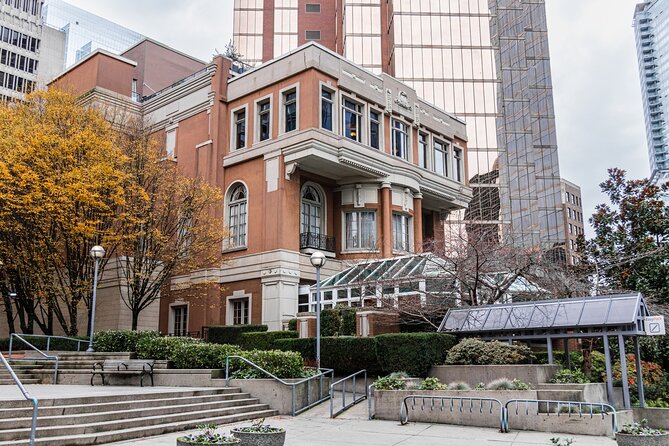
Next, you head to the corner of Howe and Cordova Streets, where construction began in 1911 and finished in 1913. The building was designed by David Ewart, Chief Architect of Public Works, and built by the federal government as a warehouse for imported goods. Customs used it until 1958.
This stop feels different from the Marine Building because you’re reading a more utilitarian side of downtown’s past. It’s not just pretty ornament; it’s a reminder that old cities were powered by shipping, paperwork, and trade.
Your task again is to look around for the right answer. The practical trade-off is that clues in functional buildings can feel less obvious than clues on highly decorated façades, so take your time at corners and entry areas.
Waterfront Station (opened Aug 1, 1914): CPR trains and a Pacific terminus
Then you arrive at Waterfront Station, built by the Canadian Pacific Railway and opened on August 1, 1914. It served as the Pacific terminus for CPR’s transcontinental passenger trains to Montreal and Toronto, and the current station is the third CPR station.
This is where the game connects architecture to motion. A train terminus isn’t only a building; it’s an invitation to imagine arrivals, departures, and long journeys.
The puzzle challenge here still asks you to search, but now you’re standing where the city once funneled travelers onto cross-country routes. If you’re into transportation history, this stop tends to land well.
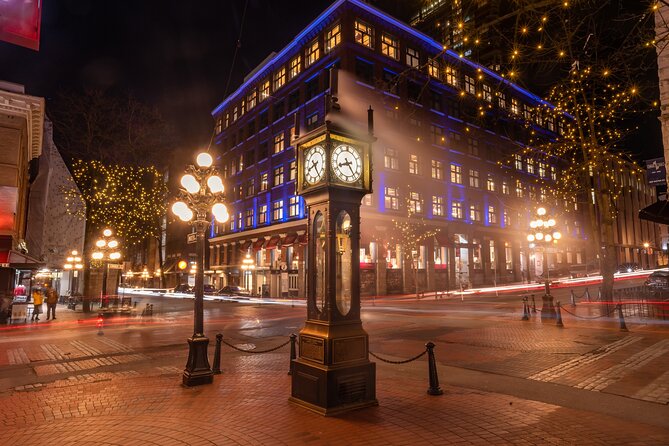
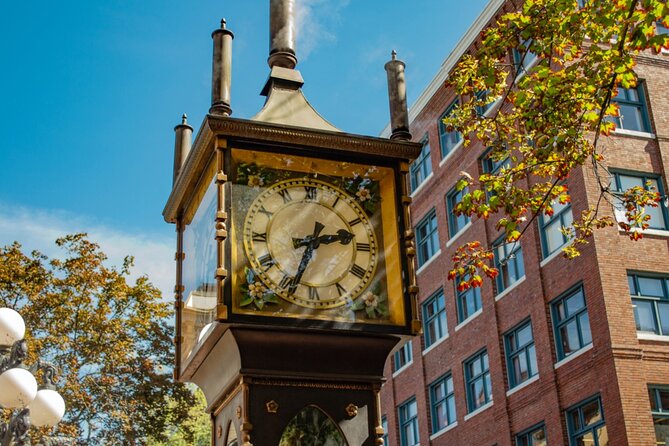
The 1977 steam-and-whistles clock: time, sound, and a quirky landmark
A short walk later, you come to a well-known antique-style clock built in 1977. It’s powered by steam and whistles to tell the time.
This is one of the more playful stops in the route because it involves more than reading stonework. Even if the exact moment doesn’t matter to the puzzle, the sound-based element makes the area feel different from a typical heritage walk.
It’s also a good mental reset during a puzzle quest. When your brain is tired from reading clues, a landmark like this brings you back to observing in a more natural way.
The Dominion Building (1908–1910): Beaux-Arts charm with terracotta and columns
The Dominion Building was built between 1908 and 1910 by J.S. Heyler. The architecture is Beaux-Arts, known for terracotta spandrels and Corinthian columns at the front entrance, and it’s often described as one of the most colorful and charismatic heritage buildings in Vancouver.
This stop rewards people who enjoy façades. The front entrance details give you plenty of visual material for the game’s look-around challenge.
One downside to expect in a puzzle walk like this: when buildings are richly detailed, the clues can be multiple-choice in your mind. You may need to focus on a specific area rather than scanning everything at once.
Sun Tower (1911–1912): Louis D. Taylor and the World and Sun newspapers
Built in 1911–1912, the Sun Tower’s heritage value includes its distinctive landmark architecture and its association with Louis D. Taylor and the Vancouver World and Sun newspapers. It also represents the expansion of the city’s business district toward the eastern fringe of downtown.
This is a strong stop for readers who like media history and city growth stories. The puzzle again works by forcing you to notice the details tied to the building’s identity.
If you’re traveling during daytime, this is a good spot to stand back for a minute and let the building’s shape come into focus. It’s easier to answer questions when you understand the whole façade, not just one fragment.
Sam Kee Building (1913): architectural ingenuity and Chinese community heritage
The Sam Kee Building at Pender and Carrall dates to 1913. It’s celebrated for architectural ingenuity, cultural significance to the Chinese community, and the history of its namesake. The building also represents an important part of Vancouver’s early citizen spirit.
This stop feels meaningful because it connects a landmark to community impact, not just a single company or a single era. The game’s challenge style—look around and answer—lets you take in that context directly in the street setting.
Potential drawback: if you prefer a lot of explicit explanation, self-guided puzzles may feel like they move you along too fast. You can counter that by slowing down after you solve a clue, just to absorb the façade.
Gassy Jack Deighton statue: why Gastown got its name
You’ll then reach the statue of Gassy Jack Deighton, a Vancouver saloon owner in the 1860s. Gastown is named for Deighton. The story has also been re-evaluated in recent years, especially because of his marriage to a 12-year-old Squamish girl, Quahail-ya, whose English name was Madeline Deighton.
This is the emotional pivot point in the route. The puzzle makes you look for an answer, but the subject matter invites more careful thinking about history and how we interpret it.
If your group likes history that raises hard questions, this stop is a real conversation starter. If you’re traveling with kids, it might help to approach it with gentle, age-appropriate framing.
Gaoler’s Mews: the first jail site and the Great Fire of 1886
Next is Gaoler’s Mews in the heart of Gastown. The first building on the site was built in the mid-1800s and housed Vancouver’s first jail. After it burned down in Vancouver’s great fire of 1886, it was replaced by a brick fire hall.
This is a clever stop for a treasure hunt because it’s easy to imagine the site’s earlier life once you know it used to be a jail. The app’s look-around challenge turns the area from scenery into evidence.
One practical note: when a story involves older urban systems like justice and fire safety, the details can be more concept-based than sight-based. If you get stuck, don’t panic—move methodically, and re-read the clue prompts.
The Alibi heritage building: food, beer, and a railyard setting
Your final stretch leads to The Alibi, in a heritage building erected over 100 years ago along the railyard, not far from Vancouver’s trade and shipping ports. The Alibi has become a community stop for food, fantastic beer, and culture.
This ending works well because it gives your legs a payoff. After solving puzzles and reading façades for about an hour and a half, you’re ready to sit down and reset.
There’s also a nice thematic connection here: a treasure hunt inspired by Gold Rush-era storytelling ends near trade and rail—the infrastructure that helped shape the city.
If you want to extend the experience, this is where you can turn the walk into a full evening plan by grabbing a bite before you head on.
How the app experience feels: hints, skip, and pause/resume power
The quest runs through the Questo app with a mobile access code. It’s step-by-step, and it’s designed so you can pause and resume whenever you like, which is great if someone in your group needs a quick break.
A big practical win is the offline functionality. That’s the difference between a fun puzzle walk and a stressed phone scramble when signal gets spotty.
If you’re worried about puzzle skill, there’s reassurance built in: hints are available, and there’s a skip button if you’re truly stuck. This keeps the quest from turning into a dead-end.
Two caution points from real-world use:
- Some groups have trouble downloading or running the quest on more than one phone, so sharing one device can be easier.
- If a clue feels stuck, you may need to use hints or the skip option to keep the route flowing.
Who should play this Vancouver Old Town treasure hunt
This game fits people who want something active but not demanding. You’re walking, reading, and searching the urban details, but you’re not expected to be an expert.
It’s also ideal if you’re traveling with friends or family. The pace is flexible, and the quest format works as a shared task.
Because it’s a private activity where only your group participates, it’s calmer than a typical group tour. Service animals are allowed, which is helpful for travelers who need that accommodation.
If you love architecture—Art Deco, Beaux-Arts, early 1900s downtown landmarks—this route is built around exactly that kind of street-level observation.
Should you book it?
Book it if you want a budget-friendly way to see a concentrated set of Vancouver heritage landmarks in about 90 minutes. I think it’s especially worth it when you like self-paced sightseeing and don’t want to pay for a live guide to cover basics.
Skip it or approach with caution if your top goal is deep, continuous narration. This is a puzzle walk, not a guided story hour. Also, if your group plans to use multiple phones, be ready to adapt and share one screen if the app acts up.
If you want a fun, low-cost way to make Vancouver’s downtown feel interactive, the Vancouver Old Town Treasure Hunt is a solid choice.
FAQ
FAQ
How long does the Vancouver Old Town Treasure Hunt take?
It takes about 1 hour 30 minutes on average.
What does the tour cost?
The price is $7.20 per person.
Is there a live tour guide?
No, it is self-guided with the Questo app.
Can I use it offline?
Yes, the game has offline functionality.
How many puzzle challenges are included?
There are 14 puzzle-based challenges.
Where do I start and where does it end?
You start at 355 Burrard St, and you end at Maple Tree Square, 1 Water St.
Is the tour available in English?
Yes, it’s offered in English.
Can I pause and resume during the quest?
Yes, you can pause and resume whenever you like.