REVIEW · ROME
Self-Guided Audio Tour – The gods of the Palatine
Book on Viator →Operated by SOUNDWALKRS · Bookable on Viator
Rome’s origin myth plays out in 40 minutes.
This self-guided audio tour takes you through the Palatine Hill, the legendary setting for the story of Romulus and Remus and later the emperors’ power base. I love how it’s designed for easy self-paced wandering (mobile ticket, no group wrangling) and how the chapters come with offline use plus maps and Rome exploration tips. One thing to watch: it doesn’t include entry/admission tickets, and the Palatine venues may have ID requirements that can trip you up if you’re not prepared.
You’ll move through major “you are here” moments—starting near Domus areas on the Palatine and working toward the Domus Augustana zone—so the audio doesn’t feel random. You get clear stop-by-stop themes, from early Rome sports and politics to imperial homes and propaganda-style monuments.
The main drawback is practical, not historical: you need to have the right setup for audio (your smartphone; headsets aren’t included) and you should plan ahead for any admission tickets the sites require. Also, if you’re arriving without reading the ticket details closely, it can be easy to lose the correct access point.
In This Review
- Key Highlights You’ll Feel on the Ground
- Why This Palatine Audio Tour Works (Myth + Real Place)
- Where You Start and Finish Near Domus Tiberiana and Domus Augustana
- Stop-By-Stop: What You’ll See and What It Means
- Circus Maximus: Racing Shows Up in Rome’s Origins Story
- Domitian’s Palace Area (Domus Flavia): Imperial Living, Not Just Ruins
- The Triumphal Arch for Emperor Titus: Propaganda in Stone
- The Founding Legend Site: Where Myth Gets Physical
- Augustus’ Former Home: The First Emperor’s Image Strategy
- Public Areas and the Central Courtyard: Where You’ll Actually Feel “Place”
- Price and Value: Why $10 Can Be a Smart Buy
- What to Bring (So the Audio Actually Works)
- Practical Timing Tips for a 40-Minute Experience
- Access and Entry Reality Check: Tickets and IDs Matter
- Who This Tour Fits Best
- Should You Book the Self-Guided Palatine Gods-of-the-Palatine Audio Tour?
- FAQ
- How long is the audio tour?
- Is this a guided tour with a person?
- Does the price include admission tickets?
- Can I use the audio without an internet connection?
- Do I need to bring a smartphone?
- Are headsets included?
- Where does the tour start and end?
- Is it private or shared with others?
- Are service animals allowed?
- Do I need photo ID?
- What is the cancellation policy?
Key Highlights You’ll Feel on the Ground

- Offline chapters with maps and tips so you can keep going even with spotty cell service.
- A focused 40-minute loop that fits well into a busy day without eating your whole afternoon.
- Imperial Rome in layers, from early legends to Domitian’s residence and Augustus’ former home area.
- Monuments with a story, including the triumphal arch honoring Emperor Titus.
- No headset required from the provider, but you’ll want earbuds to hear clearly on windy days.
- Private by default: it’s just your group, not a mixed crowd funnel.
Why This Palatine Audio Tour Works (Myth + Real Place)

The Palatine is one of those Rome neighborhoods where imagination actually helps. You’re not just looking at ruins; you’re walking through a place Romans built their identity around. A visit here can feel confusing if you only have stone and signage. This tour gives you the “what you’re looking at and why it matters” in time-sized chunks.
I especially like the way the experience is framed as myth meeting power. The audio doesn’t treat the Palatine as a museum hallway. It treats it like a living storyline: founding myths, then early state-making, then empire-level image control—played out in specific spots.
And because it’s about 40 minutes, you’re not stuck trying to translate everything at a crawl. You can do it as a mid-day “anchor,” then keep exploring nearby areas while the story is still fresh in your head.
One more practical win: the chapters are available for offline use, and that changes how you plan in Rome. If your phone battery is decent and you download ahead, you’re less hostage to signal.
You can also read our reviews of more tours and experiences in Rome.



Where You Start and Finish Near Domus Tiberiana and Domus Augustana
Your start point is listed near Domus Tiberiana / Orti Farnesiani sul Palatino, at Via della Salara Vecchia (5/6). Your end area is at Palatine Hill, within Parco archeologico del Colosseo, at Via di S. Gregorio (30). The instructions also tell you to locate yourself in front of the Domus Augustana.
That matters because the Palatine is not laid out like a simple street grid. You’ll often be dealing with multiple entrances, viewpoints, and paths that look similar from a distance. So don’t wing it. Use the maps included with your tour content and keep your phone set to the right GPS mode before you begin.
Also, this is a mobile ticket experience. In practice, that means you’ll want your ticket ready on your phone screen at the start. If your battery is low, charge before you arrive. Rome ruins are not the place to hunt for a power bank.
Stop-By-Stop: What You’ll See and What It Means
Circus Maximus: Racing Shows Up in Rome’s Origins Story
Your route begins with the Circus Maximus, tied to early Rome under the fifth king of Rome, Lucius Tarquinius Priscus. Even if you’ve heard of the Circus Maximus before, hearing it introduced as part of the founding-era power structure changes how you think about it.
What’s the takeaway you can use while you walk? In ancient Rome, big public entertainment wasn’t just fun. It was political theater. The crowd gathering, the spectacle, the noise—these were tools of control and status.
Potential drawback: depending on where you stand and what paths are open, you might not get the same “full view” you’d expect from photos. This is why the audio format helps. Instead of relying only on sightlines, you’ll get the context while you look at what you can actually see.
Domitian’s Palace Area (Domus Flavia): Imperial Living, Not Just Ruins
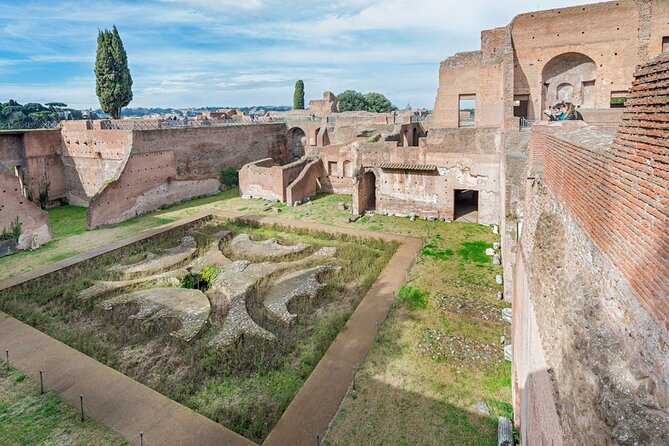
Next comes the Palace of Domitian, also called Domus Flavia, part of the larger Domitian palace complex on the Palatine. This is the point where the Palatine shifts from legend and early statecraft into the reality of emperor-level architecture.
The value here is in the human scale. Emperors lived here. Power wasn’t an abstract concept; it had rooms, courtyards, and everyday movement. When the audio frames the palace as a residence and a public stage, the stone starts to make more sense.
Practical note: your time is limited (the whole tour is ~40 minutes). So treat this stop as your “now I get it” moment. Look for the public areas and central courtyard themes later in the route, because they connect this stop to what you’ll see near the end.






The Triumphal Arch for Emperor Titus: Propaganda in Stone
You’ll then encounter a triumphal arch with inscriptions and sculptural elements honoring Emperor Titus’ military victories. This is one of those Roman features where the message is loud even when you can’t read every detail.
The useful idea: Roman victory monuments weren’t only commemorations. They were persuasion tools. They told people who deserved authority and why.
What you’ll likely appreciate most is the audio’s framing. Instead of treating the arch as just another pretty carved block, it gives you the reason it exists—so your eyes go to the right places.
Potential drawback: if you’re short on time, standing too long at a single monument can steal minutes from later stops. Keep moving so you finish the story arc.
The Founding Legend Site: Where Myth Gets Physical
After that, the route points you to the legendary founding area—what the Romans tied to the origins of the city. This is where you’ll feel the Palatine’s unique power: even ruins that look “general” can feel specific once you connect them to the founding narrative.
This stop is best approached with a simple mindset: don’t try to prove the myth. Instead, pay attention to how the Romans used myth to organize their reality. That’s often the difference between seeing ruins and understanding the place as a cultural machine.
If you tend to get frustrated with vague or legendary sites, here’s a way around it: listen for the key story beats in the audio and then match them to what your feet are actually on.
Augustus’ Former Home: The First Emperor’s Image Strategy
You’ll move to the former home of Emperor Augustus. Even if you don’t know every architectural term, you can still understand what this represents: Augustus wasn’t just ruling; he was shaping the story of what Rome should be.
This is a strong emotional pivot in the experience. You started with origins and early power structures, then you moved into Domitian’s imperial setting, and now you’re back at Augustus—the figure often treated as the turning point between republican memory and empire identity.
The practical win: the audio helps you interpret what you’re seeing as “spaces of authority,” not just “old buildings.”
Public Areas and the Central Courtyard: Where You’ll Actually Feel “Place”
The closing segment emphasizes public areas and the central courtyard within the ancient palace complex. This is great because courtyards and shared spaces are where your perspective naturally expands.
You’ll probably get the most out of this part if you do two things:
- Look up and around for how movement and visibility might have worked.
- Then listen to the audio’s explanation and match it to the space in front of you.
This is also a good moment to take photos, not because the stone is perfect, but because you’re capturing the scale and orientation.
Price and Value: Why $10 Can Be a Smart Buy
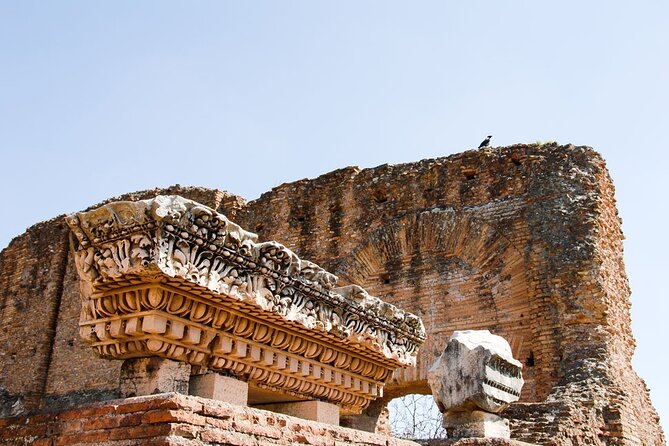
At $10 per person, the tour is priced like a practical tool, not a museum guide. That’s important. You’re not paying for someone to walk with you and explain every stone detail. You’re paying for the story structure, delivered at the exact spots where it helps.
So the real value question becomes: will you use the audio and maps? If you download and follow along, you’ll squeeze a lot of meaning out of a small time block. If your phone is dying, your audio is quiet, or you’re skipping chapters, the value drops fast.
Also, this is self-guided and private for your group. That means you can match the pace to your style—quiet listening, quick sprint to key points, or lingering where you want. In Rome, that flexibility is worth something.
One more value detail: this experience includes offline chapters, maps, and tips to explore Rome. That’s not just for the Palatine day. It can help you keep moving through the city with better context.
What to Bring (So the Audio Actually Works)

The provider does not include a smartphone or headsets, so come prepared like this:
- Your smartphone with enough battery
- Earbuds/headphones if you want clear sound (and want to avoid competing street noise)
- Any required entry info if you plan to access specific areas that require admission tickets
Also, since the route is mobile-ticket based, keep your ticket accessible. If you arrive and can’t find the ticket quickly, your start will feel harder than it needs to.
And yes, I’ll say the obvious but critical thing: don’t assume admission is covered. The tour itself is the audio experience, not entry tickets to the sites.
Practical Timing Tips for a 40-Minute Experience
A 40-minute tour is ideal when you:
- Have limited time on the Palatine
- Want a narrative backbone for your visit
- Prefer to avoid long waits or crowded group pacing
Here’s how to use the time wisely:
- Start right on schedule.
- Stay with the sequence of stops rather than jumping around.
- If you hit a confusing area, pause, reposition, then continue. Re-starting mid-stream wastes minutes.
If you want to make it even more effective, plan your day so the audio tour happens when you’re mentally ready to connect story to place. Early in the day can work well, before you get overwhelmed by Rome’s sheer volume of ruins and names.
Access and Entry Reality Check: Tickets and IDs Matter
The audio tour does not include admission tickets. That means you may still need separate entry for the specific venues or areas you encounter.
In practice, the biggest friction point is that some venues can ask for photo ID as part of their admission process. So if you’re planning to buy or use entry tickets, bring your ID with you. It’s a small hassle that can save a lot of regret.
Also, meeting-point confusion can happen in the Palatine area if you rely only on what you think is nearby. Read your ticket details carefully, then use the included maps. If something seems off, stop and get oriented before moving forward—this hill punishes guesswork.
Who This Tour Fits Best
This experience is a strong match if you like:
- Story-driven ruins
- Short, well-paced walks
- Self-guided freedom (private group by default)
- Offline-friendly planning
It’s also a good choice for people who want a Roman origin story focus, not a general “tourist highlights” route.
You might want a more hands-on guide instead if you:
- Need a lot of help navigating complex entrances
- Want full museum-style interpretation beyond the included chapters
- Are uncomfortable managing audio on your own device
Should You Book the Self-Guided Palatine Gods-of-the-Palatine Audio Tour?
I think it’s a smart booking for many first-timers and history-curious walkers, especially if you can do two things: bring your phone with offline content ready, and treat admission as separate from the audio experience.
Book it if you want a 40-minute myth-to-empire route that makes the Palatine feel coherent. Skip it or plan extra carefully if you’re relying on included entry tickets, or if you hate dealing with access points and separate venue rules.
If you’re the type who likes to figure out place names, follow story cues, and get your bearings fast, this one is worth the $10. You’ll leave with the Palatine’s main beats connected—Romulus-era imagination, imperial architecture, and victory monuments—without having to keep up with a group or wait for the next guided slot.
FAQ
How long is the audio tour?
It takes about 40 minutes (approx.).
Is this a guided tour with a person?
No. It’s a self-guided audio tour.
Does the price include admission tickets?
No. Admission tickets are not included.
Can I use the audio without an internet connection?
Yes. The tour includes chapters with offline use, plus maps and tips.
Do I need to bring a smartphone?
Yes. A smartphone is not included, but you’ll need one to use the mobile ticket and audio.
Are headsets included?
No. Headsets are not included.
Where does the tour start and end?
It starts near Domus Tiberiana / Orti Farnesiani sul Palatino on Via della Salara Vecchia (5/6). It ends at Palatine Hill within the Parco archeologico del Colosseo on Via di S. Gregorio (30). The instructions also tell you to locate yourself in front of Domus Augustana.
Is it private or shared with others?
It’s private in the sense that only your group participates.
Are service animals allowed?
Yes, service animals are allowed.
Do I need photo ID?
Admission requirements are set by the venue, and a photo ID requirement can come up with entry. Bring your photo ID to avoid problems.
What is the cancellation policy?
You can cancel for free up to 24 hours in advance for a full refund.