REVIEW · SEOUL
Seoul Self-Guided Audio Tour
Book on Viator →Operated by Uvamai Niche Tourism · Bookable on Viator
Palaces, temples, and towers—guided by your phone. This Seoul self-guided audio tour strings together 16 stops, from Gyeongbokgung Palace to Seoul Sky, with a SoundCloud playlist and an interactive map. It’s an easy way to understand why each place matters, without having to book a separate guide for every neighborhood.
I like two things right away: the access links are valid up to 6 days, so you can start when it actually fits your schedule. And each attraction has its own audio, so you can play the exact story for where you’re standing instead of committing to one long lecture.
One consideration: this is not timed-entry planning, and admission fees aren’t included for several major stops. You’ll want to handle entry tickets (and your transit between locations) on your own, and make sure you receive the email links before you start.
In This Review
- Key things to know before you go
- How the Audio Links and Map Work on Your Seoul Day
- Gyeongbokgung Palace: Royal Power, and Why Tickets Matter
- Bukchon Hanok Village: A Living Neighborhood, Not a Museum Set
- Changdeokgung Palace and Secret Garden: UNESCO Worth the Pause
- Jogyesa Temple and Bongeunsa: Two Ways to Hear Korean Buddhism
- Cheonggyecheon Stream and Hangang Park: City Water, City Memory
- Design, Art, and Instagram Seoul: DDP, Starfield Library, Leeum
- Myeong-dong Cathedral and the War Memorial: Faith and Division in One Route
- National Museum of Korea and Hangang Park: Making 5,000 Years Coherent
- N Seoul Tower, Namsan Park, and Seoul Sky: Views With a Story Attached
- Price and Value for a $9 Self-Guided Seoul Playlist
- Booking Advice After the Common Friction Points
- Who This Seoul Self-Guided Audio Tour Suits Best
- Should You Book This Seoul Self-Guided Audio Tour?
Key things to know before you go
- SoundCloud audio playlist + individual stop guides so you can jump around
- Google My Maps points that link directly to each attraction’s audio
- 16 attractions in about 3 hours (10 minutes each on the itinerary)
- Some stops require entry tickets while others are free to enter
- Links work for up to 6 days, useful if plans shift
- Private experience for only your group
How the Audio Links and Map Work on Your Seoul Day
This is a self-guided experience built around two links sent to your email. Before your starting time on your selected travel date, you get:
1) a SoundCloud web link for the audio guides, and
2) a Google My Maps link with an interactive map.
The practical beauty here is control. You can listen to one attraction at a time, or run the whole 16-stop playlist to get the overview first, then follow the order you prefer. Because the map pins correspond to each stop and link to the audio, you’re not stuck with guessing what you’re supposed to hear next.
You should also know what it does not do. It’s not a step-by-step street-navigation system. You’ll still need to use the map to orient yourself and move between locations like any independent traveler would.
Gyeongbokgung Palace: Royal Power, and Why Tickets Matter
Your tour starts at Gyeongbokgung Palace, the Joseon Dynasty’s seat of royal power. The audio focuses on the palace’s architecture and its tragic history—exactly the kind of context that turns a pretty courtyard into a story.
Here’s the logistical point that matters: admission is not included for this stop. So budget time for buying tickets on-site (or otherwise handling entry yourself). Also keep in mind that the itinerary lists only about 10 minutes at each stop. For a place this big, you may want to spend longer and let other stops slide.
If you want the best payoff, do this first. Gyeongbokgung gives you a framework for understanding what you’ll see later—especially the way Seoul mixes old authority with modern life.
Bukchon Hanok Village: A Living Neighborhood, Not a Museum Set
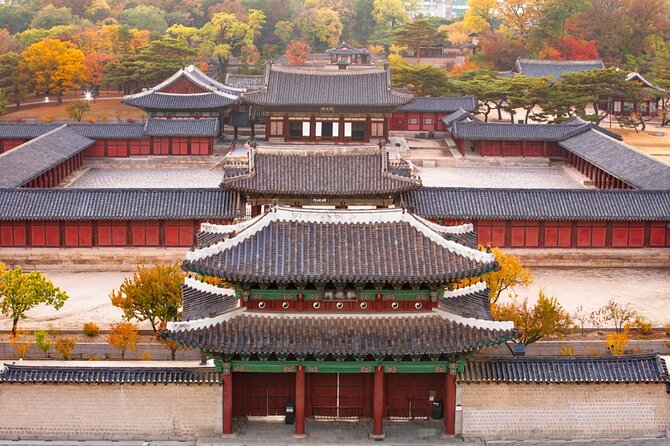
Next up is Bukchon Hanok Village, described as a living museum of traditional Korean houses (hanok). The audio’s angle is helpful: it explains the principles of hanok architecture and also how this area changed into a trendy cultural district.
This stop is free per the tour notes, which makes it a low-risk place to slow down. You’re not paying for entry, so you can wander, backtrack, and take photos without the clock feeling like it’s chasing you.
One thing to keep in mind: Bukchon is a neighborhood. If you’re hoping for a perfectly controlled, ticketed experience, this is more “walk through a real area” than “stand in line for an exhibit.” That’s not a downside—just a different kind of reward.
Changdeokgung Palace and Secret Garden: UNESCO Worth the Pause
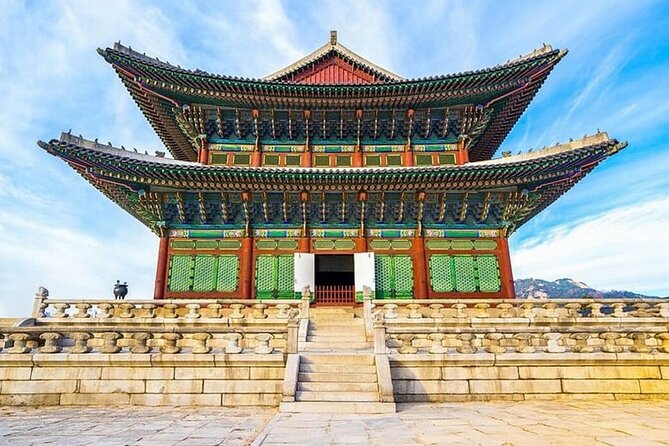
At Changdeokgung Palace, the audio centers on its UNESCO status and its famous Secret Garden. Even if you only have the quick stop time suggested in the itinerary, the narration gives you reasons to look closely—especially how the palace is designed to harmonize with nature.
This is another admission-not-included stop. It’s also the type of place where, if you care about gardens and layout, you’ll naturally want more than 10 minutes. If you’re the kind of traveler who hates feeling rushed, plan to extend this stop and shorten one of the others later in the day.
Jogyesa Temple and Bongeunsa: Two Ways to Hear Korean Buddhism
The route includes two major Buddhist stops, each with a different Seoul flavor.
- Jogyesa Temple is introduced as the center of Korean Buddhism, with the audio touching on modern Korean history and Buddhist practices and symbolism. This stop is free.
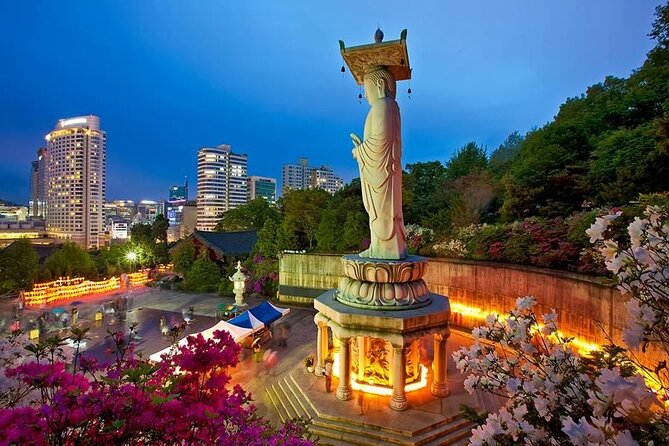
- Bongeunsa Temple comes later as a tranquility break in a modern district. The narration calls out its 1,200-year history and its role in spreading Korean Buddhism. Bongeunsa is also free.
What I like about having both on one itinerary is contrast. Jogyesa helps you understand the religious and historical role Buddhism plays in public life. Bongeunsa lets you experience that influence as quiet space—right in the middle of the city’s busiest modern blocks.
If you want respect-without-stress, treat these stops like mini time-outs: lower your pace, follow the temple etiquette you see other visitors using, and let the audio set the background without trying to turn it into a performance.
Cheonggyecheon Stream and Hangang Park: City Water, City Memory
Then you move to water in the middle of Seoul.
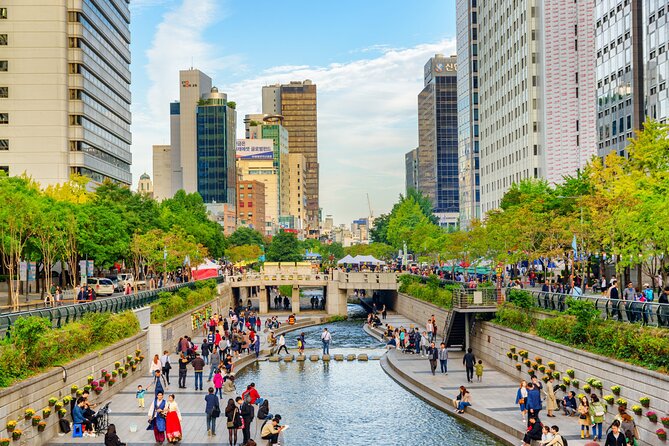
Cheonggyecheon Stream is presented as a city renewal masterpiece—its change from a covered highway into a public space, plus how it affects Seoul’s ecology. This stop is free.
Later, you get Hangang Park, also free, with narration tied to the Han River’s role in Seoul’s development and Korean culture. Even if you’re not thinking about culture theory while you stroll, connecting these two water stops in one day gives you a clearer sense of why Seoul keeps making room for nature-like breaks.
Practical note: these are stroll stops. If you’re wearing shoes that hate walking, this is where you’ll feel it. The itinerary suggests short time, but the real experience happens when you slow down and let the path pull you along.
Design, Art, and Instagram Seoul: DDP, Starfield Library, Leeum
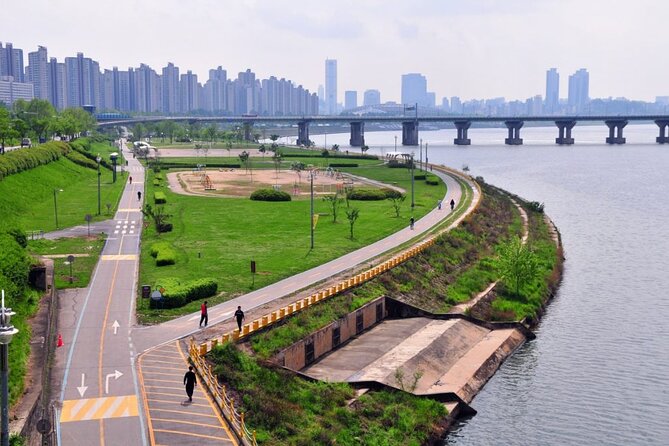
This tour gives you a modern Seoul hit list—design, art, and public creativity.
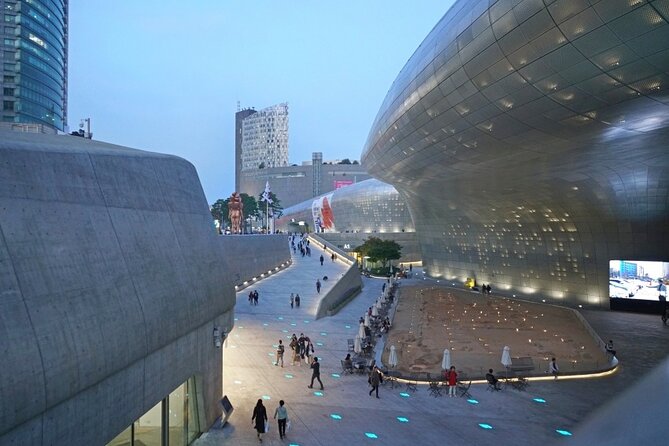
- Dongdaemun Design Plaza (DDP): the audio highlights its futuristic architecture by Zaha Hadid and its role as a hub for design and fashion. This stop is free.
- Starfield Library: the narration calls it Instagram-famous and explains how it blends literature and commerce in a uniquely Korean way. This stop is free.
- Leeum Art Museum: here the audio shifts to art history and architecture, with a focus on how the museum combines traditional Korean art with contemporary works and is housed in buildings designed by renowned architects. This stop has admission not included.
What I like is that the modern stops aren’t all “look up and take a picture.” The audio connects design and architecture to everyday culture—especially in the way Seoul uses public spaces.
If you only have energy for one ticketed modern-art stop, you’ll likely choose Leeum. But if you’re trying to keep costs down, DDP and Starfield Library keep the day moving without entry fees.
Myeong-dong Cathedral and the War Memorial: Faith and Division in One Route
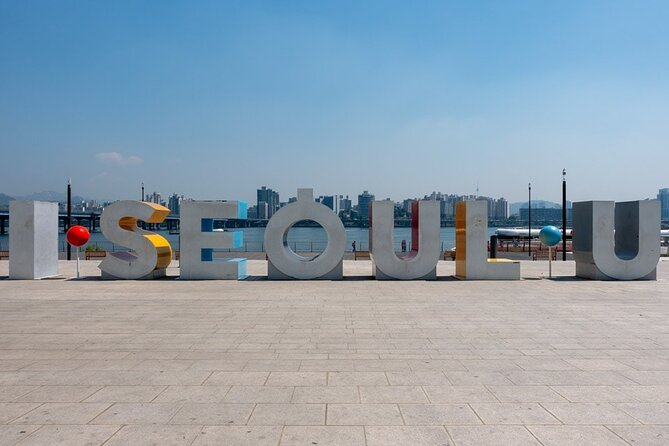
Two stops handle heavy themes, but in different tones.
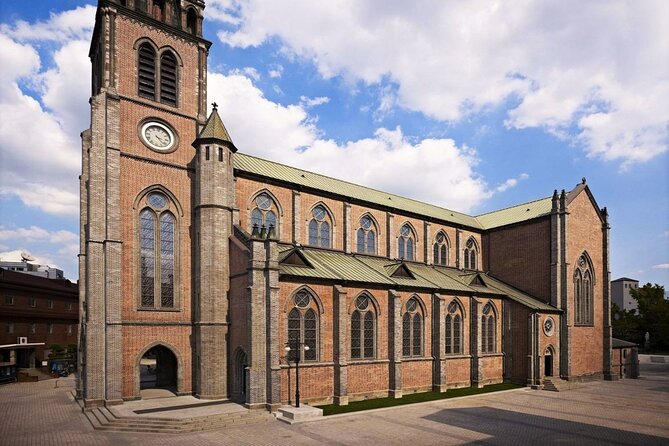
Myeong-dong Cathedral is introduced with its Gothic revival architecture and its role in Korea’s democracy movement. This stop is free.
Then you hit The War Memorial of Korea, also free, where the audio is aimed at Korea’s turbulent modern history—especially the Korean War and the ongoing impact of division on the peninsula.
This pairing works well because it keeps emotion tied to physical places. Cathedral architecture gives you a sense of how faith and civic life can coexist. The War Memorial grounds the story in a timeline you can’t ignore.
If you’re sensitive to war-related exhibits, treat this as a “pause and choose” stop. Use the audio to guide you through the main themes, then stop where you feel comfortable and continue with the rest of your day.
National Museum of Korea and Hangang Park: Making 5,000 Years Coherent
At the National Museum of Korea, the narration is built around a huge storyline: 5,000 years of Korean history and culture, with artifacts that shape Korean identity from prehistoric times to the modern era. This stop is free.
After all that context, returning to Hangang Park makes sense. It shifts the focus from long-ago artifacts to how culture plays out in daily public life—how people gather by the river, how the city grows around water, and why this area matters.
Because the itinerary allocates about 10 minutes per stop, you’ll likely treat the museum as a highlight sampler rather than a full day. If you’re an “I need to read every label” person, plan to spend longer and accept that your other stops may become shorter audio listening sessions.
N Seoul Tower, Namsan Park, and Seoul Sky: Views With a Story Attached
You’ll end with Seoul’s viewpoints, and the audio gives each one a reason to exist beyond Instagram.
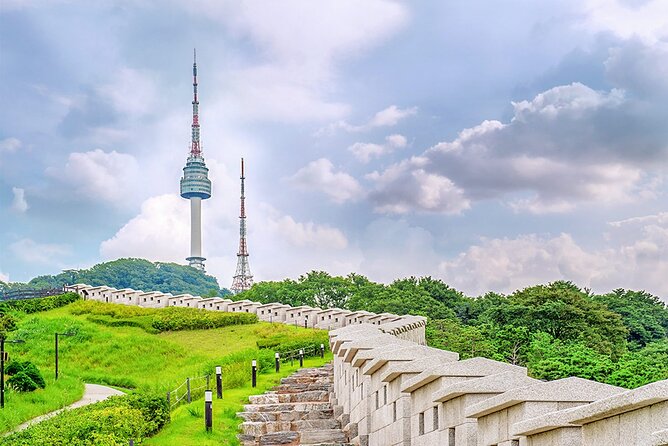
- N Seoul Tower: the audio frames it as an iconic communication tower and connects to the love lock tradition. This stop has admission not included.
- Namsan Park: a free green break with feng shui principles and the role of the mountain park as a central oasis in the city.
- Seoul Sky: the narration takes you up to Korea’s tallest building for panoramic views and includes engineering behind this super-tall skyscraper. Admission is not included here either.
This is where pacing matters most. You’ll want enough time for viewpoints, because even a quick stop can turn into lingering photos. Also remember the tour’s “10 minutes per stop” plan is a guide; the real duration depends on lines, lighting, and how long you want to stay at the rail.
If you care about city layout, do Namsan Park before the towers so the skyline feels like a destination, not just a final pop of scenery.
Price and Value for a $9 Self-Guided Seoul Playlist
At $9.00 per person for a 16-attraction audio experience, you’re paying for narration, a playlist, and an interactive map—not entry tickets. That distinction changes the value calculation.
Here’s what you should expect financially:
- Several top stops note admission ticket not included (Gyeongbokgung Palace, Changdeokgung Palace, N Seoul Tower, Leeum Art Museum, Seoul Sky).
- Many others are free (Bukchon Hanok Village, Jogyesa Temple, Cheonggyecheon Stream, DDP, Myeong-dong Cathedral, Namsan Park, War Memorial of Korea, National Museum of Korea, Hangang Park, Bongeunsa Temple, Starfield Library).
So the $9 can be a great deal if you’re planning to visit those major paid sites anyway and just want audio context to make the day click. If you’re only aiming for free stops, you might still like the audio—but you’ll feel the price is less of a bargain because the audio is doing the heavy lifting while ticket costs stay out of reach.
Also note the tour is private for your group. If you’re traveling as a duo or small group, private access links can feel more efficient than juggling multiple audioguides on one phone.
Booking Advice After the Common Friction Points
The overall rating is 3.3 out of 5 across 12 reviews, and the pattern of issues is pretty clear.
The biggest problem isn’t the content—it’s expectation and timing:
- Some people felt the email link arrived too late to use right away.
- Others expected a more guided, step-by-step routing experience and were surprised it’s self-guided audio with a map, not automatic navigation.
- A few ran into the reality that some attractions close in the evening and entry tickets are not included.
Here’s how to protect your day:
- Book with buffer time rather than assuming instant use.
- Before you start, check your email for the SoundCloud and Google My Maps links.
- When you plan your route, treat the itinerary as a suggested order and pacing, not a promise that every location will be accessible at your chosen hour.
- Build in extra time for the ticketed stops so you’re not scrambling.
If you do those basics, the audio experience becomes what it’s meant to be: a story companion that helps you understand what you’re seeing in Seoul, quickly.
Who This Seoul Self-Guided Audio Tour Suits Best
This tour works especially well if you:
- like independent travel and want to control pacing
- enjoy reading/watching history and architecture through short stop-based audio
- want an easy way to connect far-flung areas like palaces, temples, modern design, museums, and skyline viewpoints
- plan to visit both major paid attractions and free public sites
It may feel less satisfying if you:
- want turn-by-turn street navigation
- expect everything to be scheduled like a timed entry tour
- need long, detailed museum-style commentary at each stop (the itinerary is built around about 10 minutes per location)
Should You Book This Seoul Self-Guided Audio Tour?
If you want a low-cost way to make Seoul’s landmarks make sense, this is a smart purchase—especially for the palaces, temple context, and the mix of old and new that Seoul does so well. The map + audio pairing is the real strength, because it keeps you from wandering with no story to attach to what you’re seeing.
I’d book it if you’re flexible about pacing and you’re willing to handle tickets on your own. I would hold off if you’re the kind of traveler who needs the product to start the moment you arrive, or if you’re expecting a guided route instead of a self-directed audio playlist.
If you do book: start early enough that link timing and site hours don’t trap you, and treat the stops as a framework you can stretch or shrink.