REVIEW · SAN FRANCISCO
San Francisco Self-Guided Audio Drive: Explore at Your Own Pace
Book on Viator →Operated by Adventures with Action · Bookable on Viator
You can drive SF while your app talks you through it. This self-guided audio drive strings together iconic stops, from the Painted Ladies to the Golden Gate, with hands-free audio that plays when you reach each spot.
What I like most is the lifetime access (no expiry) and the fact it’s designed to work offline, so your day stays smooth even if signal disappears.
You’ll also appreciate the format: it’s built for a car trip where you can start anytime, pause whenever, and take photos or side stops without waiting on anyone else. One drawback to plan for: it’s traffic-friendly only up to a point, so rush hour can slow the clock and make tight turns and parking choices feel stressful.
In This Review
- Key Highlights to Know Before You Go
- Price and Timing: Is $16.99 Actually Good Value?
- Where You Start: Alamo Square (Steiner Street) and What That Means
- How the Audio Works: Offline Maps, Hands-Free Playback, and Phone Setup
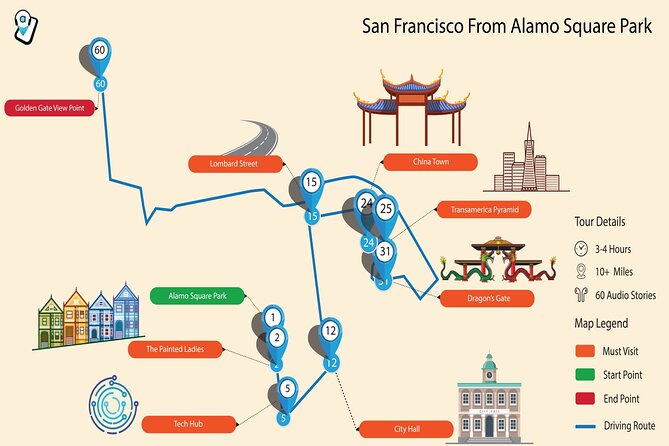
- The Route From Painted Ladies to City Hall: Getting SF’s Big Picture Fast
- Lombard Street and Telegraph Hill: The One Block You Should Drive Like It’s Special
- Coit Tower and the Housing Story: Great Views With a Reality Check
- Chinatown on Wheels: Pass Key Landmarks, Then Choose a Walk
- Waterfront to Embarcadero to Ferry Building: Maritime Stories and the Bridge That Almost Happened
- Union Square and Fisherman’s Wharf: Big-City Energy Without the Museum Line
- Crissy Field to the Golden Gate Bridge: Learn Why It’s Red, Then Cross
- SFMOMA and Silicon Valley Clues: The City After the Bridge
- Small Fixes That Make or Break Your Experience
- Who This Audio Drive Is Best For
- Should You Book This Self-Guided Audio Drive?
- FAQ
- How long does the San Francisco Self-Guided Audio Drive take?
- How much does it cost?
- Is it available in English?
- Do I need cell service during the tour?
- Can I start and pause the tour whenever I want?
- Where do I begin the tour?
- Where does the tour end?
- Is there an in-person guide with the tour?
- Does the tour include entry tickets or attractions?
- Does the tour have an expiry date?
Key Highlights to Know Before You Go
- Lifetime, no-expiry access you can replay on future visits
- Offline playback after you download on strong Wi‑Fi or cellular
- Audio runs by location so you do not have to press buttons
- One purchase per vehicle, so it can be cheaper per person for a group
- A stop plan that covers classic SF: Alamo Square, Chinatown, the waterfront, and the bridge
- Optional walk in Chinatown if you want to stretch your legs
Price and Timing: Is $16.99 Actually Good Value?
At $16.99 per person, the price is straightforward. The real value shows up if you travel as a group in one car. The tour is sold per vehicle, not per person, so you only pay once for everyone riding together. That changes the math fast versus hop-on hop-off bus tickets or guided tours where you pay per head and follow a fixed schedule.
Time-wise, the tour is about 3 to 4 hours for a full run. The total drive is listed as over 17 miles with more than 43 audio stories, so you are not just getting a few highlights. You’re building a coherent route where each stop adds context—architecture, neighborhoods, and how the city became what it is today.
One thing to keep in mind: this is a driving tour, but it also asks you to pause for specific viewpoints and landmarks. That means you’ll want a realistic plan for traffic. If you hit major rush hour, your timing will stretch. The good news is the tour format is flexible—you can pause, take a snack break, or simply continue later using the same trip.
You can also read our reviews of more tours and experiences in San Francisco.



Where You Start: Alamo Square (Steiner Street) and What That Means
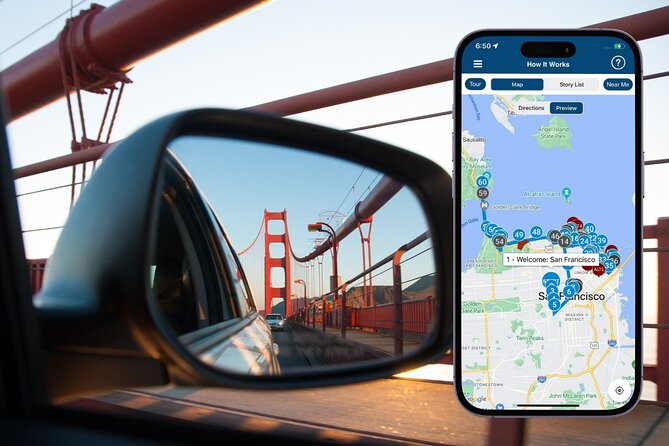
Your starting point is Steiner Street at Alamo Square Park (Steiner St, San Francisco, CA 94117). That location is a great match for the opening story about the Painted Ladies, because you’re in the right place to understand why these buildings became such a visual icon.
There’s no person greeting you at the start. Instead, you start the audio in the app at your first story point. Once you begin, the audio is designed to play automatically based on your location, which is exactly how you want a self-guided drive to work.
Practical tip: treat the first few minutes like setup time. Get your audio connected, confirm you can hear clearly, and make sure you’re pointed in the direction that makes it easy to reach the next stop. A couple of the issues people report with app tours are not about the audio—it’s about missing the first point or taking a wrong turn early. If that happens, you can usually recover, but it’s a pain when the whole plan assumes you follow the route and speed limit shown in the app.
How the Audio Works: Offline Maps, Hands-Free Playback, and Phone Setup
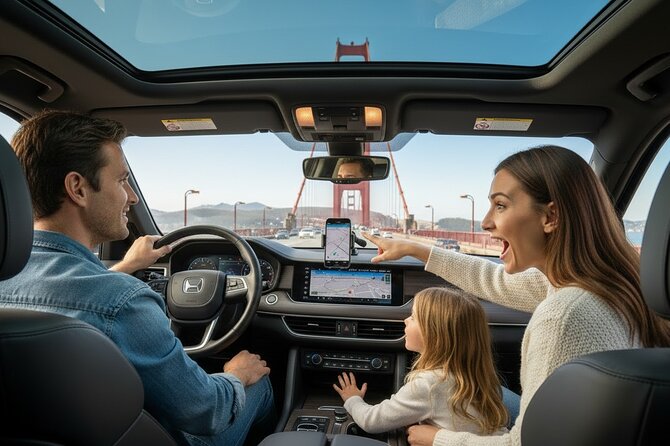
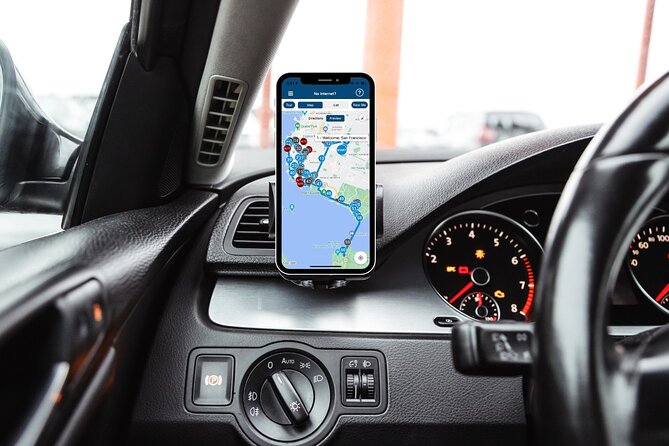
The core experience is the app-based narration. You download Action’s Tour Guide App, enter the password sent by email and text, then start the specific tour. The instructions are clear that you should download while you have strong Wi‑Fi/cellular, because it’s set up to work offline afterward.
Once you’re touring, audio stories play on their own. The goal is hands-free exploring, meaning you are driving and listening without tapping through menus at every stop. That is also why your sound setup matters.
For best listening, you have a few options:
- Connect your phone to your car stereo using Bluetooth, USB, or AUX
- If your car screen mapping is unreliable, use your phone audio so you still hear the story
- If needed, you can listen through phone speakers
One caution from real-world use: support for car integrations can be inconsistent. Do not count on the car screen to show maps perfectly. If maps behave oddly, your audio should still guide you—just keep an eye on the route instructions inside the app and follow the speed limit shown.
The Route From Painted Ladies to City Hall: Getting SF’s Big Picture Fast
The tour starts with the Painted Ladies—those vivid, striped Victorian homes that look like postcards. The story focuses on how they became painted in such bold colors, which is a nice way to ease into SF’s mix of preservation and reinvention. It’s the kind of context that makes later neighborhoods make more sense.
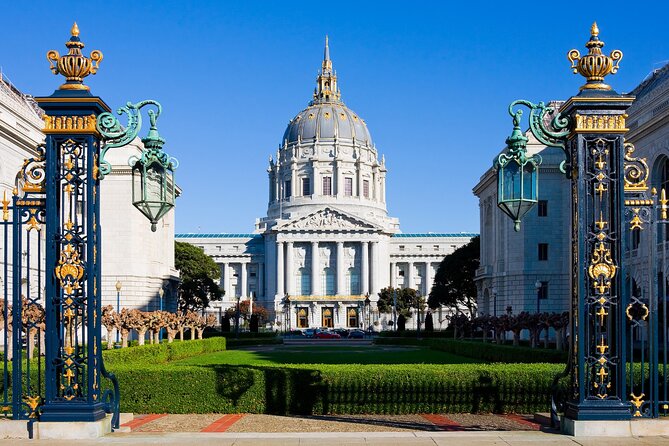
Next comes San Francisco City Hall, a marble landmark you’ll pass while driving. The audio there is about the city’s origins—how San Francisco was founded and why it grew. Even if you’ve heard the basics before, the value here is that you’re learning while you’re actually moving through the city’s visual layout, not just reading a plaque.
This is where I think the tour earns its keep. You’re not collecting random facts. You’re building a timeline feeling, with architecture and geography acting like your guide rails.
Lombard Street and Telegraph Hill: The One Block You Should Drive Like It’s Special
Stop one in the classic-photo category is Lombard Street. You get the quick explanation for why it’s called the most crooked street in the world and the practical warning: for one block, you’ll make eight hairpin turns. That is not the place to rush, and it’s not the place to assume your car can handle a sharp turn at speed.
Then you head toward Telegraph Hill, another hill-top payoff. You’re told you’ll get a phenomenal view of the bay and the city skyline once you’re up there. For many visitors, the benefit is not just the photo. It’s the understanding of how SF’s hills shape sightlines and movement—why some neighborhoods feel tucked in and why views feel like reveals.
How long will you be here? The guide notes about 10 minutes for Lombard Street and 10 minutes for Telegraph Hill. That’s enough time to park if you need to, step out for a look, and get back without turning the whole tour into a detour marathon.





Coit Tower and the Housing Story: Great Views With a Reality Check
From Telegraph Hill, the route climbs toward Coit Tower. The audio includes the view from the top and then pivots into something SF-specific: rapid real estate growth and the housing crisis the city faces today.
This is one of those moments where an audio tour earns its weight. You’re not only sightseeing—you’re getting a reminder that the city’s beauty comes with big pressures. It’s the kind of balance that makes the rest of the tour land better, especially when Chinatown and the waterfront stories start touching migration, economics, and change.
Chinatown on Wheels: Pass Key Landmarks, Then Choose a Walk
Chinatown is a major chunk of the drive. As you approach, the audio covers the impact of Chinese and Asian immigrants on San Francisco, which helps you understand why the neighborhood looks the way it does and why it matters.
You also pass a strange sight: a huge glass pyramid, and the story explains its unusual history as you drive by. Next, you see two iconic Chinatown symbols:
- the Chinatown Mural
- the Old Chinese Telephone Exchange
Then there’s a very practical option: you can jump out of the car for an optional walk. The tour frames this as a chance to explore the neighborhood’s food, drinks, and desserts. That’s smart because you’re already there, and a short walk can turn the audio from a driving listen into a real neighborhood experience.
When you’re ready to move on, you exit through the Dragon’s Gate at the intersection of Bush Street and Grant Avenue. You get the south-facing gate context and then—because SF loves theme-meets-transportation—you shift into another story: the cable car.
Waterfront to Embarcadero to Ferry Building: Maritime Stories and the Bridge That Almost Happened

As you head toward the waterfront, the audio moves into maritime history and the city’s literal gold-digging past. This is a good transition because it explains why SF’s growth and its later identities are tied to shipping, trade, and the attraction of the Pacific.
The tour brings you to the Embarcadero area. From there, you can explore the nearby Ferry Building or make your way toward Fisherman’s Wharf for a glimpse of Alcatraz. The audio then focuses on classic Golden Gate framing: the “most famous bridge in the world” and how it almost didn’t exist.
This is a standout listening section because it’s not only engineering romance. It’s also about decisions and obstacles—the kind of human details that make a big landmark feel earned.
Union Square and Fisherman’s Wharf: Big-City Energy Without the Museum Line
Next up is Union Square. The audio paints it as an old-school city center with a mix of art and entertainment. You’ll hear about the Dewey Monument and surrounding theaters, plus you get the idea of the square as a meeting point between innovation and tradition.
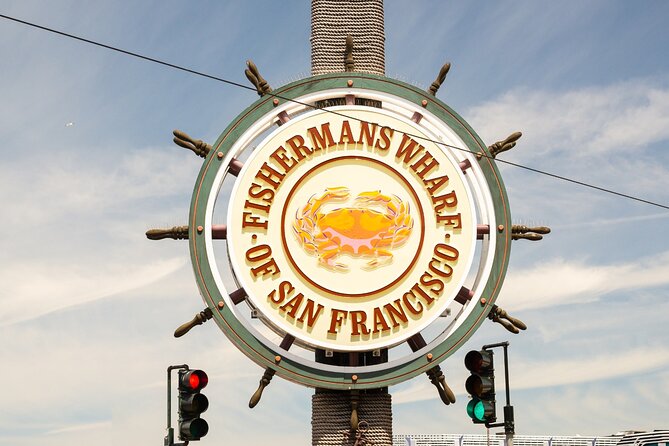
Then you swing toward Fisherman’s Wharf. The narration doesn’t treat it as a one-note tourist strip. You get stories about the Golden Gate Bridge’s money problems, construction problems, aesthetic problems, engineering problems, and even life-endangering problems it overcame. In other words: you’re not just seeing the view later—you’re learning the struggle behind the payoff.
At this stage, I’d also watch for how the route affects your driving stress. Wharf-to-bridge areas can be tight. If you’re prone to rushing, build in extra time and keep your focus on finding safe places to stop.
Crissy Field to the Golden Gate Bridge: Learn Why It’s Red, Then Cross
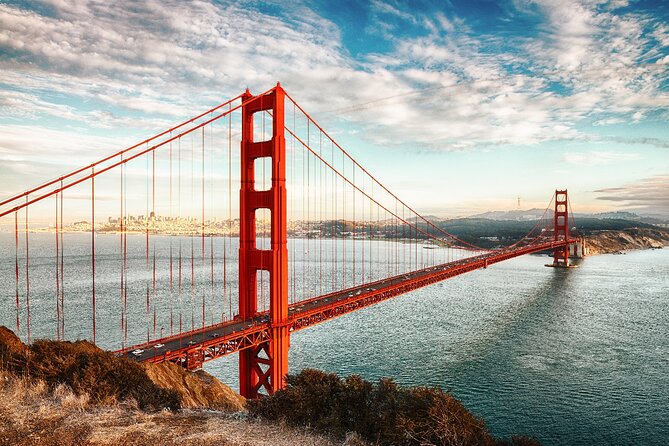
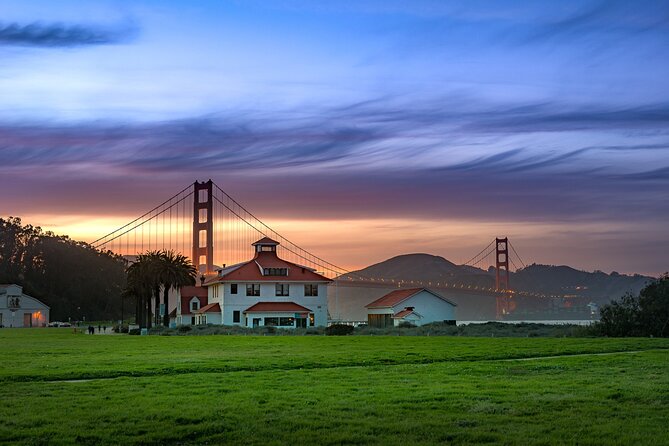
A key viewpoint stop is Crissy Field. The audio explains why the Golden Gate Bridge is red, what opening week was like, and why it remains a modern marvel of transportation.
Then it’s time to cross. As you cross, you pass the Golden Gate Welcome Center, and you get construction history tied to what you’re driving over. You also learn why the Golden Gate Bridge became a favorite Hollywood setpiece—because when you see it from the route in motion, it’s easy to understand the appeal.
When your day works well, this section feels like the reward for everything you listened to earlier. City growth, migration, maritime roots, and the bridge’s challenges all tighten into one clear story line.
SFMOMA and Silicon Valley Clues: The City After the Bridge
After you cross, the tour continues with SF’s modern identity. It includes a San Francisco Museum of Modern Art (SFMOMA) mention, highlighting it as the first West Coast museum devoted solely to 20th-century art.
Then you get a tech-focused segment: San Francisco as a technology hub, with the audio pointing to upcoming Uber and Twitter headquarters as proof. Whether you’re a tech fan or not, I like this section because it keeps the tour from becoming only about Victorian charm and bridge photos. SF is always evolving, and the audio is trying to show that change in real time.
Your final destination is Golden Gate View Point on the other side of the bridge.
Small Fixes That Make or Break Your Experience
This is the part that can save you time.
1) Download on strong Wi‑Fi or cellular first
Offline listening depends on it. If your download fails, you could end up with silence mid-route.
2) Follow the route and speed limit shown in the app
The audio is location-triggered. Going off plan can make it harder to line everything back up.
3) Expect traffic to be part of the deal
The tour is worth it, but SF timing can stretch. If you care about keeping the schedule tight, avoid peak rush hour.
4) Plan sound before you leave the parking lot
If your car setup is finicky, connect through Bluetooth, USB, or AUX so you are not scrambling later.
Who This Audio Drive Is Best For
I think this tour fits best if you want:
- A self-paced way to see SF without booking a guided van
- A route that links landmarks into a story, not just a list
- A day where you can pause for photos and snack breaks
- A group option where one purchase per vehicle saves money
It may feel less ideal if you:
- Need frequent turns into parking garages and quick exits
- Hate driving in traffic and prefer walking-only routes
- Want live, in-person answers to questions as you go (this is strictly audio, no guide)
Should You Book This Self-Guided Audio Drive?
Book it if you like structure but not babysitting. The route hits the classics, the audio is designed to run hands-free, and lifetime access means you can replay it on a future SF trip without buying again. For groups sharing one car, the per-vehicle pricing is a real advantage.
Skip it or rethink it if you know you will avoid driving at all costs or you dislike any setup work on your phone. Also, if you’re the type who needs perfect turn-by-turn directions on a big screen, remember you may have to rely more on the app route and your audio cues.
If you want a practical way to understand San Francisco while you drive through it, this is one of the more efficient ways to get depth for the money.
FAQ
How long does the San Francisco Self-Guided Audio Drive take?
It takes about 3 to 4 hours to complete.
How much does it cost?
The price is $16.99 per person.
Is it available in English?
Yes, the tour is offered in English.
Do I need cell service during the tour?
No. The tour includes offline maps and works offline after you download it.
Can I start and pause the tour whenever I want?
Yes. You can start anytime and pause whenever you like, then continue later.
Where do I begin the tour?
The start is at Steiner Street, Alamo Square Park (Steiner St, San Francisco, CA 94117).
Where does the tour end?
The end point is Golden Gate Bridge, Golden Gate Brg, California (with Google Maps link provided).
Is there an in-person guide with the tour?
No. This is self-guided audio with no in-person guide.
Does the tour include entry tickets or attractions?
No. Attraction passes, entry tickets, and reservations are not included.
Does the tour have an expiry date?
No. It says you get new lifetime access with no expiry, and you can use it for a whole year or on future trips.