REVIEW · MILAN
Milan: Museum of the 900 Fast-Track Entry Ticket & Audio Guide
Book on Viator →Operated by Vox City International Ltd · Bookable on Viator
A shortcut helps you see more art in less time. With fast-track entry to Museo del Novecento plus a smartphone audio guide, this ticket is built for a smooth, self-paced museum visit. You get plenty of structure (40+ audio points) without being herded into a group.
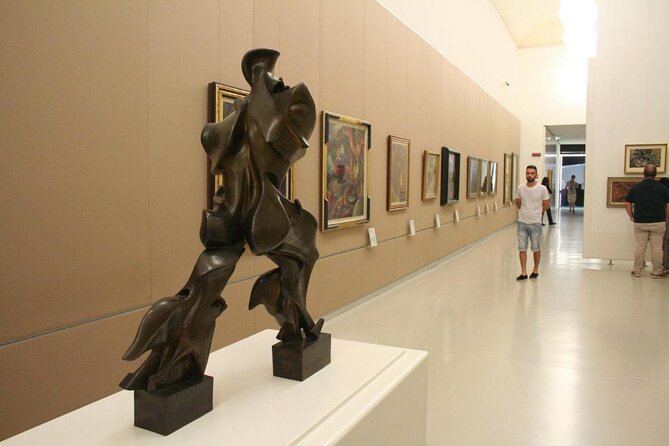
What I like most is the way the audio guide turns the museum into a real story. It starts you around 1902 with paintings by Giuseppe Pellizza da Volpedo, then moves through modern giants like Pablo Picasso, Paul Klee, and Wassily Kandinsky, before ending with works by Nunzio Di Stefano. It’s a clear route through major movements such as Futurism and Arte Povera, without you needing to be an art historian.
My only caution: the ticket is self-guided, so you’ll want to bring your own comfort setup. Headphones and your mobile device are not included, and the audio experience depends on having a working phone at the museum.
In This Review
- Key details worth knowing before you go
- Fast-Track entry at Museo del Novecento: what you’re really buying
- Meeting at Piazza del Duomo: arriving smart around the Duomo
- The smartphone audio guide: how the 40+ stops work for you
- Your modern-art route: from 1902 to Nunzio Di Stefano
- Museo del Novecento rooms: what to look for when you’re moving
- The digital map and bonus Milan audio guide: extras that actually help
- Price and value: is $15.62 worth it?
- Who should book this ticket (and who might not)
- Should you book the Museo del Novecento fast-track ticket?
- FAQ
- How long does the Museo del Novecento experience take?
- What’s included with the fast-track entry ticket?
- Which languages are available for the audio guide?
- What do I need to bring for the audio guide?
- Where do I redeem my e-ticket?
- What are the museum opening hours?
- How will I receive my e-ticket?
- Is free cancellation available?
Key details worth knowing before you go
- Fast-track entry at Museo del Novecento to save time when you arrive.
- Smartphone audio guide in multiple languages (English, French, German, Italian).
- 40+ audio points of interest plus a digital map to help you move room to room.
- A modern-art timeline that runs from early 1900s works toward the museum’s later pieces.
- Bonus Milan audio guide included for extra context beyond this one museum.
- Museum hours are tight on some days (closed Monday; Tue–Sun typically 10:00–19:30).
Fast-Track entry at Museo del Novecento: what you’re really buying
This isn’t a guided tour with a person talking at you. It’s a ticket-plus-tools package. You buy the right to get in quickly, then use the audio guide and digital map to shape your own pace.
That matters because Museo del Novecento is all about looking—really looking. When you’re stuck in a slow entry line, your energy goes first and your attention goes second. With fast-track entry, you’re more likely to start fresh, especially if you’re also doing the Duomo area that day.
You’re also paying for the thinking already done for you. The museum visit is built around a guided path: you’ll get audio points spread across the collection, and the route is meant to take you through big art ideas like Futurism and Arte Povera rather than only highlighting isolated famous works.
You can also read our reviews of more tours and experiences in Milan.


Meeting at Piazza del Duomo: arriving smart around the Duomo
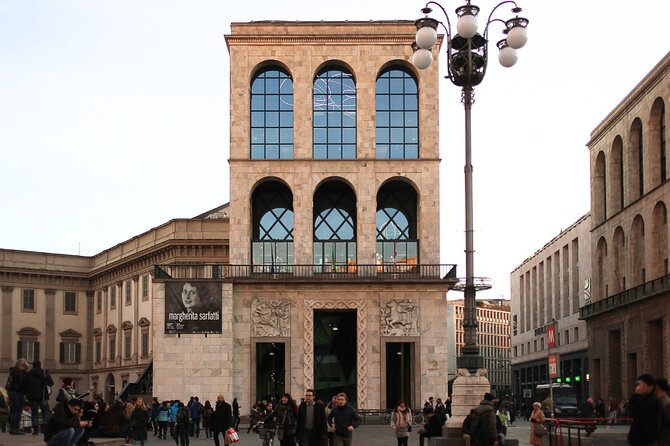
Your redemption point is at Piazza del Duomo, 8 (Museo del Novecento). That’s a helpful address because you can base yourself in the Duomo area and keep your day compact. You’ll also be near public transport, which matters in Milan, where walking is great but stops add up fast.
Here’s the practical bit: you’ll redeem by showing your e-ticket on your mobile device to museum staff. The e-tickets are delivered via WhatsApp within 24 hours before your travel date, from Vox City. So plan for one small thing that people often forget—make sure you have your WhatsApp access and your phone battery is healthy.
Also note the museum schedule: it’s open Tuesday to Sunday, 10:00–19:30, with extended hours Thursday until 22:30, and it’s closed Monday. If you want an unhurried museum visit, Thursday evening can be great—just keep expectations realistic: later hours can mean different crowd energy, even if entry is faster.
The smartphone audio guide: how the 40+ stops work for you
The audio guide is delivered digitally for multiple languages (English, French, German, Italian, German). It includes 40+ audio points of interest, so you’re not stuck with either a random self-guided wander or an exhausting nonstop commentary.
For your pace, think of it like this:
- Use the audio points as anchors.
- Let the paintings pull you off-script when something catches your eye.
- When you’re ready, hop to the next point and keep the narrative moving.
This design is ideal if you don’t want to spend your whole trip trying to interpret art from labels alone. Even if you’re a casual museum-goer, the audio framing helps you notice patterns: how styles shift across decades, how certain themes keep reappearing, and how different artists treat similar subjects in totally different ways.
One more practical note: the experience depends on your phone and on sound. Headphones are not included, so bring your own if you want a calmer, focused listen. If you forget them, you can still read and look—but you’ll lose part of what you paid for.
Your modern-art route: from 1902 to Nunzio Di Stefano
This visit is structured like a timeline you can follow at your speed. The story starts around 1902 with paintings by Giuseppe Pellizza da Volpedo. That early entry point is smart because it gives you a sense of how the museum’s modern collection developed rather than making you jump straight into twentieth-century style experiments.
From there, the audio guide pushes you toward key landmarks in modern art. You’ll encounter major names like:
- Pablo Picasso
- Paul Klee
- Wassily Kandinsky
…and you’ll also be guided through art movements such as Futurism and Arte Povera.
By the time you’re near the end of the route, the audio guide leads you to the museum’s later works, including paintings by Nunzio Di Stefano. This ending matters because it prevents the experience from feeling like it stops in the early twentieth century. You finish with a sense that modern art doesn’t sit still—it keeps changing.
Also, the museum contains 400+ works, so you’re not going to see everything in one go. The best value of this ticket is that it helps you choose what to prioritize. You’re guided toward important works and key turning points, which is exactly what you want when you only have about 2 hours.
Museo del Novecento rooms: what to look for when you’re moving
Because this is self-paced, you should treat your two hours like a strategy, not a sprint. I like to think of Museo del Novecento in three mental zones:
1) Set your visual expectations early. After you start with the 1902 section, your brain starts recognizing how the museum wants you to read art—by movement and context, not just by subject.
2) Let the big names do the heavy lifting. When you hit works associated with artists like Picasso, Klee, or Kandinsky, your job is to notice how the style changes your reaction. Color, form, and lines become part of the message.
3) Finish with a reflective attitude. The later parts of the route (including Nunzio Di Stefano) tend to feel more like questions than answers. If you rush here, you’ll miss that shift.
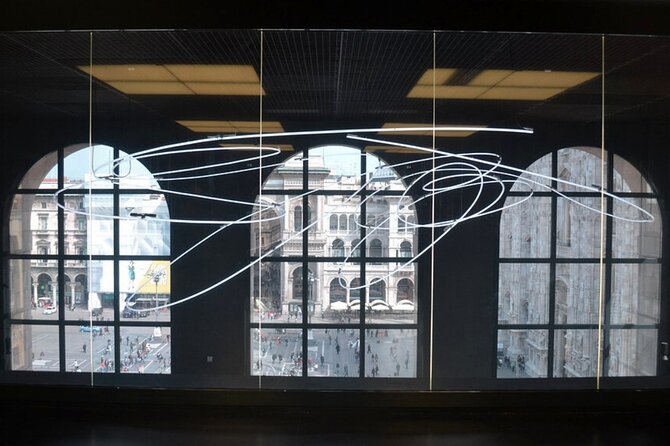
One practical tip: use the digital map to avoid the time-kill of backtracking. With 400+ works, it’s easy to wander into a dead-end loop. The map won’t make decisions for you, but it keeps you from losing the plot.



The digital map and bonus Milan audio guide: extras that actually help
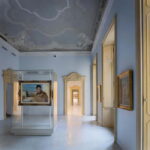
This ticket includes a complimentary digital map for the museum and a digital audio guide for the city of Milan. The city audio isn’t the main event here, but it’s a useful add-on if you’re trying to make sense of what you see outside the museum too.
In practice, the museum map helps you do two things well:
- Plan your route so you don’t spend your best energy searching for the next room.
- Save time for the works you care about, since you’ll spend less effort finding them.
The Milan audio guide can help if you’re doing other sights nearby—especially around the Duomo area—because it gives you a bit of context while you’re walking. Even a little context makes a big difference when you’re moving quickly in Milan.
Price and value: is $15.62 worth it?
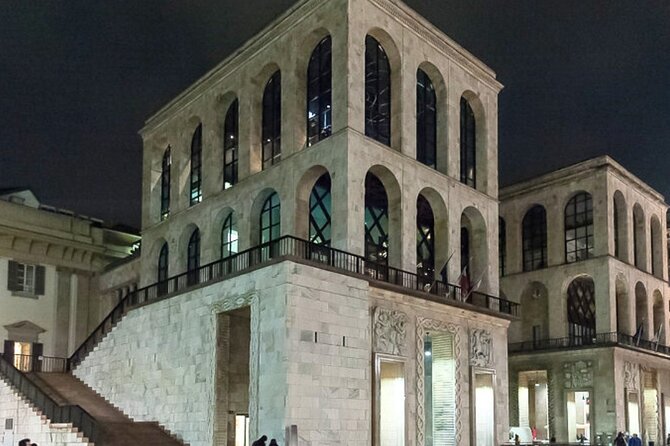
At $15.62 per person, this ticket is priced like a practical add-on to a day already planned around the Duomo and central Milan. What makes it good value is that you’re paying for convenience and structure:
- Fast-track entry saves time.
- A smartphone audio guide reduces the guesswork of what to prioritize.
- A digital map helps you move efficiently through rooms with a lot to see.
The only hidden cost is the one you can control: you’ll need your phone and ideally headphones. Since those aren’t included, factor that into your readiness. If you show up with a charged phone and your own earphones, the whole package feels like you’re getting a lot for the money—especially for a museum that otherwise can swallow hours.
Also, the average booking window is about 12 days in advance. That doesn’t mean you can’t go later, but it’s a hint that slots can be in demand around popular visiting days. If your dates are fixed, locking it in earlier can be the stress-free move.
Who should book this ticket (and who might not)
This fits best if you want:
- A museum visit that’s self-paced but not aimless
- A structured route with 40+ audio points
- A modern-art introduction that links artists to movements like Futurism and Arte Povera
It’s also a strong choice for couples or solo travelers who don’t want to coordinate with a group or who prefer to stop and re-look at a painting without waiting for everyone else.
You might skip it if:
- You prefer a live, spoken guided tour with back-and-forth Q&A (this is audio, not a lecturer).
- You don’t want to rely on your phone during the visit.
- You’re expecting headphones to be provided.
Should you book the Museo del Novecento fast-track ticket?
I’d book it if you’re doing Milan with a realistic schedule and you want your museum time to feel purposeful. The mix of fast-track entry, an audio route through major artists (Picasso, Klee, Kandinsky), and clear guidance from 1902 onward is exactly how you get the most out of a modern-art museum in about two hours.
I’d also book it if you like the idea of choosing your own pace without losing the plot. The digital map and audio points do the “what should I see next?” work, while you still get to pause when a painting grabs you.
FAQ
How long does the Museo del Novecento experience take?
The duration is approximately 2 hours.
What’s included with the fast-track entry ticket?
It includes fast-track admission to the Museum of the 900, a digital audio guide in multiple languages, and a complimentary digital map. A complimentary digital audio guide for Milan is also included.
Which languages are available for the audio guide?
The audio guide is available in English, French, German, and Italian.
What do I need to bring for the audio guide?
Headphones and your mobile device are not included, so you’ll need your own phone and headphones to use the audio guide.
Where do I redeem my e-ticket?
You redeem at Museo del Novecento, Piazza del Duomo, 8, 20123 Milano MI, Italy.
What are the museum opening hours?
The museum is open Tuesday to Sunday from 10:00 to 19:30, and on Thursdays it stays open until 22:30. It is closed on Monday.
How will I receive my e-ticket?
Your e-ticket is delivered via WhatsApp within 24 hours before your travel date, sent by Vox City.
Is free cancellation available?
Yes. You can cancel up to 24 hours in advance for a full refund.
If you tell me your travel dates and whether you’re visiting on a weekday or Thursday night, I can suggest the best time window to match this ticket’s 2-hour format.