REVIEW · PARIS
Self-Guided Audio Tour -The Eiffel Tower, Exterior
Book on Viator →Operated by SOUNDWALKRS · Bookable on Viator
The Eiffel Tower gets louder when you listen. This self-guided audio tour helps you read the monument like a story, with 3D visuals and audio effects as you walk the exterior route from Champ de Mars toward Trocadéro. You also get offline maps plus Paris tips you can pull up anytime.
I especially love the relaxed pace. You won’t be shoved along, and the audio is clear enough that one person can even run it on two phones at a comfortable listening speed. I also like the way it frames the tower beyond the postcard version, tying design ideas under Gustave Eiffel to the bigger cultural picture.
One key consideration: this is not a climb-and-enter ticket. It’s an exterior narration, and the experience does not include admission to the Eiffel Tower itself—so don’t expect it to replace a tower entry ticket.
In This Review
- Key Things You’ll Notice On This Audio Walk
- How the Self-Guided Format Keeps the Eiffel Tower From Feeling Like a Stampede
- Start at Champ de Mars, Then Think in Viewpoints, Not Checkmarks
- The Eiffel Tower Stop: Gustave Eiffel’s Design Story and the WWI Connection
- Jardins de Trocadéro: Where the Seine Frames the Eiffel Tower
- Pont d’Iéna and Parc du Champ de Mars: Parks, Water Jets, and a More Relaxed Side of the View
- The Museum Cluster at Chaillot Palace Area: Architecture, Maritime Themes, and Why It Fits
- Price and Value: What You Really Get for $10
- Who This Tour Suits Best (And Who Might Skip It)
- Should You Book This Self-Guided Eiffel Tower Audio Tour?
- FAQ
- How long is the self-guided tour?
- What does the ticket include?
- Is admission to the Eiffel Tower included?
- Do I need internet to use the tour?
- Where does the tour start and end?
- Is this a guided tour with a person?
- Do I need to bring headphones?
- Is a mobile ticket provided?
- What about service animals and public transportation access?
- Is it private for my group?
Key Things You’ll Notice On This Audio Walk
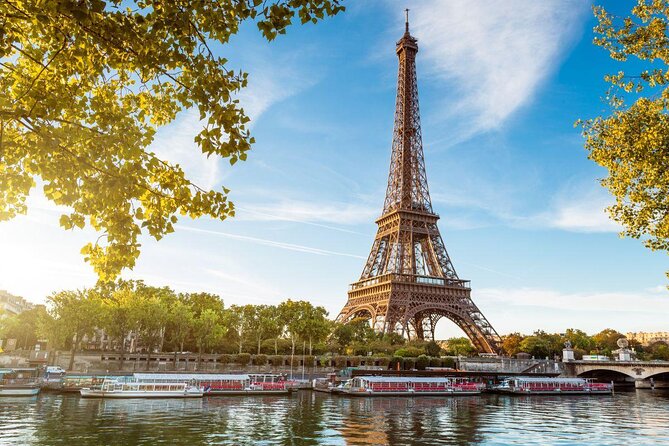
- Exterior-first storytelling that turns viewpoints into chapters, not just photos
- Offline-ready maps, tips, and audio chapters so you’re not stuck hunting signal
- 3D visuals and audio effects designed to help you picture the tower’s engineering
- A route built for angles as you move from Eiffel-area views to Jardins de Trocadéro
- Designed for comfort, with audio you can match to your own walking rhythm
How the Self-Guided Format Keeps the Eiffel Tower From Feeling Like a Stampede
This tour is all about control. You start where you want, listen when you want, and pause when you want. That matters at the Eiffel Tower, because crowds can turn even a great view into a stop-and-go blur. With a self-guided audio setup, you can slow down at the moments that deserve it—the ones where the latticework, geometry, and scale suddenly click.
The tour also leans on 3D visuals and audio effects. You don’t just hear names and dates. You get cues that help you see what the narration is pointing at, which makes the architecture feel more tangible. If you’ve ever stared at an iron structure and wondered how it holds together, this approach is a good fit.
The practical bonus is offline use. You can access the tour chapters and maps without relying on mobile data. That gives you freedom to walk the riverbanks and viewpoints without worrying that your phone will die right when you need it.
You can also read our reviews of more tours and experiences in Paris.



Start at Champ de Mars, Then Think in Viewpoints, Not Checkmarks
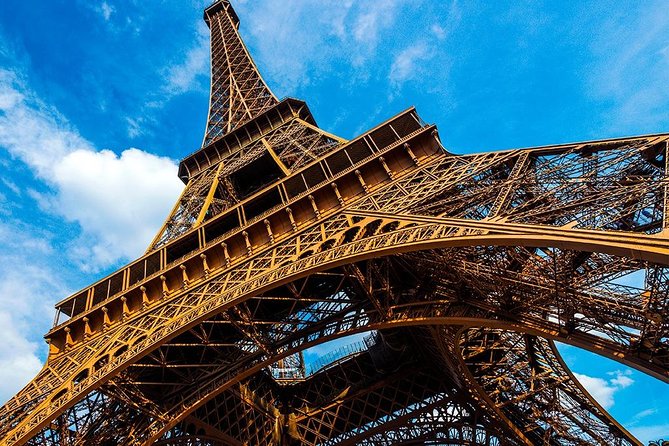
Your route begins in the Champ de Mars area (75007). This is where the Eiffel Tower dominates the scene, and it’s also where you can get your bearings fast. Instead of treating the walk like a sprint to Trocadéro, I suggest you treat it like a sequence of vantage points.
At the start, keep your expectations simple: you’re listening to the tower from the outside. The narration is designed to make you look harder at shape and structure—things your eyes might skip when you’re busy photographing.
You’ll also be moving toward the finish area at Place du Trocadéro (75016), by Chaillot Palace. That endpoint matters because Jardins de Trocadéro is one of the best places in Paris to frame the Eiffel Tower with the right foreground. You’ll get a lot more out of your photos if you save your phone’s “big shot” for that final section.
The Eiffel Tower Stop: Gustave Eiffel’s Design Story and the WWI Connection
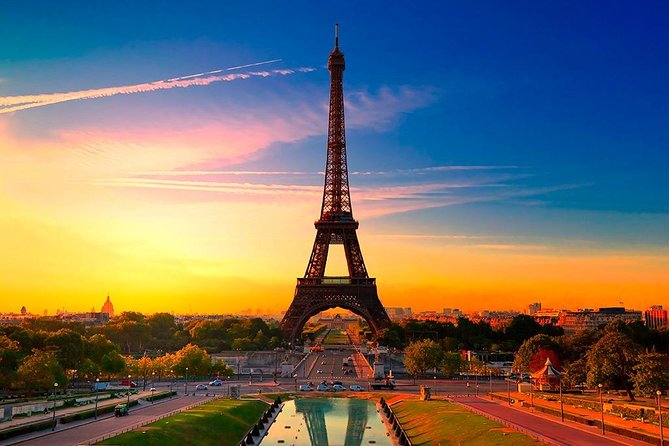
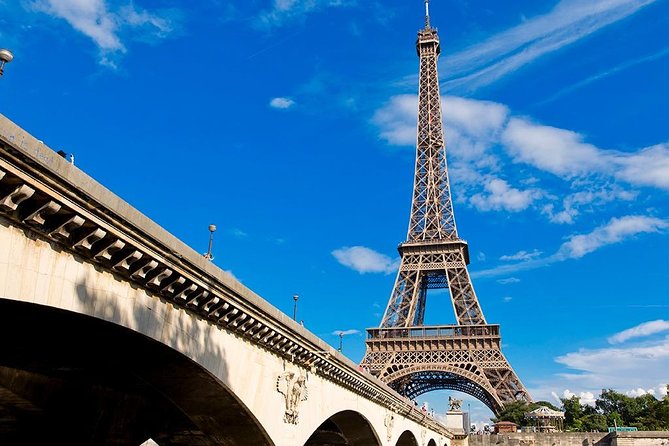
The tour’s first stop focuses on the Eiffel Tower’s exterior presence. It’s a wrought-iron lattice tower on the Champ de Mars, named for engineer Gustave Eiffel. That’s your anchor fact, but the audio goes further: it explains the design context and gives you side stories that aren’t usually front-and-center on typical Eiffel outings.
Here’s what I like about this style of narration. It pushes you past the idea of the tower as just a symbol and into the idea of the tower as a real engineering project—one that had critics and consequences. The audio includes details about the tower’s role in the first World War, so the structure stops feeling like a time capsule and starts feeling like infrastructure that served a purpose.
It also mentions artists who protested its construction. That’s one of those “wait, seriously?” moments that makes the tower feel less like an old monument and more like something people argued about in real time. When you hear about protest in the background, the tower’s bold, open-frame design reads differently. You’re not just looking at iron. You’re looking at a statement that caused a public reaction.
One practical tip: at this opening viewpoint, I’d spend a few extra minutes listening before you take your first photo. The audio helps you understand what to notice. After you listen, your camera clicks get easier.
Jardins de Trocadéro: Where the Seine Frames the Eiffel Tower
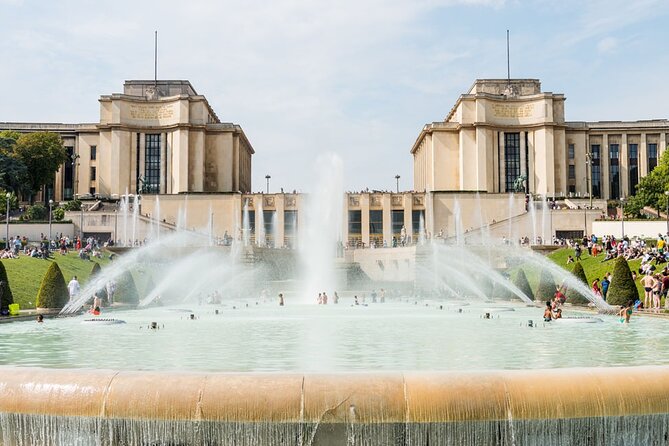
Next up is Jardins de Trocadéro, a stretch of gardens, ponds, and fountains that descend from Chaillot Palace down toward the Seine and onward to the Jena bridge. This stop is short on the clock, but it’s long on payoff. Trocadéro is where you get a classic Eiffel Tower perspective with a strong foreground, which makes the tower look tall in a way that’s hard to replicate from street level.
The narration also gives you a quick context piece about the Seine River. You learn it runs through France and is about 776 km long, making it the third longest river in the country after the Loire and the Rhône. That’s a nice bit of grounding because it reminds you this area isn’t just “pretty water.” It’s part of the geography that shapes how Paris is walked and viewed.
Even if you’re not stopping for fountains or garden paths, this is where you should listen closely. The exterior tour works best when you pair what you hear with what you see in front of you—especially at Trocadéro, where the view is built for the frame.
If you can, time your listening so your best Eiffel-angle moment lines up with the chapter that’s describing what you’re looking at. That’s the easiest way to make a 40-minute experience feel longer and smarter.
Pont d’Iéna and Parc du Champ de Mars: Parks, Water Jets, and a More Relaxed Side of the View

As you continue, you pass through the broader Champ de Mars area and reach Pont d’Iéna. In Paris, a bridge walk is often just a shortcut. In this route, it’s part of the “read the city” experience—your audio keeps you focused on why each spot matters.
One section references a public park created in 1937, with sculptures and a central fountain featuring 20 water jets. That kind of detail might sound small, but it helps you notice what’s around you instead of treating it like background. If you pause during that audio segment, you’ll get a more vivid picture of the area’s design choices and mood.
The Seine also plays into this. As you move along, you’re constantly in partial view of the river. That matters because the Eiffel Tower looks different depending on whether the river is behind it, beside it, or below it. The audio helps train your eye to see those changes as part of the story rather than random scenery.
Don’t worry if you miss a few visuals while you’re walking. The route is short, and the audio is designed to keep moving with you. Just plan to slow down briefly at least once—otherwise the experience can turn into a blur of movement and noise.





The Museum Cluster at Chaillot Palace Area: Architecture, Maritime Themes, and Why It Fits
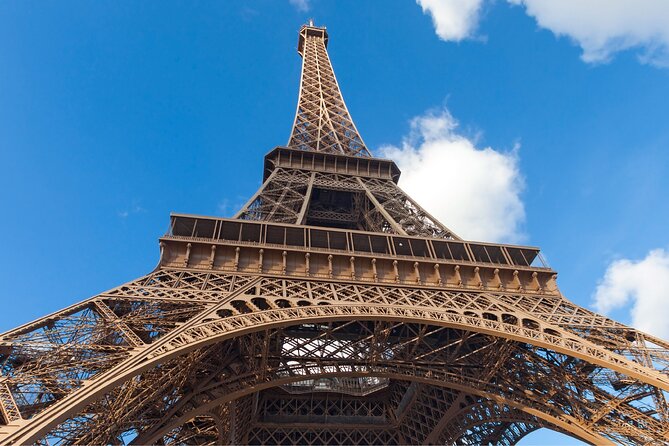
Near the Jardins de Trocadéro end of the walk is the Chaillot Palace area, and the audio highlights the museum world around you. You’ll hear about an area that includes an architectural-focused museum connected to French architecture and national monuments, plus a maritime museum with a permanent collection of oil paintings, models, and seafaring artifacts.
You’ll also get mention of architectural, naval, and ethnographic museums, along with the fact that they sit above fountains and gardens with Eiffel Tower views. Even if you don’t go inside, that context changes what you’re seeing. Instead of thinking only “This is the view,” you start thinking “This is a cultural zone overlooking a symbol.”
Now, a reality check: the experience does not include admission tickets. So if you want to enter any museum buildings, you’ll need to handle those separately. Still, even a quick look at the surroundings can make the final stretch more meaningful.
Price and Value: What You Really Get for $10
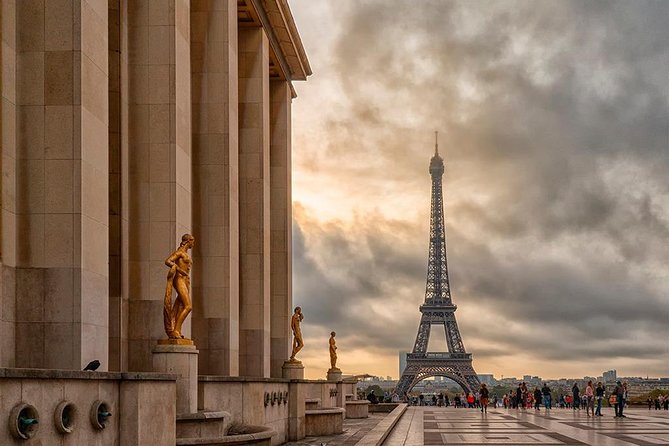
At $10 per person, this is priced like a practical add-on rather than a full guided day. The value is in what the audio gives you for the time spent: a structured walk that explains what you’re looking at, plus offline maps and Paris recommendations.
The trade-off is also clear. This doesn’t cover tower entry or snacks, and it does not include headsets. You’ll want to bring your own earphones, and it’s smart to have your phone charged before you start.
There’s also the ticket clarity issue. One caution from real-world expectations: if you buy this thinking it’s an Eiffel Tower admission ticket, you can run into problems. This is a mobile ticket for the self-guided audio experience. It is not the same thing as a climb or entry ticket.
Given the 40-minute duration, this works best as a way to sharpen your visit while you’re already in the area. If you’re spending time near the Eiffel Tower anyway, $10 is an easy decision for most people who like context and don’t want to pay for a live guide.
Who This Tour Suits Best (And Who Might Skip It)
This fits you if you want:
- A short, structured walk with narrative chapters
- More meaning than just photos
- Offline support so you can move without data stress
- A pace that’s friendly for slow walkers and quick pauses
It may not suit you if:
- You’re mainly interested in going up into the tower right now
- You want a live guide answering questions on the spot
- You expect the audio ticket to act like admission
One more thing: the experience is private for your group, which helps if you don’t want to share audio space with strangers. If you’re traveling as a pair or small group, that’s a real comfort upgrade.
Should You Book This Self-Guided Eiffel Tower Audio Tour?
I think this is a strong choice for people who like learning while walking and who want the Eiffel Tower to feel fresh, not rehearsed. The top reason is the listening format: you control the pace, and the narration is built to help you see what most people miss on a quick pass.
Before you hit book, set one expectation clearly: you’re buying an exterior audio experience, not a tower-entry ticket. If you plan for that and bring your own earphones, this becomes an easy, low-cost way to get more out of a famous landmark without adding stress to your day.
FAQ
How long is the self-guided tour?
It runs about 40 minutes.
What does the ticket include?
It includes all chapters with offline use, plus offline maps and Paris tips.
Is admission to the Eiffel Tower included?
No. Admission is not included.
Do I need internet to use the tour?
No. Maps and tour chapters can be accessed offline.
Where does the tour start and end?
It starts at Champ de Mars 75007 Paris, France, and ends at Place du Trocadéro (75016), near Chaillot Palace.
Is this a guided tour with a person?
No. It’s self-guided audio.
Do I need to bring headphones?
Headsets are not included, so you’ll need your own.
Is a mobile ticket provided?
Yes, the tour uses a mobile ticket.
What about service animals and public transportation access?
Service animals are allowed, and the meeting point is near public transportation.
Is it private for my group?
Yes. Only your group participates.