REVIEW · NORTH DAKOTA
Theodore Roosevelt National Park Self-Guided Driving Audio Tour
Book on Viator →Operated by Travel with Action · Bookable on Viator
Roosevelt country works best when you can pause and look slowly. This self-guided audio driving tour turns the North Unit into a stop-by-stop route with hands-free stories and short walks. I really like the offline-first setup (so you are not stuck hunting for signal) and the way the audio plays automatically as you reach each point. One thing to watch: if you do not download the tour in strong Wi‑Fi or cellular beforehand, playback can fail once you are out in the park.
The route is built for a practical mix of viewpoints, geology, and ranch history, so you get more than just driving. You are looking at an experience that can stretch from an easy 1–2 hours to closer to 2–3 hours depending on which trails you actually walk. If you are a “just show me the highlights” kind of visitor, you can still pick your favorite stops and skip the longer loops.
In This Review
- Key Highlights Before You Go
- Getting Your Phone Set Up for Smooth, Offline Audio
- Driving the North Unit: How Long It Takes and How to Pace It
- Little Mo Nature Trail and River Bend Overlook: Easy Legs, Big First Impressions
- Cannonball Concretions and the North Unit Visitor Center: Geology Plus Real Ranger Help
- Caprock Coulee Loop and Buckhorn Trail: The Hiking Payoff Portion
- Bentonitic Clay Overlook and Badlands Overlook: Science Meets the View
- Elkhorn Ranch Site Trail and Oxbow Overlook: Roosevelt Footprints to a 180-Degree Bend
- Oil Well Road: Why This Part of North Dakota Changed So Fast
- Price and Value: When $24.99 Really Works
- My Take: Who This Tour Is For (and Who Should Rethink It)
- Should You Book This Theodore Roosevelt National Park Audio Driving Tour?
- FAQ
- How much does theodore roosevelt national park self-guided driving audio tour cost?
- Does this tour include park admission?
- How long does the tour take?
- Does it work offline?
- Do I need a guide or a person to meet me?
- What are the available hours?
Key Highlights Before You Go

- GPS-triggered audio you can run hands-free while driving and walking
- Offline maps and offline playback after download, so you are not hostage to cell service
- A stop plan built around the park’s geology, from Cannonball Concretions to bentonitic clay layers
- Real hiker options inside the North Unit, including Caprock Coulee and Buckhorn Trail loops
- Good bison odds at the right viewpoints, with reminders to keep your distance
- Lifetime access with no expiry, so you can replay later without repurchasing
Getting Your Phone Set Up for Smooth, Offline Audio
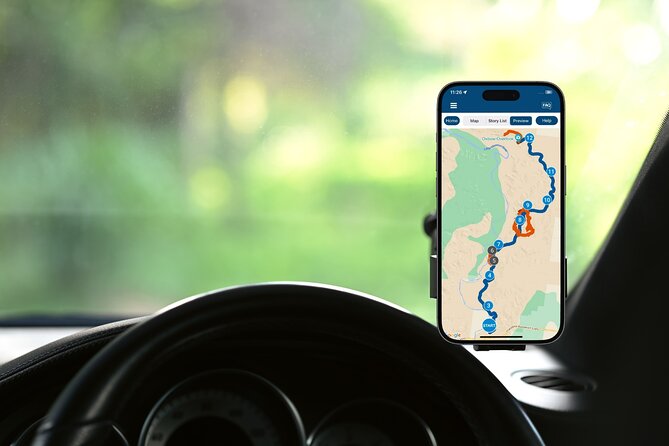
The magic here is simple: once you start the app on-site, the stories play based on where you are, not on you tapping a button every few minutes. The tour also comes with offline maps, and the audio works offline after you download the tour content first.
Before you arrive, plan for one critical step: the provider says you MUST download the tour while you have strong Wi‑Fi/cellular. After that, it is supposed to work offline. I treat this like bringing a paper map—do the heavy lifting before you need it.
For audio in the car, you connect your phone to your stereo using Bluetooth, USB, or AUX. If your vehicle supports it, audio playback is compatible with Apple CarPlay (navigation features are listed as coming soon) and support for Android Auto is on the way. For walking stops, I prefer using headphones so you do not compete with wind noise and so you can hear clearly on short trails.
Device notes matter. The setup guidance recommends an iPhone with iOS 15+, an Android device running version 9+, or an iPad/tablet with GPS and cellular connectivity for the best navigation experience.
Driving the North Unit: How Long It Takes and How to Pace It
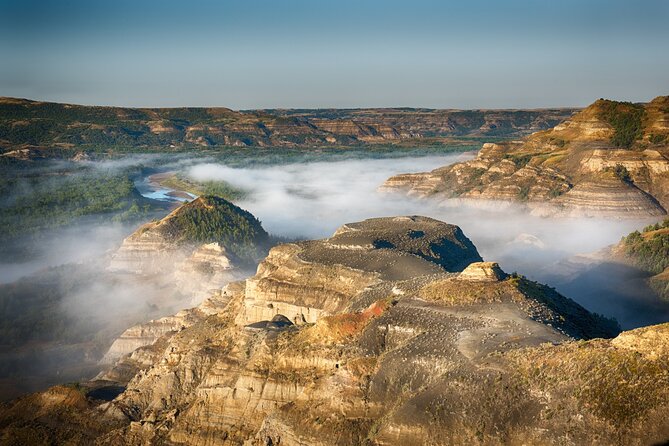
This is sold as a 1–2 hour tour on average, but the detailed route notes say it is over 29 miles long with 40+ audio stories and a typical completion time of about 2–3 hours. That is not a contradiction—it is a reminder that your pace controls the total time.
You also have a few built-in time variables:
- Short pullouts and overlooks can be quick wins if you just want views.
- The longer loops (like Caprock Coulee and Buckhorn) can add real hiking time.
- Some stops are listed as about 10 minutes, but that is more like time on-site, not counting how long you linger.
The tour is self-guided—no one meets you at the start. You go to the starting story point, launch the app, and follow the audio cues. You can pause anytime and resume later, which is great in big-sky country where you may want photos, snack breaks, or extra time for wildlife.
One practical note: the instructions emphasize sticking to the tour route and speed limit for the best experience. In a place like Theodore Roosevelt National Park, that is not just for the audio—it helps keep you safe on roads that can be slow and sometimes busy in peak season.
Little Mo Nature Trail and River Bend Overlook: Easy Legs, Big First Impressions
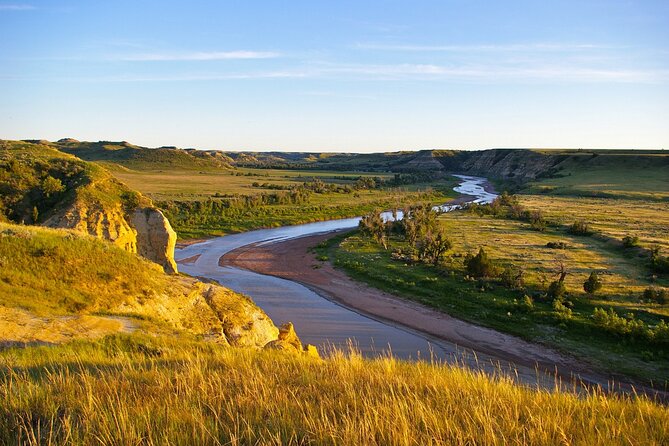
Your first stretch is designed to get you oriented without demanding a long hike. Start with the Little Mo Nature Trail, an easy loop that is an ideal way to stretch your legs after driving in. It is specifically framed as a quick “get your bearings” walk in the North Unit, with guidance that is meant to pair nicely with the audio flow.
Then you roll into the River Bend Overlook Trail. This is another short, easy path leading to a historic stone structure perched on a butte. From there, you are set up for the classic North Dakota view: the Little Missouri River cutting through the badlands below. Even if you do not do much hiking, this is the stop where you start to understand why people keep returning to this park—wide sky, sharp terrain, and water carving through rock.
Possible drawback at this early point: if you rush the first walk and skip the viewpoint time, you can miss the payoff. These first stops are short, but they help you read the rest of the scenery as you drive.
Cannonball Concretions and the North Unit Visitor Center: Geology Plus Real Ranger Help
Next up is the quick-hit geology of the Cannonball Concretions Pullout. You are looking for large spherical stones—nature’s oddball shapes made by mineral-rich water cementing sediment over time. The value of this stop is that it gives you a concrete mental picture of how badlands form and change, which makes later overlooks easier to understand.
Then you shift to the human side of the park at the North Unit Visitor Center. This is where rangers can help with trip planning and where you can get backcountry permits if you need them. There is also a bookstore with souvenirs, plus a film that covers the park’s history and natural wonders.
If you like doing things the smart way—rather than guessing—this is worth your time even if you are traveling with limited hours. A visitor center is also the best place to confirm conditions and plans for your day, especially because the park road situation can change.
Caprock Coulee Loop and Buckhorn Trail: The Hiking Payoff Portion
If you want the tour to feel more like an active day than a scenic drive, this is where it happens.
The Caprock Coulee Loop is listed as a moderate 4.4-mile hike across badlands and grassy buttes, with views into the Little Missouri River Valley. The guidance here is straightforward: bring water and wear sturdy shoes. I like this kind of trail because it is long enough to feel like you did something, but not so long that you need an all-day commitment.
For a bigger hike, the Buckhorn Trail is a moderately challenging 10.8-mile loop through grasslands, with views of the river and unique rock formations. There is also an added wildlife angle: keep your eyes open for bison, but stay at a safe distance. In practice, that means you should hike with a little patience—if you get close, you will likely just turn your trail experience into a long detour.
One consideration: if you are using the car audio and also walking, the longer loops take time that can easily push you toward the higher end of the tour duration. If you are short on daylight, I would choose one loop rather than trying to check both off.
Bentonitic Clay Overlook and Badlands Overlook: Science Meets the View
At Bentonitic Clay Overlook, the tour adds a more scientific layer to the trip. You are looking out over layers of blue-black clay that formed from volcanic ash capping the plateau below. If you like understanding what you are seeing—how one geologic event leads to the next—this stop gives your drive a narrative thread.
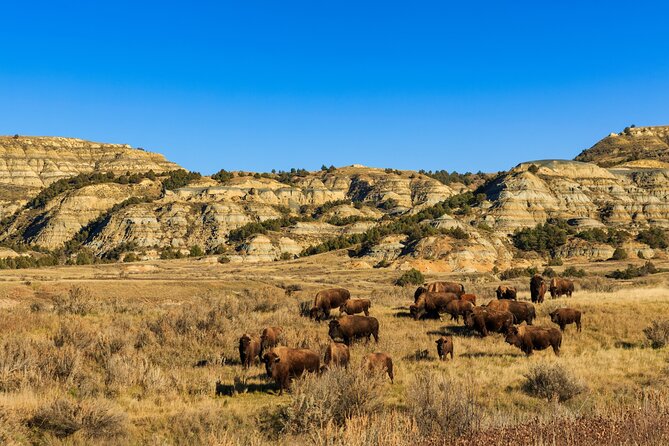
Then comes Badlands Overlook, where the emphasis shifts to wildlife and ecosystem recovery. You are reminded that bison, sometimes called buffalo, have returned to roam the grasslands in herds. Theodore Roosevelt National Park has a reintroduction program that helps visitors witness a key part of the Great Plains ecosystem, and the tour cues you to watch from the right vantage points.
A practical tip here: do not plan your day around seeing bison as a certainty. Instead, treat these overlooks as your best chances. The real win is that the audio helps you stay present and look longer, even when you are not guaranteed a close encounter.
Elkhorn Ranch Site Trail and Oxbow Overlook: Roosevelt Footprints to a 180-Degree Bend
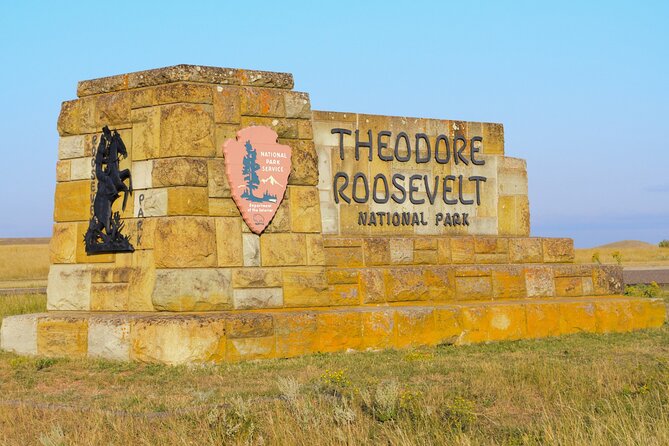
For history on foot, the tour includes the Elkhorn Ranch Site Trail, described as an accessible 0.7-mile walk to the foundation of President Roosevelt’s ranch cabin. This is the type of short trail that works even if you are tired—yet it still lands a meaningful connection to the man who shaped the park story.
There is one tech caution: the guidance specifically says to download a GPS map beforehand because service can be spotty. I strongly agree with this approach in open country where your phone can lose data just when you want it most.
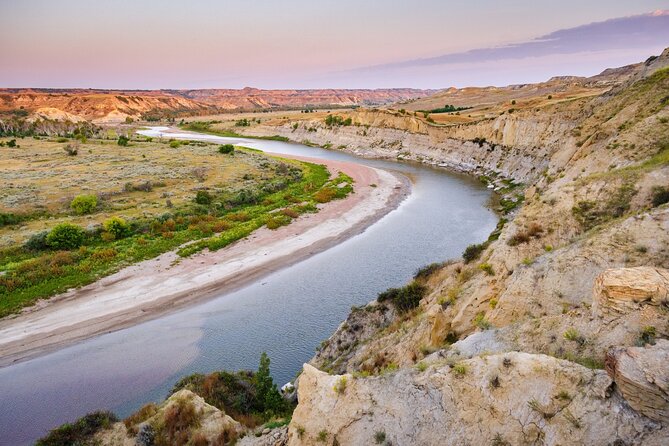
Finally, the tour culminates at Oxbow Overlook, the last stop on the North Unit Scenic Drive. You are looking at the Little Missouri River’s dramatic 180-degree curve as it carves through rugged badlands. Informative signs explain how the river’s course keeps changing. This is the kind of viewpoint where you do not just take a photo—you stand still long enough to let the geometry of the river click in your brain.
Oil Well Road: Why This Part of North Dakota Changed So Fast
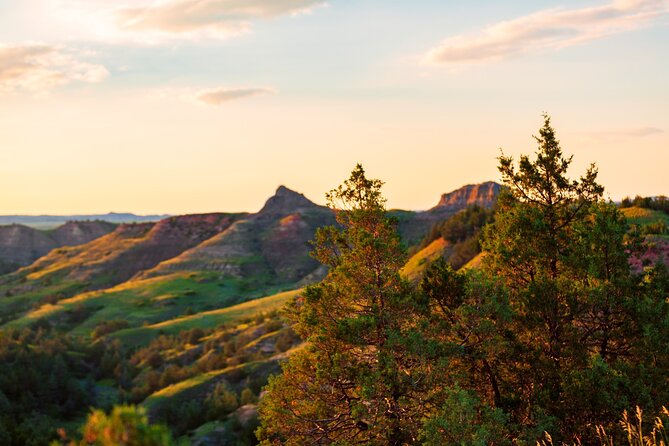
At Oil Well Road, the tour adds context for the modern story of the region. It explains that North Dakota shifted from a quiet agricultural state to a major oil producer after the Bakken Formation discovery in 2006. It also points to horizontal drilling and fracking as the techniques that unlocked reserves, and notes that the boom peaked around 2012, leaving a lasting mark on the state’s economy and landscape.
This stop is brief, but it matters because it reminds you that public lands sit beside working landscapes. When you understand the economic forces around the park, the trip feels less like a museum and more like a living region.
Also, keep in mind that road closures or late-day changes can happen. One note from past users mentioned a closure affecting the end of a south route plan, so I suggest you check current NPS updates once you’re in the area so your day does not get derailed near the finish.
Price and Value: When $24.99 Really Works
The tour costs $24.99 per group (up to 4 people), which is one of the biggest value levers. If you have two adults and split the cost, it can feel affordable. If you have a carload of four, it can feel like a bargain compared with guided tours where you pay per person.
There is also something you should account for: Theodore Roosevelt National Park admission is not included. The data states an $30.00 per booking entrance fee is required (and park passes are also mentioned). So the real all-in cost is your tour price plus park admission.
The flip side: you get lifetime access with no expiry, and you can use it on future trips and replay as many times as you want. That is meaningful if you plan to visit the park more than once, or if you want to re-experience the story stops after you learn more about the geology and history.
Given the pricing structure, this tour tends to work best for:
- Small groups in one vehicle
- People who like driving slowly and learning while they go
- Families who can manage a mix of short walks and a car-friendly audio experience
My Take: Who This Tour Is For (and Who Should Rethink It)
I think this audio tour is a strong match if you want a self-guided day that feels curated without being rigid. The North Unit is spread out, and the GPS-triggered audio helps you avoid the classic problem of driving past the good stuff because you did not know what to look for next.
It is also a good fit if you enjoy variety: you get nature trails, a visitor center with ranger help, bison-focused overlooks, geology science stops, and a Roosevelt ranch history walk. That mix keeps the day from turning into one long “look at rocks” drive.
A rethink might be smart if you rely on your phone as your only navigation system and you are not comfortable doing the setup steps before you lose signal. Also, if you want only the easiest viewpoints, you may find the longer trail options tempting but time-consuming—so pick the ones that match your energy.
One last note from experience with audio tours in general: apps can occasionally glitch. There was an unhappy report about the audio stopping early, so I recommend you bring a fully charged phone, download the tour while you still have solid connectivity, and contact support if something fails while you are still in the area.
Should You Book This Theodore Roosevelt National Park Audio Driving Tour?
I’d book it if you want an affordable way to learn as you drive and you are okay doing a mix of overlooks and short-to-moderate walks. The offline maps, hands-free audio, and the fact that it is priced per car up to four people make it a practical value play—especially in a park where cell service is not a sure thing.
Book it a bit more carefully if you are the type who will only do viewpoints and no trails, or if you hate tech setup. In that case, the longer hiking options might tempt you into running out of time.
FAQ
How much does theodore roosevelt national park self-guided driving audio tour cost?
It is priced at $24.99 per group for up to four people.
Does this tour include park admission?
No. Theodore Roosevelt National Park admission is not included, and park passes are required.
How long does the tour take?
It is listed as about 1 to 2 hours on average, but the route details also note it can take about 2 to 3 hours due to the total driving distance and number of stories.
Does it work offline?
Yes. You need to download the tour while you have strong Wi‑Fi/cellular, and it works offline after that download.
Do I need a guide or a person to meet me?
No. It is self-guided. You start the audio in the app at the first story’s point, and the audio plays automatically based on your location.
What are the available hours?
The listed opening hours are 9:00 AM to 4:30 PM, Monday through Sunday, for the date range shown.