REVIEW · BOSTON
Highlights and History of Boston: GPS Guided Audio Tour
Book on Viator →Operated by Knockabout Travel · Bookable on Viator
Boston history, without the headache. You get a GPS voice map route through key Freedom Trail sites plus smart stops for food and photos. I like that the stories connect immigration and community life to the Revolution-era landmarks. I also like that the app is set up for a self-paced rhythm, so you can keep moving without losing context. One thing to watch: several of the big interiors cost extra, so your final spend can creep up a bit.
You start at Copps Hill Burying Ground and end near Boston Public Garden, with a clear walking flow from stop to stop. Along the way, the tour name-drops real history moments (like the lantern signals on April 18, 1775) and also gives practical ideas for what to eat nearby. The only real drawback for some people is time: it’s about 3 to 4 hours, and if you stop to read every sign and take lots of breaks, plan for the longer end.
In This Review
- Quick hits: What makes this Freedom Trail GPS tour worth your time
- Start at Copps Hill and let the city set the pace
- North End Freedom Trail stops: Copps Hill to the food-and-immigration story
- Old North Church: lanterns, Robert Newman, and what you can add for $$
- The Paul Revere House: quick look, optional interior, real life changes over time
- Rose Fitzgerald Kennedy Greenway: Big Dig history plus Armenian Heritage Park
- Faneuil Hall Marketplace: lunch base and the abolitionist link
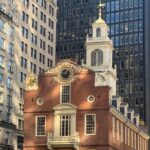
- Old State House: Boston Massacre context plus optional museum time
- Granary Burying Ground and the founders’ cast list
- Boston Common: first public park and Civil War memory you can see
- Boston Public Garden: ducklings, Swan boats, and the Cheers aftermath
- Price and value: $9.99 is the route, but interiors cost extra
- Best match for your Boston style
- Should you book it?
- FAQ
- How much does the Boston GPS Guided Audio Tour cost?
- How long does the tour take?
- What’s included in the price?
- What’s not included?
- Where does the tour start and end?
- What language is the tour offered in?
- Is this tour private?
- Are service animals allowed?
- What are the interior admission prices for Old North, Paul Revere House, and Old State House?
- Can I get a refund if I cancel?
Quick hits: What makes this Freedom Trail GPS tour worth your time
- Voice Map GPS route keeps you oriented from stop to stop without needing a guide hovering over you
- North End to Old North to Paul Revere House hits the Revolution story at street level, with optional interior tickets
- Armenian Heritage Park on the Greenway broadens the story beyond one era and one neighborhood
- Faneuil Hall Marketplace works well for lunch and a quick break, with an important closure note about the main building
- Granary Burying Ground and Boston Common give you founders’ resting places and Civil War memory in one loop
- Boston Public Garden plus pop-culture stops (ducklings, Good Will Hunting bench, Swan boats, Cheers) keep it fun
Start at Copps Hill and let the city set the pace
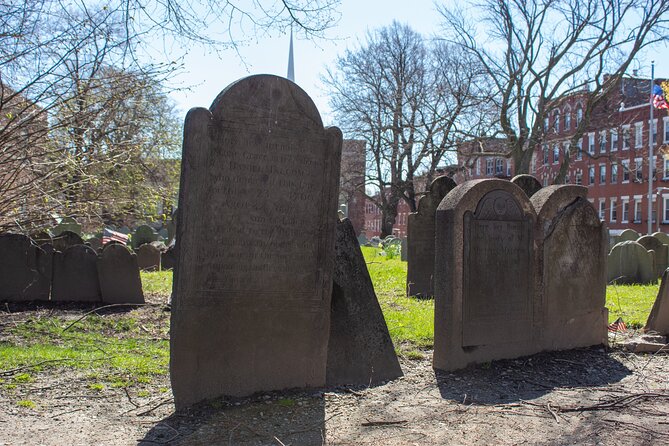
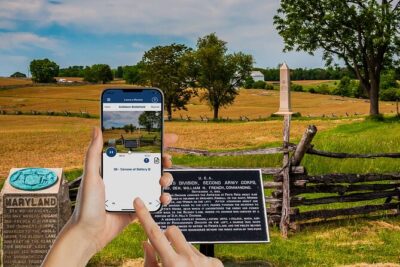
This is a private, GPS voice tour using a Voice Map app on your phone. You’ll get a mobile ticket, and the experience runs in English. Most people can handle it because it’s designed as a walking route through central neighborhoods, not a bus-and-stop itinerary.
The tour window runs 7:00 AM to 9:00 PM. You’ll meet at Copps Hill Burying Ground, 45 Hull St, Boston, MA 02113, and finish near Boston Public Garden by the George Washington Statue. That’s a good setup because you naturally end in one of the nicest “hang around after” zones—parks, snack options, and the kind of stroll that doesn’t feel like a chore.
A small practical note: it’s booked about 20 days in advance on average. That doesn’t mean you can’t score a spot later, but it does mean planning ahead helps if you’re traveling in peak season.
You can also read our reviews of more tours and experiences in Boston.
North End Freedom Trail stops: Copps Hill to the food-and-immigration story
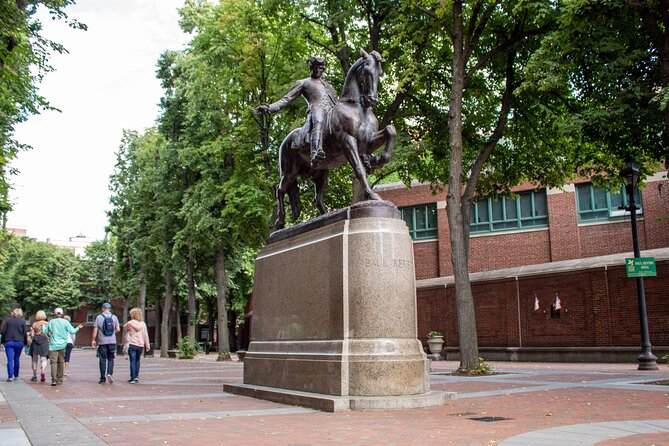
Stop 1 is the North End, where you walk through several Freedom Trail historic sites with a focus that goes beyond dates. The route includes Copps Hill Burying Ground, plus you’ll pass by Old North Church and the Paul Revere House area as part of this first stretch.
What I like here is the way the narrative ties immigration waves to what you still see in Boston today. The tour talks through the Irish and Italian periods of immigration, and how those communities shaped the culture of the city’s well-known Little Italy. That matters because you’re not just learning Revolutionary names; you’re learning why this neighborhood feels the way it does now.
You also get practical guidance on where to eat—recommended spots for Italian cuisine, pizza, and pastries. If you’re hungry mid-walk, that’s huge. Instead of wandering and guessing, you’ll have a sense of what’s worth your time nearby.
Timing-wise, this portion is about 45 minutes and the basic walking stops are free. The big “interior” experiences nearby are separate-ticket options (more on those next).
Old North Church: lanterns, Robert Newman, and what you can add for $$
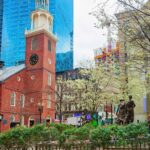
Stop 2 is centered on Old North Church & Historic Site. This is where Boston’s Revolution story hits you with a specific moment: church caretaker Robert Newman hanging lanterns in the steeple on April 18, 1775. The lantern signals helped Paul Revere and others start their rides and alert the Minutemen that the British are coming.
Even if you only do the exterior viewing, the story is powerful because you can see how signals worked in the real world—no smartphones, no instant updates. If you want the extra context, the tour notes that visiting the interior of Old North is recommended. Admission is not included, so you’ll add it on your own.
Here’s the extra bonus tucked into that area: the Old North experience also includes Captain Jackson’s Historic Chocolate Shop, with information about how special treats were made and eaten in the 18th century. That’s a fun change of pace from just reading plaques. It’s also easy to fit in because it’s part of the same historic-site visit.
The stop is about 20 minutes for the tour portion, but the interior admission time can stretch it a bit depending on your pace. The tour portion itself is short and you’ll keep moving.
The Paul Revere House: quick look, optional interior, real life changes over time
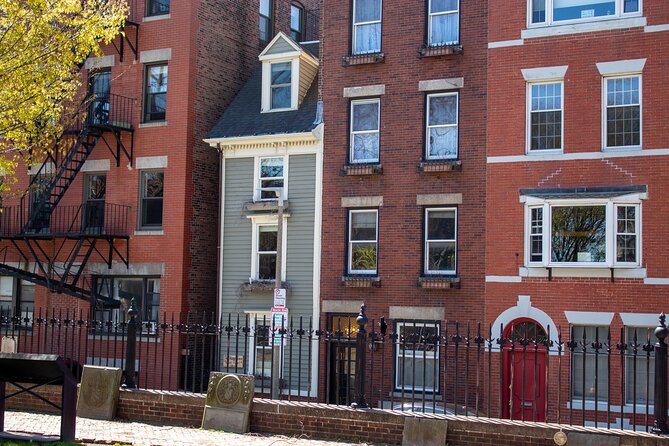
Stop 3 is the Paul Revere House. You’re looking at the house where one of Boston’s famous Sons of Liberty lived before the American Revolution.
The tour gives you two ways to experience it: you can take the interior tour (separate admission) or simply pass by as the story explains how the home changed over generations. That “changes over time” angle is worth paying attention to. Old buildings don’t just sit there. They get renovated, repaired, and adapted to new eras, and that often tells you as much as the original architecture.
This stop is only about 5 minutes on the tour clock. If you’re curious and want the interior, you’ll need extra time beyond the tour portion itself.
Rose Fitzgerald Kennedy Greenway: Big Dig history plus Armenian Heritage Park
Stop 4 shifts the mood from Revolution-era brick to modern Boston engineering. You walk through the Rose Fitzgerald Kennedy Greenway, a long park created from the fallout and transformation of Boston’s Big Dig—the huge public works project that replaced an interstate highway with green space.
If you’ve ever wondered how cities modernize without losing their identity, this is a practical example. You get to see how infrastructure decisions change everyday life—what people do outside, where they gather, and how a city breathes at street level.
The tour also highlights the Armenian Heritage Park, which pays tribute to the Armenian Genocide and the later immigration that followed to the United States. This is one of the stops that makes the tour feel more “Boston” than “just the Revolution.” It reminds you that history isn’t only about one set of events—it’s also about the people who survived and built new lives here.
Expect about 20 minutes for this stop, and it’s free.





Faneuil Hall Marketplace: lunch base and the abolitionist link
Stop 5 is Faneuil Hall Marketplace, and this is where the tour turns into a practical trip plan. You’ll have about 45 minutes here, which is a lot of time in walking-tour terms.
What’s good is the flexibility: you can eat at the food court or choose table service restaurants. You can also shop for souvenirs or grab a beer at the Samuel Adams taproom.
The tour’s historical angle is also worth sticking with, not just skipping. It covers how Faneuil Hall began as a central marketplace for everyday groceries, then evolved into a public pulpit for the abolitionist movement, and now functions as a food-and-shopping hub. So you get both the “what it was” and the “what it is,” without pretending the present doesn’t matter.
Important note: at the time this tour was updated, Faneuil Hall itself was closed by the City of Boston due to COVID-19. The rest of the marketplace was still open. So you should think of this stop as the marketplace area, not necessarily the building interior.
Old State House: Boston Massacre context plus optional museum time
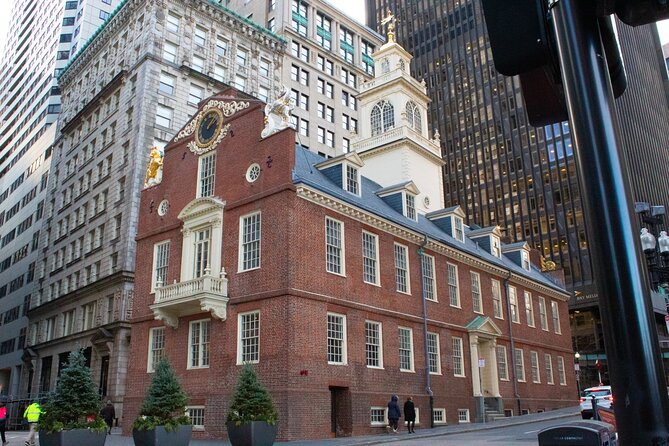
Stop 6 brings you to Old State House, a key power-and-protest location. It served as the seat of government for the Massachusetts Bay Colony and symbolized Royal power before the American Revolution. It’s also tied to the Boston Massacre, a flashpoint that shaped public opinion for years leading into the first shots at Lexington and Concord.
This is a stop where you want to pay attention to how the story builds. The tour doesn’t treat the massacre like a random violent day. It connects the events leading up to it with why feelings escalated afterward.
You have an optional add-on: you can visit the interior, which includes colonial artifacts, the Council Chamber where the governor would meet with the king’s council, and an exhibit on Crispus Attucks (the first casualty of the Boston Massacre). Admission for the interior is not included and costs $10.
The tour portion at this stop is about 15 minutes. If you’re the kind of person who reads exhibits slowly, consider whether you want to invest your extra ticket time here, especially since other interiors also cost extra later.
Granary Burying Ground and the founders’ cast list
Stop 7 is Granary Burying Ground, and it’s one of those places where the city’s big names are literally underfoot. You’ll see resting places for Samuel Adams, Paul Revere, and John Hancock, plus the five casualties of the Boston Massacre.
The value here is that you’re not only learning history as a story. You’re learning it as a place—names that helped shape the country, plus the individuals tied to the moment violence turned into resistance.
Along the way, you’ll pass by the Omni Parker House Hotel, home of the well-known Boston cream pie. Even if you don’t buy a slice, it’s a fun marker that Boston’s food culture and historical culture share the same streets.
This stop is about 15 minutes and is free.
Boston Common: first public park and Civil War memory you can see
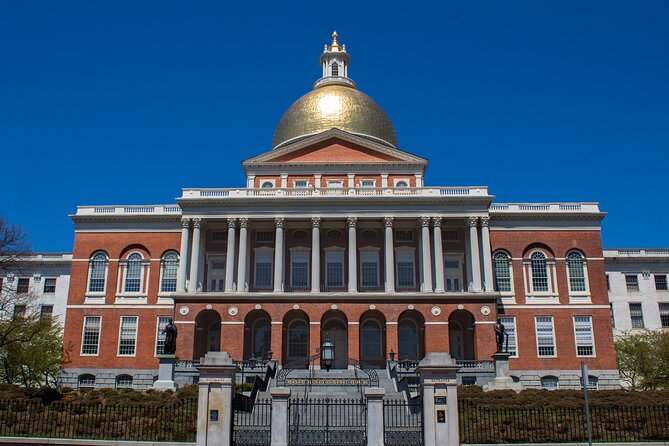
Stop 8 is Boston Common, described as the nation’s first public park. That’s a big claim, and it’s easy to understand why once you walk through it. It’s open space with purpose, the kind of place Bostonians use daily, not just a background for photos.
The tour stops at a few notable points, including a newly refurbished monument to the Massachusetts 54th Volunteer Regiment—one of the first colored infantry units in the American Civil War. The tour also connects it to the film Glory, listing cast members Morgan Freeman, Matthew Broderick, and Denzel Washington.
If you’ve seen the film, this helps you link the emotional story to the actual physical memorial in front of you. If you haven’t, it still works because it grounds the topic in a real location and a real unit’s place in history.
Time on this stop is about 15 minutes, and it’s free.
Boston Public Garden: ducklings, Swan boats, and the Cheers aftermath
Stop 9 is Boston Public Garden, one of the prettiest ways to wrap a history-heavy route. This stop is about beauty, but the tour also adds pop-culture and children’s literature stops so it doesn’t feel too solemn.
You’ll see the Make Way for Ducklings statues, tied to the award-winning children’s book. You’ll also pass the bench used in Good Will Hunting starring Robin Williams and Matt Damon, from the famous Your Move Chief scene.
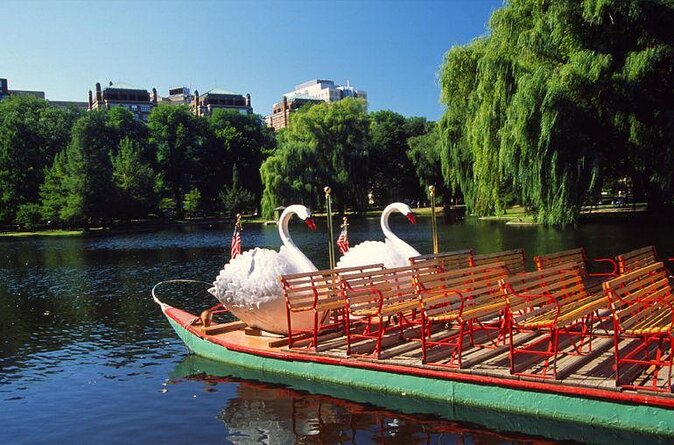
If you want a fun break, you can take Swan boats around the lagoon for a small admission. That’s optional, but it’s a great way to cool down after a walking route.
After the tour ends, you can hop across the street and grab a beer and pub food at Cheers Beacon Hill, the bar that inspired the TV show running from 1982–1993.
This last stop is about 15 minutes for the tour portion, and it’s free.
Price and value: $9.99 is the route, but interiors cost extra
At $9.99 per person, this GPS tour is one of the more budget-friendly ways to cover a concentrated stretch of Boston’s major historical stops. The included part is the Voice Map GPS-enabled app (and you’ll use your mobile ticket). That’s where the value lives: you get clear direction, stop-by-stop context, and you don’t have to worry about keeping track of which landmark comes next.
Your likely add-on costs are the interiors:
- Old North Church interior: Adults $8, Students/Seniors $6, Children $4
- Paul Revere House interior: $5
- Old State House interior: $10
So if you add all three interiors, you’re looking at a meaningful bump over the base $9.99. But it’s still optional. If you’re on a tight budget, you can do the route and focus your money on one or two interiors that match your interests.
If you love museum-style history, consider Old State House and Old North. If you’re more into the home-and-human side of the Revolution, Paul Revere House makes sense. I like that the tour gives you that choice without slowing your whole day down.
Best match for your Boston style
This tour fits best if you:
- want a clear, phone-based route with story context
- like walking through neighborhoods where the past shows up in daily life
- enjoy blending history with food planning (especially in the North End and at Faneuil Hall)
- don’t mind paying separate admissions for key interiors
It may be less ideal if you want a fully guided, live-voice museum experience where every stop includes an included ticket. In this format, you control your pace and your ticket choices.
Also, it’s a nice fit for couples and small groups because it’s set up as a private activity for your group only, not a mixed crowd with a single pace.
Should you book it?
Book it if you want a smart, low-cost way to connect Boston’s big historic storylines—Revolution signals, founders’ graves, protest turning into independence—with what the city looks like right now, including immigrant heritage and modern park space.
Skip or adjust your expectations if you only want indoor history with included admissions, or if you’re trying to do every interior in one go and you hate ticket extras.
If you’re trying to make one walking plan cover a lot of ground, this is a strong choice. You’ll end in a beautiful place to keep the day going, instead of feeling like you got dropped off and left to sort everything out.
FAQ
How much does the Boston GPS Guided Audio Tour cost?
It costs $9.99 per person.
How long does the tour take?
The duration is about 3 to 4 hours.
What’s included in the price?
You get the Voice Map GPS-enabled app and a mobile ticket experience.
What’s not included?
The tour does not include admission for Old North Church, the Paul Revere House, or the Old State House.
Where does the tour start and end?
It starts at Copps Hill Burying Ground, 45 Hull St, Boston, MA 02113, and ends near Boston Public Garden by the George Washington Statue.
What language is the tour offered in?
The tour is offered in English.
Is this tour private?
Yes. It’s a private tour/activity, so only your group participates.
Are service animals allowed?
Yes, service animals are allowed.
What are the interior admission prices for Old North, Paul Revere House, and Old State House?
Old North Church is $8 for adults, $6 for students/seniors, and $4 for children. Paul Revere House is $5. Old State House is $10.
Can I get a refund if I cancel?
No. The experience is non-refundable and cannot be changed for any reason.