REVIEW · BOSTON
Boston’s Freedom Trail: A Self-Guided Audio Tour
Book on Viator →Operated by VoiceMap Audio Tours · Bookable on Viator
Freedom Trail audio can be the easiest way to stay on track. You get offline access plus an easy self-paced route, with a veteran guide delivering history stories that include humor. The main thing to consider: the audio follows a fixed route, and if your phone app has trouble starting, you may feel stuck.
I like that you can control the pace, stop for photos, and still keep moving with clear turn-by-turn guidance. You’ll also get lifetime access, including a virtual option to revisit the places after you get home. Do bring a charged smartphone and plan to stay near the marked path so the app can keep guiding you.
In This Review
- Key Points You’ll Care About
- Freedom Trail by Audio: Why This Format Works
- Starting at Massachusetts State House (and Getting the App Going)
- Granary Burial Ground: The Walk Turns Personal
- Paul Revere and John Hancock: More Than One Famous Name
- Omni Parker House, King’s Chapel, and Old City Hall: Boston’s Big Names and Stranger Layers
- Old South Meeting House and Old State House: Where the Politics Feels Close
- Faneuil Hall and Old North Church: Revolution Talk in Walking Form
- Ending at Paul Revere House: Finish Strong, Then Rewind Later
- Price and Time: Is $11.99 a Good Deal?
- App Reality Check: What Can Go Wrong (and How to Minimize It)
- Who This Self-Guided Tour Fits Best
- Should You Book It?
- FAQ
- How much does the Boston Freedom Trail self-guided audio tour cost?
- How long does the tour take?
- Do I need cellular service during the walk?
- What language is the tour available in?
- Where does the tour start and end?
- Is the tour self-paced or scheduled like a group tour?
- Is the tour refundable if I cancel?
Key Points You’ll Care About
- Offline audio, maps, and geodata help you walk without cellular service worries
- Turn-by-turn guidance keeps the walk organized from stop to stop
- Built-in humor and big-character stories make Revolutionary-era figures easier to remember
- Lifetime access means you can replay the route later, even at home
- Fixed route instructions can be awkward if you wander far off or try to reverse it
Freedom Trail by Audio: Why This Format Works

Boston’s Freedom Trail is a straight-line walking idea with a lot of stops packed in. The problem is, the moment you pause to read plaques, check your map, or detour for coffee, you can lose the thread. This self-guided audio tour solves that with a phone-based guide designed to keep you moving and listening in the right places.
What you’re paying for is not just narration. You’re paying for structure. The app gives offline access and on-foot guidance, so you’re not constantly rechecking directions. At $11.99, that’s a fair value for the time it takes to cover the key sites in about 1 hour 15 minutes to 1 hour 30 minutes.
One more practical win: you can revisit the sites later. The tour includes a virtual option, so the story doesn’t end when your walk does.
You can also read our reviews of more tours and experiences in Boston.



Starting at Massachusetts State House (and Getting the App Going)

The tour begins in front of the Massachusetts State House at 24 Beacon St. This is a good starting spot because it gives you a natural “top of the line” feeling and helps you orient quickly.
As you start walking, the audio explains how the VoiceMap app works and sets up the major themes of what you’ll hear along the way. That early setup matters. If you’re using a self-guided audio tour for the first time, you want the instructions to land before you’re half a mile from the start.
Tip for smooth use: before you set out, open the VoiceMap app where you have a signal (if needed), confirm the download, and check that your phone battery is healthy. The tour is built for offline use, but your phone still needs power.
Granary Burial Ground: The Walk Turns Personal

Next up is the Granary Burial Ground. This stop is where the Freedom Trail story stops sounding like school and starts feeling human.
In the audio, you’ll hear about some of America’s forefathers buried here. Even if you know a lot already, you tend to remember names more easily when you’re standing in the same place tied to them. This is also one of the spots where the guide’s delivery style helps. The narration doesn’t just list facts; it frames why these people matter and why the trail keeps circling back to them.
Practical note: this is a walking tour, so plan on staying respectful with your pace and posture. Take your time, but don’t wander so far that you lose the app’s connection to the route.
Paul Revere and John Hancock: More Than One Famous Name
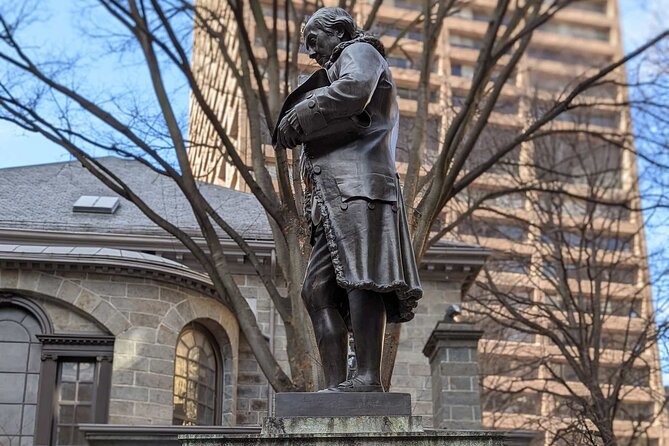
After Granary Burial Ground, the tour continues past the Paul Revere Grave. You’ll get a story that focuses on his 13 successful careers. That’s a great example of the audio tour’s approach: it nudges you to look beyond one iconic image and see a person with multiple roles.
Then you’ll pass John Hancock’s Grave. The audio includes an unusual detail tied to his love of Madeira wine and the trouble that followed. This is the kind of offbeat story that makes the Revolutionary-era figures feel less like textbook characters.
Why it’s worth listening closely here: these graves are part of what makes the Freedom Trail feel different from a standard sightseeing loop. You’re not just walking past buildings. You’re walking alongside the consequences of decisions.
Omni Parker House, King’s Chapel, and Old City Hall: Boston’s Big Names and Stranger Layers
The route passes by the Omni Parker House. In the audio, you’ll hear about famous former guests, including Charles Dickens and presidential assassin John Wilkes Booth.
This stop is fun because it connects Boston’s history to famous visitors across different eras. It also gives you something to look for while you walk: the building becomes a reference point for stories you might otherwise associate only with books.
Next is King’s Chapel. The audio explains why it was built on top of a cemetery. That single detail is a reminder that cities grow by stacking eras, not by erasing them.
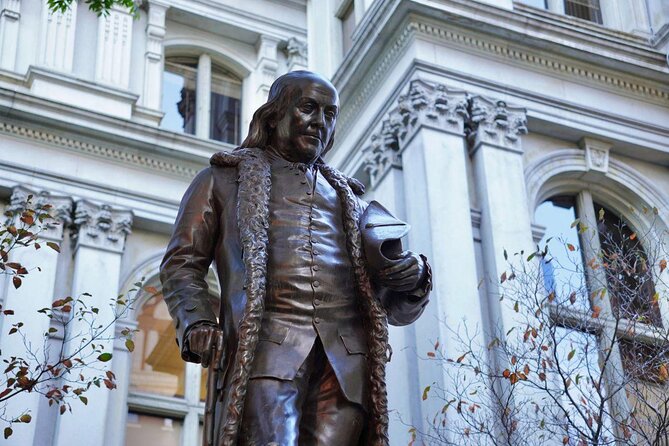
Then the tour goes by the Old City Hall. You’ll hear about the statue in front of the building as you walk. This is a common Freedom Trail move: instead of treating monuments like random photo backdrops, the guide turns them into clues that point to bigger civic ideas.



Old South Meeting House and Old State House: Where the Politics Feels Close

The tour passes the Old South Meeting House and includes the museum connection you’ll hear about as you go. Even if you don’t stop inside, the audio helps you understand why this place matters in the broader story.
Then you’ll walk by the Old State House. You’ll get the building’s history through the audio guide. The value here is timing. If you read about these places later, the details can blur together. Hearing the building story while you’re right there helps you keep the sequence straight.
If you do plan to add a museum visit, just know you’re on a schedule made for walking. The audio tour is designed to keep you on a route, so factor in any extra stops as extra time.
Faneuil Hall and Old North Church: Revolution Talk in Walking Form

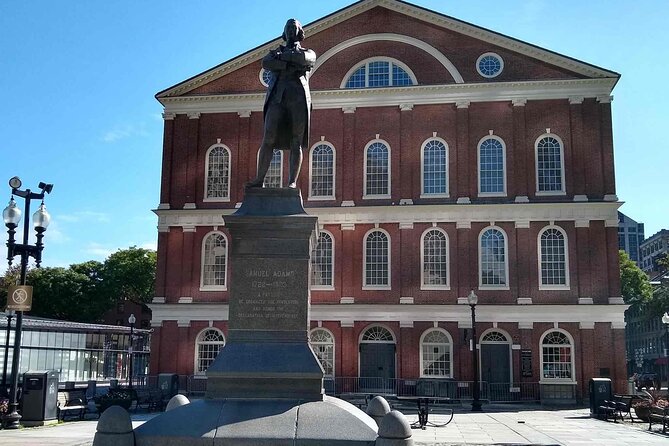
Next comes Faneuil Hall. The audio includes how the Puritans are connected to the hall while you walk. This is another place where the guide’s job is to make connections fast—without making you do extra research on the spot.
After that, you’ll pass the Old North Church. As you walk, the audio includes some of Paul Revere’s many rides. This portion is built for momentum. Instead of a single moment, you get a broader sense of repeated action and movement, which fits the way the Freedom Trail is laid out.
You’ll then reach the Paul Revere Statue, where the audio teaches you about the horse Paul rode. It’s a small detail, but it’s exactly the type of thing that makes a walking tour feel memorable when the buildings start to blend together.
Ending at Paul Revere House: Finish Strong, Then Rewind Later
The tour ends at 19 N Square in front of the Paul Revere House. This is also described as Boston’s oldest standing structure, which makes a strong finish point.
At the end, you’ve completed the walking arc from a high civic viewpoint to an early historic home base. Even if you’re tired, this is the moment when the story tends to click. The trail stops feel linked rather than random.
Then there’s the after-walk value: lifetime access. You can revisit the tour later using the included virtual option. That means you can review what you saw, refresh your memory, and even share the route with friends without paying again.
Price and Time: Is $11.99 a Good Deal?
At $11.99 per person, this tour is priced like an affordable “history fix” that doesn’t require museum tickets. The tour takes about 1 hour 15 minutes to 1 hour 30 minutes, which is a real-world travel time you can fit into a half-day.
You should think of the cost this way: you’re paying for an organized walking story plus offline access. That is hard to beat if you’re going to do the Freedom Trail anyway.
The trade-off is that you’re relying on your phone. The tour does not include headphones, and it also doesn’t include tickets to museum stops along the route. If you want to add indoor time, plan for extra costs and extra time.
App Reality Check: What Can Go Wrong (and How to Minimize It)
This tour depends on the VoiceMap app for playback and directions. If your app struggles to start or if the phone download fails, the tour can turn into a frustrating mismatch between what you see and what you hear.
Here’s how to reduce risk while staying realistic:
- Stay near the planned route. The guidance is built for a set walking path. If you wander far off, it may take extra effort to get back on track.
- Use the Resume option if you stop or step away. The tour is designed to let you pick up where you left off by selecting a starting point from a short list of nearby locations.
- Don’t try to reverse the route. The audio directions are tied to the direction of travel. If you start at the end and walk backward, turn instructions can conflict with what your body expects.
If something really fails, the best move is to contact VoiceMap support so they can troubleshoot and help you out. The tour is built to be offline, but tech issues still happen.
Who This Self-Guided Tour Fits Best
I’d suggest this tour if you want control. You like stopping for a better photo spot, pausing to read a plaque, and moving at your own tempo. The self-guided format makes it easy to avoid feeling rushed.
It’s also a good match if you’re traveling with only your own group. It’s described as a private activity, meaning you won’t be stuck waiting for other strangers at every stop.
And if you’re the type who enjoys stories, not just facts, the narration style matters. The audio approach uses humor and memorable details like Paul Revere’s multiple careers and the Madeira wine trouble tied to John Hancock.
If you need a guide to handle everything in person, this might feel like too much responsibility. But if you’re comfortable with a phone-based guide, it’s a strong way to walk the trail.
Should You Book It?
Yes, if you’re planning to walk the Freedom Trail anyway and you want a guided storyline that works without cellular service. The combination of offline audio, turn-by-turn structure, and lifetime access gives you more value than a one-time phone narration.
I would hesitate only if you know your phone is unreliable with app downloads or you tend to wander far off paths during self-guided walks. In that case, you might spend energy on troubleshooting instead of enjoying the sites.
My recommendation: if you bring a charged phone, download ahead if needed, and stay close to the walking route, this is an efficient, affordable way to turn Boston’s Freedom Trail into something you’ll remember.
FAQ
How much does the Boston Freedom Trail self-guided audio tour cost?
It costs $11.99 per person.
How long does the tour take?
Expect about 1 hour 15 minutes to 1 hour 30 minutes.
Do I need cellular service during the walk?
No. The tour includes offline access to the audio, maps, and geodata.
What language is the tour available in?
The tour is offered in English.
Where does the tour start and end?
It starts in front of the Massachusetts State House at 24 Beacon St, Boston, MA 02133, and ends in front of the Paul Revere House at 19 N Square, Boston, MA 02113.
Is the tour self-paced or scheduled like a group tour?
It is self-guided and self-paced.
Is the tour refundable if I cancel?
The experience is non-refundable and cannot be changed for any reason.