REVIEW · BOSTON
Boston Self-Guided Audio Tour Bundle: Freedom Trail & More
Book on Viator →Operated by Stories with Action · Bookable on Viator
Freedom Trail stories, minus the crowds. I love the hands-free audio that plays as you walk or drive, and I also love how the narration keeps things concise so you can move at a real human pace. One thing to watch: the full bundle’s route is long and packed with stops, so if you try to hit everything, you may feel rushed.
What makes this bundle work is the freedom. You start when you want, pause for snacks or photos, and skip anything that doesn’t grab you. Plus, you get offline maps after downloading, so you are not stuck begging for cell service at the worst possible moment.
The tradeoff is that you are managing the experience yourself. There’s no guide standing there to answer questions or adjust the plan on the fly, and some stops are brief by design, so you’ll want to plan your time if you also want to go inside museums or buildings.
In This Review
- Key highlights worth planning for
- Price and value for a full Boston-and-beyond day
- How the self-guided setup actually plays during the day
- Boston Common to the State House: starting your Revolutionary War engine
- Freedom Trail essentials: Granary Burying Ground and the people behind the politics
- The Tea Party turns into a real stop: Old South Meeting House
- Old State House and the Massacre site: architecture and argument
- From Paul Revere to the North Church to the Charles Town Navy Yard
- Bunker Hill Monument: the ending that feels earned
- Harvard Yard as a story detour (and why it helps)
- Boston Harborwalk from South Station to Long Wharf: the water story
- Cape Ann drive: Gloucester, lighthouses, Rockport, and seaside stops
- Practical stop timing: why some moments feel short
- Who should book this Boston self-guided bundle
- Should you book it
- FAQ
- How long is the Boston Self-Guided Audio Tour Bundle?
- Is it a guided tour with a schedule?
- What language is the audio available in?
- Do I need internet while I’m walking or driving?
- How much does it cost?
- Are tickets or attraction entry included?
Key highlights worth planning for
- Offline-first setup after one-time download, so the route works even with spotty signal
- Per-car pricing makes it a strong value for groups versus bus or guide tours
- Flexible stop-and-go pace, with audio cues that start automatically at each point
- Freedom Trail depth, including big moments like the Tea Party and the Massacre site
- Good “add-on” pacing, including Harvard Yard and a Harborwalk stretch by the water
- Cape Ann side trip vibe, with coastal views, lighthouses, and seaside stops
Price and value for a full Boston-and-beyond day
The price is $24.99 per person, with a key detail that changes the math: it’s priced per car, not per person. That can turn a Boston day from “too pricey for a group” into “why not.” If you’re traveling with friends, or you’ve got a couple of people splitting one vehicle, this bundle starts looking a lot more like good planning than a ticketed excursion.
You also get what matters most for an audio tour: lifetime access with no expiry. That means you’re not just paying for one day. If you only do the Freedom Trail this trip, you can come back later and run the Harborwalk or Cape Ann portion when you’ve got the time. For a city like Boston, where you’ll likely return, that access feels like part of the bargain.
You can also read our reviews of more tours and experiences in Boston.



How the self-guided setup actually plays during the day
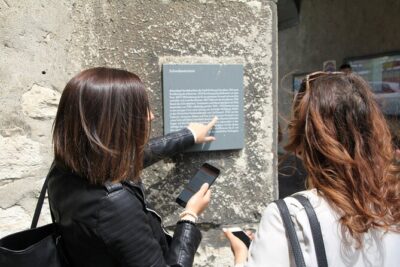
This is a private, self-guided experience. No one meets you at the start. You do your own navigation to the first story location, open the Action’s Tour Guide app, then let the audio begin automatically based on where you are.
The practical bits that make or break an audio tour:
- Download time matters. The tour app needs a strong wifi or cellular connection at setup time, then it works offline afterward.
- For the walking parts, having headphones or earbuds will make everything clearer.
- If you’re driving, you can connect your phone to your car audio through Bluetooth, USB, or AUX. Apple CarPlay compatibility is listed, and Android Auto is coming.
In plain terms: charge your phone, download the tour on decent signal before you head out, and bring a small power source if your battery runs warm. That’s the difference between a smooth story day and a stressful scramble.
Boston Common to the State House: starting your Revolutionary War engine

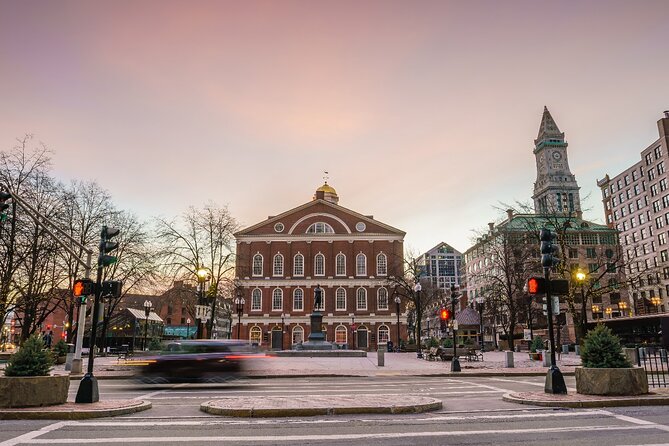
You kick off at Boston Common, and the tour begins at the Visitor Center area so you can get your bearings fast. Boston Common is one of those places that feels like a park until you remember it’s been at the center of the city’s life for centuries. The story here sets the tone for what you’re about to see on the Freedom Trail.
From there, the route leads right to the Massachusetts State House, marked by that famous golden dome. Here, the audio focuses on the people and political energy behind the Revolution, with a specific stop to the Robert G Shaw and 54th Regiment memorial across the way. That’s a smart choice because it broadens the “Revolution” story beyond slogans and gives you a thread to follow into later chapters of American history.
Then you continue along to Park Street Church. The narration frames a big question: what really prompted the Revolutionary War? Even if you already know the broad facts, this is one of those audio approaches that helps you connect events across places, not treat them like isolated scenes.
Tip for your timing: some story moments at the beginning are short. If you want extra time to look up architecture or read plaques, start earlier so you don’t feel behind.
Freedom Trail essentials: Granary Burying Ground and the people behind the politics

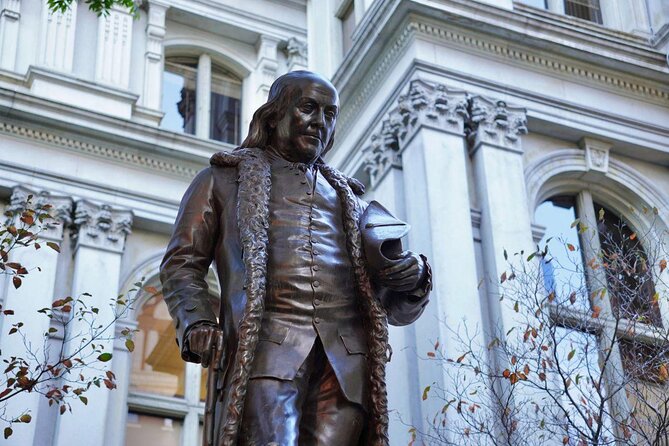
The tour keeps you on the Freedom Trail rhythm, but it also uses the graveyard stops in a clever way. Granary Burying Ground is established in 1660, and the narration leans into what you can actually see: 400 years of change in one small place. You’ll hear about the grave of Mother Goose, and you’ll also encounter the resting places of familiar Revolutionary-era names like Paul Revere, Robert Paine, and James Otis. John Hancock and Sam Adams are also part of the stop.
A good feature here is the way the audio ties who is buried where to what those people did. That’s often where self-guided tours feel thin, but this one gives you names and context so you don’t just stand and guess.
Next comes the Irish Famine Memorial, a later-history stop that shifts the focus to immigration after the Revolution. It’s a useful reminder that Boston didn’t stay frozen in the 1700s. The stories continue, and you get a sense of how new communities reshaped the city.
The Tea Party turns into a real stop: Old South Meeting House

Old South Meeting House is right across from the Irish Famine Memorial, and the audio treatment is focused. This is where the Boston Tea Party becomes more than a headline. You’ll get the organizers’ motivations, plus what happened afterward and why the consequences mattered.
Even if you’ve seen schoolbook versions of the Tea Party, the best part of this stop is the cause-and-effect framing. Taxes, trade, and politics stop being abstract. You start noticing how the story connects to the rest of your route: other harbors, other ships, and other tensions.






Old State House and the Massacre site: architecture and argument

When the tour hits the Old State House, it pauses long enough for you to pick out key architectural features and understand why this building mattered. Then it moves you to the Boston Massacre site.
This stop uses a key angle: was it truly a massacre, or was it the British version of events calling it something else? The narration also includes Crispus Attacks, an American hero associated with the incident. You’re standing at the location where the moment happened, which makes the story feel less like trivia and more like a turning point.
Real-world consideration: this portion of the route is popular in Boston. Even though you’re self-guided, you’ll still share space with other visitors. Plan your pace and don’t expect long, quiet reading time at every stop.
From Paul Revere to the North Church to the Charles Town Navy Yard

The tour goes after the iconic names in a smart order. It starts with the Paul Revere House, then shifts to Old North Church where lantern signals communicated the movements of British troops. The classic one if by land, two if by sea detail is part of the story here, but the bigger value is the explanation of how the plan worked and why it mattered.
Then you head to Copp’s Hill Burying Ground, older than Granary by about a year. That might sound like a tiny trivia point, but in practice it helps you appreciate Boston’s age and density: the city stacked life on top of earlier life.
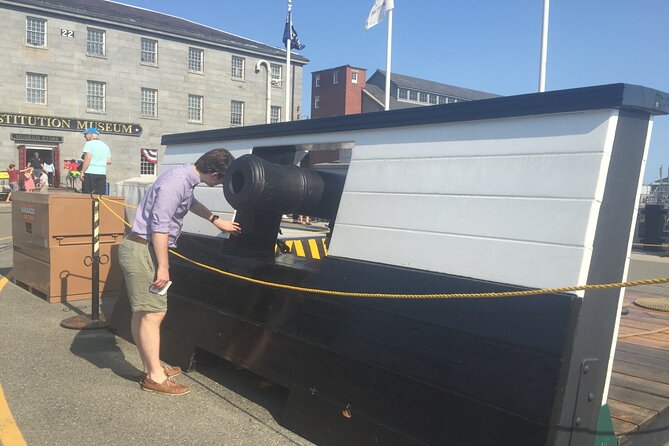
After that, the route crosses into the Charlestown Navy Yard for the USS Constitution Museum area. You get the ship’s presence, plus the narration on its battle against the Guerriere. If you like American naval stories, this stop gives you a different angle than the street-level Revolutionary moments.
Bunker Hill Monument: the ending that feels earned
The Freedom Trail portion ends at Bunker Hill Monument. The narration’s emphasis is on the brutality and intensity of the battle at this site. Because you’re reaching it after a long chain of events, it lands differently than if you visited it alone. You’ve already watched the political tension build, and now you see what those arguments cost.
If you’re doing the full bundle, this is a natural place to take a longer pause. Stretch your legs, grab water, and decide whether you keep going immediately or save part of the day.
Harvard Yard as a story detour (and why it helps)
After Bunker Hill, the bundle includes Harvard University stops in Cambridge. You’ll see Harvard Yard, the John Harvard statue, and then a path through campus highlights like the Harvard Science Center area, Memorial Church, and the Widener Memorial Library. The narration also connects buildings to notable alumni who lived in campus dorms, including JFK, Bill Gates, Malia Obama, Matt Damon, and Mark Zuckerberg.
This section works for two reasons:
- It breaks up the Revolution-heavy pace.
- The audio doesn’t treat Harvard like a museum only. It connects people to places, which keeps the walking more interesting than just sightseeing.
A possible drawback: the Harvard stops can feel like “quick look” moments, since many are short. If you want longer time in specific buildings, plan to skip a couple audio cues or accept that your day won’t include every interior experience.
Boston Harborwalk from South Station to Long Wharf: the water story
The route then transitions toward the waterfront, starting around South Station and focusing on the Harborwalk area from South Station to Long Wharf. Here, the tone shifts from Revolutionary streets to trade, shipping, and how the harbor helped shape Boston’s economy and conflicts.
You’ll pass the Federal Reserve Bank building, hear a bit of the “modern architecture with a bland name” contrast, then continue toward Atlantic Wharf and the Boston Tea Party Ships & Museum area. You also get Rowes Wharf, named for a tea smuggler referenced in the story.
As you walk, a few stops feel designed to give you a perspective view. One of them is the Marina at Rowes Wharf, with the Harbor Hotel’s copper dome and a note about viewing through the archway straight up. Even if you don’t have time for a formal visit, it’s the kind of detail that makes the waterfront feel specific rather than generic.
The New England Aquarium area appears near the end, followed by Long Wharf. The route closes with Long Wharf as a final historical marker, tying colonial battles and modern crowds together so you can feel how the waterfront’s role changed without disappearing.
Cape Ann drive: Gloucester, lighthouses, Rockport, and seaside stops
If you keep going past Boston, the bundle shifts into Cape Ann territory with a drive-style format. You start at the Gloucester Visitor Information Center, then get quick orientation through views from Stage Fort Park. Tablet Rock shows up early, with a plaque unveiled in 1907 commemorating first settlers.
Then the route adds coastal story stops:
- The Fishermen’s Memorial, tying fishing to the movie The Perfect Storm
- Gloucester HarborWalk, with granite slabs and volunteer “story moments”
- A Cape Ann whale watch note, framed as an industry where sightings are common
- Niles Beach options for stopping at big or smaller beaches
- Eastern Point Lighthouse, tied to early 1800s maritime trade anxiety
- Thacher’s Island and Rockport as part of the loop
- Motif #1 as the painted-building stop (a well-known landmark)
- Bearskin Neck, with the origin story connected to a legend about a bear caught by the tide
- Granite Pier and the Cape Ann Light Station area (Annisquam Harbor Light Station and shipwreck/shipping/fishing context)
- The loop back toward the Gloucester Visitor Information Center
What you’ll like most here is the change in scenery. You go from urban Revolutionary landmarks to ocean air, harbor views, and small-scale coastal details. It’s a nice way to turn a “Boston history day” into a “Boston region day.”
One thing to consider: Cape Ann adds driving and time. If you only have a half-day, you may want to treat the Cape Ann portion as optional and save it for a different outing.
Practical stop timing: why some moments feel short
A lot of the stops list short audio durations, often around 5 to 10 minutes. That’s not bad. It’s the structure that helps you keep moving. But it does mean:
- Some stops are meant for orientation and names, not for long reading.
- If you want extra time at a specific site, you should pause your audio and linger.
The bundle’s best feature is exactly that: you control the pace. Start, pause, and skip. If your curiosity is stronger at the burial grounds than at a building exterior, you can adjust without feeling like you’re falling behind a group.
Who should book this Boston self-guided bundle
This bundle is a good fit if you:
- Want value and have at least one vehicle in the group
- Prefer flexible timing over rigid tour schedules
- Like learning through audio that stays readable and practical
- Want to combine classic Boston sites with water views and a real coastal side trip
It may be less ideal if you:
- Want a traditional guided experience with Q&A
- Have limited time and feel stressed by long routes
- Need lots of time inside museums and buildings without skipping any audio segments
Should you book it
I think you should book it if you want a “choose your own rhythm” Boston day that mixes the big Revolutionary Trail hits with water and Cape Ann scenery. The strongest reason is the combination of offline-ready tech, hands-free narration, and per-car pricing that keeps the cost sensible. If you’re the type who enjoys stopping where the story grabs you and skipping where it doesn’t, this setup fits your style.
If you’d rather be herded on a set schedule or you’re aiming for a museum-and-ticket-heavy itinerary, you’ll need to supplement it. But for an audio-driven, do-it-your-way exploration, this bundle is easy to recommend.
FAQ
How long is the Boston Self-Guided Audio Tour Bundle?
The duration is listed as approximately 6 to 8 hours, depending on how many stops you choose to do and how much time you spend at each.
Is it a guided tour with a schedule?
No. It’s self-guided. You can start anytime within the operating window and you can pause or skip parts whenever you want.
What language is the audio available in?
The tour is offered in English.
Do I need internet while I’m walking or driving?
No. You should download the tour on strong wifi/cellular first, then it works offline afterward using the offline maps.
How much does it cost?
It’s $24.99 per person, and it’s priced per car, which can make it a more budget-friendly option for groups.
Are tickets or attraction entry included?
No. Attraction passes, entry tickets, and reservations are not included. The audio focuses on the story and the sights from the route.