REVIEW · MARYLAND
Antietam National Battlefield Self-Guided Driving Tour
Book on Viator →Operated by Action Day Trips · Bookable on Viator
Antietam National Battlefield is quiet, and the audio makes it roar. This self-guided drive turns the battlefield into a step-by-step story with hands-free, location-triggered audio and lifetime replay access, so you can come back and re-watch the fight from different angles later. I also like that the route is built for real breaks, so you can pull over, look, and keep going without racing anyone.
The main thing to plan for is tech timing: if you drive too fast, you may get audio lag or skip ahead of what you’re actually seeing. Also, you must download the tour with a strong connection before you head out, or it may be rough once you’re in low-signal areas.
In This Review
- Key highlights at a glance
- What This Antietam Audio Drive Really Gives You
- Price and Value: One Purchase per Car, Lifetime Access
- Where You Start and How You Finish (So You Don’t Get Lost)
- Before You Go: Download, Password, and Phone-to-Car Audio
- Stop-by-Stop: Antietam National Battlefield to Mansfield’s Fatal Moment
- West Woods: When the Easy Win Stops Being Easy
- Farms Under Fire: Mumma and Piper’s Different Kinds of Danger
- Irish Brigade and Bloody Lane: Why This Spot Matters
- Burnside Stone Bridge: The Numbers, the Confusion, the Cost
- Final Attack Trail: Watching the Fight Shift Toward the End
- Optional Detours That Add Depth: Zouaves, Tolson’s Chapel, and More
- How to Drive So the Audio Stays Honest With Your Location
- When It Works Best: Who Should Book This
- Quick FAQ for Your Planning
- FAQ
- How much does the Antietam self-guided driving tour cost?
- How long does the tour take?
- Is the tour audio story long and how many stops are there?
- Are admission tickets included for the stops?
- Does it work offline?
- How do I access the tour after booking?
- Where do I start and where do I end?
- Can I pause the tour and start later?
- Does the tour expire?
- What is the cancellation policy?
- Should You Book This Antietam Driving Tour?
Key highlights at a glance
- Offline-first audio: download ahead, then rely on GPS-based triggers in the field
- Union and Confederate cemeteries plus battlefield farms: you get both the fighting and the aftermath
- Burnside Stone Bridge odds: a brutal numbers story with several narration segments
- Bonus history stops: Tolson’s Chapel and School and other optional detours for added context
- Lifetime validity: one purchase lets you reuse the audio on future trips
What This Antietam Audio Drive Really Gives You
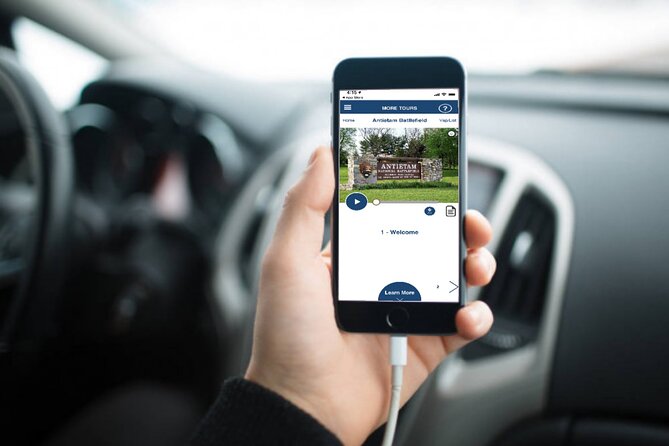
This is one of those tours where the “self-guided” part doesn’t mean you’re left guessing. The audio plays based on where you are, so you’re not constantly stopping to read signs or pull up your phone map.
I like that the story is built around the big geographic moves—creek, woods, farms, and the bridge—rather than just a straight list of dates. It helps you understand why the battle feels so different depending on where you park.
You’re also not stuck with one style of experience. You can keep it tight and do the core drive in about 1–2 hours, or stretch it with optional side stops and extra audio segments.
You can also read our reviews of more tours and experiences in Maryland.
Price and Value: One Purchase per Car, Lifetime Access
You pay $14.99 per group (up to 4), not per person. That structure matters because Antietam is perfect for small groups—two couples, a family of four, or a couple who packed snacks—where a per-person price can get annoying fast.
Then there’s the lifetime piece. The tour comes with new, lifetime access with no expiry, so it’s easier to justify even if Antietam isn’t your only battlefield stop. If you’re the type who revisits places after learning more, this pays off.
Drawback to keep in mind: admission tickets for any sites you choose to enter are not included. In practice, many parts of Antietam are walkable or viewable from the road, but you’ll still want to check what you plan to step into.
Where You Start and How You Finish (So You Don’t Get Lost)

You begin at America’s National Parks Store at Antietam National Battlefield, 5831 Dunker Church Rd, Sharpsburg, MD 21782. You end near 51st New York Infantry, Sharpsburg, MD 21782, with the audio leading you through the key scenes along the way.
Timing matters because your starting point is a store location, and the tour’s first trigger is tied to being at the correct spot. The store’s hours are listed as 8:00 AM–5:00 PM daily, with the long date range given for availability.
Also note the route is about 9 miles long with more than 38 audio stories. That’s plenty of content for 1–2 hours if you’re driving steadily and not making every scenic stop a long photo session.
Before You Go: Download, Password, and Phone-to-Car Audio
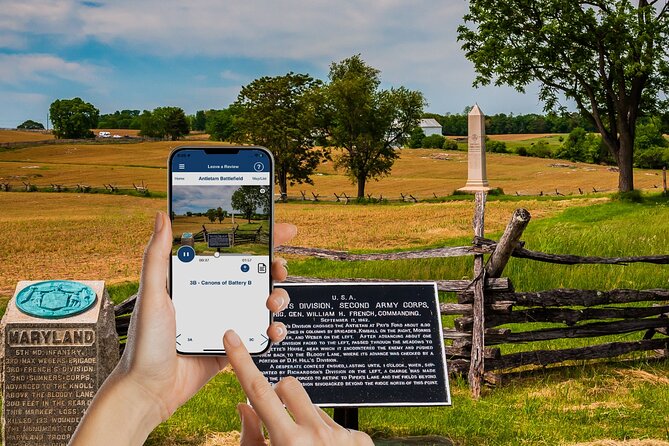
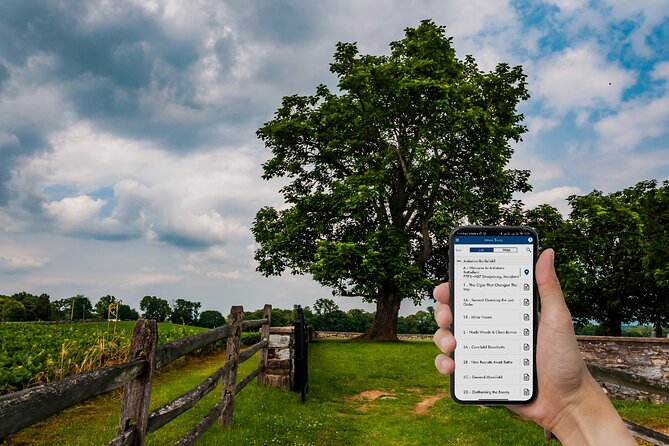
After booking, you get instructions with a password via email and text. You’ll also need to download the separate Action’s Tour Guide App, and you must do that while you have strong wifi/cellular.
This is the part that separates a great day from a frustrating one. If you don’t download well ahead, you can end up scrambling mid-drive, especially in rural signal pockets where audio and maps may not behave.
Once you’re on site, you start the tour inside the app, and audio should begin automatically at the first story point. For car listening, the audio can be connected to your stereo with Bluetooth, USB, or AUX, and it’s compatible with Apple CarPlay (Android Auto support is listed as coming soon).
Stop-by-Stop: Antietam National Battlefield to Mansfield’s Fatal Moment

At the start, you’re on Antietam Creek in Sharpsburg, which is where the battle’s geography really clicks. This National Park Service-protected area commemorates the fight of September 17, 1862, one of the bloodiest single-day battles in American history.
You’ll get story segments that help you picture what each place looked like during the fighting, not just after the fact. The app is designed so you can pause for photos or snacks, then resume when you’re back on the road.
Soon after, the drive reaches Mansfield Monument. You hear the story of Major General Joseph Mansfield, who left his untrained battalion to scout a cornfield and came back mortally wounded. It’s a reminder that battles pivot on leadership, timing, and nerve—often at the worst possible moment.
West Woods: When the Easy Win Stops Being Easy
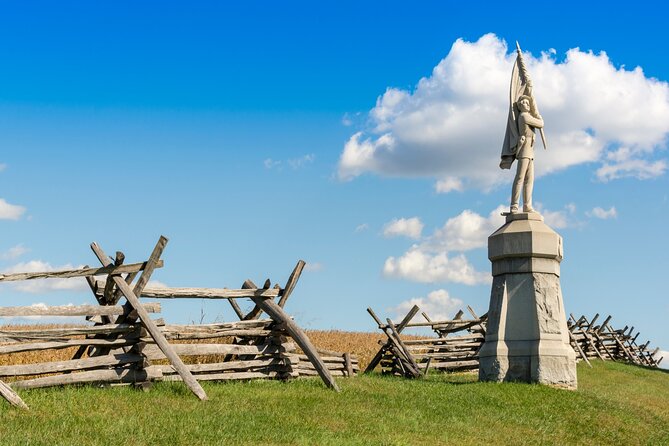
Next comes West Woods Trail, where the tone shifts. By this point, the Union has the advantage in the larger picture, but the battle is still far from finished.
The narration centers on the idea of momentum. Thousands of Union soldiers charge into the forest hoping to repeat an easier earlier gain, only to find Confederate cannons waiting from a ridge nearby.
This segment is especially effective if you pause briefly at the trail area. Even without a long hike, the surroundings help you understand why a “charge” can turn into a trapped advance in minutes.
Farms Under Fire: Mumma and Piper’s Different Kinds of Danger
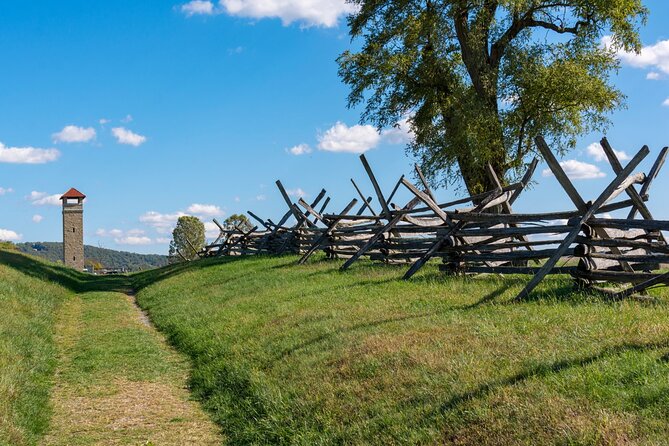
You’ll then hit the stretch with Mumma Farm and Cemetery. Here the focus is on how homes and farm buildings became tools in the conflict. As Confederate troops retreated past this point, they burned the place so the Union couldn’t use it for cover.
The narration also ties the damage to civilian reality: the Mumma family had already fled, but they’d come back later to find ashes. That small human detail makes the battle feel less like a map exercise and more like real lives in real danger.
After that, you arrive at Piper Farm, where Confederate generals used the farm as headquarters. This stop flips the script from “burned shelter” to “planning ground,” so you’re seeing the battlefield as both a place of fighting and a place of decisions.
Irish Brigade and Bloody Lane: Why This Spot Matters
A key monument stop is the Irish Brigade Monument, honoring Irish Americans who fought at Bloody Lane. The story focuses on how many of them paid the highest price right there.
This is one of those segments that helps you understand why some battle areas get named and preserved. Even if you don’t call yourself a Civil War specialist, you’ll start recognizing how heritage groups and individuals are remembered through specific points on the ground.
If you’re visiting with kids, this is also a good stop to slow down and ask what they think “honor” looks like when it’s written into stone.
Burnside Stone Bridge: The Numbers, the Confusion, the Cost
One of the main attractions is the Historic Burnside Stone Bridge area, which the tour treats as a big narrative chapter rather than one quick audio blip. The story is built around a terrifying mismatch: 13,000 Union soldiers pressing toward a bridge held by roughly 500 Confederates.
You’re told what makes crossing so punishing—Union soldiers are exposed in the attempt to cross while the defense rakes them. The bridge segment emphasizes how quickly casualties can pile up when movement is forced into a narrow space.
I also like that the tour includes a follow-up story connected to William McKinley—a future U.S. president. It recalls the boy’s unusual kind of heroism after the brutal struggle on the bridge.
There’s also a practical bit of pop history tied to the area: a fun narration segment notes that sideburns are named after General Burnside, pointing you to his portrait so the name actually makes sense.
Final Attack Trail: Watching the Fight Shift Toward the End
As you continue, you reach the Final Attack Trail area, near where Union forces assemble for what’s described as the final push against Confederate lines. By this stage, the Confederates have been forced to fall back repeatedly, and the narration is designed to match that shift.
This segment leans into sensory storytelling: gunfire, drums, and war cries. It’s not just “what happened,” but also “what it felt like” in broad strokes, so the end of the battle isn’t just a timeline entry.
If you want the most impact here, don’t just stay in the car. Pull over for a few minutes and listen—then look around the terrain and compare what you hear to what you can actually see.
Optional Detours That Add Depth: Zouaves, Tolson’s Chapel, and More
The tour also offers optional detours, and these are the ones I’d prioritize if you have a little extra time.
- Hawkins’ Zouaves Monument: This spot honors the 9th New York Infantry. The story explains that they almost broke through the final Confederate line—an action that could have changed the war’s larger course, even though it didn’t quite succeed.
- Tolson’s Chapel and School: This detour highlights a different kind of Civil War legacy—Black Americans building the chapel and school one year after the war ended.
- Good-Reilly House: The narration connects you to Sharpsburg’s older housing, giving a glimpse of what the town’s life could have looked like before the war reshaped it.
- Mt Calvary Cemetery: The story adds layers about earlier settlement (dating back to 1768) and how church buildings were repurposed during the fighting. Confederates used the demolished church area to send orders, then Union forces used the same church site as a field hospital afterward.
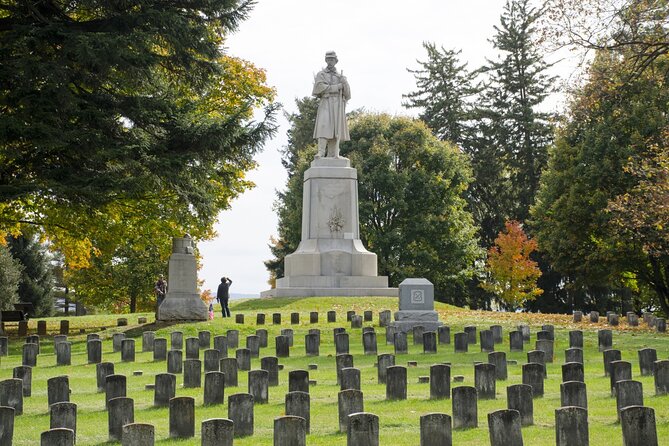
- Antietam National Cemetery: The ending focus turns to remembrance. The narration notes 4,776 Union soldiers and about 200 dead from later conflicts (Spanish-American War, World War I, World War II, and the Korean War).
These detours work because they prevent Antietam from feeling like a single-day event. You see how the war gets remembered, reused, and reinterpreted over time.
How to Drive So the Audio Stays Honest With Your Location
Here’s the simple rule that fixes most audio timing problems: start from the beginning and follow the route and posted speed limits.
A common problem pattern is easy to understand. If you move too quickly through the drive, you can get lag—audio may describe a location you passed already. On the other hand, if you stay aligned, the narration timing tends to feel much more natural.
One helpful note from real-world use: when playback gets out of sync, it can often be restarted or corrected. It’s also worth double-checking that you launched the right version of the tour using the planned starting point and direction.
If you’ve got Bluetooth connected, keep volume at a level you can hear clearly without cranking the car too loud. You want the narration to be background, not a second job.
When It Works Best: Who Should Book This
This tour is ideal if you want freedom plus story structure. It’s great for history first-timers who need a guided narrative without booking a group tour, and it’s also a solid choice for people who already know the basics and want a sharper “where-and-why” walk-through.
It’s especially friendly for families because you can adjust pacing. You can do the core drive, then add monuments or cemetery stops only if your group still has energy.
If you’re a battlefield-nerd, you’ll probably enjoy the way the tour switches between tactical moments (woods, bridge) and human moments (burned farm aftermath, memorials, chapels). And yes, there are standout story themes—people mention things like a bee attack highlight along with McKinley and Hayes as memorable audio moments.
If you hate apps, though, this may feel like more effort than a simple self-drive with printed guidebooks. Your success depends on downloading ahead and staying aligned with the route.
Quick FAQ for Your Planning
FAQ
How much does the Antietam self-guided driving tour cost?
It costs $14.99 per group, up to 4 people.
How long does the tour take?
Plan for about 1 to 2 hours.
Is the tour audio story long and how many stops are there?
The route is over 9 miles long and includes more than 38 audio stories.
Are admission tickets included for the stops?
No. Attraction passes, entry tickets, or reservations are not included, and admission ticket notes are listed throughout the tour.
Does it work offline?
Yes, offline maps are supported. You must download the tour while you have strong wifi/cellular, and it should work without signal after download.
How do I access the tour after booking?
After booking, you’ll receive email and text instructions with a password. You download the Action’s Tour Guide App, enter the password, then start the audio onsite at the first story point.
Where do I start and where do I end?
The start is at America’s National Parks Store at Antietam National Battlefield, 5831 Dunker Church Rd, Sharpsburg, MD 21782. The drive ends near 51st New York Infantry, Sharpsburg, MD 21782.
Can I pause the tour and start later?
Yes. You can start anytime, pause anywhere, and the tour can be used over multiple days.
Does the tour expire?
No. It has new, lifetime access with no expiry, and you can reuse it anytime.
What is the cancellation policy?
You can cancel for a full refund up to 24 hours in advance of the experience start time.
Should You Book This Antietam Driving Tour?
I’d book it if you want a flexible way to experience Antietam’s big scenes without paying per person or committing to a fixed tour schedule. The combo of audio that triggers by your location, offline capability, and lifetime replay makes it feel like a reusable guide, not a one-time product.
I’d think twice if you’re likely to rush the route, hate downloading apps, or want zero phone work. If your goal is to park once and wander slowly with no tech at all, this might not be your best fit.
But for most road-trippers—especially pairs and small families—this is a strong value way to turn Antietam from “a place I visited” into a story you can actually follow.