REVIEW · BOSTON
Boston Freedom Trail Self-Guided Tour with Audio Narration & Map
Book on Viator →Operated by Stories with Action · Bookable on Viator
One walk, 16 Revolutionary stops. This self-guided Freedom Trail audio tour lets you follow the red-brick route at your own pace, with GPS-triggered stories and an offline map that keeps working as you walk. For $9.99 per person, you’re set up for about 3 to 4 hours of wandering through early Boston and U.S. history.
I like that the audio cues play hands-free as you reach each place, so you’re not stuck reading tiny signs. I also like the control you get: you can pause for lunch, stop for photos, or skip a section if you’re not in the mood for it.
The main thing to consider is simple: it’s a real walking day, and GPS-based audio can be touchy in busy, crowded areas. Bring a charged phone, start early, and expect a bit of trial-and-error if you run into audio quirks.
In This Review
- Key highlights that make this tour worth it
- Why Freedom Trail audio works better than you’d expect
- Price and value: what $9.99 really buys you
- Setting yourself up for an easy start (so the audio actually plays)
- Boston Common to the golden dome and Shaw Memorial
- Watch for a time-and-traffic reality check
- Park Street Church and Granary Burying Ground: where the stories get personal
- Irish Famine Memorial to Old South Meeting House: protests and their consequences
- Old State House and the Boston Massacre site: two different kinds of tension
- Faneuil Hall Marketplace and Haymarket: politics meets everyday life
- Paul Revere’s House to Old North Church: myth, message, and geometry
- Copp’s Hill Burying Ground and the USS Constitution area in Charlestown
- Bunker Hill Monument: the final climb in the story
- How long it takes in real life (and how to plan your day)
- Who this self-guided Freedom Trail tour is for
- Should you book this Freedom Trail audio tour?
- FAQ
- Do I need cell service for this Freedom Trail audio tour?
- How long does the Freedom Trail audio walk take?
- Is this a guided tour with a person?
- Can I choose when to start or pause?
- Where does the tour end?
- Do I have to buy tickets for the historic sites?
- What phones does the app work best on?
Key highlights that make this tour worth it
- Hands-free GPS audio that moves with your location
- Offline maps, so you’re not stuck when cell service drops
- Start anytime, pause anytime to match your energy level
- A long list of stops, from Boston Common to Bunker Hill Monument
- Lifetime access, so you can repeat it on a future Boston trip
- Low cost for a full route, with admission at the stops not required to be purchased
Why Freedom Trail audio works better than you’d expect

Boston’s Freedom Trail is famous for a reason: it connects the dots of early U.S. history in a way that feels physical. When you walk the route, you see how the city shaped events—and how events shaped the city back. This audio format helps because it turns the trail into a guided timeline without locking you into a group schedule.
The big win is the way the audio follows you. You go at your pace, and stories start when you hit the next point on the route. That means you can linger where you want, duck into nearby streets when you feel like it, then return to the red-brick path without losing the narrative.
And at $9.99, you’re not paying for access to a museum ticket. You’re paying for context—names, motivations, and the “wait, that matters” details—that you’d otherwise have to look up on your own.
You can also read our reviews of more tours and experiences in Boston.



Price and value: what $9.99 really buys you
For $9.99 per person, you’re getting a self-guided walking tour designed for about 3 to 4 hours. It covers a major chunk of the trail, including notable places like Faneuil Hall Marketplace, Paul Revere’s House, the USS Constitution area, and Bunker Hill Monument. Many of the stops are free to access, so the cost isn’t eating into your sightseeing budget.
Where this feels like a good deal is pacing. A group tour might charge more and still keep you moving when you’re tired. Here, you can stop for a snack, take a slow look at a cemetery, or re-listen to a section without paying anything extra.
If you’re the type who likes facts but hates being herded, this is one of those purchases that can actually change your whole day.
Setting yourself up for an easy start (so the audio actually plays)
This experience is not a live guide walking beside you. After booking, you’ll get instructions by email and text with a password and directions to access the tour. You then download the separate Action tour guide app—doing the download in strong Wi‑Fi or cellular is important—because the tour is designed to work offline after that.
On site, you open the app, pick the right Freedom Trail version if needed, and then go to the first story point. The audio begins automatically, and then it continues as you move through the route.
One practical tip: keep your phone accessible. A few users have reported GPS/audio trouble that improved once they actively reset or reconnected their setup. If something goes weird, try the simple fixes first—restart the app and re-check audio connections.
Boston Common to the golden dome and Shaw Memorial
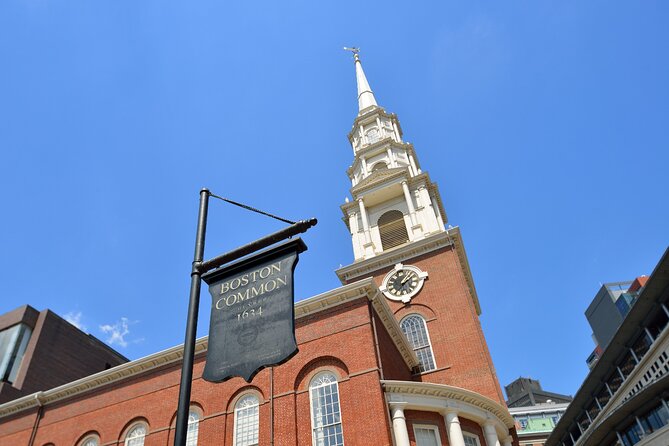
Boston Common is the natural entry point for the Freedom Trail story. It’s a big, open green with a long colonial footprint, and starting here makes the rest of the walk feel like a purposeful shift from “everyday Boston” into the revolutionary era. The route begins near the visitor area and then lines up with the red-brick path.
Right after, you reach the Massachusetts State House with its eye-catching golden dome. This is where the Revolutionary War characters start taking more defined shapes in your head. The tour also points you across the way to the Robert G. Shaw and 54th Memorial, which adds a later layer to the revolutionary storyline and helps you connect how Boston’s fight for liberty echoed well beyond the 1770s.
What I like about this section is that it builds contrast. You’re standing in a civic space that still feels current, and the audio brings historical people into focus without turning it into a lecture.
Watch for a time-and-traffic reality check
If you’re starting on a weekend, be ready for foot traffic and vehicle movement around downtown. The Common area is active, and crowds can make any GPS-based experience more annoying than it should be. Start early in the day if you can, when the sidewalks are calmer.



Park Street Church and Granary Burying Ground: where the stories get personal

From the State House area, you move toward Park Street Church. The audio sets up the big cause-and-effect question: what actually pushed the Revolutionary War into motion? Instead of just listing events, the narration connects the chain reaction across wars and politics, which makes the later scenes at protest locations and meeting houses land harder.
Next comes Granary Burying Ground, and this is one of the most absorbing stops on the trail. Established in 1660, it’s older than most people expect, and the audio points out details that make you slow down. You’ll hear how it’s tied to famous names like Paul Revere, Robert Paine, James Otis, John Hancock, and Sam Adams. It also connects the cemetery to those killed in the Boston Massacre—so you’re not learning about violence from a distance.
There’s also a fun, slightly strange detail: the ground is said to hold the grave of Mother Goose. Whether you love folklore or not, it’s a good reminder that history here isn’t only about presidents and battles. It’s about the stories Boston carried forward.
A drawback in this section: it’s easy to spend too long in cemeteries if you like reading every marker. Plan for pauses, but keep an eye on your total time. This is the area where you can accidentally turn a 3.5-hour walk into a 5-hour walk.
Irish Famine Memorial to Old South Meeting House: protests and their consequences

As you head along the Freedom Trail, you’ll come to the Boston Irish Famine Memorial. It shifts the timeline forward and widens your view beyond the first wave of revolutionaries. You’ll hear about immigrant hardships after the revolution and how communities formed and reshaped the city.
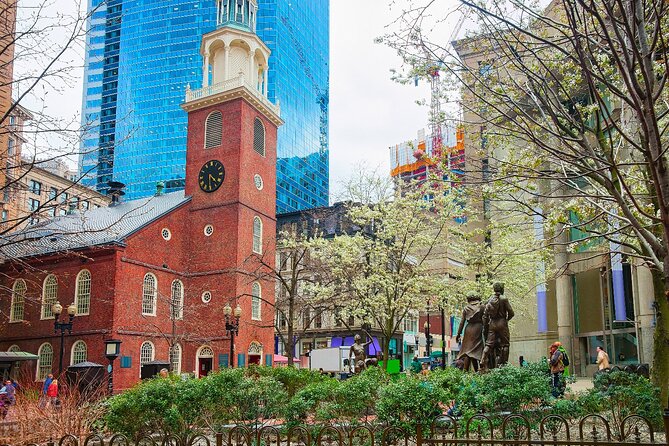
Just nearby is Old South Meeting House, tucked away enough that it’s easy to miss if you’re just walking by. The audio frames it around one of the most influential pre-Revolution events: the Boston Tea Party. You’ll get the motivations behind the organizers and—crucially—the consequences that followed. This is where the tour helps you understand why those symbolic acts mattered so much.
If you like cause-and-effect history, this is a highlight. If you only want battle scenes and cannon photos, you may find yourself wishing for a faster pace. Either way, it’s one of the sections that makes the trail feel like more than postcard locations.
Old State House and the Boston Massacre site: two different kinds of tension

The Old State House stop brings you back to architecture with meaning. You’ll pause and look for features that helped define the building’s role over time. The audio frames why it mattered in the way government, commerce, and public life intersected—so you’re not just seeing stone, you’re seeing function.
Then you reach the Boston Massacre site. The narration tackles a question that’s easy to gloss over when you read about the event later: was it truly a massacre, or was it a rowdy riot as the British claimed? That framing makes the moment feel more complicated and more human, and it also spotlights Crispus Attucks as an honored figure.
This section is worth your attention because it changes the mood. The earlier stops feel like preparation and argument. Here, you get the sense of tension breaking into violence.
Faneuil Hall Marketplace and Haymarket: politics meets everyday life

Faneuil Hall Marketplace is a Freedom Trail classic for a reason. The audio connects its history to the revolutionary-era energy you’ve been hearing about—and then it hands you something practical: the area’s food options. This is a smart place to take a break, because it’s not just a historic stop. It’s built for stopping.
From there, the route continues past Haymarket. You’ll hear about the area’s history and see the new Holocaust Memorial nearby, plus get a view toward the Custom House Tower. It’s a reminder that the Freedom Trail doesn’t freeze Boston in the 1770s. The city keeps accumulating layers of meaning.
The practical value here is that you can combine learning with logistics. If you’re getting hungry, this is one of the easiest stops to make it painless.
Paul Revere’s House to Old North Church: myth, message, and geometry
The audio returns to one of the most famous names in American storytelling: Paul Revere. You’ll hear about his midnight ride and, just as importantly, how it’s been shaped by later poetry and retellings. That myth-versus-reality framing is helpful because you’ll start noticing patterns: how legends are made, and why they last.
From Paul Revere’s House, you move to Old North Church. This is where the narrative turns into signals and coordination. The audio explains the lantern message—one if by land, two if by sea—and connects it to British troop movements and colonial communication.
If you like “how would it actually work” thinking, this is a great segment. The short, visual cues make you picture the geography instead of just swallowing dates.
Copp’s Hill Burying Ground and the USS Constitution area in Charlestown
As you head farther along into the North End, Copp’s Hill Burying Ground appears in the story. The audio notes it’s older than Granary Burying Ground by just about a year, and it reinforces the idea that burial sites are part of the city’s living memory, not museum exhibits.
Then the tour pushes into Charlestown Navy Yard, where the USS Constitution becomes the big visual anchor. You’ll learn about her epic battle against the Guerriere, and the audio keeps the focus on naval action tied to the wider War for Independence.
What I like here is the change of pace. You go from church spires and cemetery markers into a setting that feels more like power, metal, and sea-level stakes. Even if you’re not a “naval history person,” the story is framed to help you understand why this mattered.
Bunker Hill Monument: the final climb in the story
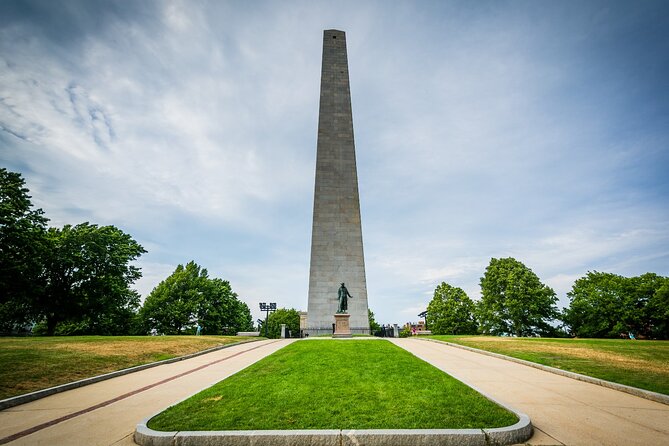
The tour ends by heading up to the Bunker Hill Monument, built to commemorate the Battle of Bunker Hill. The audio helps you understand the brutality of the fighting and why the battle became a symbol of resistance.
This last stop is where you finish the emotional arc. You’ve been through meeting houses, speeches implied by crowd energy, and moments of violence. At Bunker Hill, the audio ties it together into the sense of commitment and cost.
One logistical note: if you’ve been walking for hours already, this is the spot where your legs will feel it. Build in time for photos and a slow look around before you decide where to go next.
How long it takes in real life (and how to plan your day)
The tour is described as roughly 3 to 4 hours, and it covers a large slice of the Freedom Trail on foot. Even though people casually think of it as about 2.5 miles, expect more walking than the shortest version of the trail depending on how you arrive at the first story point and how long you linger at stops.
Here’s how I’d plan it:
- Start early to beat crowds, especially around Boston Common and downtown.
- Wear shoes you trust for long walking days.
- Bring water, since summer heat can turn “easy history” into “serious endurance.”
Also, parking can be a headache in this area and fills quickly. If you drive, arrive early. If you’re using public transportation, the route is near it, which makes switching to subway/bus easier if you’re tired.
Who this self-guided Freedom Trail tour is for
This is best if you want history with control.
You’ll enjoy it if:
- You prefer learning without matching a group’s pace.
- You like taking breaks when you want (snacks, photos, side streets).
- You want to see major stops without buying museum-heavy ticket bundles.
- You don’t mind using your phone as a guide for audio and navigation.
You might want a live guide instead if:
- You hate relying on GPS-based cues.
- You want zero tech involved from start to finish.
- You get easily frustrated when audio timing doesn’t match your exact position.
Should you book this Freedom Trail audio tour?
I’d book it if you’re doing Boston at a “see a lot but don’t rush” pace and you value flexibility. For $9.99, the payoff comes from turning the Freedom Trail into a storyline you can actually follow while you walk, not just a route you check off.
Do it if you’re curious about the details—like why Crispus Attucks is highlighted, how the Tea Party is framed, and why Paul Revere’s legend gets a reality-check. And if you’re the type who wants to stop for lunch without feeling guilty, this is one of the smartest ways to spend a morning or afternoon on the trail.
FAQ
Do I need cell service for this Freedom Trail audio tour?
You don’t. The tour is set up to work offline after you download it while you have strong Wi‑Fi or cellular service.
How long does the Freedom Trail audio walk take?
It’s about 3 to 4 hours on average, depending on how long you linger at stops.
Is this a guided tour with a person?
No. It’s self-guided. The audio plays automatically based on your location cues.
Can I choose when to start or pause?
Yes. You can start at your chosen time and pause anytime, then continue later.
Where does the tour end?
The tour ends in a different location than the start point, at the end of the route along the Freedom Trail.
Do I have to buy tickets for the historic sites?
No extra attraction passes are included. The sites along the trail listed here are described with free admission.
What phones does the app work best on?
The recommended devices are an iPhone running iOS 15 or later, or an Android device running version 9 or later, with GPS.