REVIEW · GETTYSBURG
Gettysburg Self-Guided Audio Ghost Tour
Book on Viator →Operated by Ghost Tour Fun · Bookable on Viator
Ghost stories in Gettysburg, minus the jump scares. This self-guided audio route strings together real stops with Civil War context, from the Tillie Pierce House Inn to Cemetery Hill, so you can set the pace and actually take in what you’re seeing. I like the easy walking format—about an hour—and I like that the “ghost” angle stays grounded in specific places and people.
One heads-up: this isn’t a spooky, creepy show. It’s more history-and-places than supernatural chills, so go in wanting stories, not fear.
In This Review
- Key Highlights You’ll Care About
- A $10 Self-Guided Audio Ghost Tour That Feels Like a Real Walk Through History
- Tillie Pierce House Inn: Starting With Tillie Pierce’s Eyewitness Perspective
- The Farnsworth House Inn and Those Famous Bullet Holes
- Jennie Wade House: The Only Civilian Killed at Gettysburg
- The Gettysburg Orphanage: What Followed the Battle
- Cemetery Hill: Strategic High Ground and the Path to Soldiers’ National Cemetery
- How the Route Works: Timing, Phones, and Keeping the Audio From Getting Messy
- About the “Ghost” Part: Historical Stories, Not a Horror Show
- Who Should Book This Gettysburg Audio Experience?
- Booking Verdict: Should You Book It?
- FAQ
- Where does the Gettysburg self-guided audio tour start?
- Where does the audio tour end?
- How long is the tour?
- How much does it cost?
- Are any stops free to visit?
- Is the tour refundable if I cancel?
Key Highlights You’ll Care About
- $10 mobile-ticket audio that keeps you moving without booking a group time
- Start at Tillie Pierce House Inn (301 Baltimore St) and finish at Evergreen Cemetery Gatehouse (799 Baltimore St)
- Farnsworth House bullet-hole exterior gives instant, visual context for the Battle of Gettysburg
- Free stops at Jennie Wade House, the Gettysburg Orphanage, and Cemetery Hill
- Built for short stops—roughly 10 minutes at the major interior/exterior stops before you reach Cemetery Hill
A $10 Self-Guided Audio Ghost Tour That Feels Like a Real Walk Through History
If you’re spending time in Gettysburg and want something that doesn’t eat up your whole day, this works. For $10 per person, you’re buying an audio experience that nudges you along a walk from one landmark to the next—starting at the Tillie Pierce House Inn and ending at the Evergreen Cemetery Gatehouse, just south of the Gettysburg National Cemetery area.
The big value is control. You choose when to start, you pause if you want photos or a quick look around, and you don’t have to match your pace to a loud group. It’s also in English, and you’ll use a mobile ticket tied to your booking confirmation. The tour is capped (max 500 travelers), which matters less for a self-guided audio format, but it’s still nice to know it isn’t trying to cram everyone into one moment.
One small practical note: because it’s self-guided, your experience depends on your phone and your willingness to follow prompts at the start. I’d plan for the first few minutes to be a little “setup-y,” not effortless.
You can also read our reviews of more tours and experiences in Gettysburg.


Tillie Pierce House Inn: Starting With Tillie Pierce’s Eyewitness Perspective
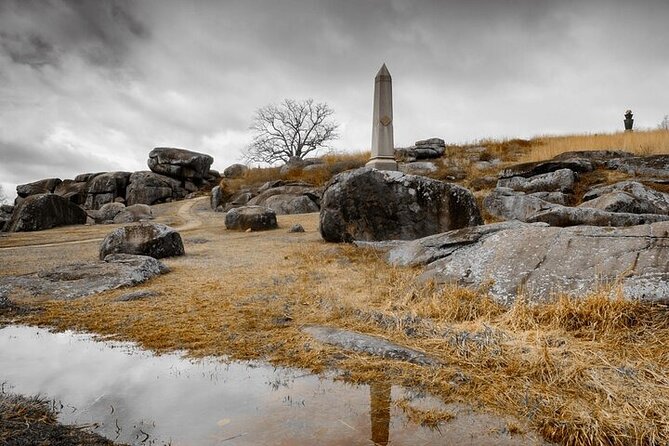
You begin at the Tillie Pierce House Inn, located at 301 Baltimore St. It’s a strong starting point because it anchors the whole experience in the idea of ordinary people watching history happen around them. Tillie Pierce was a young Civil War eyewitness, and that angle sets a tone you’ll keep hearing as you move through the town.
In practice, this opening section matters more than it seems. Gettysburg can feel like “big battlefield” on day one—lots of names, lines, and dates. Starting at a home tied to an actual witness gives you something calmer to hold onto: the human scale. Even if you’re not a hardcore history person, you’ll likely understand what you’re looking at faster once you’ve got that frame.
This is also where you can get your bearings. The inn is close to downtown sights, so if you arrive early, you can do a short warm-up walk before you press play. And if you’re building your day around dinner and an after-dinner stroll, this start point makes that easy.
The Farnsworth House Inn and Those Famous Bullet Holes

Your next major stop centers on the Farnsworth House Inn in the heart of Gettysburg. This place has a detail you can see from the outside: bullet holes still marking the exterior. That’s not a “fun fact” you skim past. It’s the kind of visual proof that makes the rest of the storytelling hit harder.
Why this stop works: it bridges the gap between map logic and real impact. Even if you’ve walked past historic markers before, bullet holes are different. They help your brain stop treating Gettysburg like a textbook page and start treating it like a set of moments that happened to real structures—and real people.
Practical tip: treat this as a photo-and-refer moment. When you’re listening to the audio, pause long enough to look at the exterior detail the story points you toward. If you try to power through without looking, the section won’t land.
Jennie Wade House: The Only Civilian Killed at Gettysburg
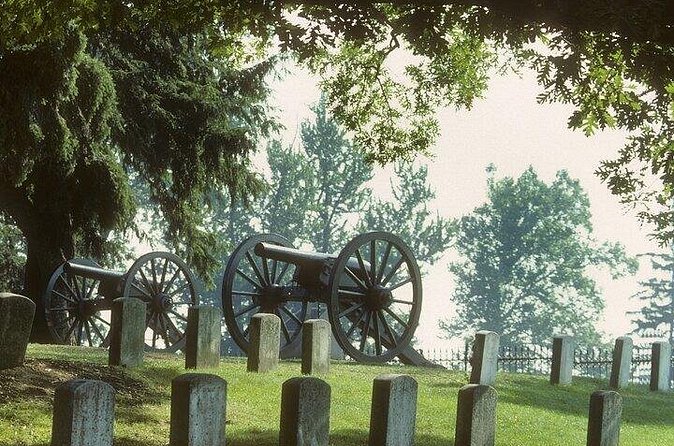
From the Farnsworth House area, the tour moves to the Jennie Wade House, stopping where Jennie Wade—the only civilian killed during the Battle of Gettysburg—lost her life. The visit is designed to be brief (about 10 minutes), and that’s actually a good match for this stop.
Here’s what makes the Jennie Wade segment valuable: it stops the story from being only about soldiers and troop movements. You get a clearer picture of what battle chaos meant to people caught in the wrong place, at the wrong time.
Also worth noting: this stop includes free admission. So you’re not paying extra to access the site as part of the experience. In a town where a lot of history can come with ticketed add-ons, that keeps your overall cost predictable.
When you arrive, plan to listen while you look, not listen after. If you do it the other way, you’ll have the facts without the location feeling.
The Gettysburg Orphanage: What Followed the Battle

Next up is the Gettysburg Orphanage, a stop built around aftermath, not combat. The audio explains that the orphanage provided refuge for children orphaned by the American Civil War—especially kids affected by the devastating Battle of Gettysburg.
This is one of those sections where a self-guided format helps. You can take the time you need. You can stand quietly and let the story settle instead of rushing because a group is moving on.
The segment is again about 10 minutes, and admission is listed as free. That’s a big plus for value: you get a meaningful stop without adding another entry fee.
What I like about including this kind of place on an audio “ghost” tour is that it doesn’t just chase fear. It uses the haunting part—loss and memory—to point at what people actually had to do next: care, education, and trying to rebuild some sense of home.




Cemetery Hill: Strategic High Ground and the Path to Soldiers’ National Cemetery

The tour’s final story stops center on Cemetery Hill, a key strategic high ground defended by Union forces during the Battle of Gettysburg. Later, it became the site connected with the Soldiers’ National Cemetery.
This portion matters because it ties together the earlier stops. By the time you reach Cemetery Hill, you’re not just hearing individual stories—you’re seeing why the geography mattered. High ground isn’t a random detail; it’s the reason certain positions mattered in the battle.
The audio time here is also about 10 minutes, and it’s listed as free. That’s smart for planning: you can spend your money on the tour and still walk away with several meaningful stops that don’t require extra ticketing.
When you finish listening, give yourself a moment to look around before you move on. Cemetery Hill is the kind of place where a pause helps you understand scale.
How the Route Works: Timing, Phones, and Keeping the Audio From Getting Messy
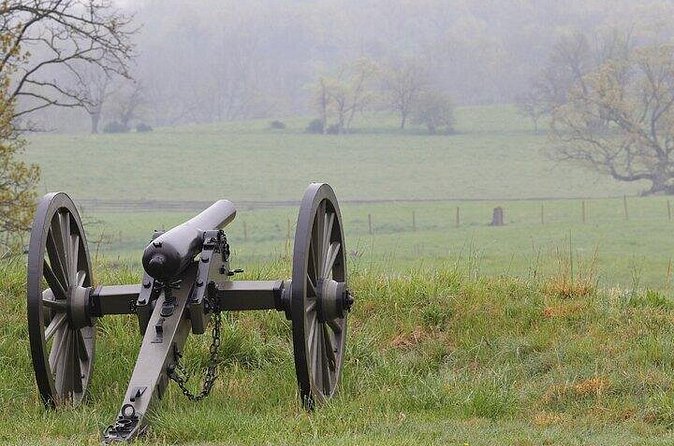
The experience is listed at about 1 hour (approx.). In the real world, I’d treat that as a “minimum.” If you stop for photos at the Farnsworth House bullet holes, if you read any on-site interpretation panels (if available), or if you’re simply walking at an unhurried pace, it can stretch longer.
Your start is Tillie Pierce House Inn (301 Baltimore St), and your ending point is Evergreen Cemetery Gatehouse (799 Baltimore St), just south of the Gettysburg National Cemetery. That ending is useful because it doesn’t trap you. You can exit, explore nearby landmarks, or head back when you’re done with the stories.
Two practical notes based on common real-life friction points you may run into:
- Give yourself time at the beginning to get audio running. Since this is self-paced, the setup process at the start can be a little fiddly. If you hit a snag, you’ll want to troubleshoot before you’ve already walked away from the best starting location.
- Keep your phone charged. This kind of tour lives and dies by your battery and signal. I’d plan to start after a top-up, not mid-charge anxiety.
One convenience factor I’d highlight: the format can be handy if you split the experience. Some people use it over more than one day, which is perfect if Gettysburg is busy and you only have a window before dinner one day and a short follow-up the next.
About the “Ghost” Part: Historical Stories, Not a Horror Show

Let’s settle expectations. This is called a ghost tour, but the actual feel is informative and historical. If you want jump scares, spooky sound effects, or a dark, creepy atmosphere, you’re likely to find it too mild.
What you’ll get instead is the “haunting” kind of experience—stories anchored in specific deaths, survivors, and places. Jennie Wade’s story, the Orphanage aftermath, and the Cemetery Hill connection to the Soldiers’ National Cemetery all carry emotional weight, even without anything supernatural happening.
So if your idea of a ghost tour is a history walk that makes you think, you’re in the right place. If your idea is a creep-fest, you’ll need a different style of tour.
Who Should Book This Gettysburg Audio Experience?
This tour fits you well if:
- you want a self-guided walk that doesn’t lock you into a strict group schedule
- you like learning in short, digestible segments (the tour builds around short stops)
- you’re trying to add history without paying for multiple paid attractions
- you want a good “take it easy” walk after dinner, especially since it’s easy to start and end near central areas
It may not fit you as well if:
- you’re chasing a spooky, scary atmosphere
- you strongly prefer tours with a live guide to answer questions on the spot
- you dislike any form of app/audio setup and want zero tech moments
Booking Verdict: Should You Book It?
I’d book this if you want a low-cost, flexible way to connect the dots between Gettysburg’s people and geography. For $10, the combination of free stops (Jennie Wade House, the Orphanage, and Cemetery Hill) plus the audio-guided walk to major landmarks is good value—especially if you’re the type who likes to wander at your own pace.
I’d skip it or pair it with something else if you’re only interested in scary entertainment. This one leans on memory and history. It’s not trying to scare you. If that’s your style, you’ll likely enjoy the walk and come away with clearer context for what you’re seeing in Gettysburg.
FAQ
Where does the Gettysburg self-guided audio tour start?
The tour starts at Tillie Pierce House Inn, 301 Baltimore St, Gettysburg, PA 17325.
Where does the audio tour end?
The audio tour ends at the Evergreen Cemetery Gatehouse, 799 Baltimore St, Gettysburg, PA 17325, just south of the Gettysburg National Cemetery.
How long is the tour?
It’s listed as about 1 hour (approx.).
How much does it cost?
It costs $10.00 per person.
Are any stops free to visit?
Yes. Jennie Wade House, the Gettysburg Orphanage, and Cemetery Hill are listed with admission ticket free.
Is the tour refundable if I cancel?
No. This experience is non-refundable and cannot be changed for any reason.