REVIEW · GETTYSBURG
Gettysburg Downtown Self-Guided Walking Audio Tour
Book on Viator →Operated by Action Day Trips · Bookable on Viator
Gettysburg hits different with headphones. This professionally narrated, hands-free audio walk turns the downtown into a story trail, with offline maps so you’re not hunting for signal. It’s a great value for a quick first pass, but the location-based audio means you’ll want to watch the app cues closely, especially on busy, noisy sidewalks.
What I like most is that you control the pace. You can start any day, pause anytime, and spend a little extra time where you’re curious—without paying for another ticket or waiting for a group. Just remember each stop isn’t an indoor museum stop with set viewing times; a few are just exterior sights, and some sites have admission not included.
In This Review
- Key highlights to know before you go
- Why this Gettysburg downtown audio walk works
- Price and what you actually get for $9.99
- Getting started: the app, the password, and the offline download
- The walk in real life: time, terrain, and pacing
- Stop-by-stop: what you’ll see and what each place is really saying
- Stop 1: Jennie Wade House and the fear of civilians
- Stop 2: Gettysburg National Cemetery and the reality of hurried burials
- Stop 3: Tillie Pierce House Inn and a teen watching danger arrive
- Stop 4: Gettysburg Heritage Center and why this town mattered
- Stop 5: Gettysburg Museum of History and the problem of missing things
- Stop 6: Witness Tree and Lincoln passing through
- Stop 7: Adams County Court House as a hospital
- Stop 8: Shriver House Museum and the family trying to outrun the battle
- Stop 9: David Wills House and building the cemetery legacy
- Stop 10: Hotel Gettysburg and everyday architecture with war-time links
- Stop 11: Lincoln Statue at Wills House and the idea of the common man
- Stop 12: G.A.R. Hall and what veterans needed after the guns cooled
- The biggest practical win: you can choose how much you want
- One drawback to watch: navigation and sound conditions
- Who this walking audio tour is best for
- Should you book Gettysburg Downtown Self-Guided Walking Audio Tour?
- FAQ
- How much does the Gettysburg Downtown Self-Guided Walking Audio Tour cost?
- How long does the walking tour take?
- Where do I start and where does it end?
- Do I need cell service during the tour?
- What language is the tour offered in?
- Is the narration hands-free?
- Are admission tickets included for the stops?
- When can I use the tour?
- Do I need an in-person guide?
- Can I use the same password on more than one device?
- What if I need a refund?
Key highlights to know before you go
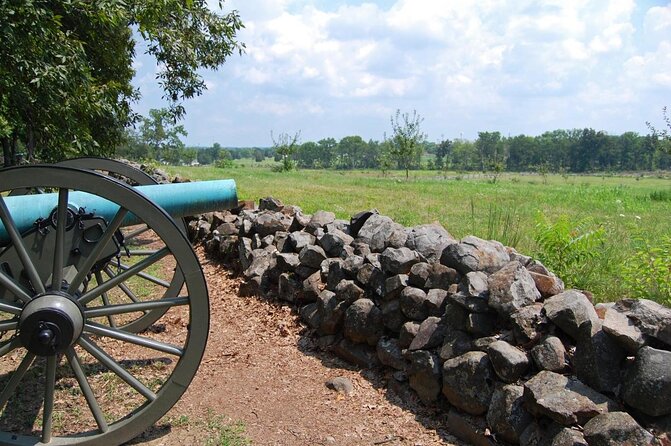
- Location-triggered audio plays automatically as you follow the route, so you’re not constantly tapping
- Offline maps + downloaded content keep the tour running even with spotty cell service
- 12 downtown stops move from homes and hospitals to monuments tied to Lincoln and the postwar veterans’ world
- Lifetime access with no expiry means you can reuse the audio on later trips or share it with your group
- About 1–2 hours for an over-1-mile walk with 21+ audio stories, so it fits well between other Gettysburg plans
Why this Gettysburg downtown audio walk works

This is the kind of tour that makes Gettysburg feel less like a memorization project and more like a walk through cause-and-effect. One minute you’re near a home connected to civilian fear in 1863, and the next you’re at a place that functioned like emergency care as wounded soldiers flooded the area. The story pattern matters: it keeps you thinking about what the battle meant beyond cannon fire.
You also get a true self-guided format. There’s no waiting, no “stick together,” and no awkward questions to a guide. The tradeoff is you’re the navigator, so your best experience depends on using the app properly and staying on the recommended walking route.
You can also read our reviews of more tours and experiences in Gettysburg.



Price and what you actually get for $9.99
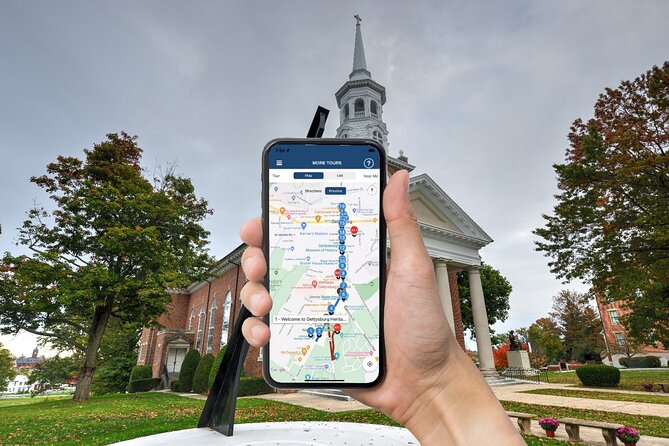
At $9.99 per person, this is priced like a smart add-on to your Gettysburg day—especially if you’re already visiting a few major sites nearby. It’s not an all-access museum ticket bundle. Instead, it’s a narrated route: story delivery, context, and “how to look” at places you might otherwise glance past.
For the value, pay attention to the structure:
- It’s about 1–2 hours.
- It’s over 1 mile long.
- It includes 21+ audio stories, plus extra text and video-type materials inside the app.
So you’re paying for interpretation and pacing tools more than admission. If you enjoy learning while you walk, this kind of tour is hard to beat for the cost.
Getting started: the app, the password, and the offline download

This tour uses the Action’s Tour Guide App. After booking, you get an email and a text with setup instructions and a password. You’re expected to download the tour while you’re on strong wifi/cellular, then it works offline after that.
Here’s the simple workflow:
- Download the Action tour app before you start.
- Enter the password sent by email/text on your device.
- Once onsite at 297 Steinwehr Ave near the Gettysburg Heritage Center, open the app and launch the tour.
- Start at the correct starting point so the audio triggers in the right order.
One practical note: the password can be used on the same number of devices as the travelers you booked. If you’re traveling with someone else and you want one tour running for both of you, you can share the experience by using a second device (or split headphones if your setup allows it). The tour is marked as a private activity, meaning it’s just your group—no merging into a larger crowd during the walk.
The walk in real life: time, terrain, and pacing
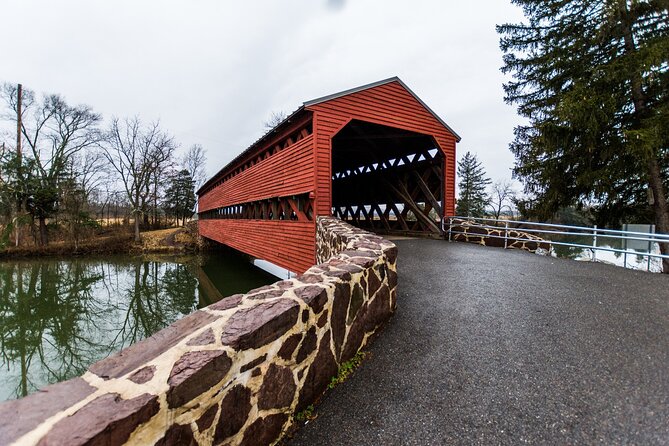
The route is designed for a quick, city-style stroll. Stops are short—around 5 minutes each—but the total time stretches depending on how much you pause for photos, reading, and shopping breaks along the way.
If you’re planning your day, treat it like a framework:
- Use it early to get the “map of meaning” for the town.
- Then come back later (or keep moving) if a topic hooks you.
Because audio plays based on location, I recommend staying close to the route and not wandering far off while a story is mid-trigger. If you’ve ever had GPS-based audio get confused in tight areas, you’ll know the feeling—so build in a little patience and re-check the app cues if something sounds out of sync.
Stop-by-stop: what you’ll see and what each place is really saying



Stop 1: Jennie Wade House and the fear of civilians
You start with the Jennie Wade House, tied to how civilians tried to stay safe as Confederate troops advanced in 1863. The story centers on Jennie Wade and her mother fleeing to her sister Georgia, clutching hope and prayer as battle approached.
This stop is effective because it shifts the tone. Gettysburg isn’t only about soldiers; it’s also about people who had no control over what was about to happen. If you’re used to battlefield tours that focus on lines and movements, this one is a grounding switch.
Watch for this: the audio includes multiple stories at this start zone, so it’s worth stepping a bit carefully around the area to let the narration line up with what you’re looking at.
Stop 2: Gettysburg National Cemetery and the reality of hurried burials
Next is the Gettysburg National Cemetery. The key idea here is how quickly the aftermath had to be handled. The story notes that burial teams placed graves where men fell, Union and Confederate alike, and that many graves were only about 12 inches deep—because the army had other battles to fight.
This is one of those stops that can get quiet fast, even in daylight. It’s also a strong moment for perspective: the cemetery isn’t just a list of names; it reflects the speed, confusion, and limited resources of wartime death.
Stop 3: Tillie Pierce House Inn and a teen watching danger arrive
The Tillie Pierce House Inn brings you to Hettie Shriver’s flight—and the presence of Tillie Pierce, a 15-year-old neighbor. The story emphasizes how Tillie was drawn to the spectacle at first, watching Union soldiers ride by, then realizing once cannons began that curiosity doesn’t protect you.
What I like about this stop is the emotional realism. It reads like a “then it got real” moment, not a polished legend. If you’re paying attention, it also helps you understand why civilians couldn’t just stay neutral observers during the battle.
Stop 4: Gettysburg Heritage Center and why this town mattered
At the Gettysburg Heritage Center, the focus widens. You’re reminded that Gettysburg became famous for the battle, but there’s more going on than armies and flags. This stop acts like an orientation checkpoint: it frames why everyday life in Gettysburg and the war’s bigger consequences connect.
If your time in town is limited, I’d treat this as one of the most strategic pauses, because it gives context you’ll carry through the rest of the route.
Stop 5: Gettysburg Museum of History and the problem of missing things
The Gettysburg Museum of History stop highlights one of the biggest private Civil War artifact collections in the country, with more than 4,000 total artifacts. It also tackles a harder side: how some battlefield remains and gear disappeared over time, including references to looting and the fact that even with local and government efforts, not everything stayed accounted for.
This is where the tour gets more complicated in a good way. It nudges you from “look at objects” into “think about how objects move, get lost, or get taken.” Even if you don’t spend much time reading exhibit panels, the audio story helps you see why collections exist and what they can’t fully fix.
Stop 6: Witness Tree and Lincoln passing through
Then you hit the Witness Tree, tied to Abraham Lincoln’s route to deliver the Gettysburg Address. The story focus is simple and memorable: Lincoln rode past this tree.
This stop works best if you slow down and actually look at the setting. The tree becomes a time marker—one of those places where you can picture a real human schedule, not just a statue or a textbook moment.
Stop 7: Adams County Court House as a hospital
Next is the Adams County Court House. This building didn’t stay a courthouse for long. During the battle, it became shelter for wounded soldiers, turning any available space into makeshift care as the wounded piled up.
This stop is strong because it explains how war rewires everyday structures. If you walk through towns like Gettysburg and expect “only war sites,” the courthouse story is a reminder that the war spilled into civic life.
Stop 8: Shriver House Museum and the family trying to outrun the battle
The Shriver House Museum spot returns to Hettie Shriver, painting a familiar Gettysburg pattern: people fleeing to relatives or nearby farms, hoping distance equals safety, only to realize the horrors still followed.
This stop helps tie earlier stories together. You’re no longer hearing isolated tales—you’re seeing the chain reaction of fear, movement, and trauma across the town.
Stop 9: David Wills House and building the cemetery legacy
At the David Wills House, the story centers on David Wills, an attorney and a community figure credited with organizing the creation of the Gettysburg National Cemetery.
This is one of those stops that’s useful no matter your politics or background. It helps you understand that the cemetery wasn’t inevitable—it was built through decisions after the fighting ended. If you’ve walked a battlefield and wondered who made sense of it later, this is your answer.
Stop 10: Hotel Gettysburg and everyday architecture with war-time links
The Hotel Gettysburg stop covers a building dating back to 1797, originally a tavern, and at one point associated with the prominent McClellan family.
This place gives you the texture of Gettysburg between major events. You see that the town wasn’t empty of life before 1863—it was filled with businesses, families, and local networks. For photo-taking, this is also a good “reset” stop between heavier narratives.
Stop 11: Lincoln Statue at Wills House and the idea of the common man
The Lincoln statue at the Wills House comes with a concept: the man standing next to Lincoln doesn’t have a specific name. That’s the point—the Common man idea, connecting Gettysburg and Lincoln to everyday people in modern life.
Even if you don’t usually like monuments, this stop can land because it tries to translate the story into something personal. It’s less “a specific hero” and more “what the story means for regular people.”
Stop 12: G.A.R. Hall and what veterans needed after the guns cooled
Finally, you reach the G.A.R. Hall—the Grand Army of the Republic building. The story focuses on its postwar purpose for Union veterans: a place to gather, share stories, and help one another in times of need. This is the emotional ending the route earns.
If your battlefield learning often stops at 1863, this last stop gently extends the timeline. You leave with the sense that the war’s impacts didn’t vanish overnight—it carried forward into community life.
The biggest practical win: you can choose how much you want

The app gives you extra stories tied to things you enjoy, plus videos/text-type add-ons. That means if you hit a topic you like—civilians, hospitals, Lincoln—you can spend more time without restarting your day.
The other win is hands-free audio. Once you start the story, it moves by location cues. You’re walking, looking, and learning instead of constantly checking your screen.
One drawback to watch: navigation and sound conditions

This format is powerful, but it has a built-in weakness: location-based audio can get messy if you’re off-route or distracted. A few people also find it hard to hear narration when street noise is high, especially if they’re in areas with loud traffic or nearby chatter.
My practical advice:
- Keep one hand free and your eyes up.
- Stay on the route the app recommends.
- If audio feels out of sync, pause, adjust your position, and restart that segment rather than pushing forward blindly.
Who this walking audio tour is best for

This fits best if you:
- Want a quick, structured intro to Gettysburg’s downtown connections
- Like history told through human stories (civilians, wounded care, veterans), not just troop movements
- Prefer self-paced travel where you can shop, snack, and stop for photos
- Are comfortable using a phone for navigation and audio triggers
It may not be your best choice if you:
- Get frustrated with GPS-based tools
- Want a guided explanation of every scene with back-and-forth questions
- Plan to enter paid exhibits at each stop (many stops list admission not included)
Should you book Gettysburg Downtown Self-Guided Walking Audio Tour?
I’d book it if you’re trying to get real value from a limited schedule. For $9.99, you’re paying for narration, context, and a route that connects major downtown story points—Lincoln, civilian survival, makeshift medical care, and what came after the battle.
Skip it only if you strongly dislike app-based, location-triggered audio or you know you won’t enjoy fiddling with navigation in busy areas. Otherwise, it’s a smart way to turn Gettysburg’s streets into a story you can actually follow.
FAQ
How much does the Gettysburg Downtown Self-Guided Walking Audio Tour cost?
It costs $9.99 per person.
How long does the walking tour take?
It takes about 1 to 2 hours to complete.
Where do I start and where does it end?
The tour starts at Gettysburg Heritage Center, 297 Steinwehr Ave, Gettysburg, PA 17325 and ends back at the meeting point.
Do I need cell service during the tour?
You should download the tour while you have strong wifi/cellular. After that, it works offline.
What language is the tour offered in?
The tour is offered in English.
Is the narration hands-free?
Yes. Audio stories are designed to play on their own based on your location, and you can pause or start as needed.
Are admission tickets included for the stops?
No. Attraction entry tickets are not included. One stop listed as free is G.A.R. Hall.
When can I use the tour?
The tour is described as flexible: you can use it any day, any time. The meeting point hours shown are 8:00 AM to 5:00 PM.
Do I need an in-person guide?
No. It is self-guided, and no one meets you at the start. You start the app onsite.
Can I use the same password on more than one device?
Yes. The password can be used on the same number of devices as the travelers you booked.
What if I need a refund?
You can cancel for a full refund if you cancel at least 24 hours in advance of the start time.