REVIEW · GETTYSBURG
Gettysburg Battlefield Self-Guided Driving Audio Tour
Book on Viator →Operated by Action Day Trips · Bookable on Viator
If you like history, but hate being herded, this self-guided Gettysburg drive fits. You follow a set route, and the audio starts on its own as your phone tracks your position, so you get a guided-feeling day without a group pace.
I especially like two things: first, the GPS-triggered, hands-free narration that guides you stop to stop. Second, the value is strong because you buy per car (up to 4 people) and get new lifetime access with no expiry.
One thing to consider: the experience depends on getting your phone aligned with the route. If your audio loses sync, you may need to restart or slow down and stick closely to the suggested driving speed and path.
Quick Take: What’s Great About This Tour
- Per-car pricing means more people can listen for the same ticket price
- Offline maps and offline audio playback reduce stress in areas with spotty signal
- Day-by-day story flow helps you make sense of what happened on each phase of the battle
- Real monument and terrain moments make the narration feel tied to what you see outside your windshield
- Optional detour included for the Eisenhower National Historic Site if you want more
- You control your stops and timing, including breaks for photos and walking a monument loop
In This Review
- Why a Self-Guided Driving Audio Tour Makes Sense in Gettysburg
- Price and Value: What $16.99 Gets You (Per Car) and Why That Matters
- Setting Up the App and Connecting Audio in Your Car
- How the Route Flows: Day 1 to the Cemetery, Without Feeling Random
- Stop-by-Stop Guide: Heritage Center, Day 1 Ridgelines, and Memorial Markers
- Stop 1: Gettysburg Heritage Center (Museum time)
- Stop 2: McPherson’s Ridge (first-day clash)
- Stop 3: The Railroad Cut (strategy and early skirmishing)
- Stop 4: Eternal Light Peace Memorial (north and south symbolism)
- Stop 5: Oak Ridge Observation Tower (panoramas that make the day make sense)
- Stop 6: 11th Pennsylvania Infantry Monument and Battlefield Sallie
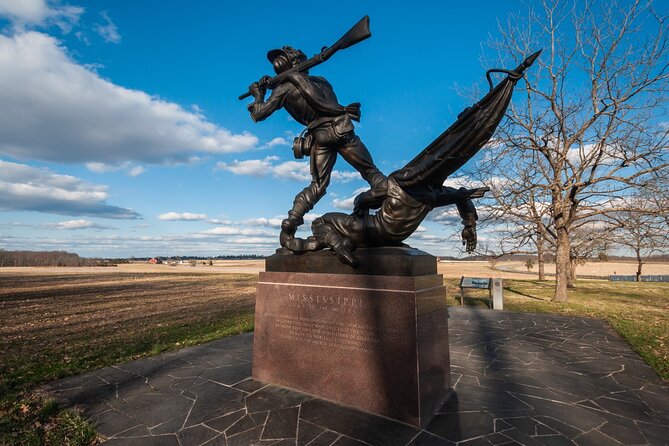
- Stop 7: North Carolina Memorial and Virginia Monument
- Stop 8: the route into Day 2 (Pickett’s Charge story saved for later)
- Stop 9: Longstreet Observation Tower (a second-day vantage)
- Stop 10: Eisenhower National Historic Site (optional detour)
- Stop 11: Warfield Ridge (marksmen and the defensive line)
- Stop 12: Little Round Top and the Valley of Death
- Stop 13: Wheat Fields and JJ Purman
- Stop 14: Peach Orchard
- Stops 15–18: Trostle Farm, Plum Run, Weikert Farm, and the Pennsylvania Memorial
- Stop 19–21: Spangler’s Spring, Culp’s Hill Tower, and East Cemetery Hill (night raiding tension)
- Stop 21: Gettysburg National Military Park (where the turning point lands)
- Stop 22–23: Pickett’s Charge and the National Cemetery (the final emotional notes)
- Where I’d Slow Down: Towers, Hill Views, and Monument Reading Time
- The Main Hiccups: GPS Sync, Starting Smoothly, and Audio Restarts
- Should You Book This Gettysburg Battlefield Driving Audio Tour?
- FAQ
- How long does the Gettysburg Battlefield self-guided driving audio tour take?
- Is the tour price per person?
- Do I need cellular data while I’m driving?
- Can I listen hands-free while driving?
- Where does the tour start and end?
- Do I need to visit the Heritage Center museum?
- Is the tour offered in languages other than English?
- Can I pause and resume during the tour?
- What should I do if the audio doesn’t trigger correctly?
- Is the audio tour refundable?
Why a Self-Guided Driving Audio Tour Makes Sense in Gettysburg
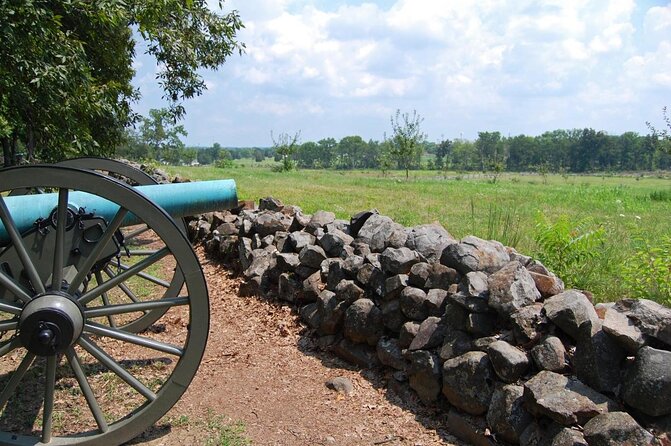
Gettysburg is one of those places where the details matter, but you also need freedom. If you’re on a bus tour, you’re often stuck with someone else’s timing. Here, you get the narration, but you set the pace: stop when you want, keep driving when you don’t, and jump out for monuments on your own schedule.
The audio setup is built around location. That means it’s not just a podcast you hit play on. You enter the first story point, and then the “next chapter” cues play as you reach each stop.
This is a great match for independent travelers who want a structured route without the pressure to keep up. It’s also a good fit if you’re traveling with different interests, like one person who wants to read monuments and another who just wants the battlefield story thread.
Price and Value: What $16.99 Gets You (Per Car) and Why That Matters
The headline is simple: it’s $16.99 per group (up to 4), and the tour is purchased per car, not per person. That changes the math fast. If you’re traveling with a family of four or a couple plus friends, this is usually cheaper than paying for a seat on a guided tour.
You also get new lifetime access with no expiry. That matters because Gettysburg rewards repeat visits. You might rush through the first time, then come back to linger at a specific ridge, tower view, or cemetery section.
One more practical value point: the route includes a long chain of stops, but the audio itself is designed to make the drive feel organized. With 19 miles per tour and 60+ audio stories, you’re not just paying for a few highlights. You’re paying for a full “road trip with context.”
You can also read our reviews of more tours and experiences in Gettysburg.



Setting Up the App and Connecting Audio in Your Car
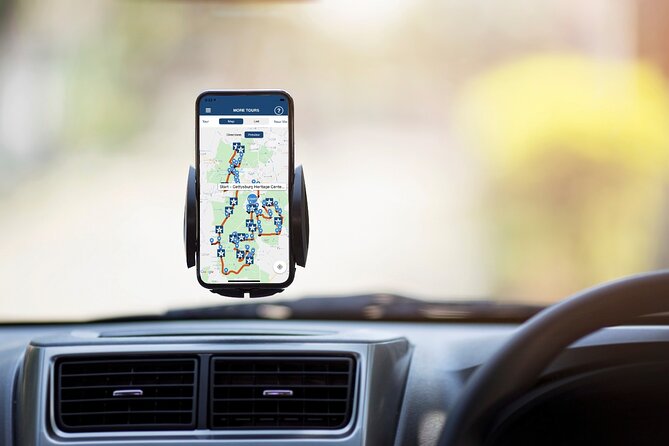
You use Action Day Trips’ app: Action’s Tour Guide App. After booking, you’ll get email and text instructions with a password. The key practical step is that you need to download the tour while you have strong wifi or cellular. After that, the tour works offline.
Once you’re on site, you open the app and start at the correct first story point. There’s no guide meeting you at the curb. You follow the on-screen start prompt and then you go in order as the audio cues trigger.
For sound, you can connect your phone to your car stereo using Bluetooth, USB, or AUX. If you plan to get out at stops, bring the option you prefer: car audio works for driving, and headphones can help when you step away from the vehicle.
If you run into trouble, the tour is designed to be repairable. A lot of hiccups people report come from starting at the wrong place or losing GPS alignment. Staying on the suggested route and respecting the speed limit helps keep the phone’s location accurate.
How the Route Flows: Day 1 to the Cemetery, Without Feeling Random

The tour is built like a storyline across the battle days.
You start on the first day: ridges, early clashes, and the memorial landscape that marks the ground. Then you move into day two: observation towers, Devil’s Den rock cover, wheat and orchard areas, farm sites turned into hospital scenes, and the wooded fighting around Culp’s Hill and the springs.
Finally, you reach day three and the climax: Pickett’s Charge, then the National Cemetery, which is where the tour ends with context tied to Lincoln’s Gettysburg Address.
Because the narration follows that arc, you don’t just see monuments in a row. You start mentally labeling the terrain: where forces tried to hold, where commanders tried something new, and where momentum shifted.
Stop-by-Stop Guide: Heritage Center, Day 1 Ridgelines, and Memorial Markers
Plan on starting at the Gettysburg Heritage Center parking area (the tour notes Heritage Center parking, lot 297 on Steinwehr Ave). The tour can also begin at the National Park Visitor Center depending on your route instructions, but most people will find Heritage Center the easiest starting anchor.
Stop 1: Gettysburg Heritage Center (Museum time)
This is your “get your bearings” stop. The Heritage Center is where you set the context before you start driving the Auto Tour route. The audio begins at your start point, and the stop includes a note that admission is not included here, so you’ll need your own museum entry ticket if you want to go inside.
If you’re short on time, you can treat it as a quick orientation stop and move on. But if you’ve never been to Gettysburg, I’d budget extra minutes so the narration lands better at the battlefield overlooks.


Stop 2: McPherson’s Ridge (first-day clash)
You drive into the early fighting view. The story focuses on the idea of dawn and troops being ordered into place. The point is to help you look outward and picture the movement across the ridge—not just read a plaque.
Stop 3: The Railroad Cut (strategy and early skirmishing)
This stop adds battle strategy to the terrain. The narration connects the route to the different approaches used by Union and Confederate forces. It also points out that this was an “unlikely” skirmish site on day one, which is exactly the kind of detail that makes the battlefield feel less like a set of postcard locations.
Stop 4: Eternal Light Peace Memorial (north and south symbolism)
You pass the memorial commemorating U.S. reunification. It’s built from Maine granite and Alabama limestone, which the tour uses as an easy way to remember how the memorial landscape frames reconciliation after the war.
Even if you skip reading every monument marker, you’ll notice the difference between “history ground” and “memory ground” here.
Stop 5: Oak Ridge Observation Tower (panoramas that make the day make sense)
At Oak Ridge Observation Tower, the audio helps you reset from morning to afternoon. You’ll get a panoramic view of fields that once saw heavy fighting. This is one of those stops where you should actually pause and look, even if you’re tempted to keep driving.
Stop 6: 11th Pennsylvania Infantry Monument and Battlefield Sallie
This stop is one of the most memorable because of the human detail. You’ll pass the 11th Pennsylvania Infantry Monument, where there’s a dog sculpted on the base. That dog represents Battlefield Sallie, a mascot that accompanied the regiment for much of the Civil War.
The audio ties that to a bigger theme: how military music and drummers mattered in day-to-day battlefield life.
Stop 7: North Carolina Memorial and Virginia Monument
This is another “pass and absorb” moment. The narration keeps the day-one story going as you move toward the end of the first day, when positions are shifting and commanders are making plans for what comes next.
Stop 8: the route into Day 2 (Pickett’s Charge story saved for later)
You enter the second day through the battlefield auto road. This is where the tour quietly trains you to think ahead. It points out that Pickett’s Charge is coming, but not right yet, so the story stays organized.
Stop 9: Longstreet Observation Tower (a second-day vantage)
Longstreet Observation Tower gives you another chance to see the terrain as a whole. If you only stop at one tower, these two observation points are the ones that help you understand the “big picture” between the smaller monument stops.
Stop 10: Eisenhower National Historic Site (optional detour)
Here you can take an optional detour to the Eisenhower National Historic Site, which overlooks the battlefield. The tour notes that President Eisenhower often stayed there. This works well if you want a break from continuous stopping and want one extra viewpoint with a strong connection to American presidential history.
Stop 11: Warfield Ridge (marksmen and the defensive line)
The narration focuses on Confederate assembly and a defensive response by Union marksmen. This is a great stop if you like the “how did they try to win” side of battle stories.
Stop 12: Little Round Top and the Valley of Death
Little Round Top is a critical moment on day two. The audio frames it as a near-miss defense: Union soldiers barely holding onto control of a strategic hill. As you drive around, you’ll cross the Valley of Death, which the narration uses as a blunt reminder of how lethal this ground was.
Stop 13: Wheat Fields and JJ Purman
The Wheat Fields area becomes the next “join the fight” zone in the story. You’re guided toward the second major skirmish site on day two, with a personal thread: the tour includes the strange tale of Union soldier JJ Purman.
If you like stories about specific individuals, this is one of the places where the audio starts to feel more like people than just troop labels.
Stop 14: Peach Orchard
The audio keeps moving through the day-two story and the idea of what worked versus what didn’t. The orchard stop is useful because it’s where the battle starts to feel like a series of pressures and counter-pressures, not a single straight line of events.
Stops 15–18: Trostle Farm, Plum Run, Weikert Farm, and the Pennsylvania Memorial
- Stop 15: Abraham Trostle Farm highlights the evacuation story: the family fled so fast their dinner was still on the table.
- Stop 16: Plum Run continues the day-two narrative right after skirmishes.
- Stop 17: George Weikert Farm adds a darker turn: their farm became a battlefield hospital. This is a hard stop, but it’s also one of the most real moments on the route.
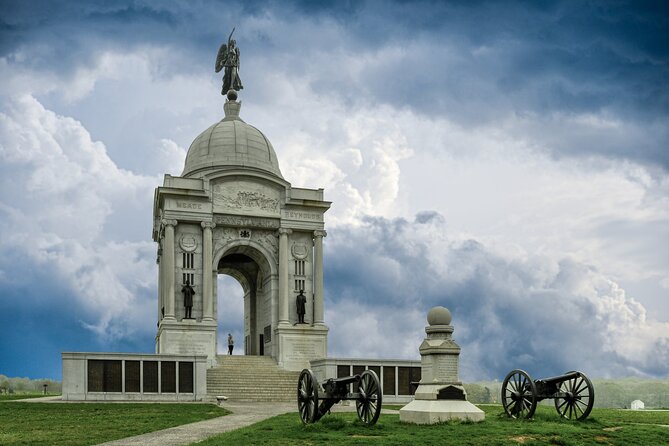
- Stop 18: State of Pennsylvania Monument ties the battle to state identity. The narration explains that for the nearly 35,000 Pennsylvanians, it wasn’t abstract. It was personal.
These are the stops where I think the self-guided format shines. You can pause long enough to absorb what the ground meant, instead of watching time disappear.
Stop 19–21: Spangler’s Spring, Culp’s Hill Tower, and East Cemetery Hill (night raiding tension)
- Stop 19: Spangler’s Spring brings you into the woods and into the “small but mighty” significance of this ground.
- Stop 19 continuation: Culp’s Hill Tower covers another sharp clash, ending with the Union defense holding until evening.
- Stop 20: East Cemetery Hill shifts to nighttime tension. The narration points out that Confederate failure to fully capture Culp’s Hill leads to a nighttime raid, when the Union came closest to losing.
Stop 21: Gettysburg National Military Park (where the turning point lands)
This stop places the battle in the broader war context. It also points you toward the “why this mattered” theme: the turning point that ended Robert E. Lee’s second invasion of the North, and the tie-in to Lincoln’s later address.
Stop 22–23: Pickett’s Charge and the National Cemetery (the final emotional notes)
- Stop 22: Pickett’s Charge viewpoint is described as the third day’s dawn and the final epic battle. The tour has you look down toward the farthest Confederate advance, the so-called high water mark.
- Stop 23: National Cemetery and Lincoln context wraps things up with honoring the fallen Union soldiers and the link to the Gettysburg Address.
The tour officially ends at the cemetery, which is exactly where the day-three story should land.
Where I’d Slow Down: Towers, Hill Views, and Monument Reading Time

This is not a “set it and forget it” drive. Gettysburg is full of detailed markers, and the narration is at its best when you’re willing to stop and look out.
The stops where you should plan extra time are:
- Oak Ridge Observation Tower for the wide battlefield panorama
- Longstreet Observation Tower for the second-day overview
- Little Round Top for the hill-and-valley layout the narration calls out
- Wheat Fields, Devil’s Den area, and key farm sites if you want more than surface-level context
- National Cemetery if you want the final story moment to feel complete
You can also treat some stops as quick pass-throughs. The self-guided setup makes that choice yours.
The Main Hiccups: GPS Sync, Starting Smoothly, and Audio Restarts

Most of the feedback points toward an easy learning curve once you start correctly. Still, a few issues show up in the real world.
Here’s what I’d do to avoid the common problems:
- Start at the suggested starting point and make sure you’re on the marked route.
- Keep driving within the speed limit when the audio is expecting a location trigger.
- If the tour feels out of sync, don’t keep rushing ahead. Slow down, confirm your position, and restart the audio from where it should be active.
If you get to the point where audio is not playing when it should, contact support through the tour app support channel. The good news is that the tour system is designed for troubleshooting rather than “you’re stuck.”
Should You Book This Gettysburg Battlefield Driving Audio Tour?
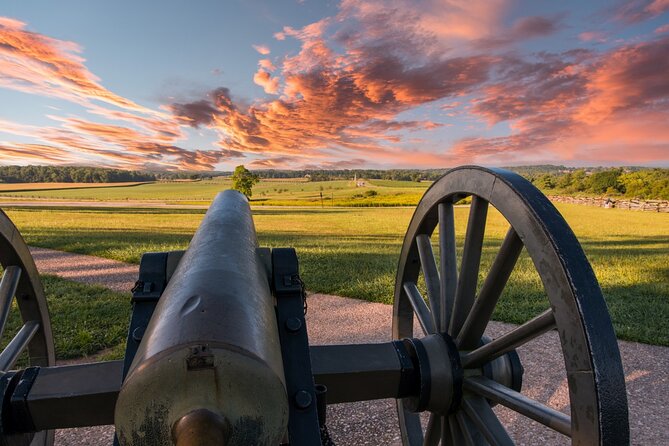
Book it if you want a structured Gettysburg day without paying for a guide’s time. You get 60+ story segments, offline access, a route that moves from day one through day three, and the ability to pause whenever you want.
I’d say skip this particular format if you hate relying on apps and GPS. If you’re the type who prefers a human guide’s constant attention, you might find the “location triggers” stressful. Also, budget extra patience for your first start so you can get your phone and car audio synced cleanly.
If you’re traveling by car with up to four people and want a memorable Gettysburg drive you can repeat later, this is a strong value pick.
FAQ
How long does the Gettysburg Battlefield self-guided driving audio tour take?
The audio route is about 1–2 hours to complete, with a driving route length of about 19 miles. Plan a longer outing if you stop for photos and viewpoints, since the experience is commonly set up for a 2–4 hour visit.
Is the tour price per person?
No. The price is $16.99 per group (up to 4), and the purchase is per car, not per person.
Do I need cellular data while I’m driving?
No. You download the tour while you have strong wifi or cellular. After that, the tour works offline.
Can I listen hands-free while driving?
Yes. The audio is set up to play automatically based on your location, and you can connect your phone to your car stereo through Bluetooth, USB, or AUX.
Where does the tour start and end?
The start point is at the Gettysburg Heritage Center parking area (lot 297, Steinwehr Ave, Gettysburg, PA 17325). The end is at 125 Taneytown Rd, Gettysburg, PA 17325.
Do I need to visit the Heritage Center museum?
It’s the first stop and the narration begins there, but the Heritage Center admission ticket is not included. You can still treat it as an orientation stop if you don’t want museum entry.
Is the tour offered in languages other than English?
The tour is offered in English.
Can I pause and resume during the tour?
Yes. You can go at your own pace, pause for breaks, and start again when you’re ready.
What should I do if the audio doesn’t trigger correctly?
Make sure you started from the correct starting point and you’re staying on the suggested route and speed limit, since the audio uses GPS triggers. If you still have issues, contact support.
Is the audio tour refundable?
You can cancel for a full refund up to 24 hours before the experience start time. If you cancel less than 24 hours before, the amount paid is not refunded.