REVIEW · LOS ANGELES
Pacific Coast Highway: Smartphone Audio Tour, LA to Santa Maria
Book on Viator →Operated by Tripvia Tours · Bookable on Viator
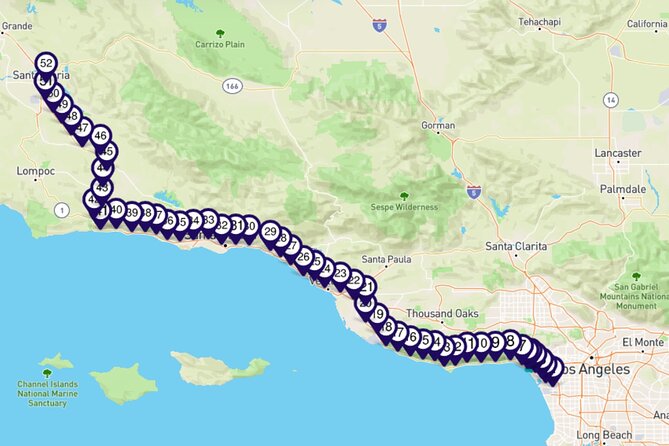
Four hours of PCH facts, no map stress. This smartphone audio tour guides you along California’s coast with stories timed to where you are, plus trivia that makes you look at famous places a little differently. You drive your own car, but the commentary follows the route so the road trip feels less like aimless cruising and more like a fun lesson on why this coast looks the way it does.
I love the GPS-based playback that helps the next stop start when you’re getting close. I also like the short trivia questions and quirky details that give you something to mention later at dinner, even if you’ve passed some of these sights before.
One possible drawback: the experience depends on your phone working the way it should. If the initial download is a headache for you, or if you want more humor and less geography-heavy talk, it might feel too school-ish compared with what you hoped for.
In This Review
- Key points to know before you go
- How this LA to Santa Maria audio tour actually works
- Los Angeles to Venice: Loyola Marymount, Marina del Rey, and beach-watching fuel
- Santa Monica and the Getty Villa: beach time plus art and neighborhood context
- Malibu’s cliffs: Zuma, Point Dume, El Matador, and the Chumash timeline
- Santa Monica Mountains by way of Boney Mountain and the Polaris missile
- Ventura and Oxnard-style road trip energy: ports, strawberries, and a big natural river
- Solimar, Emma Wood, Rincon Island, and the bluffs people protect
- Channel Islands and Santa Barbara’s layered stories: Chumash roots and tide-pool life
- From split-pea soup to Vandenberg: murals, missions, and bandit lore
- Santa Maria Valley finale: Pinot and Chardonnay country plus trails with big views
- Practical tips so the audio trip feels worth it
- Should you book this LA to Santa Maria smartphone audio tour?
- FAQ
- How much does the Pacific Coast Highway smartphone audio tour cost?
- How long is the tour from Los Angeles to Santa Maria?
- Do I need an internet connection while I’m driving?
- Can I start and stop anywhere along the route?
- Is this tour private?
- What language is the commentary in?
- Do I need to buy tickets for museums or attractions mentioned on the drive?
- What do I need to participate?
- What if I need to cancel?
Key points to know before you go
- GPS-triggered commentary helps keep the drive organized without you staring at your phone
- Trivia questions turn big scenery into something you can actually remember
- Real driving flexibility: you can take the recommended 4–5 hours or go at your own pace
- No signal needed during the tour after you download the audio
- A coast-to-inland mix: beaches, cliffs, parks, missions, and even space-mission history
- One booking per vehicle means it’s built for a small private group up to 15 people
How this LA to Santa Maria audio tour actually works
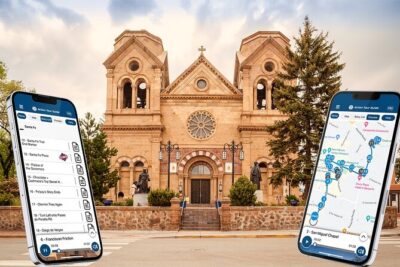
This is an audio tour you run on your smartphone (or tablet) while you drive. You’re not buying attraction tickets, and you don’t park just because the audio says so. The guide is meant to ride alongside your trip: you listen while you’re in the car, and when you want to pull in for views or a quick photo, you can.
Two practical things matter a lot. First, you’ll want a decent mobile or Wi‑Fi connection for the initial download so everything is ready before you hit the road. Second, during the drive there’s no signal required or data used, which is a big deal along parts of the coast where reception can be spotty. That means you can focus on driving and enjoying the scenery instead of babysitting your connection.
The tour is also flexible in a way most rigid “group tours” aren’t. There’s an approximate 4–5 hour route from Los Angeles to Santa Maria, but the experience is yours to keep and enjoy anytime, and you can take as long as you like to finish it. For me, that’s the sweet spot: long enough to feel like a real road trip, short enough to fit into a day without destroying your schedule.
You can also read our reviews of more tours and experiences in Los Angeles.

Los Angeles to Venice: Loyola Marymount, Marina del Rey, and beach-watching fuel
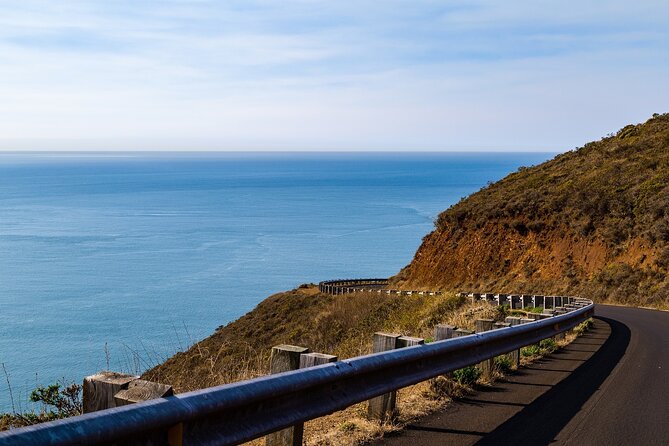
Your trip starts in Los Angeles, and right away it sets a tone: this isn’t only about postcard views. It also pulls in “why this place exists” details.
One early stop zooms you toward Loyola Marymount University, formed from a merger between Loyola College and Marymount College, and institutionally committed to Roman Catholicism. Even if you’re not a campus person, it’s a quick reminder that this route runs through real communities, not just scenic backdrops.
Next you pass Marina del Rey, built in the 1950s and known as North America’s largest man-made small-craft harbor. This is one of those moments where you can either keep rolling or slow down for boat-watching. If you love the sight of sails, fishing boats, or just busy docks, you’ll get a lot out of taking a minute.
Then comes Venice—Venice Beach and the Venice Canals. This is classic LA beach energy: walkable, noisy, and visual. The audio’s value here is that it gives you context so you’re not just thinking, I’ve seen beaches like this. You’re also getting a sense of the place’s shape and identity.
Santa Monica and the Getty Villa: beach time plus art and neighborhood context
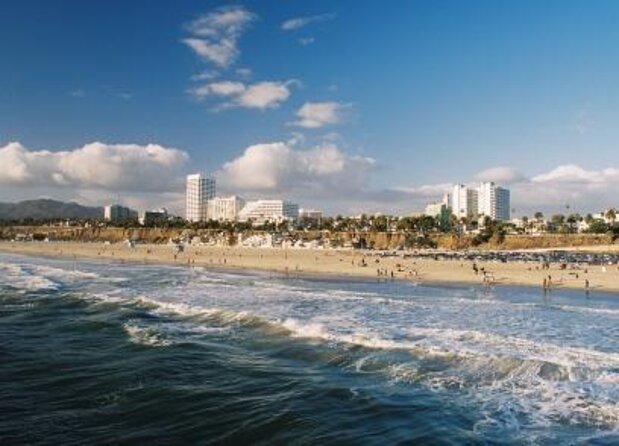
As you work your way along the coast, the tour hits a couple of beaches that are hard to beat for quick stops and big views. You’ll get passing commentary on Will Rogers State Beach and Santa Monica Beach, both great for a stretch of shoreline photos—especially if you’re timing it for softer late-day light.
Then the audio pivots toward something many road-trippers skip: the Getty Villa Museum. If you’re into Italian villas and ancient Greek-and-Roman artifacts, this is the kind of stop that turns a drive into a day with real variety. Even if you don’t go in, the narration sets up why Pacific Palisades feels different from the more touristy shoreline zones you’ve already passed.
What I like about this section is the balance. You’re not stuck in “look at the ocean” mode. You’re also being told how this stretch of coastline connects to art, wealth, and cultural institutions—so you understand what you’re seeing instead of just admiring it.
Malibu’s cliffs: Zuma, Point Dume, El Matador, and the Chumash timeline

Malibu shows up as more than a name on a map. The audio gives you the feeling of a place with its own pace and identity.
You’ll drive through Malibu City and hear about history like the Adamson House, which is especially useful for history buffs who don’t want to spend hours researching on their own. The tour also brings in some of the region’s deeper layers—like the story of the Chumash people, who lived in these areas almost 8,000 years ago and had an extensive trading system throughout California. That changes how you look at “pretty rocks and waves.” You start seeing a landscape that held people and routes long before modern roads.
Then it’s beach-and-cliff time. You’ll hear about Zuma Beach and Point Dume—broad sand, big coastal openness, and a filming location vibe. After that, you get El Matador, known for massive rock formations that make the coastline feel sculpted. These are stops where you’ll probably want a few minutes outside the car, even if it’s just to walk to a lookout and take photos you’ll actually be proud of later.
The tour also mentions the coastal reef as a scuba-diving site. Even if you don’t suit up, it’s a great reminder that the ocean world here isn’t just something you watch from the shore. It’s active, complex, and full of life.
Santa Monica Mountains by way of Boney Mountain and the Polaris missile
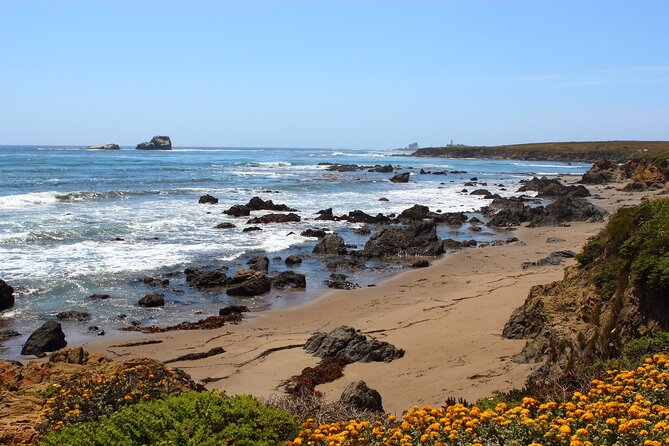
One of the cooler things about this audio tour is that it doesn’t treat the coast like a single flat line. As you keep driving, you’ll hear about inland bluffs and foothills tied to the Santa Monica Mountain range. That’s a subtle but important shift: the coast here is dramatic because the land rises hard, fast, and close.
The audio points you toward hiking trails and views near Boney Mountain. For most of us, we’re not turning this road trip into a full backpacking weekend. But even if you only stop briefly, the narration helps you understand why the views feel so wide and why the valleys and canyons look the way they do.
Then it gets oddly specific in a good way: you’ll hear about missiles like Polaris, the first U.S. submarine-launched ballistic missile. This is the kind of detail that makes people stop mid-sentence and say, wait, what? You’re used to thinking “coast” equals waves and sunsets. Here you’re also reminded that this geography has military and scientific significance.
Ventura and Oxnard-style road trip energy: ports, strawberries, and a big natural river
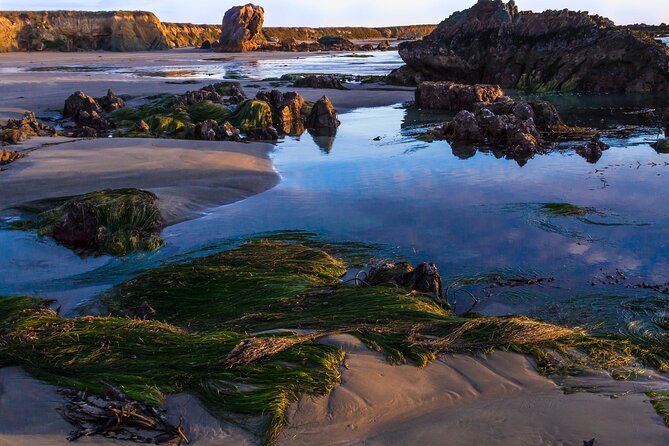
As you head farther north, the tour keeps mixing nature with human stories. You’ll hear about a port on the shores of a city that’s described as the only deep-water port between Los Angeles and San Francisco. That’s a useful fact because it gives you a reason to notice industrial edges without feeling like you’re “passing by something ugly.” It’s part of how goods move along this stretch of the coast.
The audio then brings in agriculture—California strawberries and how much comes from right here in the Oxnard valley. It’s a reminder that the coast isn’t only beaches. It’s also the edge of a food system that feeds the rest of the country.
Next up is the Santa Clara River, described as the largest natural river system in Southern California, draining several mountain watersheds and stretching 84 miles long. That helps you understand why coastal landscapes here include river connections and why the inland-to-coast transitions matter.
You’ll also hear county context—Ventura County, home to roughly 825,000 Californians, with most living within coastal plains at the foot of the Topatopa Mountains. That kind of framing makes the route feel like a living region rather than a sequence of stops.
In downtown Ventura, you’ll pass an active Catholic parish, along with a museum and tourist-attraction. The point isn’t that you must go in every time; it’s that the tour keeps reminding you the Pacific Coast Highway runs through real civic life.
Solimar, Emma Wood, Rincon Island, and the bluffs people protect
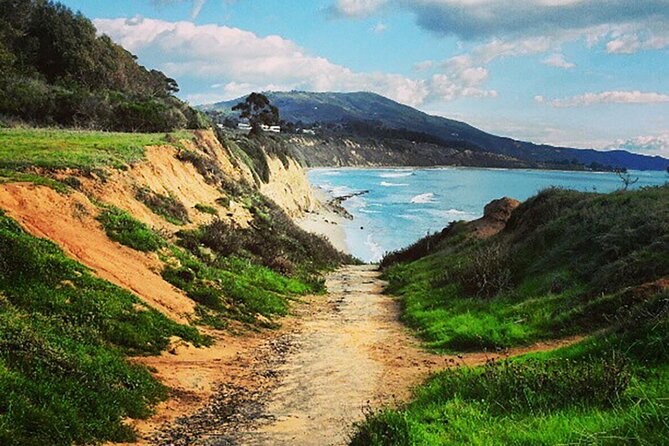
The route includes more state beaches like Solimar State Beach and Emma Wood State Beach, which are ideal if you like quick shoreline pauses. The audio also adds the science-and-story layer: you’ll hear about earthquakes and how a point was created, which is a great match for coastline driving. The scenery changes, but the explanations give it a thread.
You’ll also hear the story behind Rincon Island and the Richfield Pier—a small island connected by a long pier. This kind of detail is perfect for audio tours because it encourages you to look out the window and track what you’re seeing.
Then comes Carpinteria Bluffs Nature Preserve. The tour notes locals are protective and mentions $6.9 million raised in trust to create the preserve. That’s one of those facts that turns “we have nice bluffs” into “people cared enough to protect them.” After that, you’ll hear about Carpinteria itself and what makes the small city worth a pause.
A great practical moment here is Vista Point, with ocean views and, if it’s clear, Santa Rosa Island. Even if you can’t see the island, the point is still great for a breath of air and a long look outward.
Channel Islands and Santa Barbara’s layered stories: Chumash roots and tide-pool life
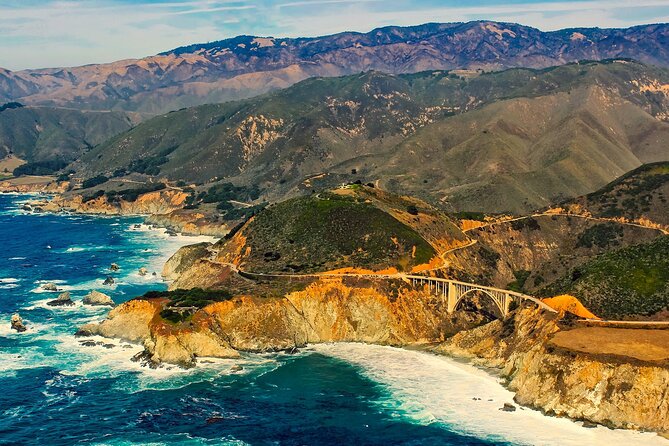
The tour treats protected land like a big deal, not background scenery. You’ll hear about a park that protects marine and island wildlife plus archaeological sites found on the islands. The tour also notes Navy Seals are trained to withstand worst-condition conditions nature can throw at them. That’s a striking reminder that “beautiful and remote” also means “hard to survive in,” which helps you take conservation seriously.
Then you arrive at Santa Barbara. The audio gives you origins that trace back to centuries before Europeans arrived, when the Chumash flourished here. That repeats a theme along the whole trip: long before tourism, this place had established culture and trade.
You’ll also hear how popular Santa Barbara is—over 7 million tourists annually—which explains why the area feels like a destination even when you’re just passing by. The shoreline includes nature preserves, a quiet beach, and a Monarch Butterfly Grove, which is a gentle change from the “big waves and wide sand” feeling of earlier beaches.
As you keep driving, the tour mentions the mountain range you’re paralleling as part of the Transverse Ranges. After that, it shifts into science and research.
You’ll hear about UC Santa Barbara as a top research university with faculty that includes six Nobel Prize winners. The narration then connects to protected coastal mountains that cover over two million acres and help protect an endangered species. If you like your road trip facts to connect to bigger systems—wildlife, land management, research—this stretch is a strong match.
Then you get a vivid nature moment: barnacles, starfish, sea anemone, crabs, and sea sponges trapped in rocky pools when the tide pulls out. That’s exactly the kind of “pay attention right now” detail that makes you want to stop and look for tide pools if conditions allow.
The audio also flags an environmental tragedy along a beautiful beach in 2015. It doesn’t drown you in doom, but it gives the place a real-world weight. The coastline is also described as infamous as a drop-off point for nefarious activities—again, context that changes how you think about the rugged shapes.
Finally in this general region, you’ll hear about Nojoqui Falls, which build outward from the cliff over time. That’s a fun “wait, that’s backwards from what I pictured” kind of geology fact.
From split-pea soup to Vandenberg: murals, missions, and bandit lore
South of the Santa Barbara area, the audio leans into small-town identity and history you’d miss if you only zoomed through.
One stop notes a small city’s claim to fame is being the home of split-pea soup—a very specific bit of local culture. Another stop mentions murals in alleyways and on the sides of buildings, which suggests a place where street art is part of what makes the town feel alive.
You’ll also hear about La Purisima, described as restored to its peak period in the 1820s, when it was the seat of mission government. If you want the mission history side of California, this is the kind of narrative stop that makes the architecture make sense.
Then it’s Vandenberg, linked to the new branch of the U.S. Armed Forces: the Space Force, solely to space. Even if you don’t spend time at the base, the fact that this region plays a role in space operations adds a surprising layer to a coast drive.
And yes, the audio goes into bandit lore: these hills were a hideout for Salomon Pico, including why he was famous. That kind of story is great on long drives because it keeps the brain from zoning out while you watch the scenery slide by.
Santa Maria Valley finale: Pinot and Chardonnay country plus trails with big views
Your finish lands in the Santa Maria Valley, home of the second oldest American Viticultural Area. The tour highlights Pinot Noir and Chardonnay as big local products, which is useful if you’re a wine person or even just curious about how coastal climate affects flavor.
One of the more scenic-sounding stops here is the Hurricane Deck Trail, running along a ridge with spectacular views. Even if you only do a short segment, that kind of ridge viewpoint is often where the coastline energy clicks into place—you finally understand how the cliffs and beaches connect.
You’ll also hear about 1875 settlement in the area, starting with free land, rich soil, and a cooler Mediterranean climate. That’s a clean way to connect the valley’s growth to the conditions that make it farmable and livable.
The end stretches across more Santa Maria-area highlights: wineries, the Conservatory Theatre, rural parks, nearby trails, lookouts, and multiple beaches and roadside canyon viewpoints. The common thread is choice. The audio gives you enough “why it’s here” context that you can decide where to hop out, not just where the road happens to curve.
Practical tips so the audio trip feels worth it
- Start with the audio downloaded before you leave the house. You only get one shot at a smooth run once you’re on the road.
- Set your car volume before playback starts so you’re not fiddling with buttons while driving.
- If you don’t want to stop for a point of interest, you can keep driving and just listen. The tour is meant to work even when you’re passing by.
- Bring patience for real-world coast timing. Beach lookouts and popular areas often mean slower pull-ins and more cars, even when you’re only stopping briefly.
Should you book this LA to Santa Maria smartphone audio tour?
Book it if you want a value-packed audio guide for a one-day drive, and you like being fed small, memorable facts rather than long lectures. The strongest reasons to go are the GPS-triggered playback, the trivia-style moments that help the route stick in your memory, and the mix of beaches, parks, missions, and even science and space details that keep the trip from becoming repetitive.
Skip it (or at least go in with realistic expectations) if you need humor over facts or if you want the kind of narration that feels like a comedy tour. Also, if your phone setup is unreliable and you hate troubleshooting apps or downloads, do yourself a favor and test the audio download before you head out.
If you’re the type who enjoys stopping for a view, listening while you drive, and sharing a few great facts afterward, this is a smart way to turn the Pacific Coast Highway into something more than scenic driving time.
FAQ
How much does the Pacific Coast Highway smartphone audio tour cost?
It costs $11.99 per group (up to 15 people).
How long is the tour from Los Angeles to Santa Maria?
Plan on about 4 to 5 hours, with flexibility to go faster or slower.
Do I need an internet connection while I’m driving?
No. The tour uses no signal and no data during the experience, but you do need a good mobile or Wi‑Fi connection to download the audio at the start.
Can I start and stop anywhere along the route?
Yes. The tour starts or stops at either Los Angeles or Santa Maria, and you can start anywhere along the route.
Is this tour private?
Yes. It’s a private experience, so only your group participates.
What language is the commentary in?
The tour is offered in English.
Do I need to buy tickets for museums or attractions mentioned on the drive?
No attraction tickets are included. The audio may recommend places to visit, but tickets aren’t part of the tour.
What do I need to participate?
You need your own smartphone or tablet for the audio playback, plus transportation (your own vehicle).
What if I need to cancel?
You can cancel for a full refund up to 24 hours in advance. If you cancel less than 24 hours before the start time, the amount paid is not refunded.