REVIEW · GETTYSBURG
Ghosts of Gettysburg Self-Guided Driving Audio Tour
Book on Viator →Operated by Action Day Trips · Bookable on Viator
Ghosts on the battlefield, without the tour bus.
This self-led driving audio route turns Gettysburg into a choose-your-own-adventure: you park, listen, then move on when you feel like it. I especially like the hands-free location-based playback and the fact the tour is narrated by Mark Nesbitt, author of Ghosts of Gettysburg.
The second big win for me is the value math: it’s $14.99 per group (up to 4) and you get lifetime access with no expiry, so you can reuse it on another visit. One thing to consider first: the experience is meant for daylight. The battlefield and roads close at sunset, so plan to finish on time rather than trying to stretch it after dark.
In This Review
- Key things I’d plan around
- The value: $14.99 per car, plus lifetime listening
- How the audio tour actually works in the real world
- Phone-to-car audio setup is where you’ll either win or curse
- Don’t plan this as a true night tour
- A route built for 1 to 2 hours of steady exploring
- Stop-by-stop: what you’ll see and why each place matters
- Stop 1: Gettysburg Heritage Center (start strong)
- Stop 2: Mark Nesbitt’s ghost story intro (and why it’s different)
- The first-day fighting story segment (Pennsylvania Crossroads area)
- Stop 3: Battle of Gettysburg First Shot Marker (daylight-only caution)
- Stop 4: Schmucker Hall (old dorm, hospital use)
- Stop 5: Devil’s Den (the name fits the date)
- Stop 6: Little Round Top (uncanny questions, not just facts)
- Stop 7: The George Weikert Farm (a story with domestic dread)
- Stop 8: State of Pennsylvania Monument (Woman in White encounters)
- Stop 9: Eisenhower National Historic Site (battlefield then and retirement later)
- Stop 10: Codori Farm (some of the worst carnage)
- Final drive context: West Confederate Avenue and the end marker
- The biggest risks: audio gaps and navigation confusion
- When audio gets silent or out of sync
- When directions don’t make sense in Gettysburg
- When the map view is hard to read
- Who this tour is best for (and who should pick something else)
- Should you book it? My practical call
- FAQ
- How long does the Ghosts of Gettysburg self-guided driving audio tour take?
- Where does the tour start and end?
- Does it work offline or do I need cellular signal?
- Is admission to stops included in the $14.99 price?
- Is this tour available at night?
- How much does it cost and is it per person?
- What devices and setup are recommended for using the app and navigating?
Key things I’d plan around
GPS-triggered audio, so you can stop and go without button-pushing.
Lifetime access means this isn’t one-and-done entertainment.
About 11 miles and 30+ stories works best if you keep a steady driving pace.
Daylight-only reality check: some stops sit inside areas that close at sunset.
You’ll need solid phone-to-car audio (CarPlay isn’t supported).
Offline-first setup matters—download the tour on strong Wi‑Fi before you start.
The value: $14.99 per car, plus lifetime listening

For $14.99 per group (up to four people), this audio tour is priced like a practical day-use add-on, not a pricey guided tour. If you’re traveling with a couple friends or family, the cost drops fast compared with per-person admissions or bus-style guiding.
The other value lever is the lifetime access. You’re not buying a timed ticket that expires when your trip ends. You can save it for a future return, or even listen at home to refresh the places before you go back.
You can also read our reviews of more tours and experiences in Gettysburg.



How the audio tour actually works in the real world
This is not a “press play and hope” experience. The audio plays based on your location, so you generally hear each story when you arrive near the next marker. The route is designed for driving, with short stops where you can step out and look around.
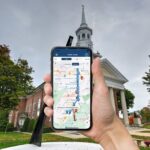
You’ll use Action’s Tour Guide App on your phone, and the app comes with offline maps. That’s a big deal in Gettysburg, where signal can be hit-or-miss. Still, you must download the tour content while you have strong Wi‑Fi/cellular at setup time—after that, the tour is meant to work offline.
Phone-to-car audio setup is where you’ll either win or curse
To hear the narration while driving, you’ll want to connect your phone to your car stereo using Bluetooth, USB, or AUX. One caution from real usage: CarPlay support isn’t reliable/available for this product. If your setup depends on CarPlay, test before you commit to a full loop.
Also keep in mind: to get the most out of a “ghost plus battlefield” tour, you’ll want clear audio. If you’re the driver, you’ll appreciate this being hands-free once it starts.
Don’t plan this as a true night tour
The battlefield and roads are open from 30 minutes before sunrise to 30 minutes after sunset. Some parts of the route go through areas that close at sunset, and this is explicitly not a night-only activity.
If you want a spooky vibe, you can still do it close to evening—but you need to be disciplined about finishing before closures. If you’re the type who loves lingering for photos and reading every marker, give yourself extra time so you don’t cut the route short.
A route built for 1 to 2 hours of steady exploring

The drive is about 11 miles long and includes 30+ audio stories. The total time is usually 1 to 2 hours, but that depends on how often you stop, how long you linger, and how smoothly you stay on route.
This is a self-guided format, so you control pacing. But to keep audio and directions lining up, you’ll want to stick close to the intended route speed and turning cues. When people get off track (even briefly), the location-based audio can fall out of sync.


Stop-by-stop: what you’ll see and why each place matters
Stop 1: Gettysburg Heritage Center (start strong)
Your starting point is the Gettysburg Heritage Center at 297 Steinwehr Ave. This is a smart “warm-up” location because it sets the tone and context before you start driving into the battlefield itself.
One note: admission to the Heritage Center isn’t included. The audio tour doesn’t require you to go inside for the narration to work, but if you have time, stopping briefly can make the rest of the stories hit harder.
If you want the best experience, arrive ready to start the app on site. Then let the first story cue you into the route.
Stop 2: Mark Nesbitt’s ghost story intro (and why it’s different)
This is where the tour’s tone clicks. The narration is by Mark Nesbitt, tied to Ghosts of Gettysburg, and the stories blend local history with eerie accounts tied to the battlefield and the town.
This segment is important because it explains the “rules” of what you’re doing: you’re not just learning facts; you’re hearing a curated set of haunting tales anchored to real places.
If you’re expecting an “only history” tour, you might find this portion leans darker and sometimes more graphic than you want. If you’re with kids, you’ll want to judge their comfort level in advance.
The first-day fighting story segment (Pennsylvania Crossroads area)
After the ghost-story setup, the tour moves into battlefield context tied to the first day of the three-day battle, described as fighting that spread across farm fields west, north, and east of the Pennsylvania Crossroads area.
Even though you’re listening in the car, this part helps you connect geography to what happened. That matters in Gettysburg, where it’s easy to feel like you’re just driving from one monument to the next.
Stop 3: Battle of Gettysburg First Shot Marker (daylight-only caution)
This is one of the places where the audio framing becomes very “you are here.” The tour explicitly points you toward sites where mysterious or unexplainable happenings are said to have occurred.
Practical tip: the battlefield and roads are open only within the sunrise-to-sunset window. If you arrive late, you may find sections closed before you finish the route. Plan so this marker comes earlier rather than later.
Stop 4: Schmucker Hall (old dorm, hospital use)
At Schmucker Hall, you’re looking at a building with a grim wartime role: it was used as one of the early hospitals starting July 1.
The “ghost” angle works best here because the place already carries real human stories. Even if you’re skeptical about hauntings, the shift from classroom/dorm function to medical emergency gives the tour a stronger emotional core than typical audio tours.
Stop 5: Devil’s Den (the name fits the date)
Devil’s Den is free to visit as part of the route, and the audio centers on why that name feels fitting for the violence of July 1863. You’ll get the historical framing plus the haunted-story vibe—so it’s one of the stops most likely to satisfy people looking for spooky atmosphere.
This is also a common “attention stop.” If your navigation gets flaky around here, it’s usually because there’s a lot of nearby road complexity. Slow down and confirm your location marker before you move on.
Stop 6: Little Round Top (uncanny questions, not just facts)
Little Round Top is one of the most iconic battlefield features. The tour’s narration turns the volume from facts-only into “what could we be missing,” tying perception to the eerie idea that something could be affected by your presence.
If you’re into the mental game—standing where history happened and wondering what you’d sense if the past were still audible—you’ll probably enjoy this one.
Stop 7: The George Weikert Farm (a story with domestic dread)
This stop is described through a residential setting: a roommate’s experience in a house where another noise is noticed alongside the television drone.
That kind of story lands differently on a battlefield tour. It’s not just cannons and maps; it’s the idea that fear can show up in ordinary rooms. It’s one of the more effective “ghost narrative” choices in the route.
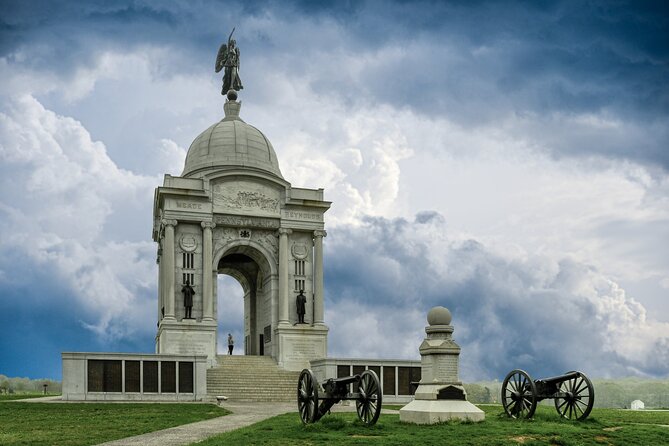
Stop 8: State of Pennsylvania Monument (Woman in White encounters)
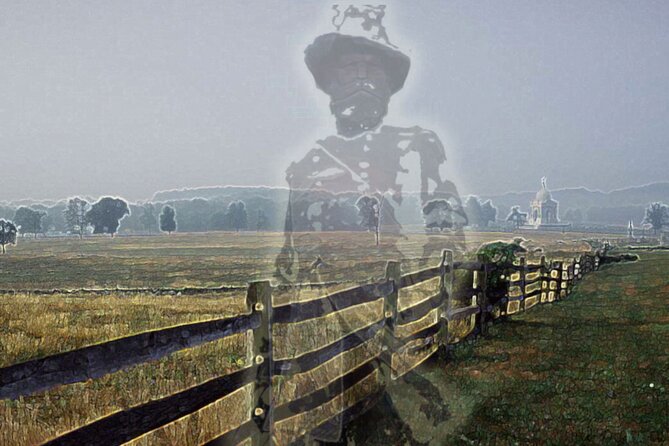
Here the audio mentions the Woman in White, with sightings described as sometimes reported at this location and more frequently at Spangler’s Spring (the tour suggests pausing and using a learn-more option for encounter details).
This is a good stop if you like classic haunting lore mixed with geography. It also gives you a break from driving—five to ten minutes where you can focus, look around, and let the story set the mood.
Stop 9: Eisenhower National Historic Site (battlefield then and retirement later)
At the Eisenhower National Historic Site, the tour connects Gettysburg to World War II history and to President Dwight D. Eisenhower’s later decision to retire there after his presidency.
Even if you’re here for ghost stories, this stop gives you a “time jump.” You’re not only hearing about 1863; you’re hearing how the site lived on into later American leadership and memory.
Admission isn’t included here as part of the audio tour. The audio can still guide you through the drive-by context.
Stop 10: Codori Farm (some of the worst carnage)
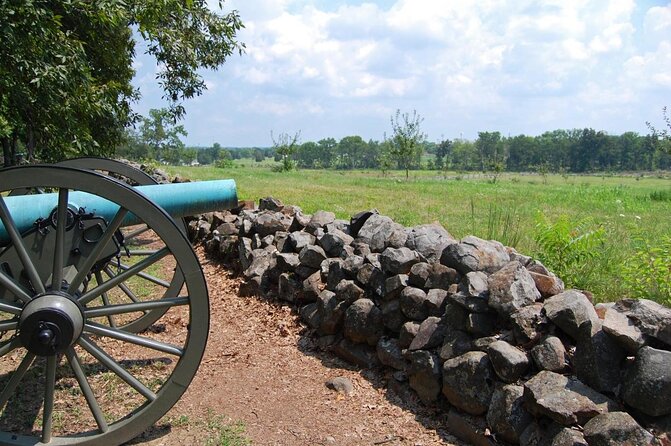
Codori Farm is positioned near where the audio describes heavy fighting and marching across the fields and stonewall area.
This is a heavier stop, emotionally, because it’s tied directly to the brutality of the battle landscape. The tour’s haunted framing doesn’t erase that; it sits on top of it.
Final drive context: West Confederate Avenue and the end marker
West Confederate Avenue runs along Seminary Ridge and the Confederate main battle line. As you drive, the audio emphasizes how peaceful the ground feels now compared with what happened there.
Your route ends at the 1st Delaware Infantry Monument / 2nd Delaware Volunteer Infantry Regiment area on Hancock Ave (the end point listed with the monument reference). If you’ve stayed on track, this ending gives you a satisfying “done” moment before you head back into town.
The biggest risks: audio gaps and navigation confusion
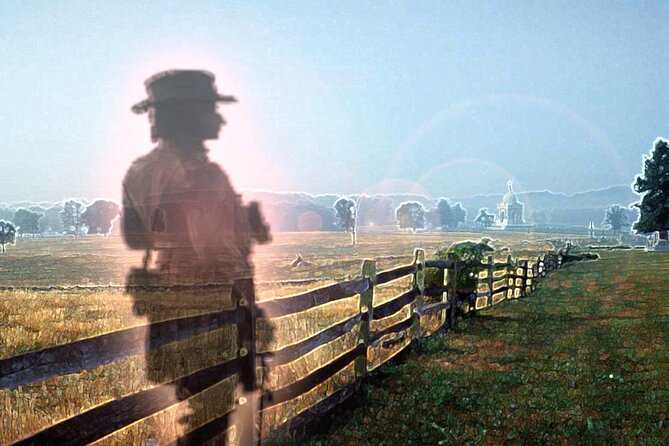
A chunk of the reviews you provided point to issues that you should take seriously before you buy.
When audio gets silent or out of sync
Some users reported broken gaps with silence and stories not matching the marker/destination. Usually, the likely causes are app setup problems, download timing, or speed/route mismatch.
The practical fix is simple: don’t rush. Follow the route line and speed cues closely so GPS triggers have a chance to line up.
When directions don’t make sense in Gettysburg
Multiple issues show up around unclear driving instructions—especially early in the tour when people start in the wrong direction or from a slightly different starting approach. If you want this to feel smooth, start at the exact Gettysburg Heritage Center meeting location and begin the tour from there inside the app.
When the map view is hard to read
Some users struggled with the map display in the app, including difficulty keeping the highlighted route visible. If your phone screen is dim or you’re relying on a dashboard mount, make sure visibility is good before you start.
Who this tour is best for (and who should pick something else)
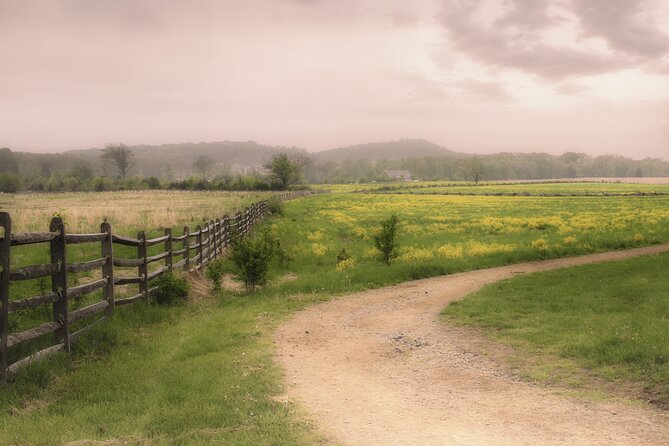
This is a great choice if you:
- Want flexible pacing and short stops rather than a group bus schedule.
- Like eerie storytelling but still want it anchored to real battlefield locations.
- Prefer a per-car price and a lifetime audio library rather than a one-time guided ticket.
You might want to think twice if you:
- Need turn-by-turn directions to be extremely simple and idiot-proof in a new city.
- Rely entirely on CarPlay for audio.
- Want a “history-only” experience with no ghost-story lean, or you’re traveling with kids who are sensitive to gore-themed storytelling.
Should you book it? My practical call
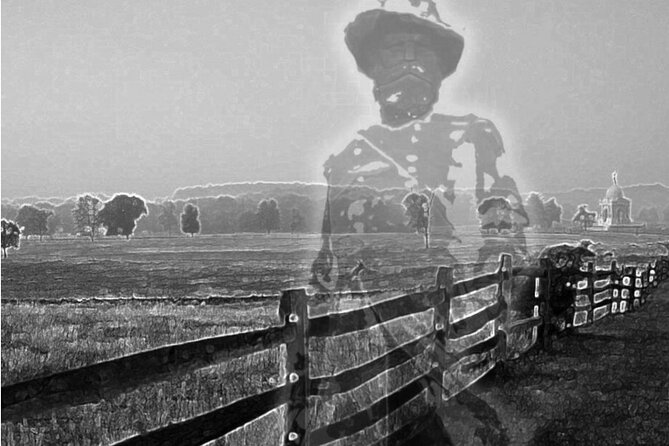
I’d book this if you’re visiting Gettysburg and want a different flavor than standard lecture-style tours. The combination of Mark Nesbitt’s narration, location-triggered audio, and offline operation makes it feel like you’re driving with a story partner, not sitting through a slideshow.
I’d also book it if you’re the type who likes to return. The lifetime access means you can revisit later when you’re ready to slow down, or when you want to explore sections again.
Just don’t treat it like a true nighttime ghost hunt. Plan your timing so you’re done before sunset, confirm your phone-to-car audio method ahead of time, and start from the intended Heritage Center point. If you do those three things, the tour’s value is strong for the price.
FAQ
How long does the Ghosts of Gettysburg self-guided driving audio tour take?
It typically takes about 1 to 2 hours to complete.
Where does the tour start and end?
It starts at Gettysburg Heritage Center, 297 Steinwehr Ave, Gettysburg, PA 17325, and it ends at the 1st Delaware Infantry Monument / 2nd Delaware Volunteer Infantry Regiment area on Hancock Ave in Gettysburg.
Does it work offline or do I need cellular signal?
Yes. It includes offline maps, and the audio is designed to work without signal after you download the tour content.
Is admission to stops included in the $14.99 price?
No. Attraction passes, entry tickets, or reservations are not included. Some stops listed are marked as free, while others note admission not included.
Is this tour available at night?
No. The battlefield roads are open from 30 minutes before sunrise to 30 minutes after sunset. It’s not a night activity, and parts close at sunset.
How much does it cost and is it per person?
It costs $14.99 per group for up to 4 people.
What devices and setup are recommended for using the app and navigating?
The tour recommends an iPhone running iOS 15 or later, an Android device version 9 or later, or an iPad/tablet with GPS and cellular connectivity. For audio, you can connect via Bluetooth, USB, or AUX.