REVIEW · GETTYSBURG
Civil War Battlefields Self-Guided Audio Driving Tour Bundle
Book on Viator →Operated by Action Day Trips · Bookable on Viator
Five battlefields, one phone, zero bus drama.
This audio driving bundle turns you into your own guide across Gettysburg, Antietam, Vicksburg, Shiloh, and Yorktown, with hands-free stories that play as you move stop to stop. I especially like that the app works offline with navigation, so you are not stuck hunting signal while you are trying to take in views like Oak Ridge Observation Tower or the bridge at Antietam.
One big consideration: the app is designed to start from the correct beginning point. If you begin the tour from the wrong place, it can get confused and your day can feel more like improvising than sightseeing.
In This Review
- Key Highlights You’ll Actually Notice
- A Self-Guided Road Trip Built Around Time, Not Tours
- Day 1 Gettysburg: From Heritage Center to Lincoln’s Graveyard
- Start with context at the Gettysburg Heritage Center
- McPherson’s Ridge and the idea of battle momentum
- The Railroad Cut and strategy behind the scenery
- Eternal Light Peace Memorial: a symbolic detour that still fits
- Oak Ridge Observation Tower: the view you’ll remember
- 11th Pennsylvania Monument and Battlefield Sallie
- Day 1 closes with uncertainty
- Second day begins: North Carolina Memorial to Longstreet’s vantage
- Optional detour: Eisenhower National Historic Site
- Warfield Ridge Observation Tower and the third-day setup
- Little Round Top is not accessible, but the story still works
- Devil’s Den sharpshooters and the Wheat Fields
- Peach Orchard to Trostle Farm: the war enters people’s kitchens
- Hospitals, exhaustion, and the weight of Pennsylvania
- Spangler’s Spring, Culp’s Hill Tower, and East Cemetery Hill
- Pickett’s Charge and the high water mark
- End at the National Cemetery and the Gettysburg Address
- Day 2 Antietam: Bloody Lane, Burnside Bridge, and the long day of consequences
- Mansfield Monument: leadership hits hard early
- West Woods Trail and a forest full of traps
- Mumma Farm and the burning retreat
- Irish Brigade Monument and Bloody Lane
- Piper Farm: headquarters in the middle of chaos
- Burnside Stone Bridge: 13,000 vs 500 and the cost of a bottleneck
- Sideburns and other details that make it human
- Optional stops that add depth
- Day 3 Vicksburg: memorials, mines, gunboats, and a city-sized siege
- Memorial Arch and the bittersweet reunion idea
- Minnesota, Michigan, and Illinois: states as characters
- Logan’s Approach: an engineered tactic you can picture
- Old Abe and the West Wisconsin story
- The African American Monument: fighting with unequal treatment
- Grant and the US Navy Monument: the siege as teamwork
- Vicksburg National Cemetery: second burials and wooden markers
- Fort Hill and why no land battle happened there
- State memorials through Missouri to Kentucky
- Day 4 Shiloh: monuments, Grant’s Last Line, and a church story with two versions
- Iowa State Monument: symbolism you can read from the car
- Grant’s Last Line: dusk and heavy guns
- Shiloh Church and Cemetery: replica + original storytelling
- Day 5 Yorktown: Revolutionary War sites plus a Civil War cemetery surprise
- Moore House and Washington’s Headquarters
- French artillery: the “support” story that feels physical
- Yorktown Victory Monument and the big closing image
- Price and Value: $39.99 per Group That Adds Up Fast
- Practical Tips So Your Audio Day Goes Smooth
- Should You Book This Battlefields Audio Bundle?
- FAQ
- How long does each day’s driving audio tour take?
- Is this a guided tour with a person?
- Do I need cellular service during the tour?
- Where do I start?
- Can I start and pause whenever I want?
- Do I have lifetime access?
- What admission fees are not included?
- How many people can use one purchase?
- What do I need on my phone to use the audio?
Key Highlights You’ll Actually Notice

- Location-triggered audio keeps you moving and reduces stop-and-start fumbling
- Big viewpoints are built in, including Oak Ridge Observation Tower and Longstreet Observation Tower
- Little Round Top is handled smartly: you cannot access it right now, but you can still listen and view pictures
- You get “day-by-day battle flow” at Gettysburg, Antietam, and Vicksburg instead of random facts
- Major Civil War sites mix with Yorktown for a solid, broader American timeline
- Lifetime access means you can repeat the route on future trips without repurchasing
A Self-Guided Road Trip Built Around Time, Not Tours

This bundle is five separate driving audio tours. Each one follows a set route through a major battlefield area, with story stops that trigger based on your location. You can start when you like within the opening hours, pause anytime, and resume later. That freedom matters because battlefield driving takes mental space. Some stops are quick, and some are the kind you want to sit with for a bit.
Cost-wise, it is priced per group (up to 4), not per person. That is what makes it feel like good value. You are paying for the app access and route experience, not for a guide’s seat on a bus.
You will want a phone with good GPS. The app can also use your car audio system via Bluetooth, USB, or AUX, which helps a lot when you are driving the longer segments (especially Gettysburg at 19+ miles).
You can also read our reviews of more tours and experiences in Gettysburg.


Day 1 Gettysburg: From Heritage Center to Lincoln’s Graveyard
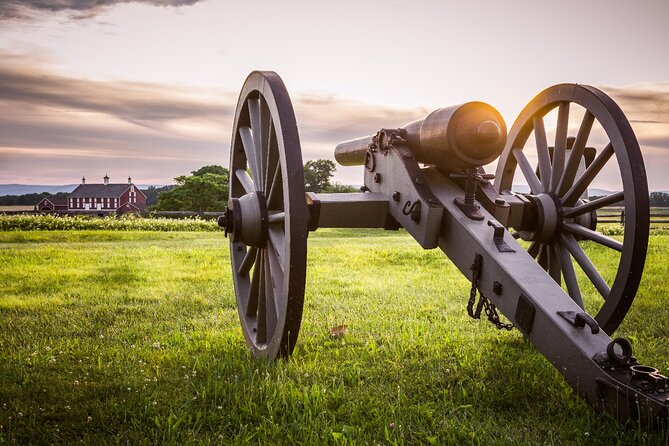
Gettysburg is the “main character” day. The drive is about 19+ miles per tour and typically takes 1–2 hours with 60+ audio stories. Plan on at least that much if you actually stop for the viewpoints. The start is flexible: you can begin at the Gettysburg Heritage Center or the National Park Visitor Center. The Heritage Center admission is not included, but the audio route itself guides you through the official Auto Tour pattern.
Start with context at the Gettysburg Heritage Center
If you start at the Heritage Center, give it enough time to get the big picture before you start driving. Gettysburg hits harder when you know what you are looking at. A lot of the later stops make more sense once you have the overview.
McPherson’s Ridge and the idea of battle momentum
Your first driving story places you in the dawn hours at McPherson’s Ridge. This is where the Union and Confederate armies clash and where generals move regiments into position. The audio framing is useful because it helps you read distance and elevation like it matters. At Gettysburg, it does.
The Railroad Cut and strategy behind the scenery
Next up is the Railroad Cut, a site tied to early-day fighting. The audio focuses on how commanders thought through terrain and movement. You are not just hearing names; you are getting a sense of why a place mattered.



Eternal Light Peace Memorial: a symbolic detour that still fits
You will pass the Eternal Light Peace Memorial, which uses Maine granite for the base and Alabama limestone for the pillar to symbolize reunification. It is a quiet moment in the middle of a day full of war talk—and it sets a tone that Gettysburg often carries: sorrow mixed with memory.
Oak Ridge Observation Tower: the view you’ll remember
This is one of the most satisfying stops in the whole set. From Oak Ridge Observation Tower, you get panoramic views of the fields that saw brutal fighting. The audio “time jump” helps too: it revisits first-day fighting, but by afternoon. That’s the kind of story structure that makes the geography click.
11th Pennsylvania Monument and Battlefield Sallie
You will also pass the 11th Pennsylvania Volunteer Infantry Regiment Monument, and yes—there is a dog sculpted on the base. The story connects that mascot, Battlefield Sallie, to the role of drummers and military music. It is a small detail, but it gives you a more human sense of how regiments operated, not just how they fought.
Day 1 closes with uncertainty
As evening descends, you hear how soldiers lost ground and what generals tried next. This is where the audio stops feel less like trivia and more like a narrative of desperation and decision-making.
Second day begins: North Carolina Memorial to Longstreet’s vantage
You drive past the North Carolina Memorial and Virginia Monument, then reach Gettysburg Auto Tour Stop 5, where the second day starts. You get a renewed focus on strategy and mobilization.
Longstreet Observation Tower comes next, and it is another “stand here, look there” moment. It gives you the perspective you need before you hear about the next Confederate push.
Optional detour: Eisenhower National Historic Site
There is an optional stop off the main auto route for Eisenhower National Historic Site, which overlooks the battlefield. Even if you keep the detour short, it is a good reminder that Americans kept returning to this ground for generations.
Warfield Ridge Observation Tower and the third-day setup
As you go forward, Warfield Ridge Observation Tower cues more second-day action and the stage set for attack. The audio keeps returning to how defenders and attackers prepared—less chaos, more planning.
Little Round Top is not accessible, but the story still works
Little Round Top is currently inaccessible due to construction. The tour compensates by letting you listen to the narrations and view battle pictures tied to the location. It is not the same as standing there, but it keeps you from losing the storyline.
Devil’s Den sharpshooters and the Wheat Fields
You will hear about Confederate sharpshooters positioned among volcanic rocks at Devil’s Den, picking off soldiers from cover. Then the route moves through the Wheat Fields, including the strange tale of Union soldier J. J. Purman. Those story choices make the battlefield feel lived-in rather than just mapped.
Peach Orchard to Trostle Farm: the war enters people’s kitchens
The Peach Orchard and Abraham Trostle Farm are where the audio gets personal. Trostle family dinner was still on the table when fighting broke out and they fled. That kind of detail is brief, but it stays with you because it turns history into something close to home.
Hospitals, exhaustion, and the weight of Pennsylvania
You continue past Plum Run and the George Weikert Farm, where the Weikert’s farm became a battlefield hospital after evacuation. Then comes the State of Pennsylvania Monument, tied to nearly 35,000 Pennsylvania soldiers—and the audio stresses they were fighting for their state, not an abstract idea.
Spangler’s Spring, Culp’s Hill Tower, and East Cemetery Hill
You go deeper into the woods at Spangler’s Spring, then toward Culp’s Hill Tower. The audio frames it as a strategic outpost with clashes on both sides. East Cemetery Hill follows, with nightfall and a nighttime raid that becomes a moment when the Union came closest to losing. If you only remember one Gettysburg “turning point,” that emotional arc is it.
Pickett’s Charge and the high water mark
Finally, you reach the infamous Pickett’s Charge area. You get the story of the farthest Confederate advance, the high water mark, and the view down the slope. This is one of those drives where the audio helps you understand that even movement across open ground was a deliberate gamble.
End at the National Cemetery and the Gettysburg Address
The last stop is the National Cemetery, honoring the fallen Union soldiers. The audio also ties in Lincoln’s Gettysburg Address and the idea that the speech stayed relatively short so it would not steal attention from the soldiers.
Day 2 Antietam: Bloody Lane, Burnside Bridge, and the long day of consequences
Antietam National Battlefield is about 9+ miles and typically 1–2 hours, with 38+ audio stories. Admission for the battlefield is not included. The start is at Antietam National Battlefield along Antietam Creek in Sharpsburg, Maryland.
Mansfield Monument: leadership hits hard early
You begin with the Mansfield Monument. The story centers on Major General Joseph Mansfield, who scouts a cornfield and is mortally wounded. It is a brutal reminder that battles can turn on a single moment of command.
West Woods Trail and a forest full of traps
West Woods follows. The audio focuses on thousands of Union soldiers charging into the forest and encountering Confederate cannons waiting nearby. The tone shifts from advantage to desperation quickly, which is exactly what the day becomes.
Mumma Farm and the burning retreat
At Mumma Farm and Cemetery, Confederate troops retreat past this point and light the place on fire so the Union cannot use it for cover. The audio also notes the Mumma family had already fled and returned later to find ashes.
Irish Brigade Monument and Bloody Lane
Then comes the Irish Brigade Monument, tied to the Bloody Lane. This is one of the stops where I would call the views and positioning especially powerful. You are not just hearing about Irish-American sacrifice—you are given the “why here” behind the fight.
Piper Farm: headquarters in the middle of chaos
Piper Farm is next, used by Confederate generals as headquarters while attacks and defensive lines were planned. It is a good counterbalance to all the action scenes. War is also paperwork, waiting, and deciding.
Burnside Stone Bridge: 13,000 vs 500 and the cost of a bottleneck
The Burnside Stone Bridge story is one of the most intense segments in the entire bundle. The audio sets up 13,000 Union soldiers trying to take the bridge against about 500 Confederates holding it. It highlights how bodies pile up on the bridge during the defense.
If you prefer lighter days, you might still want to listen—but you should be ready for an emotional stop. Also, since the audio mentions sounds like drums and war cries, try to find a safe parking spot and listen at a sensible pace.
Sideburns and other details that make it human
There is even a fun fact stop about Burnside Stone Bridge and the origin of the term sideburns. It is brief, but it breaks the heaviness without wiping it away.
Optional stops that add depth
You can also take optional detours to:
- Hawkins’ Zouaves Monument (a near breakthrough that could have changed the war’s rest of the outcome)
- Tolson’s Chapel and School, built by Black Americans one year after the war ended
- Good-Reilly House (called an older house in Sharpsburg)
- Mount Calvary Cemetery, where both Confederate orders and Union field hospital use are mentioned
- Antietam National Cemetery as a final optional stop, with 4,776 Union remains and about 200 from later conflicts
Day 3 Vicksburg: memorials, mines, gunboats, and a city-sized siege
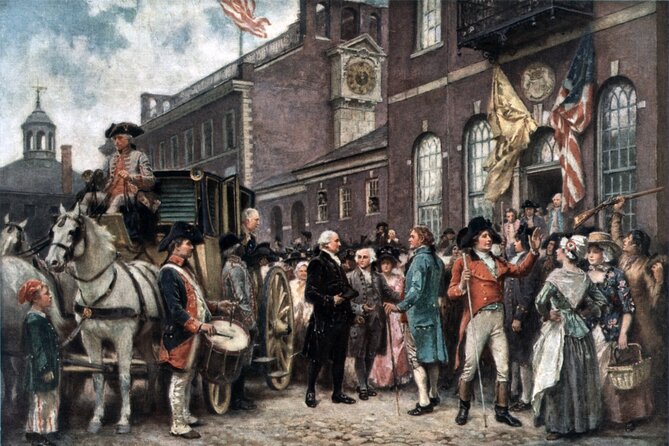
Vicksburg National Military Park is about 15 miles and typically 1–2 hours with 44+ audio stories. Park admission is not included here either, and it is listed at $20 per booking.
Memorial Arch and the bittersweet reunion idea
You start with the Memorial Arch, built after a 1917 veterans reunion where former soldiers from both sides sat side by side. It is a stark contrast to the battlefield logic you hear later, and that contrast is the point.
Minnesota, Michigan, and Illinois: states as characters
You pass memorials for Minnesota, Michigan, and Illinois. The Minnesota Memorial includes a statue of peace with a sword and shield laid down. Michigan’s story includes Captain Samuel DeGolyer being mortally wounded nearby on May 28. Illinois’s monument is described as a temple-like memorial with names of Illinois soldiers.
Logan’s Approach: an engineered tactic you can picture
Logan’s Approach is where the audio gets technical in a way that still feels human. Union engineers dug a trench to a Confederate fort and placed a mine loaded with 2,200 pounds of gunpowder. It’s hard to imagine unless you hear it framed like a step-by-step plan.
Old Abe and the West Wisconsin story
The Wisconsin Memorial brings in Old Abe, described as a real war eagle and an official mascot for the 8th Wisconsin Infantry. The story even notes honorable discharge in 1864 and that Old Abe witnessed 42 battles. That is the kind of specific detail that makes a memorial feel less generic.
The African American Monument: fighting with unequal treatment
The African American Monument story is explicit about segregation and unfair pay and equipment, while still stressing the soldiers fought for the Union and freedom. It’s sobering, and it matters that the audio does not soften it.
Grant and the US Navy Monument: the siege as teamwork
Ulysses S. Grant is a central figure here, and the audio also emphasizes that gunboats mattered. The US Navy Monument is tied to the idea that Grant could not have succeeded without the Navy, with references to sneaking past defenses and carrying Grant’s army across the Mississippi at Bruinsburg.
Vicksburg National Cemetery: second burials and wooden markers
Vicksburg National Cemetery is described as the final resting place for 17,000 Union soldiers, and the audio explains why it became a second burial ground for many. Early graves were close to where men fell, sometimes marked with simple wooden crosses, later replaced with proper government efforts.
Fort Hill and why no land battle happened there
Fort Hill is presented as a strong lookout point with open land and clear river views, where warships had to slow down due to a bend. The audio notes no land battle took place there because it was so secure.
State memorials through Missouri to Kentucky
Missouri’s monument represents a state divided, with numbers given for Union and Confederate service. Mississippi and Alabama monuments include women as state protectors or peace/reconciliation symbols. Kentucky’s monument is especially striking because it depicts both Lincoln and Confederate President Jefferson Davis, both described as Kentucky-born.
Day 4 Shiloh: monuments, Grant’s Last Line, and a church story with two versions
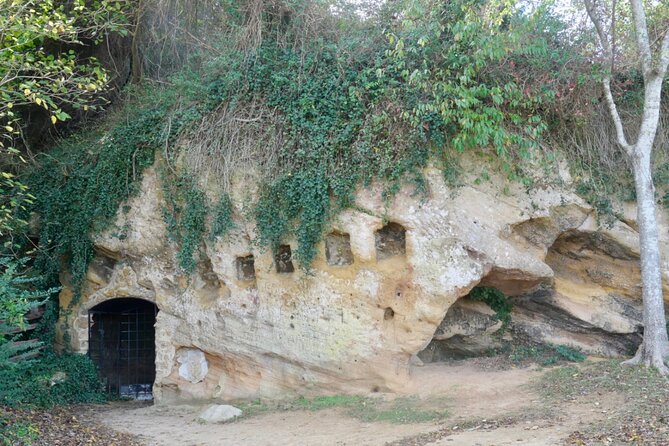
Shiloh is shorter driving—about 6 miles and 1–2 hours with 34+ audio stories. You start at the Shiloh Visitor Center (1055 Pittsburg Landing Road). Here, stops are mostly free in terms of admission tickets.
Iowa State Monument: symbolism you can read from the car
The Iowa State Monument includes an eagle caught mid-flight and a bronze statue of Fame holding a quill pen, carving an elegy for posterity. It’s a lot of symbolism for a relatively small pull-off, but the audio makes it understandable.
Grant’s Last Line: dusk and heavy guns
Grant’s Last Line is described with siege guns dragged by men (usually requiring oxen), plus the gathering of 20,000 troops. The audio frames it as the last attempt to hold back the Confederate surge.
Shiloh Church and Cemetery: replica + original storytelling
You turn into the parking lot for Shiloh Church and Cemetery. The audio explains there is a modern church and an authentic replica of the original. The replica is a one-room log cabin, and the audio also notes General Sherman and his men camped around it. This is one of the few stops where the audio helps you understand why two structures exist.
Day 5 Yorktown: Revolutionary War sites plus a Civil War cemetery surprise
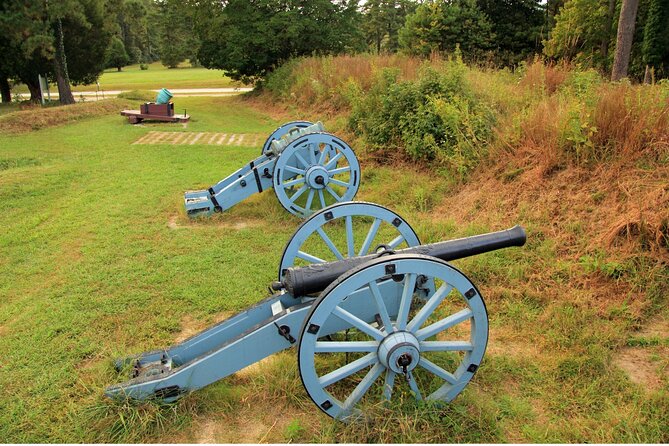
Yorktown ends the bundle. You start outside Yorktown Battlefield Visitor Center at 1000 Colonial National Historical Parkway. The drive is about 10+ miles and 1–2 hours with 20+ audio stories.
Moore House and Washington’s Headquarters
You hear how Cornwallis and Washington sent representatives to the Moore House and that the British offered total surrender to the French and American coalition. Then the route moves to Washington’s Headquarters at Yorktown, where plans for the final battle of the American Revolution were drawn.
French artillery: the “support” story that feels physical
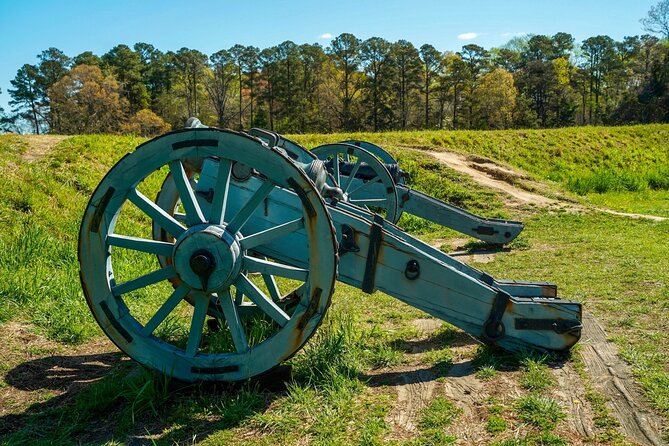
French Artillery Park and the Grand French Battery follow, with the Grand French Battery described as the largest concentration of French artillery during the Battle of Yorktown. If you want more than just the main duel, these stops give you the wider mechanics of victory.
Yorktown Victory Monument and the big closing image
You finish at the Yorktown Victory Monument, conceived soon after Cornwallis’s surrender. But there is one last twist: Yorktown National Cemetery is included, and the audio notes it is actually a Civil War burial ground. It’s a neat reminder that the past keeps layering on itself.
Price and Value: $39.99 per Group That Adds Up Fast
At $39.99 per group (up to 4), this is the kind of deal that can work for almost any road-trip budget—especially when you compare it to the cost of doing five separate guided tours.
What you should watch:
- Gettysburg Heritage Center admission is not included.
- Antietam and Vicksburg park admission are not included, listed at $20 per booking for each.
- Most other stops are marked as admission ticket free in the route.
Still, even with the two extra $20 admissions, the math is usually favorable when you split among up to four people. You also get lifetime access, so the value is not just for one weekend. You can come back later and redo a day when you want a different pace.
Also, the bundle’s biggest value is not savings. It is flexibility. You can spend 10 minutes at a monument when you want to move, or 20 minutes at a tower when you want to stare at the terrain and let the story land.
Practical Tips So Your Audio Day Goes Smooth
- Download before you start. The setup says you must download the tour while in strong wifi/cellular, then it works offline.
- Start from the correct starting point. If you start somewhere else, the app may not line up your audio with your location.
- Use your car audio if possible. Bluetooth, USB, or AUX can make driving easier and safer.
- Give the towers extra time. Oak Ridge and Longstreet are short stops on paper, but the views are the point.
- Be ready for the emotional stops. Burnside Bridge at Antietam and the nighttime action at East Cemetery Hill are intense.
- If you want statues, adjust expectations. One review note said Clara Barton was represented with a plaque rather than a statue. You may see similar memorial-style markers across the route.
Should You Book This Battlefields Audio Bundle?
Book it if you like independence and want a serious route through five major sites without paying for guided-tour time slots. It is especially good for families or mixed groups because the format is hands-free and you can pause for photos, breaks, and side stops while staying on the storyline.
Skip it (or reconsider) if you know you will not want to use an app, or if you plan to start each day from whatever parking spot looks best. This bundle works best when you start the tour where it expects and let the location-based audio do its job.
If you want a fast way to get meaningful battlefield context—paired with real viewpoints and narrative structure—this one is worth your $39.99 per group.
FAQ
How long does each day’s driving audio tour take?
Each tour is listed as about 1–2 hours, depending on the day and route length. Gettysburg is about 1–2 hours for a 19-mile+ route, Antietam about 1–2 hours for a 9-mile+ route, Vicksburg about 1–2 hours for a 15-mile route, Shiloh about 1–2 hours for a 6-mile route, and Yorktown about 1–2 hours for a 10-mile route.
Is this a guided tour with a person?
No. This is self-guided. There is no one meeting you at the start.
Do I need cellular service during the tour?
No. The bundle includes offline maps, and it works without cellular or wifi after you download the tour.
Where do I start?
You start at the day’s stated starting point (for example, Gettysburg Heritage Center or the National Park Visitor Center for Day 1, the Shiloh Visitor Center for Day 4, and Yorktown Battlefield Visitor Center for Day 5). You follow the audio cues to reach each stop.
Can I start and pause whenever I want?
Yes. The app is designed so you can start anytime within the opening hours and pause anywhere, then resume later.
Do I have lifetime access?
Yes. The access is described as new and lifetime with no expiry, so you can use it on any trip and as many times as you want.
What admission fees are not included?
Vicksburg National Military Park has a listed admission fee of $20 per booking, and Antietam National Battlefield also lists $20 per booking. Gettysburg Heritage Center admission is also noted as not included.
How many people can use one purchase?
It is priced per group for up to 4 people.
What do I need on my phone to use the audio?
You download the Action’s Tour Guide App, enter the password sent by email/text, and start the tour in the app once you are onsite. You can connect your phone to your car stereo via Bluetooth, USB, or AUX for audio playback while driving.