Dark history feels heavier when you walk it.
This Auschwitz-Birkenau trip is interesting because you get transport and entry handled up front, then you have time inside to explore with a steadier pace. You’ll also start with an English-speaking leader who helps you understand the layout before you’re left to walk and reflect.
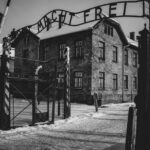
I like two things most: first, the Auschwitz I setup starts with a guided pass under the gate inscription Arbeit Macht Frei, so you know where you are and what you’re seeing. Second, the experience stays practical—after that initial help, you’re given tickets to move at your own pace through both Auschwitz I and Auschwitz II-Birkenau.
One possible drawback: because your time on site includes self-paced walking (and sites can affect timing), you should expect a long day and be prepared for schedule shifts depending on the Auschwitz Museum.
In This Review
- Key highlights you’ll actually feel on the ground
- How the ride from Krakow shapes the day
- Meeting at Pawia 18B and what’s included (and what isn’t)
- Auschwitz I: getting bearings quickly before you go solo
- Walking Auschwitz I at your own pace (and why that’s not a cop-out)
- Birkenau (Auschwitz II): scale, design, and why your eyes will struggle
- Timing, regrouping, and the “7 to 8 hours” reality
- Price and value: is $38.05 a good deal here?
- Who this works best for (and who should consider another option)
- Should you book Auschwitz-Birkenau from Krakow with this tour?
- FAQ
- What does this tour include?
- Where do I meet for the tour?
- What time does the tour start?
- How long is the Auschwitz-Birkenau visit?
- Is the visit guided or self-guided?
- Do I visit both Auschwitz I and Birkenau?
- What kind of vehicle is used from Krakow?
- How many people are in the group?
- Is the tour physically demanding?
- Can the schedule change?
Key highlights you’ll actually feel on the ground
- English-speaking tour leader intro to the layout before you enter on your own
- Auschwitz I gate experience with context right away (Arbeit Macht Frei)
- Independent walking time through both camps for slower, reflective viewing
- Birkenau setting and scale explained through what the camp was built for and how it worked
- Small-group feel with a maximum of 30 people, plus a smooth return to Krakow
- Door-to-door convenience from the Pawia 18B meeting point in Krakow
How the ride from Krakow shapes the day
This is a true day trip in the real sense: you leave Krakow and spend a good chunk of time on the road before you ever reach the camps. Expect about 1.5 hours each way between Krakow and Oświęcim, where the memorial sites are located. The group travels in a comfortable, air-conditioned minivan or bus, which matters more than it sounds when you’ll later do a lot of standing and walking.
A small practical bonus: you can bring or request a lunchbox, and there’s a brief break on arrival so you can grab coffee or stretch your legs. That break isn’t there to make the day more fun; it’s there to help you arrive steadier and less rushed. When you’re about to face some of the world’s most difficult history, being physically comfortable helps you pay attention.
There’s also a reason the tour start time matters. This one begins at 2:30 pm, which means you likely won’t be doing the sites at the very start of the day. That can affect light and crowding, but it also gives you a buffer in the morning for Krakow. If you’re already planning a day in the city, this timing can fit neatly.
You can also read our reviews of more tours and experiences in Krakow.

Meeting at Pawia 18B and what’s included (and what isn’t)
You meet at Pawia 18B, 31-154 Kraków, Poland. The end point is back at the same meeting place. That simplicity helps. You’re not playing transportation roulette in unfamiliar areas after a heavy day.
The tour includes transportation, entry tickets, and assistance of a tour leader. What it does not promise is a full inside-guide narration for every single moment. The structure is: you get help with entering and understanding the layout, then you explore independently within the memorial sites.
The group is capped at 30 travelers, which can make it feel easier to move as a cluster at the beginning and to regroup after. Still, once you’re inside Auschwitz I and Birkenau, you’ll be walking at your own pace, and that means you’ll naturally create your own “schedule” within the time you have on site.
English language is included for the tour leader at the start. That’s important because the way the site is laid out can be confusing if you arrive with only guesswork. A good orientation at the front can turn a confusing walk into something you can actually process.
Auschwitz I: getting bearings quickly before you go solo
Auschwitz I is the smaller of the two main parts of the complex, but it’s often the first place your brain starts trying to make sense of what happened. Here’s where the initial guided segment does a lot of work for you.
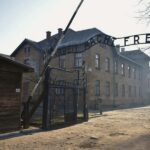
You’ll be met by a professional guide and led through the infamous gate at Auschwitz I, with the inscription Arbeit Macht Frei. That moment matters because you’re not just viewing artifacts—you’re stepping into a place designed to control and dehumanize. The guide’s role here is practical and emotional at the same time: setting the frame so you’re not wandering without understanding.
You’ll also learn how the site began and why it grew. Auschwitz was established in 1940, reusing old Polish army barracks. It started by holding Polish POWs and political prisoners. Later, as the system expanded, more than 1.5 million prisoners passed through, including Jews, Poles, Italians, and French. About 1.1 million were exterminated, making Auschwitz the largest genocide in human history.
One practical note: even if you’ve read about Auschwitz before, the value of this orientation is that it connects names and numbers to real locations. You can stand in front of preserved structures and finally understand what they were for.
Walking Auschwitz I at your own pace (and why that’s not a cop-out)
After the guided entry and orientation, you’re given entry tickets to walk through the camps independently. That choice is a key part of the experience. It gives you control over your pace, and it lets you decide how long you want to linger in specific areas.
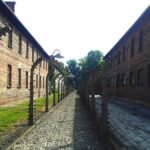
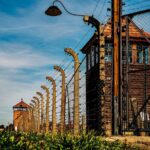
In Auschwitz I, you’ll be able to see preserved barracks, original fences, watchtowers, and museum exhibitions. These pieces aren’t just “stops” on a list. They’re part of a layout that repeats certain patterns: confinement, surveillance, and the cold logic of administration. Walking on your own helps because you can slow down when a detail catches your eye, or move on when you need space.
A self-paced visit can also be emotionally uneven. Some people want to move quickly through. Others need time in quiet corners. Either way, the independent format respects that you’re not on a performance timeline. You’re processing.
If you want one way to make this work: pick a few areas you want to understand, not everything at once. With the freedom to roam, you’ll do better if you mentally choose your priorities rather than trying to “finish the camp.”
Birkenau (Auschwitz II): scale, design, and why your eyes will struggle
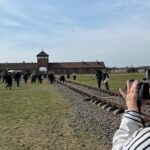
Birkenau, also known as Auschwitz II and located in Brzezinka, is larger and often more overwhelming. This isn’t just because of size. It’s because Birkenau was designed for mass imprisonment and systematic extermination.
Before you go far, you’ll get the essential context: Birkenau began as a camp for Soviet POWs, and then it became a concentration camp for prisoners of various nationalities, with a central role in the extermination of Jews. Construction began in October 1941, using slave labor on the site of the displaced and largely destroyed village of Brzezinka, about three kilometers from Auschwitz I.
The camp was designed to hold up to 125,000 prisoners at a time. Many were condemned from the outset to die from cold, hunger, and disease—conditions created and enforced as part of the system. In other words, Birkenau is not simply a site of ruins. It’s evidence of a planned machine.
You’ll spend time exploring Birkenau with your self-guided tickets. You’ll see how the physical layout contributes to the horror: the distances, the open spaces, and the arrangement that made people easy to control and hard to escape.
One consideration here is emotional and physical. Birkenau can involve more walking over uneven or exposed ground compared with Auschwitz I. Since the tour is listed for moderate physical fitness, wear shoes you’re confident in and plan for a long stretch of moving.
Timing, regrouping, and the “7 to 8 hours” reality
The full experience runs about 7 to 8 hours. The exact flow can shift depending on the schedule at the Auschwitz Museum. That’s not something you can control, but it’s helpful to know you’re not tied to a perfectly predictable clock.
After your time on site, you rejoin your group and return to Krakow. On the way back, there’s an added cushion: you don’t get pushed out immediately. You’ll have at least 15 minutes for a bookstore stop or simply to take a break, then you drive back about 1.5 hours to your meeting point in Krakow.
That book-and-break window is small, but useful. For many people, the visit creates questions they want to answer afterward. If you want something to take home—either a book for context or just a quiet place to reset—this is your chance.
Price and value: is $38.05 a good deal here?
At $38.05 per person, this is priced like a practical day trip rather than a premium private experience. And given what’s included, it can be good value if you want structure without paying for a full inside-guided tour for the entire duration.
What you’re getting for the money:
- Round-trip transportation from Krakow
- Entry tickets to the memorial
- An English-speaking tour leader to help you enter smoothly and understand the layout
- A small group size (maximum 30), plus help regrouping afterward
What you’re not getting:
- A continuously guided, step-by-step explanation during every moment inside the memorial
That trade-off can actually be the sweet spot for many people. You get clarity at the start (when orientation matters most), then you control the rest of the visit. If you’re the type who needs space to process, the structure fits.
If you’re someone who wants constant narration, you might feel the self-paced portion is too quiet. But the tour is designed around freedom of pace, and that’s part of the experience’s value.
Who this works best for (and who should consider another option)
This tour fits best if you want:
- A guided orientation that makes the site easier to follow
- Independent time once you’re there
- A direct Krakow connection without stressful logistics
It’s also a good fit if you’re comfortable reading museum signs and interpreting exhibits yourself, with the guide’s layout help as a starting point.
I’d think twice if you strongly need continuous interpretation for every area, because the plan is oriented toward self-walking inside the memorial grounds. Also, because the day is long and you’ll be on your feet, plan for comfort if you have mobility limits. The listing calls for moderate physical fitness, and Birkenau especially asks for solid walking stamina.
Should you book Auschwitz-Birkenau from Krakow with this tour?
Yes—if you want a straightforward, well-organized way to visit that doesn’t drown you in logistics. I especially like that you’re not dropped in with zero orientation. The combination of an English-speaking intro and time to explore on your own helps you avoid feeling rushed while still having structure.
Book this option if you:
- Are starting in Krakow and want transport plus tickets handled
- Prefer to control your own pace inside memorial sites
- Appreciate a small-group setup and a reliable return to the same meeting point
Consider another format if you need continuous guiding throughout the grounds. But if you’re ready for self-paced walking with the right front-end help, this day trip is a strong, practical choice.
FAQ
What does this tour include?
It includes transportation from Krakow, entry tickets, and the assistance of a tour leader.
Where do I meet for the tour?
The meeting point is Pawia 18B, 31-154 Kraków, Poland.
What time does the tour start?
The start time is 2:30 pm.
How long is the Auschwitz-Birkenau visit?
The full experience runs about 7 to 8 hours.
Is the visit guided or self-guided?
You get help and guidance at the start, including explanations of the layout, and then you walk through the camps independently with entry tickets.
Do I visit both Auschwitz I and Birkenau?
Yes. You’ll visit Auschwitz I and then continue to Auschwitz II-Birkenau.
What kind of vehicle is used from Krakow?
You travel in a comfortable, air-conditioned minivan or bus.
How many people are in the group?
The maximum group size is 30.
Is the tour physically demanding?
The tour is described as suitable for moderate physical fitness.
Can the schedule change?
Yes, the time may change due to scheduling at the Auschwitz Museum.