REVIEW · KRAKOW
Self-Guided Tour of Auschwitz-Birkenau Museum with Transportation
Book on Viator →Operated by Krakow Tours by KrakowDirect · Bookable on Viator
Auschwitz asks for your attention, on your terms. You get round-trip transfers from central Krakow and skip-the-line entry for Auschwitz I and Auschwitz II-Birkenau. The self-paced format lets you linger in silence, but your experience can feel rushed if timing runs tight once you arrive at Birkenau.
This tour runs about 7 hours, starting at 2:30 pm from the Radisson Blu Hotel (Floriana Straszewskiego 17) and ending back at the same meeting point. You’ll travel with a small group (maximum 30), hear the story through headset audio at Auschwitz I, and watch a documentary, The liberation of Auschwitz, during the ride. Food and drinks aren’t included, so plan around that and bring patience—this is a heavy day.
In This Review
- Key things to know before you go
- Round-trip transfer from Krakow: when timing makes or breaks the day
- Stop 1: the Judenrampe memorial and why it’s worth your 30 minutes
- Auschwitz I with headset audio: walking through the gate and into the main camp
- Auschwitz II-Birkenau at Brzezinka: a bigger camp and a shorter visit
- The “self-guided” part: what you actually control
- Price and value: is $40.51 a good deal?
- What to pack and how to pace yourself emotionally
- Should you book this Auschwitz-Birkenau self-guided tour?
- FAQ
- How long is the tour?
- What time does it start?
- Where is the meeting point in Krakow?
- Is transportation included?
- Is the tour in English?
- Are entrance tickets included?
- Do I get a live guide?
- What stops are included?
- Is food included?
- Can I cancel for a full refund?
Key things to know before you go
- Round-trip transfers from Krakow keep logistics simple and reduce stress on a day with strict site rules.
- Skip-the-line tickets for both sites help you spend time inside the memorial grounds instead of waiting in queues.
- Headset audio at Auschwitz I means you can hear your guide clearly while still moving at your own speed.
- A short memorial stop at the Judenrampe gives you a lesser-known piece of the deportation story between Auschwitz I and Auschwitz II.
- Birkenau is time-sensitive: the visit is shorter than Auschwitz I, so being on time for shuttles matters.
- Small group size (up to 30) usually makes it easier to find your rhythm without getting swallowed by a crowd.
Round-trip transfer from Krakow: when timing makes or breaks the day
The practical win here is that you don’t have to figure out transport on your own. You’re picked up from the Radisson Blu Hotel in Krakow and brought back there when the tour ends. That helps a lot, especially because Auschwitz-Birkenau visits run on tight internal schedules.
One important thing: this starts at 2:30 pm. Afternoon tours can be great if you want a calmer feel, but you must treat the schedule like it’s non-negotiable. In real life, you can still face delays, and one review highlighted waiting outside for around 50 minutes before entry was possible. Another account described a situation where Birkenau access felt extremely limited because the site was closing soon after their arrival.
So here’s my advice: when you book, mentally budget for waiting and for the fact that Birkenau will come later in the day. If you’re the type who needs to see every single exhibit, this tour format may not give you the wiggle room you’d like.
You can also read our reviews of more tours and experiences in Krakow.
Stop 1: the Judenrampe memorial and why it’s worth your 30 minutes
Most Auschwitz visitors focus on the big photo spots at Auschwitz I and Auschwitz II, so it’s easy to miss the Judenrampe. That railway unloading platform sits between Auschwitz I and Auschwitz II and was used during the Holocaust between 1942 and 1944.
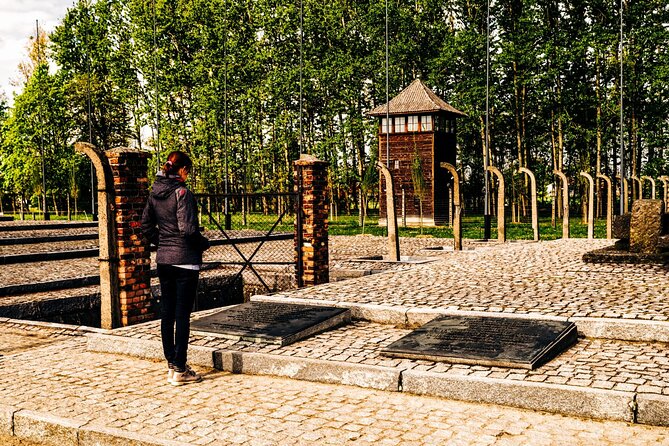
Today, the Judenrampe is a memorial site with plaques honoring victims. What makes it valuable is that it fills in the “how did they arrive” piece of the story. You’ll be standing in a place tied to mass deportations, and it helps connect Auschwitz I and Birkenau into one system instead of two separate stops.
This isn’t a long stop—about 30 minutes—and it’s also noted as having free admission. Still, I’d treat it as a quiet reset. If you only skim it, you’ll lose context that you can’t easily get later once you’re moving on.
Auschwitz I with headset audio: walking through the gate and into the main camp
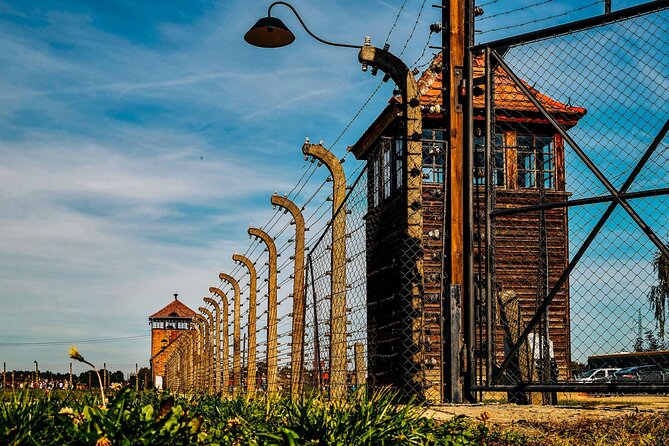
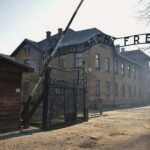
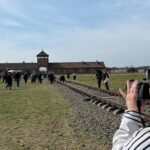
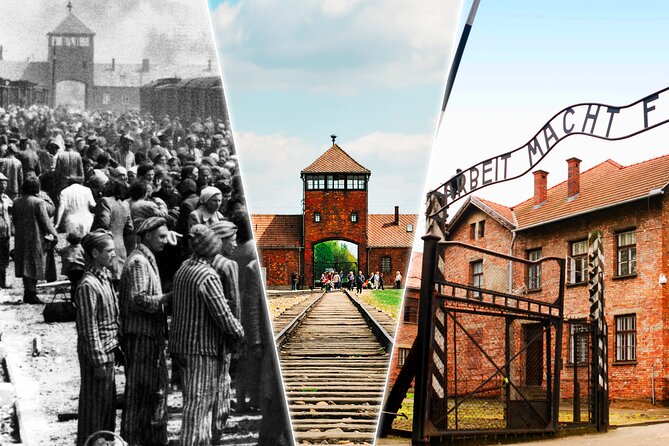
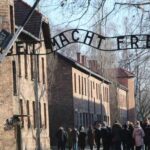
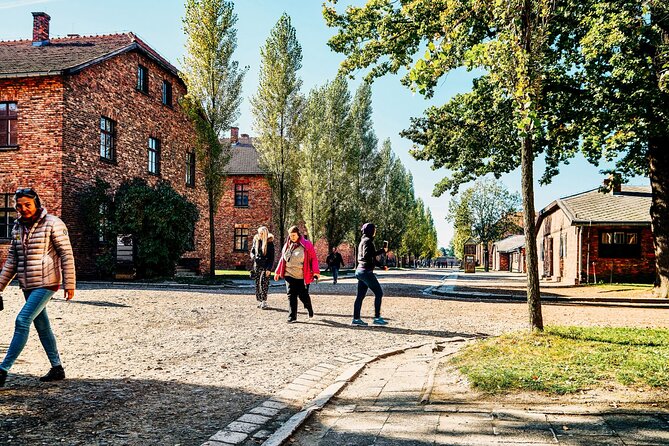
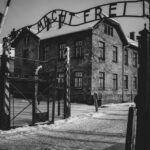
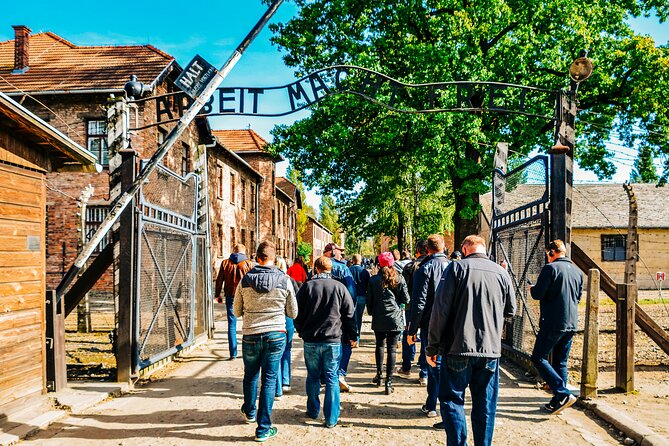
Auschwitz I is where the experience takes its deepest, most haunting turn. You’ll walk through the gate of Auschwitz I and pass under the sign Arbeit Macht Frei, the notorious message visitors can’t forget.
In this segment, the tour is designed around listening and moving. You’ll use a headset to hear your guide clearly, and the group size is limited to 30, which matters. Small groups tend to work better in places where you might stop suddenly, step back for photos you don’t really want, or just need a moment.
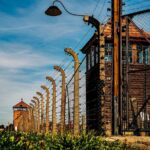
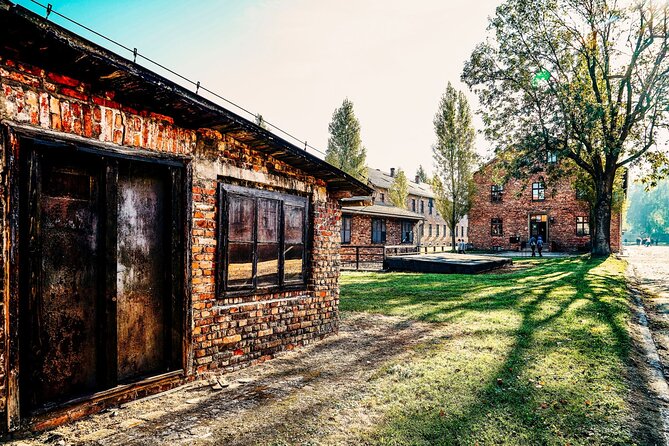
What you can expect to see is the original camp layout and key structures: wooden barracks, fortified walls, barbed wire fences, and the camp’s gas chambers and crematoria. The aim isn’t entertainment—it’s scale and evidence. I like this audio-plus-on-your-feet approach because you control your pace. You can linger where something hits you hardest without having to keep up with a live narration pace.
A practical drawback to note: one review mentioned that their group expected a guidebook and didn’t receive it. The tour information says a guidebook is included in your language with the route and detailed description, so plan to have it—but if it’s missing, don’t let that steal your focus. Stick to the audio and the signage on site.
Auschwitz II-Birkenau at Brzezinka: a bigger camp and a shorter visit
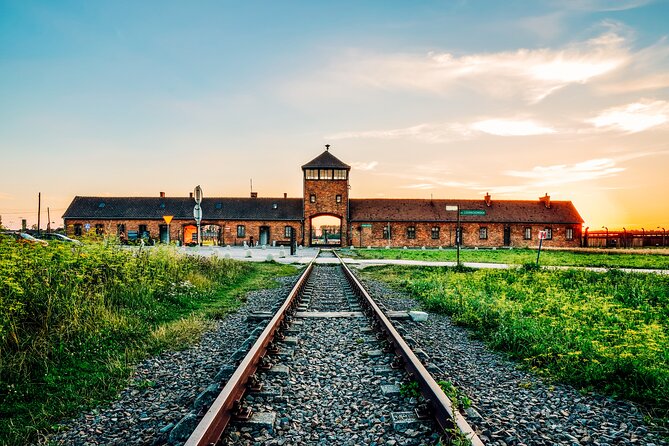
Birkenau is about 3 minutes from Auschwitz I, but the change is huge. Auschwitz II-Birkenau was built and operated with the Nazi goal of making Europe Judenrein—free of Jews—and it was the larger camp. You’ll hear how the camp system worked, including brutal living conditions, the selection process, and pseudo-scientific medical experiments conducted by Nazi doctors, including Josef Mengele.
The narration also covers liberation. The gates of Auschwitz were opened on January 27, 1945, by soldiers from the 60th Army of the First Ukrainian Front. That ending matters, not because it reduces the horror, but because it gives the story an actual finish point: this genocide was stopped.
Now for the real-world part: this portion is shorter—about 30 minutes. And that time can feel even shorter if you arrive late or the site is close to closing. One review described Birkenau closing in about five minutes after they arrived, which meant they didn’t get the look-around time they expected. That’s the biggest caution with this itinerary: Birkenau requires you to be efficient about where you go first.
If you’re someone who likes to take photos, read every plaque, and fully understand each section, you may find 30 minutes tight. If you’re comfortable using your time wisely—start at the most important areas first, then go back for a second pass—you’ll likely feel better about your visit.
The “self-guided” part: what you actually control
Even with the word self-guided, this tour isn’t just you wandering with a map. It’s more like guided structure with personal pacing.
- At Auschwitz I, you’ll use a headset so you can hear your guide clearly while you walk at your own speed.
- Between major areas, you’re still following a planned flow: Judenrampe, Auschwitz I, then Auschwitz II-Birkenau.
- You also get a guidebook in your language with the route and detailed description—at least on paper.
In the field, what this means for you: you control how long you stay at each area, but you still have to respect the group’s timing and shuttle returns. And because this tour includes round-trip transfers, missing the pickup window isn’t just inconvenient; it can change the entire shape of your day.
The best version of this tour is the quiet one. I like that the format can be experienced in silence when you want it to be. One highly rated review described it as a great way to see everything at your own pace and appreciate it in silence. That’s exactly how you should aim to use the flexibility.
Price and value: is $40.51 a good deal?
At $40.51 per person, the value is mostly in the logistics and ticketing. You’re not paying extra for transfers, and you’re getting skip-the-line tickets for Auschwitz I and Auschwitz II. Those two pieces often matter as much as the admission itself, especially on a day where delays add up fast.
You are not getting:
- a live guide,
- food and drinks.
So the “value” tradeoff is time and interpretation. If you want deep, real-time Q&A from a person standing beside you, you’ll need a different kind of tour. But if you’re okay with headset narration and a route guide, this price can be a fair way to do both sites without the transport headache.
One more value check: because your Birkenau time is shorter, you’re paying a lower “hours on site” cost. That can be fine if you plan your priorities. It can feel disappointing if you expected a long, slow exploration of every area.
What to pack and how to pace yourself emotionally
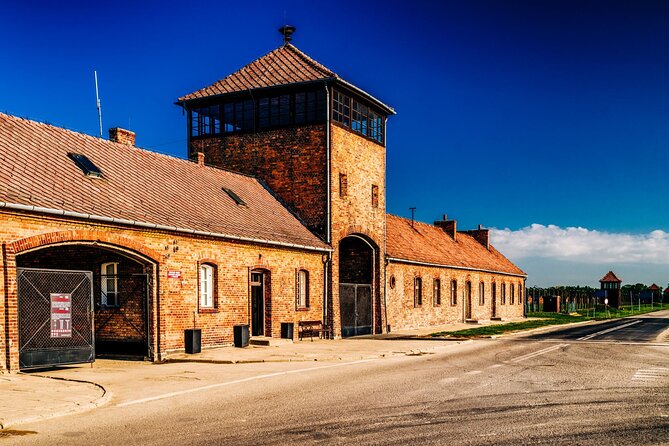
No one needs me to tell you Auschwitz-Birkenau is intense. Still, your practical comfort affects your ability to cope.
Food and drinks aren’t included. I’d bring water and a simple snack so you’re not spending mental energy on hunger. Wear shoes you can walk in for hours, and keep layers in mind. Even when the day is warm, you might find yourself outside waiting for the next segment.
Also, plan for a “two-step” memory process:
- First pass: follow the route without trying to absorb everything.
- Second pass: when something stands out, take a slower moment and read the plaque text carefully.
This is where the self-paced format can really help. The goal isn’t to collect facts. The goal is to connect what you’re seeing to what it represented.
Should you book this Auschwitz-Birkenau self-guided tour?
I’d book it if you want:
- an organized day with round-trip transport from Krakow,
- skip-the-line entry for both sites,
- headset audio that lets you walk at your own pace,
- a smaller group (up to 30) without constant crowd shuffling.
I’d think twice if you:
- need more than about 30 minutes at Birkenau,
- are prone to stress with schedule changes or waiting outside,
- strongly want a live guide to answer questions on the spot.
If you do book, go in with your priorities set for Birkenau, stay alert to shuttle timing, and don’t let delays (if they happen) ruin the purpose of the day. This is one of those experiences where preparation isn’t about convenience—it’s about giving yourself enough steadiness to pay attention.
FAQ
How long is the tour?
It runs about 7 hours.
What time does it start?
The start time is 2:30 pm.
Where is the meeting point in Krakow?
You meet at the Radisson Blu Hotel, Floriana Straszewskiego 17, 31-101 Kraków, Poland.
Is transportation included?
Yes, round-trip transportation is included from the meeting point.
Is the tour in English?
Yes, it is offered in English.
Are entrance tickets included?
Yes. Skip-the-line entrance tickets are included for Auschwitz I and Auschwitz II (Birkenau).
Do I get a live guide?
No. A live guide is not included; the tour uses a headset for listening during the Auschwitz I portion.
What stops are included?
You visit the Judenrampe memorial, Auschwitz I, and Auschwitz II-Birkenau.
Is food included?
No. Food and drinks are not included.
Can I cancel for a full refund?
Yes. You can cancel up to 24 hours in advance for a full refund.