REVIEW · UTAH
Self-Guided Audio Driving Tour in Capitol Reef
Book on Viator →Operated by GuideAlong (GyPSy Guide) · Bookable on Viator
Capitol Reef is made for a slow, stop-and-stare drive. This self-guided GPS audio tour turns your car into a guided route, with stories and tips that trigger as you reach each spot. I really like the location-based commentary idea, because it keeps you from guessing where to go and when to linger. The big win is that you can set your own pace across the Scenic Drive.
Two things I’d call out right away: the clear narration + smart GPS timing (so the story matches where you are) and the low-cost group pricing—one purchase covers everyone in your vehicle. One consideration: parts of the park route can be affected by closures or road conditions, so you’ll want to stay flexible if you hit unexpected limits on the drive.
In This Review
- Quick hits: what you should know before you roll out
- How much this costs (and why it can be worth it)
- Why the GPS audio works so well at Capitol Reef
- Entering Capitol Reef National Park with location-based stories
- Capitol Gorge Trail: a 2.5-mile canyon extension with road rules
- Fruita Schoolhouse and the Behunin Cabin: quick stops with big visual payoff
- Fruita orchard time: irrigation history and the fruit-picking moment
- Goosenecks Overlook: deep canyon views plus an easy sunset spot
- Grand Wash spur road: outlaw hiding vibes with Swiss-cheese rock
- Grand Wash Trail: slot-canyon style hiking and real flash-flood caution
- Fremont Petroglyphs: an easy boardwalk stop you won’t want to skip
- The Waterpocket Fold drive: an 8-mile highlight with optional spurs
- A few practical tips that make the day smoother
- Should you book this self-guided Capitol Reef audio tour?
- FAQ
- Is a National Park pass included?
- How long does the audio tour take?
- Does it work offline?
- Can I start and stop anywhere along the route?
- How many people can use one purchase?
- Will the audio play through my car screen?
- Are there vehicle size limits on the spur roads?
Quick hits: what you should know before you roll out
- GPS-triggered audio means you don’t need a printed map, just a charged phone
- Group value: $19.99 per group (up to 8 people)
- A choose-your-own day: the tour can stretch from 8 to 16 hours
- Trail options for different moods (easy overlooks to slot-canyon style hikes)
- Road height limits on spur roads like Capitol Gorge and Grand Wash (27 feet)
How much this costs (and why it can be worth it)
At $19.99 per group (up to 8), this is priced like a practical “everyone gets something” add-on. If you’re traveling with family or friends and you’d otherwise hire a ranger-led program—or just pay for your own entertainment—this can feel like a bargain.
Also, the audio tour is buy once, use forever with free updates. That matters in a park like Capitol Reef, where plans can shift because of weather, daylight, or road access. You’re not buying a one-day ticket that disappears if your schedule slips.
You can also read our reviews of more tours and experiences in Utah.


Why the GPS audio works so well at Capitol Reef
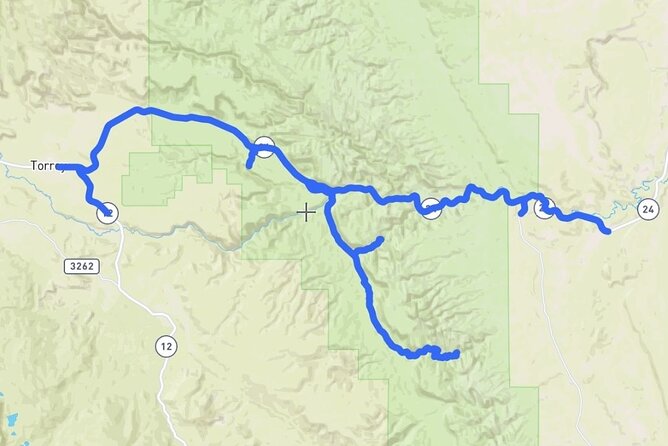
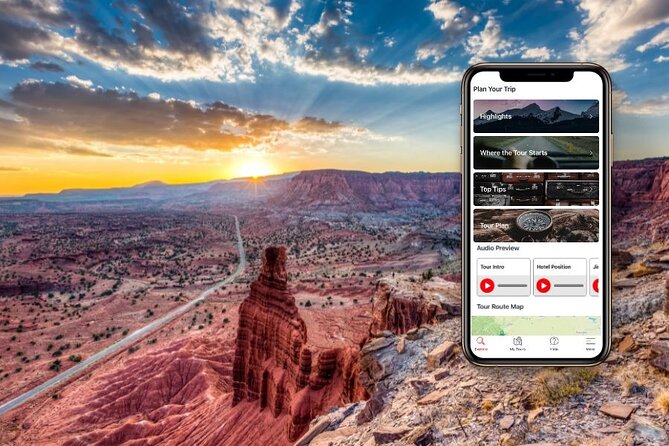
Capitol Reef is built around driving loops and short spurs. That’s perfect for a system that plays stories based on where your phone is, not where you think you are. You don’t have to coordinate a meeting point with a guide or worry about keeping up with a group. You just drive, listen, and stop where the audio points you.
The setup is also designed for low-stress use: you pre-download the tour so it works offline, and you can preview the route inside the app before you start. Since you’ll be out in a canyon-and-highway kind of environment, offline access is a real comfort.
One more thing I appreciate: the audio doesn’t just read facts. It mixes in stories, tips, and directions as you go. So even if you’re not a “geology person,” the park still makes sense while you’re looking at it.
Entering Capitol Reef National Park with location-based stories
Your tour begins at Capitol Reef National Park near Torrey, and you can start and end anywhere along the tour route. That flexibility is useful because Capitol Reef’s drive time and your hike choices can change a lot depending on when you arrive and how long you want to linger at each view.
As you drive, the commentary plays automatically based on your GPS location. Translation: you can focus on driving safely and enjoying the scenery, rather than constantly checking your phone screen. If you want CarPlay or Android Auto, the app’s audio can play through your car’s display, while your phone handles the map.
If you’re the type who likes “just one more stop,” this is also great. The tour is built to keep going as you move from landmark to landmark along the Scenic Drive and its associated spurs.
Capitol Gorge Trail: a 2.5-mile canyon extension with road rules
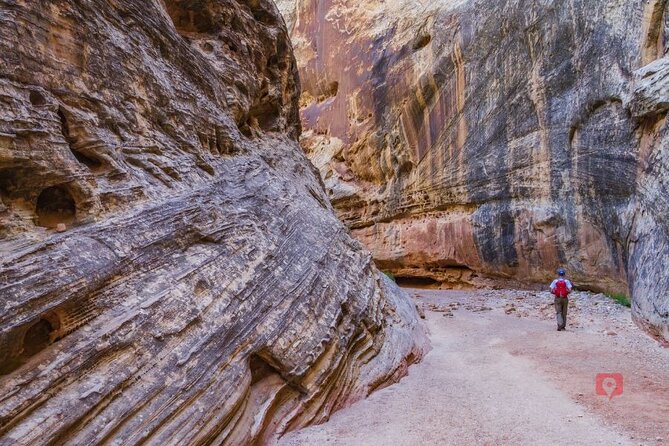
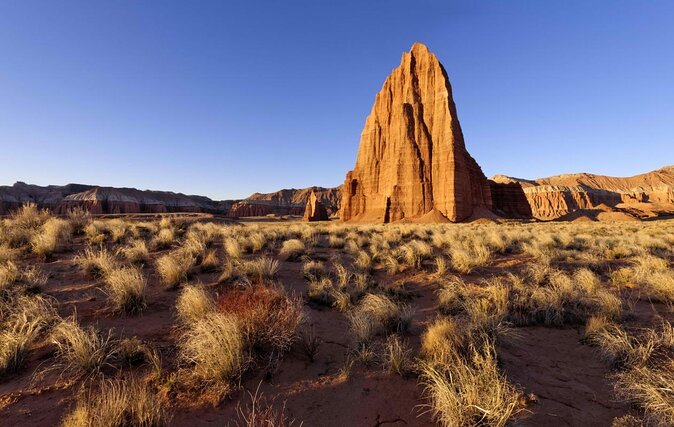
This is the kind of place you’ll remember because it feels like you’re stepping into a canyon timeline. The Capitol Gorge Trail extension is a 2.5-mile add-on that takes you through steep-walled terrain and layers of geological time. You’ll hear the storyline of how this landscape shifted between ancient river environments and enormous sand-dune conditions.
The tour also nudges you toward a smart, low-effort option: at the end of the drive, an easy 1-mile return hike into the gorge is highly recommended. If you want the canyon without committing to a long strenuous outing, that’s the move.
Important practical note: the spur area has a 27-foot size restriction. Trailers can detach before driving the spur road. The road is unpaved but well-maintained, and the info says it’s suitable for regular vehicles—still, I’d take it slow.
Fruita Schoolhouse and the Behunin Cabin: quick stops with big visual payoff
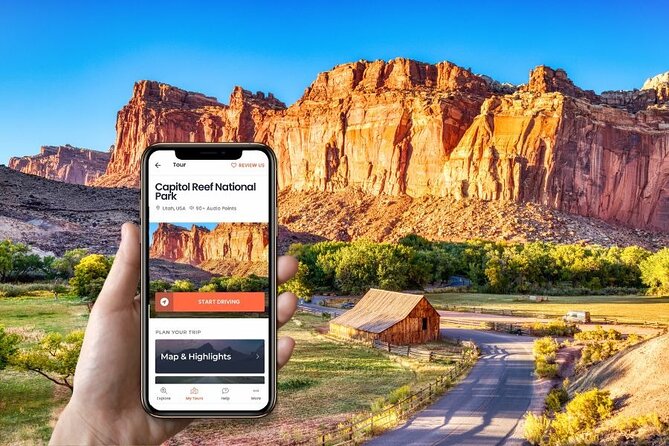
Fruita is one of the best parts of Capitol Reef for short, enjoyable stops. The Fruita Schoolhouse is an easy pull-off where you can get a clean photo of the century-old one-room schoolhouse. You don’t need a long hike to feel like you’ve stepped into the park’s human story.
A little further along the highway, the tour points you to another early pioneer structure: the Behunin family cabin. This pairs well with the schoolhouse because it gives you two different “everyday life” snapshots—education on one side, homestead shelter on the other.
These are fast stops, which is exactly what you want in a day packed with viewpoints. If you’re touring with multiple age groups, these short pulls can keep everyone happy without turning the day into a marathon.
Fruita orchard time: irrigation history and the fruit-picking moment
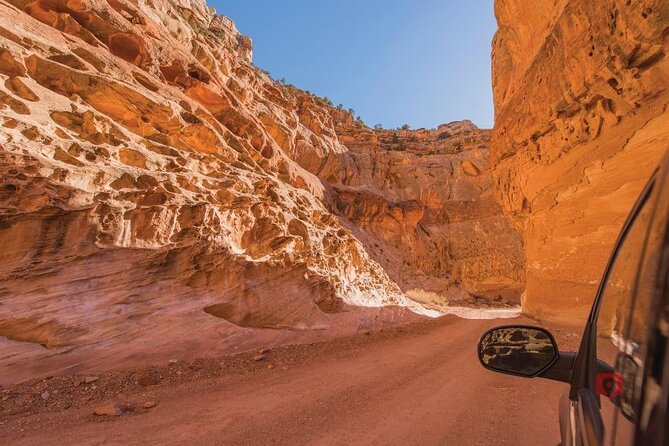
The Fruita area connects you to the park’s agricultural past. Archaeological evidence shows Native American cultures occupied this region for thousands of years, and then in the late 1800s Mormon settlers created an orchard community. The story centers on irrigation ditches drawing water from the Fremont River, especially to support fruit orchards like apples.
At its peak, Fruita was home to 10 families, and the preserved buildings sit right near the beginning of the Scenic Drive. That proximity matters: you can fit Fruita into almost any itinerary length.
If you’re there during fruit season, you’re allowed to pick fruit right from the trees. That’s not just a cute perk. It changes the vibe from sightseeing to participating—like you’re tasting why the orchards mattered here in the first place.
Goosenecks Overlook: deep canyon views plus an easy sunset spot
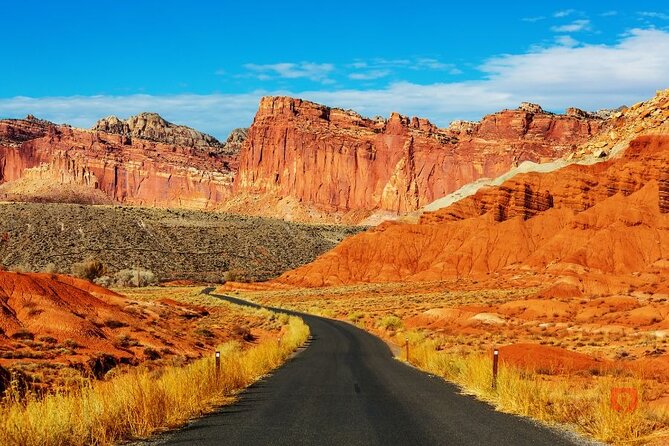
Goosenecks is where you get a different perspective on Capitol Reef’s dramatic geology. For much of your visit, you’ll be staring at rock layers and cliff shapes rising around you. The Goosenecks viewpoint flips the angle and lets you peer down into a steep, deep canyon.
The tour also calls out a geologic highlight: the oldest rock in the park has been exposed by the creek below. So you’re not only getting a pretty view—you’re seeing why this area is a big deal for understanding the region’s deep time.
After you’ve looked around, there’s a short walk to what the tour describes as the best sunset location that’s easily accessible from near the main highway, but far enough away to feel peaceful. If you’re trying to plan a day without overthinking timing, build your sunset around this stop.
Grand Wash spur road: outlaw hiding vibes with Swiss-cheese rock
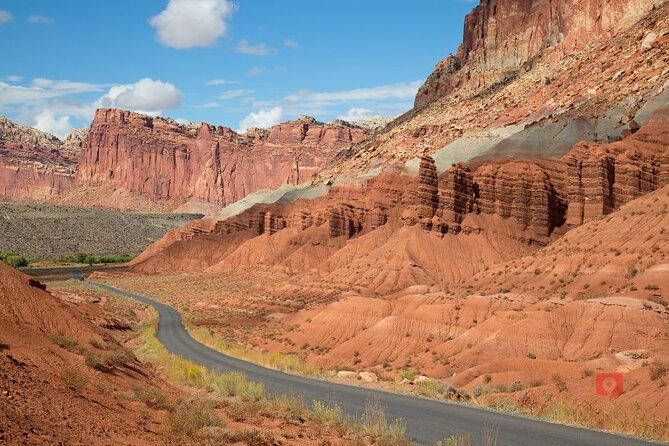
Grand Wash is one of those places where the drive itself feels like part of the attraction. Midway along the Scenic Drive, there’s an unpaved spur road that gets you close to rock layers that, in places, look like Swiss cheese.
The audio adds a fun layer: this canyon was once a hiding place for famous outlaws, and you can see why it would’ve worked—because the terrain gives you natural cover. It’s a story element, but it also guides your attention. You start noticing the shapes and shadowed recesses rather than treating the canyon like a static photo backdrop.
Again, check vehicle limits: there’s a 27-foot size restriction on the road, and it’s unpaved but well-maintained and suitable for regular vehicles according to the info. If your vehicle is near the limit, don’t guess—confirm before you commit time and fuel.
Grand Wash Trail: slot-canyon style hiking and real flash-flood caution
At the end of the Grand Wash spur road, you get two hike options. The first is a fairly strenuous climb to higher viewpoints, with a chance to see Cassidy Arch and views across the valley.
Then there’s the option the tour calls the easiest and arguably best short outing: follow the Grand Wash Trail for an introduction to slot-canyon style hiking. The scale here is the hook—at its most amazing point, you’re in a corridor with 800-foot walls and a canyon only about 15 feet wide.
Now for the serious part: the tour explicitly warns not to hike if rain is forecast or skies are threatening. Flash flooding is a genuine risk in canyon terrain. That’s not a “be careful” suggestion; it’s a “don’t risk it” instruction. If weather is uncertain, shift to overlooks or shorter stops until conditions are clearly stable.
Fremont Petroglyphs: an easy boardwalk stop you won’t want to skip
Fremont Petroglyphs is a quick win. There’s convenient highway parking, and you reach the panels via an easy boardwalk. So you’re not negotiating rough trail conditions just to see the artwork.
The story ties the petroglyphs to the Fremont Culture, identified by evidence from sites along the Fremont River. The payoff is that you get to connect the visual markings to a real cultural timeline instead of treating them as random carvings.
Because this is a low-effort stop, it works well as a break between longer hikes. It’s also a strong option if the group includes people who don’t want a strenuous day every single hour.
The Waterpocket Fold drive: an 8-mile highlight with optional spurs
If you want one “core loop” day, this is the backbone. The tour highlights a true standout through an 8-mile drive with spectacular views and layered rock formations, described as getting you up close to the Waterpocket Fold.
The official Scenic Drive is paved, with two short spur roads that detour just short distances. The info says to expect a couple of hours for sightseeing, and then add time if you want hikes. That’s a good planning rule: plan for “at least a couple hours,” not “I’ll knock this out fast,” because the viewpoints encourage lingering.
This is also where the audio timing shines. As you move along the paved road, the commentary helps you understand what you’re seeing while you’re still at the viewpoint—not after you’ve driven away.
A few practical tips that make the day smoother
- Charge your phone before you leave. The tour is designed to run offline, but you still need battery for GPS and audio.
- Bring a USB/C car charger. It’s a small thing that prevents a big disappointment.
- Plan for different energy levels. Capitol Gorge and Grand Wash offer options from easier returns to steeper climbs.
- Keep weather in mind for canyon hikes. Slot-canyon style trails come with flash-flood risk; choose overlooks if skies look unstable.
- Expect flexibility with access. One downside that can crop up in any park drive is road construction or closure impacts, so keep your plan adaptable.
Should you book this self-guided Capitol Reef audio tour?
I think you should book it if you want a low-cost, high-value guide that lets you choose your own timing at Capitol Reef. It’s especially good for groups, since one purchase covers up to 8 people and everyone benefits from the same audio cues.
You might skip it (or at least be extra cautious) if you’re planning a tight schedule and you know your day depends on reaching every spur road and trail. In that case, still consider it—but build in wiggle room for road access and weather, because canyon hikes are the first things that get affected.
If you want a day that feels guided without feeling trapped, this GPS audio approach fits Capitol Reef really well. You get the geology story, the pioneer context, and the canyon drama—without needing to negotiate where to go next.
FAQ
Is a National Park pass included?
No. National park passes are not included in the tour price.
How long does the audio tour take?
The duration is listed as 8 to 16 hours (approx.), depending on how many stops and hikes you choose.
Does it work offline?
Yes. Once you download the tour in the GuideAlong app, it works offline, and you don’t need internet or cell service while driving.
Can I start and stop anywhere along the route?
Yes. Commentary plays automatically based on your location, so you can start and end anywhere along the tour route, and you can control your pace.
How many people can use one purchase?
One purchase covers everyone in your vehicle, up to 8 people.
Will the audio play through my car screen?
The app’s audio can play through your car’s Apple CarPlay or Android Auto display, while your phone shows the app map.
Are there vehicle size limits on the spur roads?
Yes. The Capitol Gorge Road and the Grand Wash spur road have a 27-foot size restriction, and trailers have a location to detach before driving the spur road.