REVIEW · PARIS
The Famous Graves of Père Lachaise – Self-Guided Audio Tour
Book on Viator →Operated by Vidi Guides · Bookable on Viator
Graves, stories, and GPS in one cemetery. This self-guided audio tour lets you wander Père Lachaise at your own speed, with GPS map help so you can find the stops without constant app-hopping. I like that it’s built around famous names and real Paris landmarks, not just a random walk.
What I also like is the offline mode, so you can download the tour in advance and listen without Wi‑Fi while you move through the cemetery. One consideration: earphones and your phone are not included, and some people have found the navigation/support side frustrating when the app or audio doesn’t cooperate—so plan to download before you arrive and bring your own headphones.
In This Review
- Key highlights at a glance
- Why Père Lachaise Works So Well for a Self-Guided Audio Tour
- Price and Value: $17.81 for Audio in a Free Cemetery
- Start Smooth: What You Need on Your Phone (and Why Earphones Matter)
- How the GPS Map Actually Helps in a Maze of Paths
- From Napoleon’s Cemetery to Heloïse and Abélard’s Tomb (Stops 1–2)
- Jim Morrison and the Weird Traditions You’ll Notice Only After You’re Told (Stop 3)
- The President, Secularity, and Why Père Lachaise Feels Like a Debate (Stop 4)
- Balzac’s Statue, the Crematorium, and French Funerary Choices (Stops 5–6)
- Yves Montand, Oscar-Wilde-Adjacent Drama, and the Human Side (Stop 7)
- Gertrude Stein, Le Mur des Fédérés, and Edith Piaf’s Final Note (Stops 8–9)
- Walking, Shoes, and Keeping Your Pace (What to Expect on the Ground)
- When This Audio Tour Is a Great Fit (and When It’s Not)
- Should You Book This Père Lachaise Audio Tour?
- FAQ
- Is the tour available in English?
- How long does the self-guided tour take?
- Do I need Wi‑Fi to listen?
- Is admission to Père Lachaise included?
- Are earphones included?
- Where does the tour start and end?
Key highlights at a glance
- GPS + location-aware mapping helps you move between specific gravesites
- Offline mode means you can keep listening without relying on signal
- Three to nine guided stops cover big stories and recognizable faces
- Short segments (about 5 minutes each) make it easy to pause or speed up
- Free cemetery entry means you’re paying for interpretation, not admission
Why Père Lachaise Works So Well for a Self-Guided Audio Tour
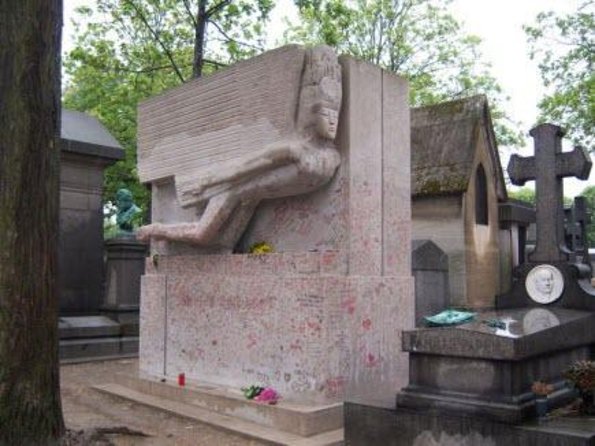
Père Lachaise is the kind of place where a guided group can feel too rushed. The cemetery is big, the paths can be uneven, and you’ll want time to stand still at the tombs long enough to actually read the plaques and take in the setting.
An audio format fits that mood. Each stop is short, so you can follow the story, then keep looking around after the narration ends. It also supports a low-stress rhythm: walk, listen, stop, repeat. You’re not trapped in a fixed schedule.
You can also read our reviews of more tours and experiences in Paris.



Price and Value: $17.81 for Audio in a Free Cemetery
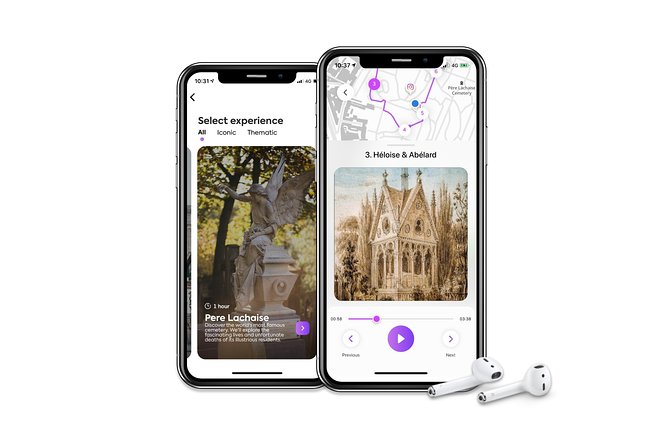
The price is about $17.81 per person, and the tour itself runs roughly 45 minutes to 1 hour 30 minutes. That range matters here, because Père Lachaise is not a quick stop like a museum with clear lines and one entrance. You’ll likely spend time between stops just trying to orient yourself and decide what’s worth lingering on.
Here’s the key value question: entry to the cemetery is free, and the specific stops listed are also free. So you’re paying for the audio storytelling and the practical help (GPS mapping and location awareness). When the app works, that can be worth it—you get guidance to the right places plus context that you might miss if you only use a map.
When the app fails or the audio doesn’t match your expectations, it can feel overpriced fast. Some feedback focused on audio quality and the way navigation instructions were missing or unclear, especially when people tried to rely on the tour instead of using Google Maps. If you’re comfortable pairing audio with your own map skills, the cost is easier to justify.
Start Smooth: What You Need on Your Phone (and Why Earphones Matter)
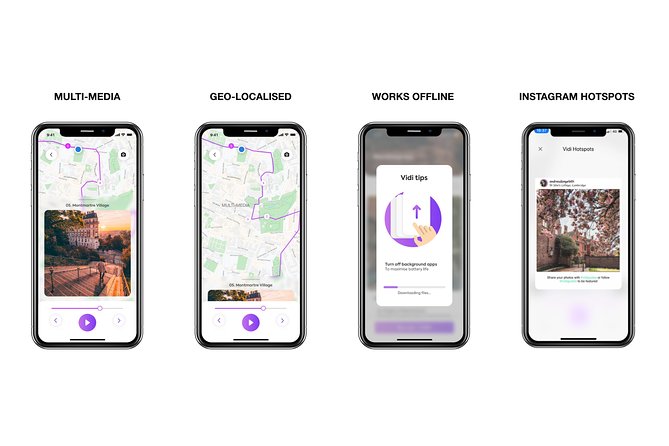
This is a mobile ticket experience in English, delivered through a smartphone app. The tour is listed as “near public transportation,” and the activity starts and ends at Père‑Lachaise, 75020 Paris.
Before you step onto the grounds, make sure you’re ready for the basics:
- You’ll need your mobile device.
- Earphones are not included, so bring a pair you trust.
- The tour supports offline mode, but you need to download ahead of time.
That offline point is huge in a cemetery. You can’t count on stable data once you’re walking and switching between spots. If you only try to download when you’re already inside, you might hit a dead end. I’d treat offline download like a checklist item, not a nice-to-have.
How the GPS Map Actually Helps in a Maze of Paths
The tour promises location-aware mapping, which is exactly what you want in Père Lachaise. The cemetery can feel like a labyrinth, with rows of graves stretching in every direction. Even if you have a map, it’s easy to lose a landmark when paths split or signage is unclear.
The best-case scenario is simple: you start at the cemetery, follow the app, and it keeps you pointed toward the next named stop. That reduces decision fatigue, letting you spend more energy on reading and reflecting.
The drawback is also straightforward: if the app or audio isn’t playing, the GPS plan becomes your fallback, not your guide. Some reviews described ending up with Google Maps when the tour didn’t provide enough help. So think of the tour as story + routing support, not a guaranteed way to find every marker with zero effort.
From Napoleon’s Cemetery to Heloïse and Abélard’s Tomb (Stops 1–2)
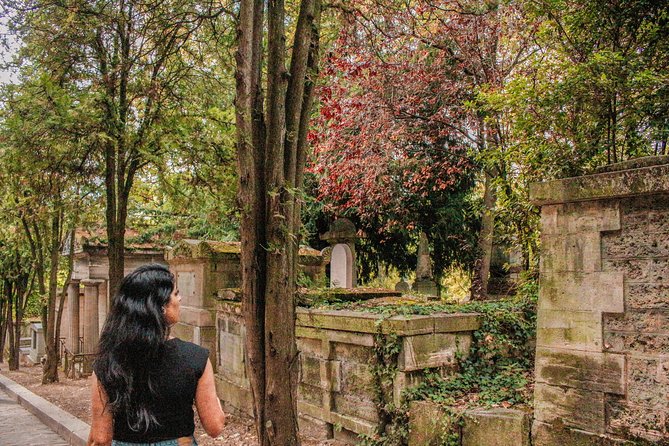
Your first stop is Père‑Lachaise Cemetery itself. This is where the tour sets the tone by linking the place to a big historical origin—Napoleon founded the cemetery, and the narration frames the idea that famous residents have both brilliant lives and sad outcomes. It’s a strong opening because it makes the cemetery feel like more than sightseeing.
Right after that, you’re guided to Héloïse and Abélard’s tomb. The story is pitched as a bittersweet love tale, often described as the original Romeo & Juliet. This is the kind of stop where audio shines because it gives emotional context while you stand in front of a grave that can look plain at first glance.
Possible pacing snag: these first two stops can create an early “story momentum” that makes you want to rush ahead. If you’re the type who likes to read slowly, plan to pause. The cemetery is free and open-ended—don’t feel like you need to “finish the script” in one pass.






Jim Morrison and the Weird Traditions You’ll Notice Only After You’re Told (Stop 3)

Next is the tomb of Jim Morrison. The audio focuses on his reputation as a rock ’n’ roll poet and calls attention to his unconventional grave and odd traditions. This is a stop where the narration can steer your attention.
Even if you know the name, you might miss the “why people do what they do” aspect without audio. Morrison’s site has a different energy than the more formal tombs, and the tour’s framing helps you understand what’s going on around you rather than only photographing it.
One practical tip: if you want photos, this is a good moment to slow down. The cemetery has a lot of stone and angles, and Morrison’s stop is likely to be one of your most distinctive visuals. Give yourself a minute or two before you move on.
The President, Secularity, and Why Père Lachaise Feels Like a Debate (Stop 4)

The tour then moves to a Père‑Lachaise stop that ties back to politics and religion. You’ll hear about a controversial President and how this connects to secularity at Père Lachaise.
This part can be polarizing—in the best way. Cemeteries aren’t neutral spaces; they reflect social values, laws, and cultural shifts. Having the narration point you toward that angle keeps you from viewing tombs as just famous names.
The consideration here is attention span. If you’re tired from walking, political context can feel heavy. If that happens, treat it as optional listening: pause when you need to rest, then restart audio when you’re ready.
Balzac’s Statue, the Crematorium, and French Funerary Choices (Stops 5–6)
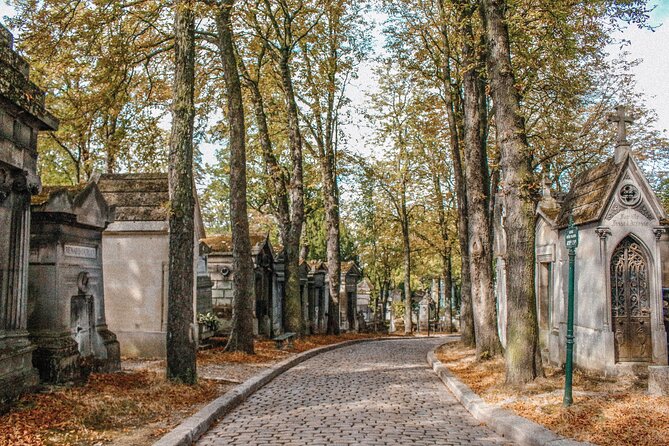
The next highlight is the statue of Honoré de Balzac. The narration plays with the mystery behind authorship and asks who really wrote major novels like The Three Musketeers and The Count of Monte Cristo. Even if you don’t come in with literary trivia, this stop gives you a reason to look closely and pay attention.
After that, you’ll reach the crematorium of Père Lachaise. The audio describes the building and explains cremation in France. This is a useful shift in theme because it brings you from famous people’s names to how French funerary practice works.
Why this stop is valuable: most cemetery visits focus only on individuals. Learning how cremation fits into the picture helps you interpret the architecture and the space as part of a broader system, not just a collection of monuments.
Yves Montand, Oscar-Wilde-Adjacent Drama, and the Human Side (Stop 7)
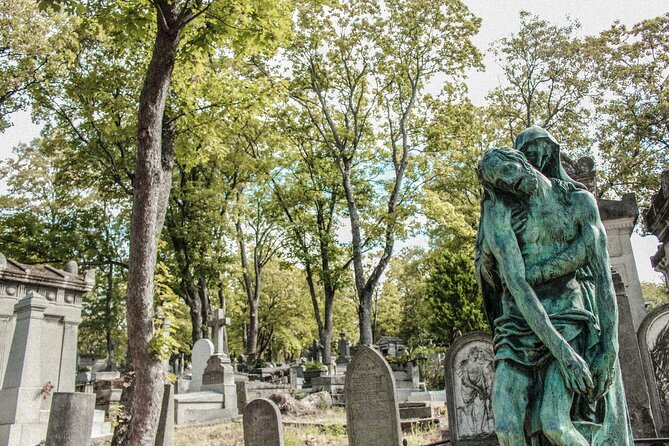
The tour includes the tomb of Yves Montand and connects it to a tragic tale involving Oscar Wilde. It also references a warm but weird tradition tied to the site.
This stop is the kind where audio can change what you notice. Without context, traditions can look like random tourist behavior. With context, you understand that people are following a ritual or a symbolic pattern, even in a place of mourning.
If you like stories with emotion and a bit of personality, this is one of the better segments of the route. If you prefer strictly historical facts, you may want to treat it as a narrative hook and then spend extra time reading the actual stonework around you.
Gertrude Stein, Le Mur des Fédérés, and Edith Piaf’s Final Note (Stops 8–9)
You’ll return to Père‑Lachaise for a segment that includes Gertrude Stein and a pause at Le Mur des Fédérés. This part is built for reflection, and it helps the tour avoid becoming only celebrity-focused.
Then you end at the Edith Piaf statue, with the audio framed as a final love-and-loss story for France’s cherished singer. This ending works because it “closes the loop” on emotion: from historical origins to famous romances to public mourning, ending with a figure who symbolizes Paris music culture.
A practical thought: cemeteries can feel quiet enough that you’ll hear your own thoughts. If you want a calmer finish, consider walking more slowly at the final stop. Let the narration play, then stay a bit longer after it ends.
Walking, Shoes, and Keeping Your Pace (What to Expect on the Ground)
This tour is short on paper, but Père Lachaise is not short physically. There’s a lot of walking, and you should expect steps and rough paths. That matters because your audio schedule is only as helpful as your mobility.
One reason some feedback was positive is that the route seems to avoid huge crowds. With a maximum group size of 10 travelers, you’re less likely to feel swallowed by a single big pack.
My advice: wear comfortable shoes with grip. Plan for 60 minutes of movement as a baseline, and longer if you stop for photos or reading. If you go in with realistic expectations, the audio timing won’t feel like pressure.
When This Audio Tour Is a Great Fit (and When It’s Not)
This works well if you want:
- A self-paced way to explore famous graves
- Storytelling that connects names to themes like love, controversy, art, and funerary practice
- Help moving through the cemetery via GPS maps and offline mode
It’s also a good option if you’re okay handling navigation on your own as a backup. Some people had to switch to Google Maps, so it helps to already be comfortable with that mindset.
Skip it or think twice if:
- You strongly prefer a live guide who can correct problems in real time
- You rely on phone audio working perfectly without preparation
- You expect step-by-step directions down to the exact grave without any additional effort
The cemetery is free. That’s the big reason to be picky about value. If you do the prep (download offline, bring earphones, test the app before entering), you’re far more likely to feel like the price paid translated into time saved and better understanding.
Should You Book This Père Lachaise Audio Tour?
If you’re the type who likes to wander with a plan but not a crowd, I’d lean yes. The tour’s structure—short stops with theme-based narration—fits how Père Lachaise feels on the ground. And the inclusion of GPS mapping and offline mode is exactly what you want in a place where signal can be unpredictable.
Still, be smart about risk. Tech glitches and download issues show up in the feedback, and when that happens, people felt they could have managed for free with their own maps. So make the experience easy on yourself: download ahead, bring earphones, and treat the audio as guidance, not a magic teleport.
If you’re okay with that, this audio tour can add real meaning to the names you came to see—and helps you notice details you might otherwise skip.
FAQ
Is the tour available in English?
Yes. The audio tour is offered in English.
How long does the self-guided tour take?
The duration is listed as approximately 45 minutes to 1 hour 30 minutes.
Do I need Wi‑Fi to listen?
No. The tour includes offline mode, which lets you download tours in advance so you can listen without Wi‑Fi.
Is admission to Père Lachaise included?
Admission is listed as free for the stops. The price is for the audio tour access, not cemetery entry.
Are earphones included?
No. Earphones are not included, and you’ll need your own mobile device.
Where does the tour start and end?
It starts at Père‑Lachaise, 75020 Paris, France and ends back at the same meeting point.