REVIEW · WILLIAMSBURG
Colonial Williamsburg Self-Guided Audio Walking Tour
Book on Viator →Operated by Action Day Trips · Bookable on Viator
Colonial Williamsburg comes alive on your phone. I really like the offline GPS maps (no signal stress) and the lifetime access that lets you replay the stories on future trips; the main catch is that audio clips can feel short, and you need to walk close enough for the GPS to trigger every stop.
This is a self-guided smartphone walking tour in English, timed around roughly 1–2 hours (some sources also suggest up to 2–3 hours depending on pace). You’ll cover about 2.5+ to 3+ miles from the Visitor Center area to the end point near Scotland St, hitting core landmarks like the Capitol, Governor’s Palace, Bruton Parish Church, and the William & Mary campus.
In This Review
- Key highlights at a glance
- Why this self-guided audio walk fits Colonial Williamsburg
- Price and value: $14.99 that you can reuse forever
- Getting the app ready: offline maps, GPS, and the start process
- The walking route: miles, time, and pacing strategy
- Stop-by-stop: the core story sites you’ll hear on this walk
- Colonial Williamsburg Visitor Center (Start)
- Peyton Randolph House area (100 W Nicholson St)
- Bassett Hall, Rockefeller family connection (The Rockefellers’ Bassett Hall)
- Colonial Williamsburg Capitol Building
- Secretary’s Office
- Raleigh Tavern
- Colonial Williamsburg Magazine
- Old courthouse across the way (Colonial Williamsburg Courthouse)
- Playhouse Theatre recreation
- Governor’s Palace
- George Wythe House (abolitionist among the founders)
- Bruton Parish Episcopal Church (oldest building in Colonial Williamsburg)
- Bowden-Armistead House (Civil War-era divisions)
- William & Mary College (oldest college in the U.S.)
- The Wren Building (oldest college building in the U.S.)
- Making the audio pay off: how to listen smart while you walk
- Technical tips that prevent the most common headaches
- Who should book this Colonial Williamsburg audio tour
- Should you book this $14.99 lifetime audio walk?
- FAQ
- How long is the Colonial Williamsburg self-guided audio walking tour?
- Where does the tour start and end?
- Does the audio tour work offline?
- Do I need admission tickets for the stops?
- What do I need to use the tour?
- Do I need to meet a guide at the beginning?
- Is the tour valid more than once?
Key highlights at a glance
- Offline GPS maps: download once, then keep going without cellular or Wi‑Fi
- Lifetime validity: no expiry, use it again on later trips
- Location-triggered audio: hands-free playback as you reach each story point
- 30+ audio stories: a steady hit of revolutionary-era scenes, people, and conflicts
- Flexible pacing: pause for photos, snacks, or side wandering and then rejoin anytime
Why this self-guided audio walk fits Colonial Williamsburg

Colonial Williamsburg is the kind of place where you can either rush through “important-looking buildings” or slow down and actually connect dots. This tour is built for that middle approach: you walk the main spine of the historic area, and the audio gives you context exactly when you’re standing nearby.
I like that it’s independent-minded. No waiting around for a group to assemble, no fixed start time you have to fight. You can start once you’re on site, pause whenever you want, and keep moving at a pace that matches your legs and your curiosity.
The flip side: because it’s audio-guided, you’re responsible for staying near the intended route. If you wander far off the suggested path or walk too close to the curb edge without passing the story point, some stops may not trigger.
You can also read our reviews of more tours and experiences in Williamsburg.

Price and value: $14.99 that you can reuse forever
At $14.99 per person, this isn’t priced like a classic paid guided tour with staff-led narration. You’re paying for convenience: clear stop order, a scripted audio track, and offline navigation so you don’t spend your day fighting your phone.
The bigger value lever is lifetime access. If you’re the type who likes to do a second pass—maybe one day when it’s quieter, or another trip when you can afford paid entries for interiors—this app becomes a low-cost “history companion” rather than a one-time add-on.
What you should still factor in: it does not include attraction tickets. Many stops are described as admission ticket not included. That means you may be able to view buildings from the outside, but if you want to go inside particular sites, you’ll need separate admissions, likely arranged at the Visitor Center.
Getting the app ready: offline maps, GPS, and the start process
This tour runs through the Action’s Tour Guide App, and you use a password sent after booking. You must download the tour while you have strong Wi‑Fi/cellular signal, because the offline version is what keeps you moving later.
A few practical points that matter:
- Turn on GPS/location access so the map can sync to your position.
- Bring headphones/earbuds. The app is hands-free, but walking in public streets gets noisy fast.
- If you’re on a first-time setup, give yourself time to install and log in before you’re standing at the first story point.
Also, there’s no guide meeting you. You simply go to the starting point, enter the app, start the relevant tour version (especially if multiple directions exist), and let the audio cue itself to your location.
If you’re thinking about a “download later on site” plan: don’t. One of the biggest frustrations people hit with this kind of tour is connectivity in the area. The safest strategy is to download before you arrive.
The walking route: miles, time, and pacing strategy
Expect a route that’s roughly 2.5+ to 3+ miles depending on where you enter and how closely you follow the intended path. Typical completion time is about 1–2 hours, but it can stretch to 2–3 hours if you slow down for photos, pauses, or extra reading.
What helps most is pacing with intention:
- If you want the full sweep of major sites, keep it steady and trust the stop order.
- If a topic grabs you—like abolition or revolution—pause longer there and accept that you’ll finish closer to the high end of the time range.
Safety note: parts of the route cross busier streets. One recurring caution is that areas around Lafayette St can feel awkward for crossing on foot because sidewalks may be limited. If you’re traveling with little kids, go slower and be more deliberate at street crossings.
Stop-by-stop: the core story sites you’ll hear on this walk
Colonial Williamsburg Visitor Center (Start)
The tour kicks off at the Colonial Williamsburg Visitor Center. This is a smart starting point because it gives you an orientation for what you’re about to see—a beautifully preserved slice of colonial America and the kind of setting where details matter.
From here you’ll launch into the first set of audio stories. Plan a few minutes to get your app settled before you begin, because once you’re moving, the audio is designed to run by location cues.
Peyton Randolph House area (100 W Nicholson St)
Your next story point focuses on the Peyton Randolph House, tied to William Randolph—described as an ally to people like Thomas Jefferson. This stop works well if you like political relationships: it’s not just “famous names,” it’s who supported whom in the messy build-up to revolution.
You’ll keep moving after a short stop, so if you’re tempted to read every sign nearby, don’t overdo it here. Save some time for later stops where you may want longer looks.
Bassett Hall, Rockefeller family connection (The Rockefellers’ Bassett Hall)
This stop shifts you from early 1700s roots into later layers of the story. You’ll hear about Bassett Hall, an 18th-century white frame farmhouse and part of a much larger estate.
The details that make this stop interesting are the connections: it was the Williamsburg home of John D. Rockefeller Jr. and Abby Aldrich Rockefeller, and it’s tied to Philip Johnson as the builder estimate (1753–1766). Even if you’re more focused on colonial-era politics, this one shows how Williamsburg’s preservation story has continued into later American history.
Colonial Williamsburg Capitol Building
The Capitol Building stop covers the political engine of the colony. Built between 1701 and 1705, it served as the first Williamsburg statehouse until a fire in 1747 destroyed the building.
You’ll hear what each wing was for—the General Court and colony secretary on one level, and the House of Burgesses and its clerk on another. This is the kind of stop where the audio helps you visualize how power worked, not just what the building looks like.
Secretary’s Office
This stop is brief but clever: the Secretary’s Office is described as the place where documents needed to reconstruct Williamsburg’s colonial days were stored.
In other words, you’re not only hearing about “then.” You’re hearing about how the past got rebuilt and interpreted for people today. If you like preservation work, pause a few extra seconds and look for any nearby plaques or signage while you listen.
Raleigh Tavern
Next up is the Raleigh Tavern, where rebellious Virginians reportedly met to plot a possible revolution against British rulers. The audio also mentions that meetings even welcomed famous names like Thomas Jefferson.
This is a great example of why audio works here: a tavern can look like just another historic building, but the story gives it a job—political organizing, whispered plans, and high-stakes conversations.
Colonial Williamsburg Magazine
This stop turns tense. You’ll hear about the Magazine, where American patriots faced British soldiers trying to steal gunpowder from the town before it could support rebel hands.
This is one of those moments where the audio is doing emotional work for you. Without context, the location might feel like a set piece. With it, you feel the pressure—time running out, supplies at stake.
Old courthouse across the way (Colonial Williamsburg Courthouse)
Directly opposite the Magazine is the old courthouse, tied to a landmark moment: residents heard the Declaration of Independence read aloud for the very first time there.
If you’re the kind of traveler who likes a single “human moment” inside the big story, this one is strong. It reminds you that history is often built from meetings, readings, and decisions made by ordinary people who happened to be present.
Playhouse Theatre recreation
The Playhouse Theatre stop is about performance and storytelling. It’s a recreation of one of the early theaters in America, and while the original may not have succeeded, this one still hosts shows on a regular basis.
This adds balance to the political-heavy rhythm of the walk. It also helps you understand that Williamsburg wasn’t only courts and committees—it was daily life, culture, and public entertainment.
Governor’s Palace
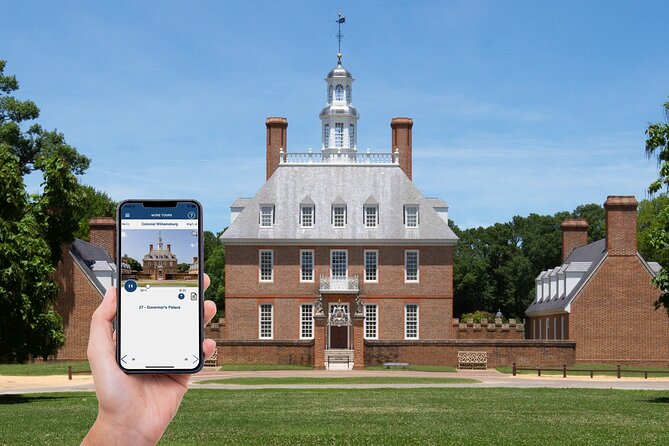
Then you’ll face the Governor’s Palace, described as extravagant—enough to help explain why residents of Williamsburg didn’t love their British royal governors.
This stop is all about contrasts: big authority, big symbolism, and local resentment. If you listen closely, you’ll probably start spotting how architecture can act like propaganda.
George Wythe House (abolitionist among the founders)
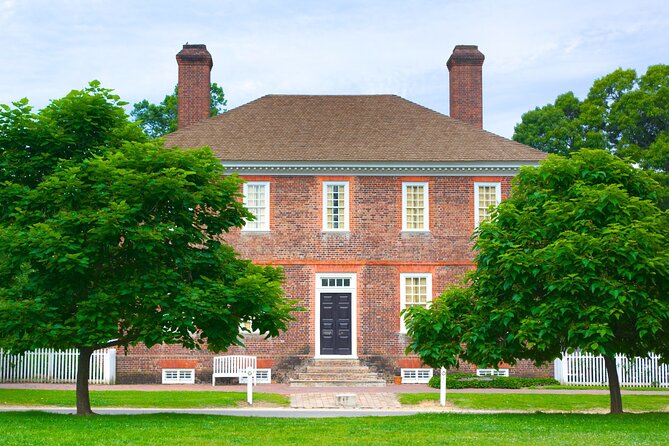
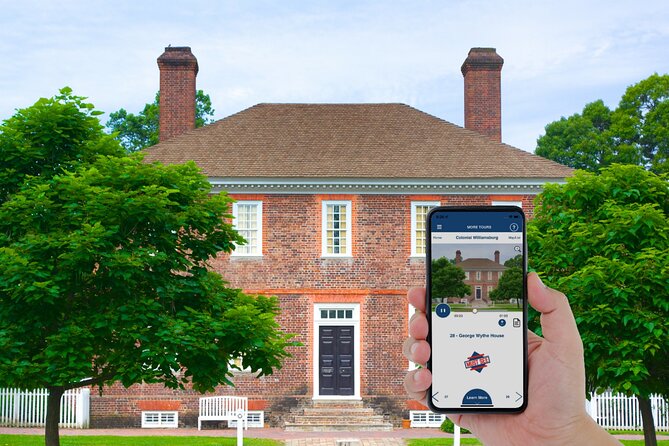
The audio at the George Wythe House highlights something unusual for Virginia’s political world: Wythe is described as an abolitionist, in a state using a lot of slave labor.
That detail gives this stop real bite. You’re not just learning a name tied to independence—you’re learning about contradictions inside the era. It’s also a reminder that “founding values” didn’t arrive on a perfectly even playing field.
Bruton Parish Episcopal Church (oldest building in Colonial Williamsburg)
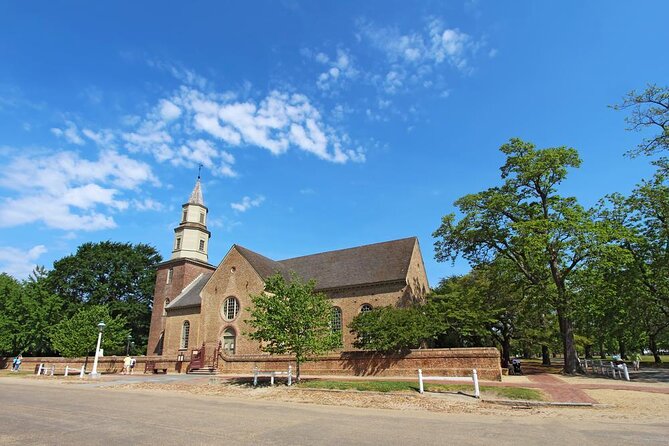
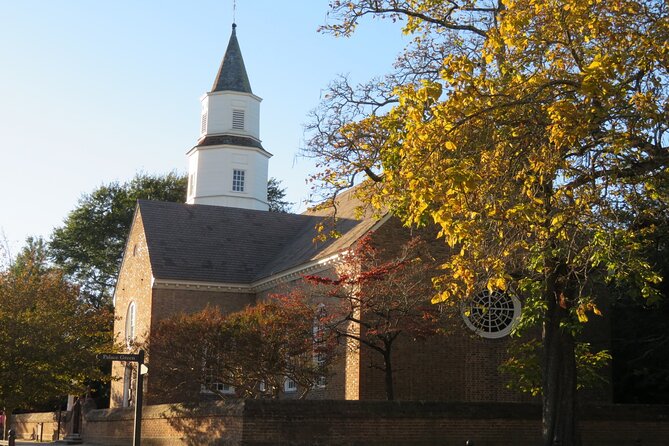
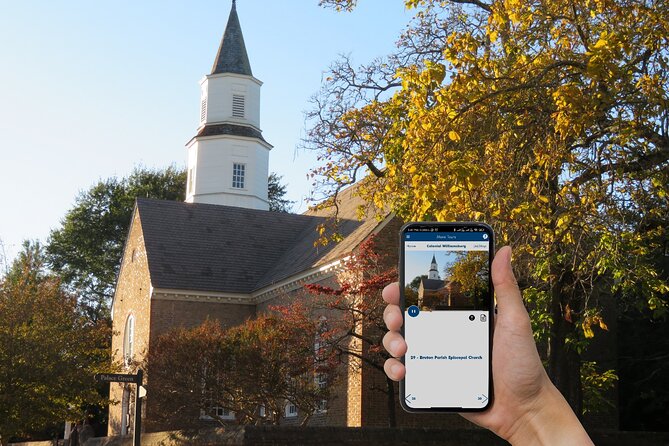
The next stop is Bruton Parish Episcopal Church, described as the oldest building in Colonial Williamsburg. The story also frames the church as central to why Colonial Williamsburg exists in the first place.
This is a good moment to slow down. Religious buildings often carry multiple layers—community life, preservation choices, and longstanding local identity—so a couple extra minutes here can pay off.
Bowden-Armistead House (Civil War-era divisions)
At the Armistead House story point, you’ll get a snapshot of division around the Civil War. The audio notes the owner was a northerner, and that the local Virginian neighbors likely didn’t feel great about that.
This is one of the strongest “history is complicated” stops. It’s not just revolution; it’s the later conflict that split communities and loyalties within the same place.
William & Mary College (oldest college in the U.S.)
Your route takes you to the campus of William & Mary College, described as the oldest college in the United States. That one line does a lot of work. You’re walking from governing bodies into education—the place where ideas, leaders, and arguments get shaped.
If you like seeing how institutions influence culture, this is a great bridge between politics and long-term thinking.
The Wren Building (oldest college building in the U.S.)
Finally, you reach the Wren Building, described as the oldest college building on campus and also the oldest college building in the entire United States.
As a final stop, this works because it pulls your day toward permanence. The revolution-era buildings explain power and conflict; the college building hints at continuity—how society tries to survive its own changes.
Making the audio pay off: how to listen smart while you walk
Audio tours can go two ways: you either enjoy the stories, or you end up wishing the clips were longer. Here, you’ll likely find a mix—short scenes that keep the walk moving, plus more learning offered at some points.
A few tactics I recommend:
- Listen once through fully, even if you’re not a “history every minute” person. The quick pacing helps you understand the structure of the town.
- If a topic grabs you—like the gunpowder standoff, Wythe’s abolitionist stance, or the first Declaration reading—take extra time at that stop before moving on.
- Bring a bit of patience for GPS behavior. Some GPS triggers need you to be near the story point and not just along the same street.
Also consider headphones volume. If you crank it too high, you’ll miss street-safety cues. If you keep it too low, you’ll lose the plot.
Technical tips that prevent the most common headaches
This tour is usually straightforward, but the setup matters. These are the practical fixes that align with the tour’s operating model:
- Download the tour on strong Wi‑Fi/cellular before you rely on the offline mode.
- Use GPS/location access so the map can track you and start the right story.
- Confirm the correct tour version when you open the app at the start point (direction and starting location matter).
- Bring a compatible device: iPhone with iOS 15+, Android 9+, or an iPad/tablet with GPS and cellular connectivity are recommended.
If something feels “off,” don’t assume the tour is broken. Often it’s a GPS permission issue or you’re a little off the story line.
Who should book this Colonial Williamsburg audio tour
This one is a good match if you:
- Love history but don’t want to sit on a bus all day
- Prefer self-paced sightseeing with short breaks for photos and wandering
- Want an affordable way to learn the main story lines before choosing which interiors to pay for
It’s also solid for first-time visitors because it gives you a logical stop order through the core sites, instead of turning your day into a map puzzle.
If you’re traveling as a couple, there’s a savings idea: couples can share one tour by splitting headphones. Just note that the tour is designed for hands-free listening and location-triggered playback, so you’ll both want to be able to hear clearly.
Should you book this $14.99 lifetime audio walk?
I’d book it if you want a low-cost, flexible way to understand what you’re seeing in Colonial Williamsburg without being tied to a group schedule. The big wins are the offline GPS maps, the lifetime access, and the fact that the audio is designed to start automatically as you reach key story points.
I wouldn’t book it as your only plan if you hate tech setup. The experience depends on downloading ahead of time, using GPS correctly, and walking close enough for triggers. And if you expect long-form narration at every stop, you may want to treat this as a fast story guide rather than a full documentary.
If you’re happy to follow an outlined walking route and use the audio as your main interpretive layer, this is a smart way to get more from Colonial Williamsburg for the money.
FAQ
How long is the Colonial Williamsburg self-guided audio walking tour?
It’s described as taking about 1–2 hours to complete, with a note that the tour is over 3 miles long. Another note also suggests about 2–3 hours for a 2.5+ mile loop, so plan for extra time if you stop often.
Where does the tour start and end?
The start is at Colonial Williamsburg Visitor Center, 101 Visitor Center Dr, Williamsburg, VA 23185. The end point is listed as 110 Scotland St, Williamsburg, VA 23185.
Does the audio tour work offline?
Yes. The tour includes offline GPS maps, so it works without cellular or Wi‑Fi after you download it.
Do I need admission tickets for the stops?
Admission tickets are not included. Some locations are noted as free, but many stops specifically say admission ticket not included, so you may need separate tickets if you want to enter certain sites.
What do I need to use the tour?
After booking, you’ll get an email and text with setup instructions and a password. You download the separate Action’s Tour Guide App, enter the password, and then start the tour on site.
Do I need to meet a guide at the beginning?
No. There’s no one meeting you at the start. You go to the starting point and begin the audio in the app, then follow the audio cues.
Is the tour valid more than once?
Yes. It’s described as new lifetime access with no expiry, so you can use it anytime, on any trip, and as many times as you want.