REVIEW · PARIS
Napoleon’s Paris: A Self-Guided Audio Tour
Book on Viator →Operated by VoiceMap Audio Tours · Bookable on Viator
Napoleon’s story plays out right under your feet. This self-guided GPS audio walk strings together GPS guidance and lifetime access, letting you start when you want and move at your own pace. One heads-up: it’s still a lot of walking, so on very hot days you may want extra breaks.
I like that the tour feels flexible without being chaotic. You don’t need to figure out a route on foot first; the app handles the turning points and keeps you moving. And if you run into trouble nearby, one report highlighted a helpful staffer named Victor who stayed supportive and punctual.
You’ll finish at Napoleon’s tomb, but the best part is how the audio stitches together what you’re seeing as you go. It’s also a smart choice if you prefer hearing details when you’re ready—like pausing to grab water, a snack, or use a restroom.
In This Review
- Key things that make this tour work well
- How the self-guided audio tour actually plays out
- Price and time: what you’re really paying for
- Start at Arc de Triomphe du Carrousel, end at Napoleon’s Tomb
- Stop-by-stop: what you’ll see and why each part matters
- 1) Arc de Triomphe du Carrousel: bronze, bas-reliefs, and a perfect frame
- 2) Tuileries Garden: your break, your backdrop, your story pause
- 3) A Napoleonic-era street: arcades, symmetry, and luxury storefronts
- 4) A madeleine stop: buttery Paris comfort built into the route
- 5) Iconic street energy: luxury boutiques with historical weight
- 6) A baroque church with bullet holes: history you can still see
- 7) Neoclassical arcades and a darker story: intrigue and assassination plots
- 8) Place Vendôme and the Column: melted cannons turned to art
- 9) A huge square with the Luxor Obelisk: wide views and stacked meanings
- 10) The French National Assembly: Neoclassicism in the post-Revolution era
- 11) Hôtel des Invalides: wounded soldiers, imperial scale, and the gilded dome
- 12) Napoleon’s tomb: marble, sculptures, and a heavy final note
- The best part: pacing, GPS help, and audio you can control
- Things to watch for before you go
- Who should book this tour?
- A smart way to plan your day around it
- Should you book Napoleon’s Paris?
- FAQ
- How much does Napoleon’s Paris cost?
- How long is the tour?
- Is the tour available in English?
- Do I need a smartphone and headphones?
- Does the app use GPS so I don’t get lost?
- Can I download anything for offline use?
- Is there a time limit for using the tour?
- Where does the tour start and end?
- What is the cancellation policy?
Key things that make this tour work well
- Start anytime: no set departure time, so you can match it to your day
- Lifetime access: keep using the audio later, even after your visit
- GPS directions: you can focus on monuments instead of map anxiety
- Offline audio and maps: save your data for real life Paris problems
- Designed pacing: built for slow-and-steady listening, not sprinting between stops
- Ends at the tomb: a strong closer at Les Invalides, right where Napoleon is memorialized
How the self-guided audio tour actually plays out
This is a smartphone-first tour. You load the VoiceMap Audio Tours app (iOS/Android), follow GPS guidance, and press play on the audio track as you reach each stop. That approach is great in Paris, where streets can feel busy and signage can be inconsistent.
Two practical perks matter most for real-world visitors. First, the app is meant to help you avoid getting lost, since it guides you on the spot. Second, the audio is available offline, including audio, maps, and geodata—so you’re not stuck hunting for signal at the exact wrong moment.
The tour is also flexible in how you experience it. You can pause the audio while you get something to drink, take a breather, or handle a bathroom stop. That’s not just comfort; it changes the way the tour lands. You get to match the story to your energy, rather than the other way around.
And because it’s lifetime access, you don’t have to cram everything into one visit. You can come back later, reuse the route, or listen again if you want more from a specific stop.
You can also read our reviews of more tours and experiences in Paris.



Price and time: what you’re really paying for
At $11.99 per person, you’re buying a self-paced walking route with GPS, audio, and offline support. For that price, the value is less about the audio being fancy and more about the convenience: you’re not paying for a guide’s time, and you’re not boxed into a strict schedule.
The total time is listed at about 1 hour 30 minutes to 2 hours. That estimate is realistic if you treat it like a stroll, not a museum sprint. If you’re slower, plan extra minutes—one report specifically said the pace worked because the audio can be paused while you handle stops.
Also keep in mind what’s not included. The tour does not include food, drinks, transportation, or personal attraction fees. So if you want to spend extra time inside certain places, you’ll need to budget separately.
Start at Arc de Triomphe du Carrousel, end at Napoleon’s Tomb
The tour begins at Arc de Triomphe du Carrousel (Pl. du Carrousel, 75001 Paris). It ends at Napoleon’s tomb at 129 Rue de Grenelle, 75007 Paris, inside Hôtel des Invalides.
That “arc to tomb” flow is clever. You start with an imperial monument that signals power and victory, and you finish in the memorial space devoted to Napoleon’s legacy. The geography also keeps things moving: most stops sit along a logical west-to-south walk through central Paris.
Stop-by-stop: what you’ll see and why each part matters
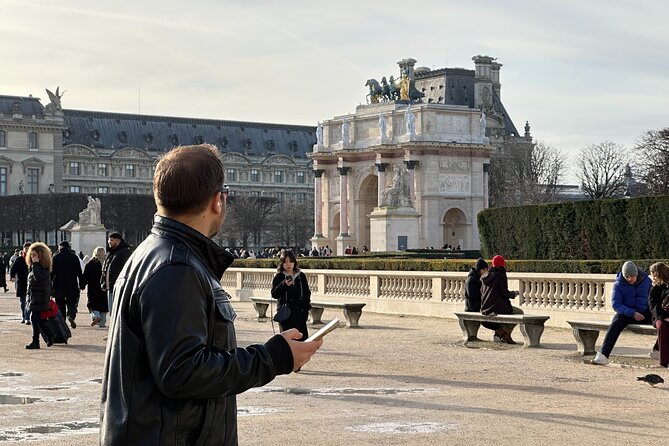
1) Arc de Triomphe du Carrousel: bronze, bas-reliefs, and a perfect frame
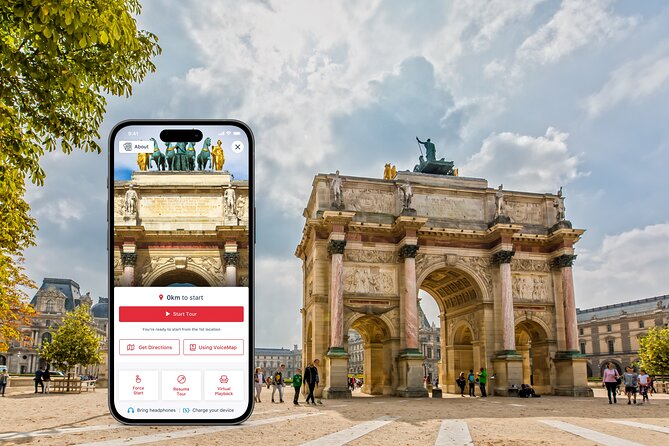
The opening scene is an ornate triumphal arch crowned with a bronze quadriga. The bas-reliefs depict Napoleon’s victories, so the story starts right at the visual level—he’s not introduced quietly. As you pass by, the arch also frames the entrance to the Tuileries Garden, giving you an instant Paris “what am I looking at?” moment.
Tip: Pause right where the audio lines up with the view. These monuments make more sense when you’re standing in the exact sightline the story is describing.




2) Tuileries Garden: your break, your backdrop, your story pause
Next comes the Tuileries Garden—tree-lined pathways, classical statues, and fountains that add motion to the walk. This stop is where the tour breathes. Instead of only monuments, you get a designed outdoor space that people actually use.
It’s also a smart place to reset your pace. If you need a quick break before you hit the busier streets, you’ll find a quieter rhythm here.
Drawback to consider: On a very hot day, gardens can still feel exposed. If heat is an issue for you, you’ll want water and a plan to take pauses.
3) A Napoleonic-era street: arcades, symmetry, and luxury storefronts
From the garden, the tour moves onto a grand street lined with arcaded buildings and luxury shops—urban planning that reflects the Napoleonic era’s sense of order. You’ll notice the symmetry more as you walk, not just as you stare.
This part works well because the audio can help you read city design like a clue. The architecture isn’t just pretty; it’s part of how power was displayed in streets, not only in palaces.
4) A madeleine stop: buttery Paris comfort built into the route
At one point you’ll reach a charming pâtisserie renowned for its buttery madeleines. This is a practical stop disguised as a cultural one. Even if you’re not a dessert person, the audio moment pairs nicely with an actual snack break.
How to use it well: Treat this as a short reset, then continue. Because the tour is timed around a walking route, getting too sidetracked can throw off your sense of flow.
5) Iconic street energy: luxury boutiques with historical weight
You’ll then pass along another iconic street where luxury boutiques meet older Paris charm. The vibe here is less about monuments you photograph and more about the texture of the city—shops, street life, and the feeling that you’re walking through a famous thoroughfare.
The audio helps by connecting the modern scene back to the Napoleonic-era urban planning ideas you’ve already seen. It’s a good bridge between “wow, buildings” and “now I understand why these streets matter.”
6) A baroque church with bullet holes: history you can still see
This stop is visually striking: a baroque-style church whose facade still shows bullet holes from the French Revolution. The exterior is the dramatic part, but the audio contrast is the payoff—how a calm interior sits next to a violent past.
This is one of those moments where you’ll likely slow down on your own. The physical damage is a reminder that big political changes didn’t happen in textbooks only.
7) Neoclassical arcades and a darker story: intrigue and assassination plots
The tour continues along a picturesque street with Neoclassical arcades. Here the audio shifts into intrigue, including tales of assassination plots tied to the historic location.
Even if you don’t care about political drama, this is a useful section because it turns what could be a normal walk into a story you can follow. You’re not just counting landmarks; you’re tracking motives.
8) Place Vendôme and the Column: melted cannons turned to art
Next is Place Vendôme and the bronze Column rising from it. The spiraling reliefs are made from melted enemy cannons, which makes the symbolism hard to ignore. It’s a military message turned into decorative form, and the column is both imposing and detailed.
Standing beneath it is a reminder that public monuments were often built as propaganda—meant to be seen, meant to be believed.
9) A huge square with the Luxor Obelisk: wide views and stacked meanings
After the column, you’ll pass through an expansive square featuring the Luxor Obelisk. This stop gives you space—wide sightlines and sweeping views over Paris.
It also carries layered historical meaning, going from royal grandeur to the turmoil of the Revolution. That contrast is exactly what makes an obelisk feel more than decorative. It’s a time marker.
10) The French National Assembly: Neoclassicism in the post-Revolution era
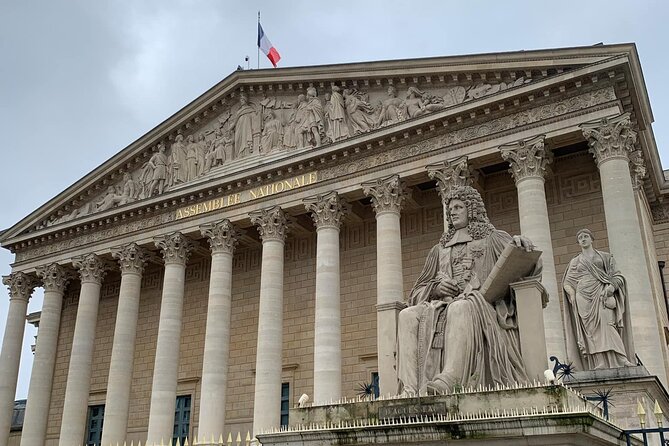
You’ll then see the French National Assembly, housed in a stately neoclassical building. The architecture reflects the influence of Neoclassicism on post-Revolutionary Paris, and the columns make the building feel formal and serious.
Why this matters on an audio tour: the story can connect the Napoleon era to what followed—how new systems took shape in the same city, using similar visual language.
11) Hôtel des Invalides: wounded soldiers, imperial scale, and the gilded dome
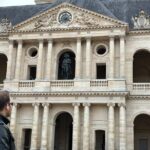
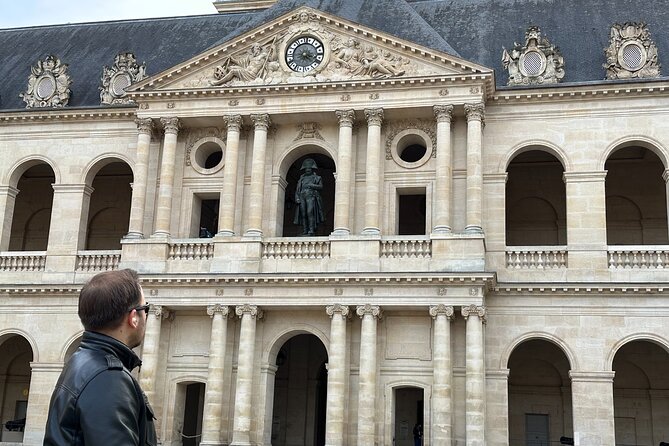
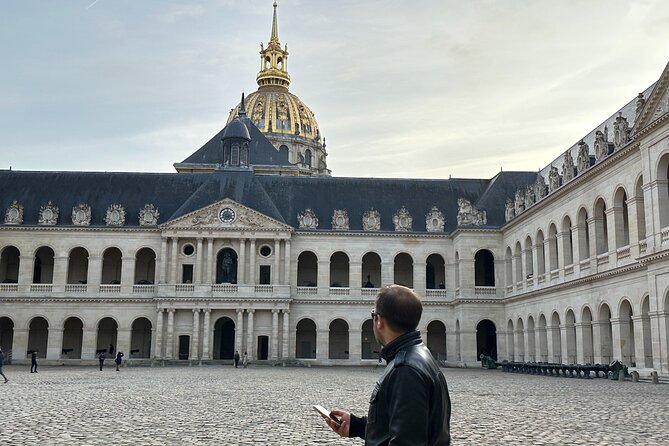
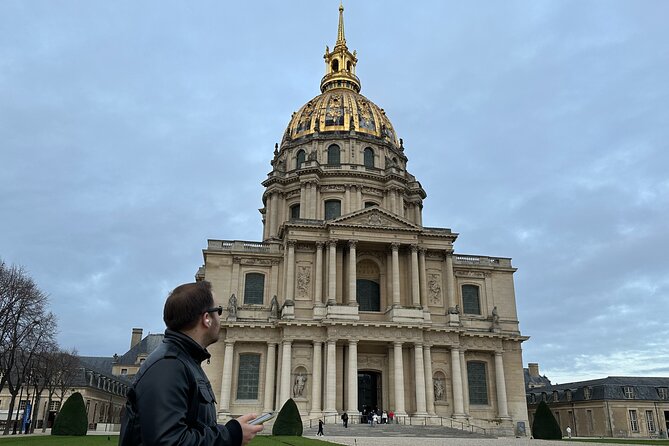
Then comes Hôtel des Invalides, recognizable by its gilded dome and sprawling courtyards. This complex was originally built as a hospital for wounded soldiers, so the meaning goes beyond spectacle.
You get the sense of military might, yes, but also the cultural legacy of honoring those who suffered. It’s a different angle from triumphal arches and victory reliefs.
12) Napoleon’s tomb: marble, sculptures, and a heavy final note
The last stop is Napoleon’s tomb beneath the golden dome. The tomb is presented as a grand marble sarcophagus surrounded by intricate sculptures. By the time you reach this point, you’ve already heard the story in layers: victory monuments, street planning, political intrigue, and finally legacy.
This ending tends to work because the tour doesn’t just dump information at the end. It has been building to the idea of memory—how a life gets turned into stone.
The best part: pacing, GPS help, and audio you can control
If you like tours where you stay in charge, this one fits. One report praised the ability to go at a slower pace and pause the audio for practical stops like water, snacks, or restrooms. That matters because Paris walking can be tiring, and forced pacing ruins good listening.
The GPS guidance also reduces the most common self-guided pain: guessing which street corner you’re supposed to be on. Instead, you can look around while the app keeps you oriented.
And the offline tools help you keep your attention on the street. With offline audio and offline maps, you’re less likely to lose the story because your connection disappears.
Things to watch for before you go
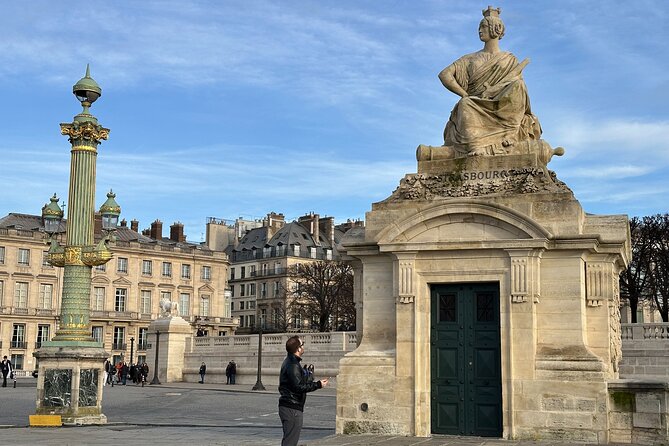
There are a few practical considerations that can make or break the experience.
First, you need to bring your own smartphone and headphones. That’s listed as not included. If you forget headphones, you’ll still have the tour, but it will be much less enjoyable—especially in noisy sidewalk areas.
Second, plan for a decent walk. The tour is short in total time, but it’s still a linear path with multiple stops. If you’re sensitive to heat or long stretches of pavement, go earlier in the day or carry water.
Third, remember what’s not included. The tour doesn’t cover food, drink, or transportation, and it doesn’t include attraction costs beyond the audio itself. So if you want to go inside extra places along the route, you’ll want to budget and time it on your own.
Who should book this tour?
This is a great fit if you want:
- a budget-friendly, self-paced introduction to Napoleon-era Paris
- a tour with lifetime access, so you can listen again later
- a route that uses GPS help so you don’t get lost
- an audio experience where you can pause easily
It may be less ideal if you want a full guided explanation with real-time Q&A. This is audio-led, not human-led.
Also, because most people can participate and service animals are allowed, it’s broadly doable. But like any walking route, you should judge it based on your own comfort level.
A smart way to plan your day around it
You’ll be starting at Arc de Triomphe du Carrousel and ending at Napoleon’s tomb at Les Invalides. That makes it easy to build a half-day plan around central Paris.
If you’re trying to avoid heat, aim for a cooler time window and keep the madeleine stop as your built-in snack break. If you’re traveling light, make sure your phone is charged before you start. Offline support helps, but battery still has to last.
And if you want the story to land, don’t rush. This tour works best when you let each stop be a moment, not a checkbox.
Should you book Napoleon’s Paris?
I’d book it if you like controlling pacing and you want a clear Napoleon-focused route without paying for a guided group schedule. The mix of major monuments and storytelling stops—ending at Napoleon’s tomb—gives you a satisfying arc in just 1.5 to 2 hours.
I’d reconsider if you hate walking or if you expect a guided lecture with lots of extra ticketed entries. Since attractions beyond the audio are not included, you’ll need to plan any add-ons separately.
Bottom line: for $11.99, you’re getting a well-structured route with GPS reassurance and offline audio. That’s a strong value for anyone who wants to understand what they’re seeing while keeping freedom to pause and move.
FAQ
How much does Napoleon’s Paris cost?
It costs $11.99 per person.
How long is the tour?
The duration is about 1 hour 30 minutes to 2 hours.
Is the tour available in English?
Yes, the audio tour is offered in English.
Do I need a smartphone and headphones?
Yes. A smartphone and headphones are not included.
Does the app use GPS so I don’t get lost?
Yes. The tour includes GPS guidance to help you follow along and stay on track.
Can I download anything for offline use?
Yes. The tour offers offline access to audio, maps, and geodata.
Is there a time limit for using the tour?
No. You get lifetime access to the tour.
Where does the tour start and end?
It starts at Arc de Triomphe du Carrousel, Pl. du Carrousel, 75001 Paris, France. It ends at Napoleon’s tomb, 129 Rue de Grenelle, 75007 Paris, France.
What is the cancellation policy?
You can cancel for free up to 24 hours in advance for a full refund. Canceling less than 24 hours before the start time is not refundable.