REVIEW · PARIS
Montmartre – A Canvas of Art and History (Self-Guided audio tour)
Book on Viator →Operated by sGuiding · Bookable on Viator
Montmartre can feel like a painting you can walk into. This self-guided, GPS-triggered audio tour pairs 15 iconic sights with real neighborhood details, so you can wander and still follow a clear route. You start at Église Saint-Jean de Montmartre and end near Moulin Rouge, with stories timed to where you stand.
I like the freedom here. You can go slow, pause for photos, and choose how long you stay at each stop, because there’s no group schedule forcing your pace. I also love that the audio isn’t just about what to see; it gives you what to notice, from church architecture to the romance-and-cabaret side of Montmartre.
One thing to watch: the activation code comes in a message, and if you miss it in your inbox, you’ll be stuck before you even start. Double-check that message once you book, so you don’t lose your first hour.
In This Review
- Key things to know before you go
- Why Montmartre fits a self-guided audio plan
- Starting at Église Saint-Jean de Montmartre: the quiet start that matters
- Sacré-Cœur and the view payoff you can’t fake
- Saint-Pierre de Montmartre: oldest-stones energy, with real schedule limits
- Le Mur des Je t’aime: romance, color, and a quick stop that works anytime
- Museum time at Musée de Montmartre: the pink façade and what’s inside
- Place du Tertre and Place Dalida: where the neighborhood keeps performing
- The cabaret and old artists’ quarter feeling
- Moulin Rouge as a practical finish line
- Timing tips so you don’t feel rushed
- Price and value: what $5.78 buys you in real time
- Is it worth it if you don’t want an overscheduled day?
- A quick reality check on the audio experience
- Should you book this Montmartre audio tour?
- FAQ
- How long is the Montmartre self-guided audio tour?
- What does the tour cost?
- What do I need to use the audio guide?
- Where do I start and where does it end?
- Is the tour completely self-guided?
- Are admissions included?
- What are the opening hours for Sacré-Cœur?
- Do all churches have the same opening hours?
- Is this tour private?
- Can I cancel for a full refund?
Key things to know before you go
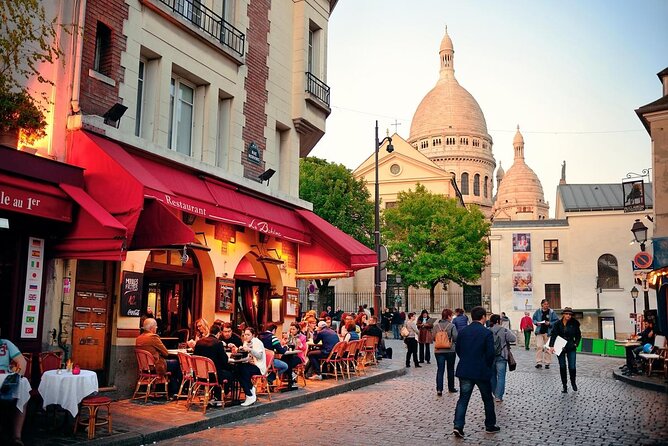
- GPS-triggered audio tells you what to look for as you move
- 15 Montmartre landmarks keep your walk focused without a rigid plan
- Most stops are free, with only the Musée de Montmartre charging admission
- Church hours vary (for example Saint-Pierre de Montmartre has a Monday closure)
- Short format (1–2 hours) works well for a single Montmartre outing
- You finish near Moulin Rouge, a handy way to link your walk to the rest of Paris
Why Montmartre fits a self-guided audio plan
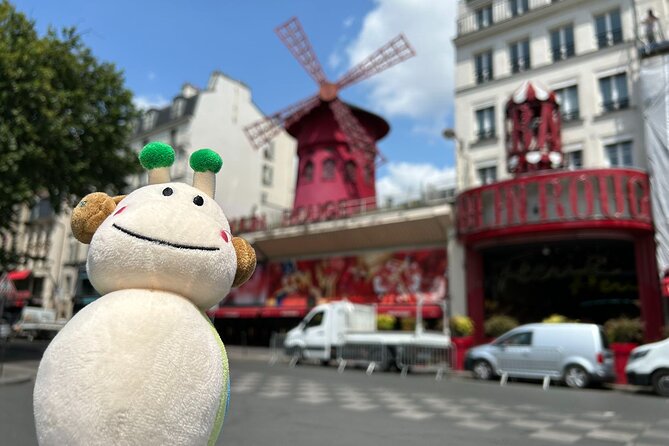
Montmartre rewards slow walking, but it can also feel a bit like you’re wandering without a point. This format solves that. The GPS-triggered audio acts like a light hand on your shoulder, nudging you from one landmark to the next while you stay in control.
You’ll get the best of both worlds: big-name Paris sights plus the in-between details that make Montmartre feel like itself. And since it’s private to your group and self-paced, you won’t have to match anyone else’s speed.
The whole experience is designed to fit a short window, about 1 to 2 hours. That’s perfect if you want Montmartre without turning the day into a long trek.
You can also read our reviews of more tours and experiences in Paris.



Starting at Église Saint-Jean de Montmartre: the quiet start that matters
Your walk begins at Église Saint-Jean de Montmartre (19–21 Rue des Abbesses). The timing given for this church is daily 9:00–18:00, and entry is free, so it’s a good place to start when your energy is fresh.
What I like about this first stop is the tone it sets. You’re in Art Nouveau territory right away, and the church’s spiritual calm helps you tune your brain to the neighborhood’s style—ornate details, tucked corners, and that layered Montmartre vibe.
Practical tip: get your phone ready before you leave the front area. With a self-guided setup, it’s easier if your audio is playing and your GPS is working from the start, not after you’ve already walked a block or two.
Sacré-Cœur and the view payoff you can’t fake
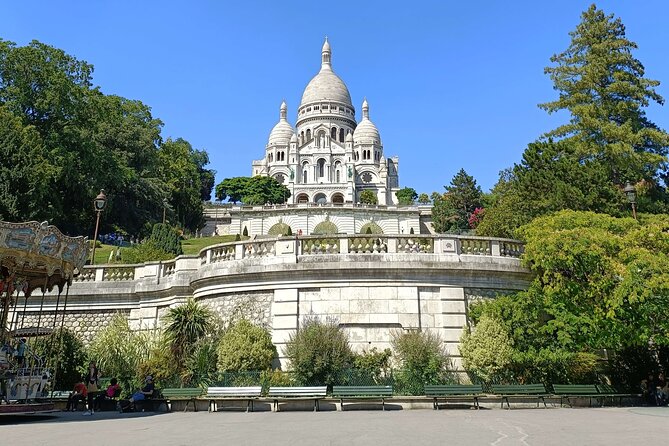
Next comes Basilique du Sacré-Cœur de Montmartre. It’s free to enter, and it’s open daily 6:30–22:30, so you’re not locked out even if your day runs late.
This is the moment where the audio tour starts to feel worth it. Sacré-Cœur isn’t only a famous building; it’s a built-in viewpoint. When you’re up on Montmartre Hill, you understand why artists and photographers kept coming back.
A small consideration: because it’s open from early morning to night, you’ll likely have crowds at many times. If you want quieter photos, aim for earlier in the day or later in the evening, when you can still catch the skyline with fewer people.
Saint-Pierre de Montmartre: oldest-stones energy, with real schedule limits
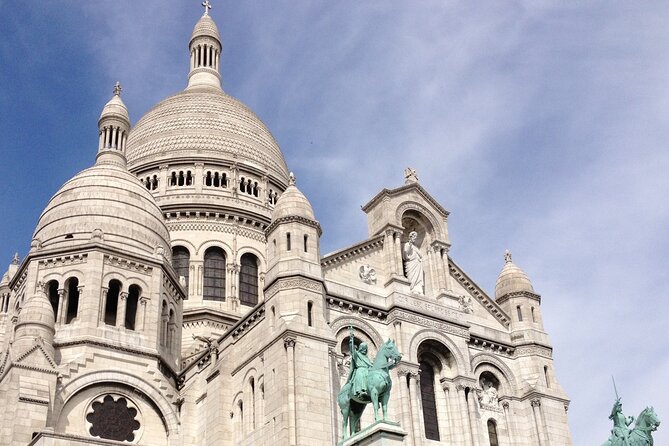
Then you’ll reach Eglise Saint-Pierre de Montmartre, another free church stop that adds old-Paris weight to your walk. It’s described as one of the oldest churches in Paris, and that matters because you’re not just ticking boxes—you’re seeing how Montmartre shifted through centuries.
The hours are specific, and you should respect them:
- Monday: closed
- Saturday: 9:00–12:00 and 15:00–19:00
- Tuesday–Friday & Sunday: 9:00–12:00 and 15:00–18:00
If your visit lands on a Monday, plan your route so you don’t count on this one. The audio tour will still move you along, but you’ll miss the chance to step inside at the right moment.
Le Mur des Je t’aime: romance, color, and a quick stop that works anytime
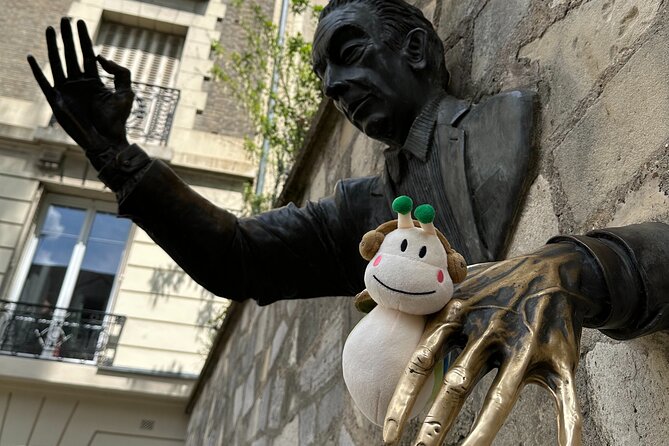
The tour includes Le Mur des Je t’aime, with free entry and a very workable daily window:
- Monday–Friday: 08:00–17:30
- Saturday–Sunday: 09:00–17:30
This stop is short, listed at about 3 minutes, but it’s the kind of place that resets your mood. It’s a simple idea made public—messages of affection covering the wall—so even if you’re not in a romantic mood, you’ll still feel the warmth.
The drawback is obvious once you’re there: it can get crowded at peak hours. If you’re moving through, keep your attention on the details of the wall rather than waiting for the perfect photo angle.





Museum time at Musée de Montmartre: the pink façade and what’s inside
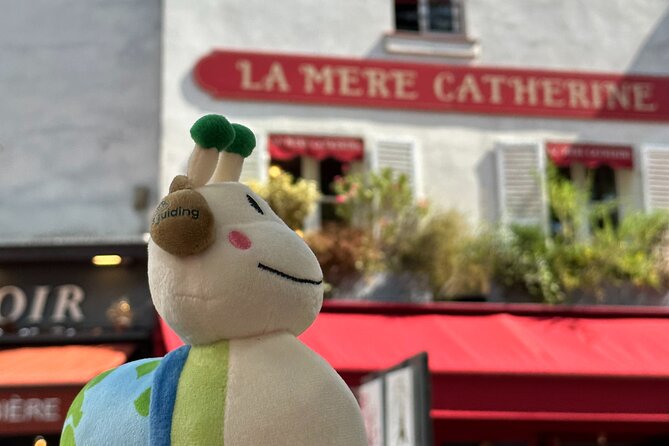
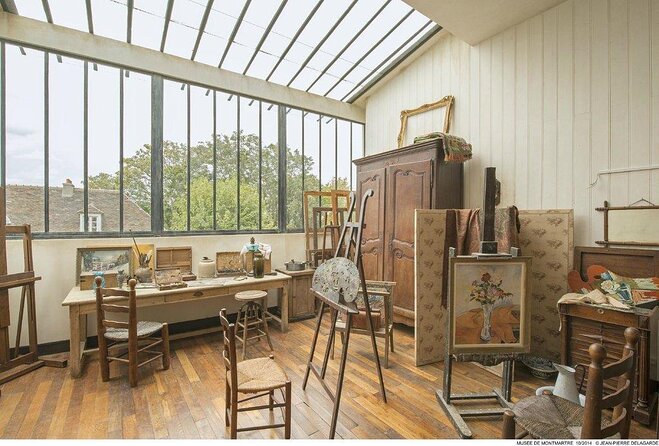
At some point, you’ll want a break, and that’s where Musée de Montmartre fits. It’s open daily 10:00–19:00. Entry is not included, so you’ll pay separately if you choose to go in (the tour time estimate around 30 minutes includes the museum window).
The museum is known for its bright pink façade and the district-focused story it tells. That’s valuable because Montmartre often gets flattened into postcard clichés: artists, cabarets, and stone stairways. A museum stop gives you context for why those images stuck—and what people actually built, worked on, and celebrated here.
Real-world note: because museum admission is not included, you’re deciding on the spot. If you’re tight on time, you can still enjoy the walk’s other free sights and skip the museum. If you do go in, treat it as your “understand Montmartre” pause.
Place du Tertre and Place Dalida: where the neighborhood keeps performing
From there, you hit Place du Tertre, a classic square full of artists, cafés, and street life. The audio keeps this stop brief, but it’s a strong area for people-watching and quick sketches of the neighborhood’s energy.
Then you move to Place Dalida, a smaller square dedicated to the singer Dalida. This stop is also short, but the details matter: the tour notes it as her homage area and points out that her connection to Montmartre lasted for more than 20 years.
This part is where the tour becomes more than “see famous places.” It nudges you to notice how Montmartre remembers its own. Even if you don’t know much French pop history, the idea lands: the neighborhood turns lives into landmarks.
The cabaret and old artists’ quarter feeling
Your audio route also works in Montmartre’s theatrical past. You’ll hear about an artists’ quarter that once drew famous performers, and you’ll get references tied to cabaret culture—so the evening side of Montmartre makes sense instead of seeming random.
One venue-specific detail is included with time hints: Tuesday & Thursday through Saturday, 21:00–01:00. That’s a useful consideration if you like the idea of matching your walk with a late-night atmosphere, even if the audio is what you’re actually paying for here.
Also along the route are connections to:
- the café from the movie Amélie Poulain
- Auguste Renoir’s Le Bal du Moulin de la Galette (the famous painting’s location)
These references are great because they give you a reason to look up from your phone and scan the street for what matches the story.
Moulin Rouge as a practical finish line
The tour ends near Moulin Rouge, and the directions say you’re close to Blanche Metro Station (Line 2). This is handy. You don’t finish “deep in nowhere.” You finish near a major transit line and a big, easy-to-find landmark.
Even if you don’t go inside Moulin Rouge, the finish helps you plan the rest of your evening. It’s a good place to grab a snack or hop to another neighborhood without backtracking.
Timing tips so you don’t feel rushed
Because the full experience is about 1–2 hours, the trick is matching your pace to the stop mix. Most of the churches and key landmarks listed are free, so your time is mostly about where you choose to linger.
Here’s how I’d think about timing:
- Start earlier when you can, especially if you want to include Saint-Pierre de Montmartre, since it has a Monday closure and split-day hours.
- Use Sacré-Cœur (6:30–22:30) as your flexible anchor if something else runs long.
- If Le Mur des Je t’aime matters to you, aim to arrive before it closes at 17:30.
- Decide upfront whether you’ll pay for Musée de Montmartre. If you do, treat it as a planned 30-minute reset rather than a last-minute gamble.
One more practical tip: keep water handy. Montmartre walks include steady climbs and lots of stop-and-go. Even on a self-guided tour, your body still sets the pace.
Price and value: what $5.78 buys you in real time
At $5.78 per person, this is priced like an audio add-on, not like a full guided tour. That’s the point. You’re paying for a guided experience without paying for a human escort.
So what’s the value?
- You get 15 named sites and structured storytelling that helps you connect the dots fast.
- Most of the experience is at free locations, meaning your money isn’t eaten up by admissions.
- The only admission you might pay is Musée de Montmartre, which makes the cost feel controllable.
Is it a bargain or just cheap? It feels like a bargain when you use it the way it’s meant to be used: phone on, GPS working, and you actually let the audio point your eyes at things you’d otherwise miss.
Is it worth it if you don’t want an overscheduled day?
Yes, especially if you want Montmartre but dislike strict plans. I like that this tour doesn’t trap you in set timing between stops. The audio fits your walk, not the other way around.
It also works well solo. The standout feedback around solo use is that it’s a straightforward way to see Montmartre’s best without needing to match group energy. Even if you go with friends, the private setup means you stay together as one unit.
Best fit:
- You like walking.
- You want stories but don’t want a guide marching you around.
- You’re comfortable handling your own phone navigation.
Possible mismatch:
- If you hate using your phone for navigation, this might feel like extra work.
- If you only want a quick “drive-by highlights” version, the 1–2 hour walking length may still feel like commitment.
A quick reality check on the audio experience
Since it’s GPS-triggered, your phone’s location accuracy matters. In tight spots, GPS can be fussy, so give it a moment if the audio doesn’t start instantly when you arrive.
Also, remember that audio tours can’t replace being at the site. They guide your attention, but you’ll still get the most out of them by slowing down for 30–60 seconds at each key stop.
And do check that activation code message. One missed message can turn a smooth start into a frustrating delay.
Should you book this Montmartre audio tour?
I’d book it if you want Montmartre in a bite-sized, well-directed way—especially if you like mixing churches, art references, and cabaret culture. The combination of free entry for most sites, a short 1–2 hour format, and 15 GPS-triggered story stops gives you strong value for the money.
Skip it (or look for an alternative) if you want someone to manage your schedule, or if you’re likely to arrive without checking your activation message and getting your audio ready first.
If you plan to walk Montmartre anyway, this turns that walk into something you’ll actually remember.
FAQ
How long is the Montmartre self-guided audio tour?
It takes about 1 to 2 hours.
What does the tour cost?
It costs $5.78 per person.
What do I need to use the audio guide?
An iOS device, since the experience is accessed through a phone.
Where do I start and where does it end?
You start at Église Saint-Jean de Montmartre, 19–21 Rue des Abbesses, 75018 Paris. You end near Moulin Rouge, close to Blanche Metro Station (Line 2).
Is the tour completely self-guided?
Yes. You explore independently with GPS-triggered audio and no rigid schedule.
Are admissions included?
Most stops listed are free. Musée de Montmartre is not included.
What are the opening hours for Sacré-Cœur?
Sacré-Cœur is open Monday through Sunday from 6:30 to 22:30.
Do all churches have the same opening hours?
No. For example, Saint-Pierre de Montmartre is closed on Monday and has split hours on other days as listed in the tour details.
Is this tour private?
It’s private for your group, meaning only your group participates.
Can I cancel for a full refund?
Yes, free cancellation is offered if you cancel at least 24 hours before the experience’s start time.