REVIEW · MOAB
Self Guided Audio Tour in Arches and Canyonlands
Book on Viator →Operated by GuideAlong (GyPSy Guide) · Bookable on Viator
A good road trip needs a good story. This self-guided GuideAlong GPS audio tour turns your phone into the driver’s seat guide for Arches and Canyonlands, with narration triggered as you move through key viewpoints and trailheads.
You keep privacy (only your group) and you control the pace, which is a big deal in parks where everyone else seems to be in a hurry.
Two things I really like: the narration plays automatically as you drive, so you do not have to constantly stop and check your phone; and the stops are practical, with clear time estimates and directions for walks ranging from short viewpoints to a few steeper trail segments. I also like that you can download for offline use, so the whole experience stays smooth even if cell service gets patchy.
One drawback to plan around: you still need to handle your own hiking timing and park access. The tour includes the audio and app tools, but it does not include entrance fees or national park passes, so double-check your day plan before you roll up to the gates.
In This Review
- Key points before you go
- Why a GPS audio drive feels different in Moab
- Price and value: $24.99 per group, plus your park fees
- Getting the app ready: offline audio and fewer tech headaches
- Arches National Park drive: Windows, Double Arch, Delicate Arch, Park Avenue
- Stop 1: Arches National Park (your orientation and top picks)
- Stop 5 and Stop 6: Double Arch and the Windows area (close together, easy to string)
- Stop 7: Delicate Arch (celebrity status, two ways to see it)
- Stop 8: Park Avenue Trail (paved start, optional deeper canyon time)
- Stop 9: Skyline Arch (short walk, late-day photos)
- Landscape Arch and Devil’s Garden: two hikes with very different moods
- Stop 3: Landscape Arch (long span, fragile reality)
- Stop 4: Devils Garden Trailhead (fins, arches, and a choose-your-own-length vibe)
- Canyonlands Island in the Sky: Mesa Arch and the big overlooks
- Stop 2: Island in the Sky (Grand View Point Road focus)
- Stop 10 and Stop 11: Grand View Point and Green River Overlook
- Stop 12: Mesa Arch (the classic sunrise window)
- Stop 13: Upheaval Dome (science mystery, strong visuals)
- Stop 14: Aztec Butte Trail (granaries and a slickrock scramble)
- Extending the day: The Needles District for color and quieter slickrock
- Should you book this self-guided tour for Arches and Canyonlands?
- FAQ
- Do I need national park entrance fees or a park pass?
- How many people can use one purchase?
- Does the narration play automatically as I drive?
- Can I use the tour without cell service?
- How long is the experience?
- Is it only for one specific day?
Key points before you go
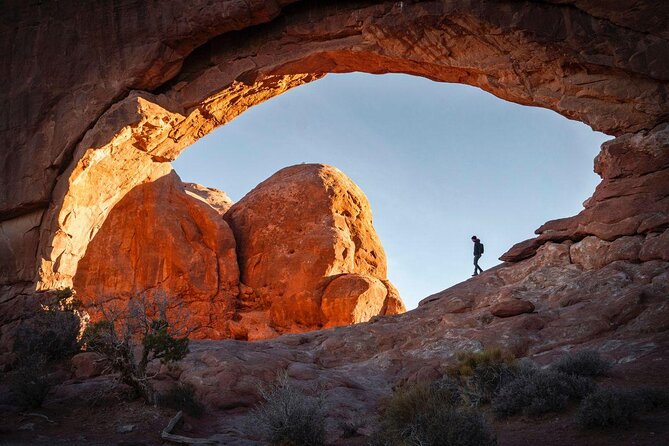
- GPS-triggered audio means you get stories right when you’re at the right pull-off or trailhead
- Download once, use offline so your day does not depend on signal
- Group purchase price covers up to 8 people, which can be strong value for a carful of friends or a family
- Flexible routing lets you skip hikes you do not feel like doing and still stay on a smart path
- Lots of photo-friendly timing built into the route, from Mesa Arch sunrise to Skyline Arch late-day light
- Offline trip planner options (app, web, PDF) help you map your own version of the day
Why a GPS audio drive feels different in Moab

In a place like Moab, you can do the “drive, stop, walk, repeat” routine and still feel like you missed half the point. This tour changes that. As you move along the route, the narration follows your position using your phone’s GPS. The effect is simple: you get the why behind what you’re seeing, without having to stop reading signs or squint at your phone for directions.
I like how the tour is designed around real driving days. You can start and end anywhere along the route because the narration is location-based. That matters when your timing is off due to parking, coffee, weather, or just the reality that everyone in a car moves at slightly different speeds.
The experience is also private. It is only your group in your vehicle. That means you can take longer at a viewpoint that grabs you, and you do not have to keep pace with a bigger group. In parks where a 15-minute photo break can turn into 45 minutes fast, that flexibility is worth something.
You can also read our reviews of more tours and experiences in Moab.


Price and value: $24.99 per group, plus your park fees
The audio tour costs $24.99 per group (up to 8 people). If you’re traveling as a family, that can turn into a very low per-person cost fast. If you’re in a car with friends, it’s even better: one purchase covers everyone in that vehicle.
Where the math needs a reality check is what the price does not include. The tour explicitly does not include entrance fees or national park passes. The stop notes show some sections listed as ticket free and others as not included, but the overall product still does not hand you park entry. So you should plan on paying any park access costs on your own, based on which districts you enter and how you route your day.
If you already know you want the big-name sights—Delicate Arch in Arches and Mesa Arch in Canyonlands—this tour’s value comes from filling the gaps. Without audio, it’s easy to park and think, I guess that’s cool. With audio, you get the geological story, what to look for, and what’s worth your limited time.
Getting the app ready: offline audio and fewer tech headaches
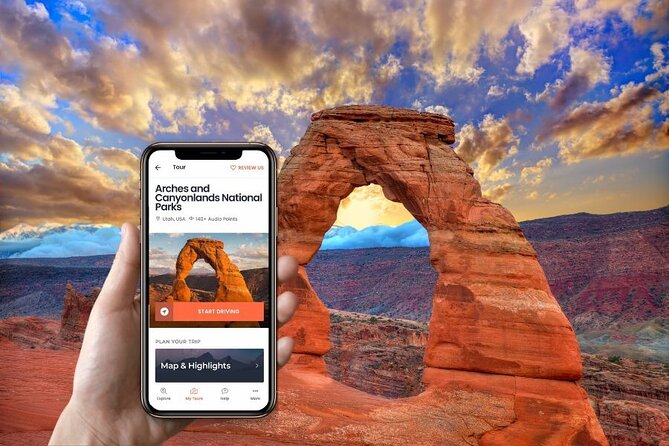
This is a smartphone tour, so a little prep makes it feel effortless. After booking, you receive email/text instructions that tell you to redeem a voucher code and sign in with your Apple or Google account. Then you download the GuideAlong app and the tour under My Tours.
The key detail for comfort: you can download ahead and then use the audio offline. That means once your tour is downloaded, you do not need constant internet or a strong cell signal to keep listening. The company also advises downloading over WiFi or cellular data ahead of time and brings up the simple need for a charger.
I strongly recommend you do one quick test before you leave Moab proper:
- Start the tour in the app
- Confirm audio plays
- Make sure your phone battery is comfortably above half
- Bring a USB/C or car charger
There’s support too: toll-free phone, chat, and email. So if something goes sideways, you are not stuck alone, but the best experience comes from testing once early.
Arches National Park drive: Windows, Double Arch, Delicate Arch, Park Avenue
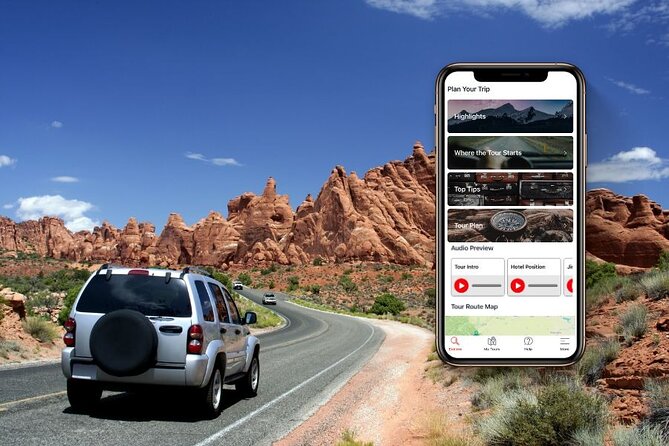
Your day in Arches can be as long or as short as you want because the audio is built to work like a flexible itinerary. The best strategy is to choose your “must-walk” and then let the narration help you fill in the rest efficiently.
Stop 1: Arches National Park (your orientation and top picks)
You start with an Arches narration that uses your GPS location. The tour gives you a clear introduction to the geological forces that created the arches—and it sets expectations that help you appreciate what you’re seeing. It also points you toward the park’s most “can’t miss” features when your schedule is tight.
Arches has 2,000+ arches, but most people only have a handful of hours. This part of the tour helps you prioritize without feeling like you’re rushing through everything. You also get reminders about the fragile ecosystem—useful context because this park isn’t a theme park. Your footsteps matter.
Even if you do not add extra hikes, you will likely want to hit several featured pull-offs along the route, including the ones later in the audio.
Stop 5 and Stop 6: Double Arch and the Windows area (close together, easy to string)
From a practical standpoint, this is a smart pairing because the Double Arch and Windows section are designed for efficient sightseeing. Double Arch is called out as a high-impact arch experience in a compact area.
Then Windows expands the feeling: you’re looking at multiple arches in close proximity, which makes it easier to compare shapes and scale. The tour’s approach here is great for visitors who want big visual payoff without committing to a long hike.
Stop 7: Delicate Arch (celebrity status, two ways to see it)
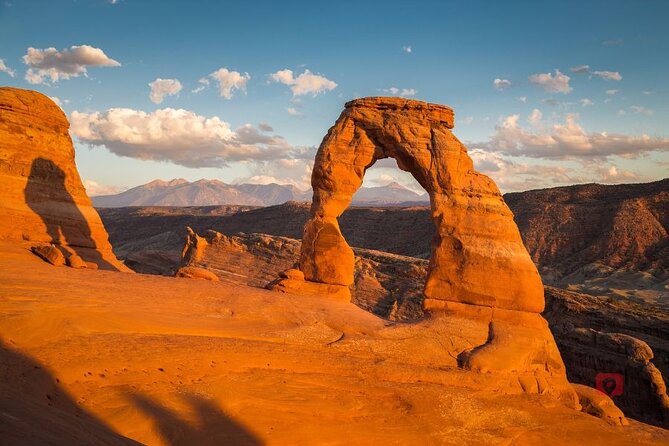
Delicate Arch is described like meeting a celebrity: it’s the unofficial symbol of Utah and the most famous arch in the park. You can drive to the viewpoint, or you can hike uphill if you want to get closer.
If you’re short on time, the viewpoint still delivers the iconic photo. If you want more satisfaction, the hike adds effort-to-reward value because you get the arch framing more dramatically as you approach.
Stop 8: Park Avenue Trail (paved start, optional deeper canyon time)
This stop is for people who like an easy warm-up. The Park Avenue viewpoint uses an easy paved trail. From there, you can continue another 1.6 km / 1 mile down into the canyon toward Courthouse Towers.
This is a useful design because it lets you decide how tired you are after parking and photos. If the day is hot, do the paved portion and call it a win. If you still feel good, keep going.
Stop 9: Skyline Arch (short walk, late-day photos)
Skyline Arch is a short, easy half-mile trail. The audio specifically nudges you to save it for late afternoon because the sun angle makes photos more dramatic. This is one of those timing tips that is worth following, even if you think you’ll wing it.
Landscape Arch and Devil’s Garden: two hikes with very different moods
These are the sections where you trade driving comfort for walking payoff. The good news: the audio gives you enough context to choose wisely.
Stop 3: Landscape Arch (long span, fragile reality)
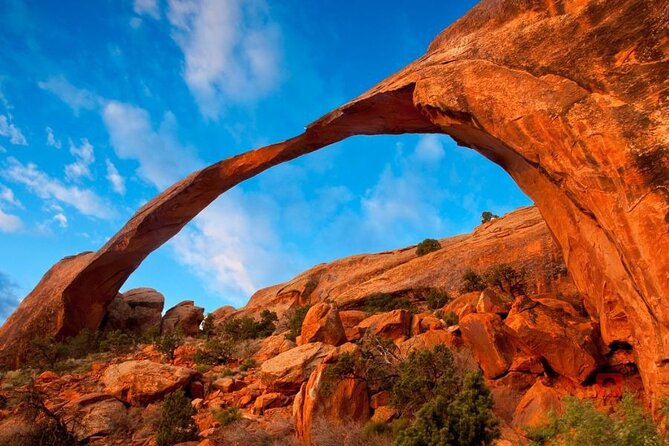
Landscape Arch is noted as the longest span arch in Arches National Park—about 300+ feet (94 m)—and narrow at the center: around 11 feet (3.5 m). That shape is the point. It feels like a thin line holding up the sky.
There’s also a safety-and-truth moment in the narration. You can see debris from a large fall in 1991, when a slab about 60 feet (18 m) fell. Since then, the trail beneath the arch has been closed. This detail matters because it helps you understand what you’re seeing today, not just what it looked like in some old photo online.
The hike suggestion starts at Devils Garden trailhead and is about 1.6 miles (2.6 km) round trip with hard-packed trail and rolling hills. Early morning photography is suggested for better color.
If you like walking but you don’t want an all-day grind, this is a strong choice.
Stop 4: Devils Garden Trailhead (fins, arches, and a choose-your-own-length vibe)
Devils Garden is described as one of the best areas for the park’s “fins”—narrow rock walls that eventually erode into arches. It’s also where the audio ties back to Landscape Arch.
This part is worth it even if you are not chasing every arch on a list. The rock formations themselves do the selling, and the narration helps you spot what makes Devils Garden different from the more famous clusters.
Canyonlands Island in the Sky: Mesa Arch and the big overlooks
Canyonlands is across the valley from Arches, and it feels like a different universe. Where Arches is about concentrated sculpted forms, Canyonlands is about scale. Your eyes stretch outward, and the canyons do most of the talking.
Stop 2: Island in the Sky (Grand View Point Road focus)
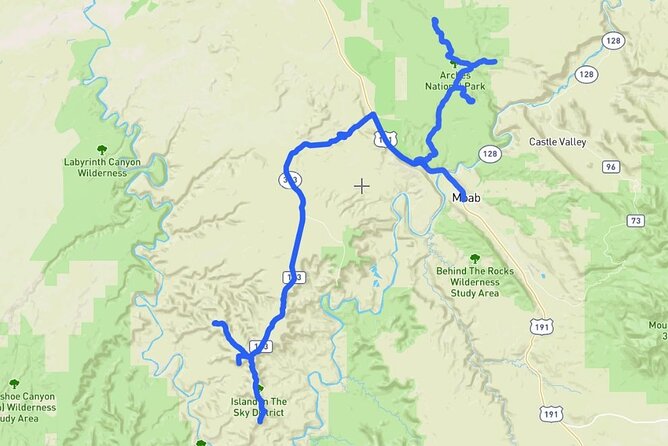
Starting in Moab, the route heads to the Island in the Sky District via Grand View Point Road. If you care about sunrise photography, the tour calls out Mesa Arch as the signature image and emphasizes getting up early.
If you start later, the plan shifts toward being in the park for sunset. Either way, this stop is about timing. Canyonlands light changes how the canyons look more than you might expect.
Stop 10 and Stop 11: Grand View Point and Green River Overlook
Grand View Point Overlook is described as the southernmost point of Island in the Sky, with views across the valley and down into a maze of canyons. It’s the kind of viewpoint where you stop thinking about what arch you’re seeing and start appreciating how long this terrain has been carved.
Green River Overlook is another panoramic stop, and the narration adds a named-for-history explanation. It references the rock carving actions of the Green River and imagines John Wesley Powell testing out his wooden boats before exploring the canyon. Even if you’re not a history buff, those context hooks make the view feel more grounded.
Stop 12: Mesa Arch (the classic sunrise window)
Mesa Arch is the classic Canyonlands image. The audio warns you about the reality of photographers showing up early—because the sunrise angle and the arch framing are that strong. It also gives you the reward: the view through the arch, down into the canyons, and on clear days all the way toward the Le Sal Mountains.
If you hate crowds, you might not love this stop. But if you want the payoff shot, plan for it and show up with time to spare.
Stop 13: Upheaval Dome (science mystery, strong visuals)
Upheaval Dome is called mysterious in the narration, with no fully explained cause. The audio frames it as a question—meteor impact versus earth thrust up and then collapse—and gives it the nickname Utah’s belly button.
This stop is shorter, about 20 minutes, but it works well as a mental reset. You’re not just looking at a pretty shape. You’re looking at a question mark, and that makes it memorable.
Stop 14: Aztec Butte Trail (granaries and a slickrock scramble)
Aztec Butte is a 1.2-mile round trip hike to ancestral Puebloan structures called granaries. The trail is well marked but described as steep right at the end, where you need to scale a slickrock slope. The narration also mentions that scrambling back down can deter some hikers.
If you’re the type who likes ruins and does not mind an uphill push at the end, this is a strong add-on. If you’d rather keep the day gentle, you can skip it and focus on the driving overlooks.
Extending the day: The Needles District for color and quieter slickrock
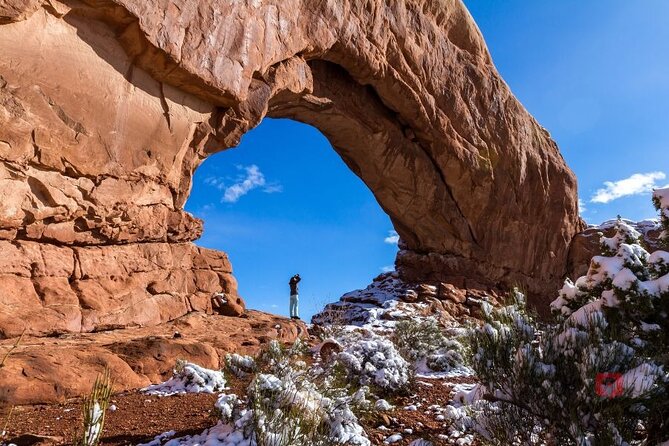
Stop 15, The Needles, is a side trip for when you have the spare time. It’s about 90 minutes south of Moab, and the drive from the turnoff from US-191 is around 40 minutes. The tour notes Highway 211 as scenic and calls out petroglyphs at Newspaper Rock.
The big reason to consider this district is the rock type and the feel of the area. It’s known for colorful spires of Cedar Mesa Sandstone, and the tour points out that it receives fewer visitors than the Island in the Sky District. If you like slickrock hiking and you want a different texture than the canyon viewpoints closest to Moab, The Needles can feel like a bonus day.
This stop does not promise the same “one iconic shot” certainty as Mesa Arch, but it offers a different kind of satisfaction: more space, different shapes, and a more rugged approach to exploring.
Should you book this self-guided tour for Arches and Canyonlands?
Book it if you want:
- A private, flexible way to see major sights without timing a group
- A driving-day plan that helps you prioritize without guessing
- Offline GPS audio so you can focus on views, not WiFi and maps
- Narration that ties geology and history together with what you’re standing in front of
Skip it (or at least reduce your expectations) if:
- You’re strictly chasing hiking mileage and already have every route nailed down
- You want a fully guided hike-by-hike experience with ranger-level detail and logistics handled for you
- You’re not willing to do basic tech prep like downloading ahead and keeping your phone charged
If you’re visiting Moab and you want one smart way to turn long drives into real understanding, this is an efficient choice. The $24.99 group price helps, and the GPS-triggered stories make the parks feel less like checkboxes and more like a connected landscape of time, weather, and rock.
FAQ
Do I need national park entrance fees or a park pass?
No. The audio tour price does not include entrance fees or national park passes. You’ll need to handle park access separately for the areas you visit.
How many people can use one purchase?
The price is $24.99 per group, and it covers up to 8 people in the same vehicle.
Does the narration play automatically as I drive?
Yes. The tour uses your phone’s GPS location so the commentary plays automatically as you drive and reach the tour points.
Can I use the tour without cell service?
Yes. The tour supports offline use after you download the tour through the GuideAlong app.
How long is the experience?
The tour is listed as 8 hours to 1 day (approx.), depending on which stops and hikes you include.
Is it only for one specific day?
No. It’s a one-time purchase with no expiry and no date/time limit, so you can use it on a different day if your plans change.