REVIEW · MOAB
Canyonlands National Park Self-Guided Driving Audio Tour
Book on Viator →Operated by Travel with Action · Bookable on Viator
Canyonlands gets loud when you know where to listen. This self-guided driving audio tour lines up turnoffs and stories across Island in the Sky so you’re not just staring at rocks. I like that it’s hands-free once you start, and I also like the offline setup so the drive doesn’t depend on cell service.
You’ll get a big set of highlights without the mental work of planning every stop. The tour uses GPS location cues to play audio stories as you reach each point, and it includes plenty of context—geology, human history, and even practical “watch your step” reminders.
One drawback to plan for: if you don’t download the tour content well before you’re inside the park, the app can act cranky later when service is weak. Also, you’ll want to follow the route and the posted speed limits; if you’re off-route, the audio timing may not match what you’re seeing.
In This Review
- Key highlights at a glance
- Why this Canyonlands drive feels different than “just driving”
- The value math: $16.99 per group for a 62-mile GPS tour
- Before you go: download offline, then trust the GPS cues
- Timing reality: 1–2 hours on paper, longer when you hike
- White Rim: stunning views with a serious off-trail warning
- Cataract Canyon and the Colorado River story you’ll actually notice
- Green River Overlook and the visitor-center reality check
- Corona Arch and viewpoint math for people who fear heights
- Plateau Viewpoint, accessible breaks, and a small anthropology lesson
- Dead Horse Point: the legend gives the viewpoint teeth
- Sevenmile Canyon, Merrimac and Monitor: spot the distant shapes
- Murphy Point Overlook: easy hike, big payoff, and Green River context
- Big Mesa Viewpoint and the granaries you have to look for
- Whale Rock and Upheaval Dome: a one-mile hike with a real view payoff
- Mesa Arch and Candlestick Tower: the must-do pair
- Buck Canyon overlook and the cafe break with limited tables
- Orange Cliffs and the cowboy naming vibe
- Grand View Point: wrap-up with big cliff views
- The Neck: the thin connection that ties the mesa story together
- Who should book this Canyonlands audio tour?
- Should you book this Canyonlands National Park self-guided audio drive?
- FAQ
- How long does the Canyonlands self-guided driving audio tour take?
- How much is it, and how many people can use one purchase?
- Does the tour work offline inside Canyonlands?
- Are park passes included?
- What do I need to play the audio in my car?
- Where does the tour start and where does it end?
Key highlights at a glance
- One purchase per car (up to 4 people): great value if you’re traveling as a small group.
- 62 miles of route and 37+ audio stops: enough variety to feel like a real tour, not a quick skim.
- Offline maps and audio after download: no signal required once you’ve planned ahead.
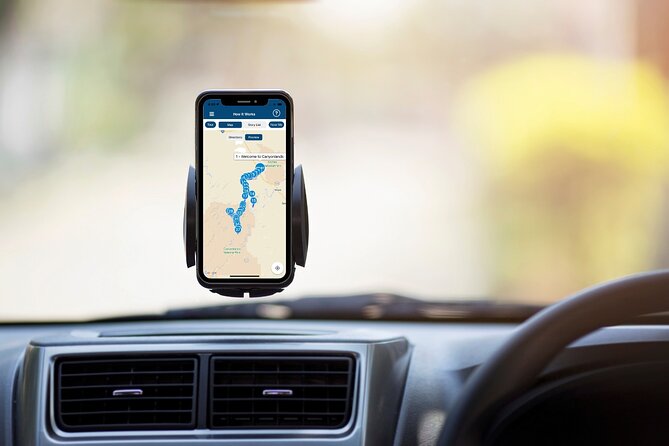
- Location-triggered narration: you don’t have to keep tapping your phone while driving.
- Short walks mixed in: Mesa Arch, Whale Rock, and optional overlooks give you view time without turning the day into a hike marathon.
- Park has few services: the narration nudges you to plan water and rest stops.
Why this Canyonlands drive feels different than “just driving”
Canyonlands National Park is huge, and Island in the Sky is packed with viewpoints that look amazing from the car—and even better once you understand what you’re looking at. This audio tour turns each pull-off into a mini lesson. You’ll hear what carved the canyons, what the layers mean, and why certain landmarks have the names they do.
What I like most is the pacing. Instead of one long lecture, you get short stories that match where you are. That means you can enjoy the drive and the explanations, without stopping to read signs every five minutes.
You can also read our reviews of more tours and experiences in Moab.


The value math: $16.99 per group for a 62-mile GPS tour

The price is $16.99 per group (up to 4), which matters because Canyonlands isn’t a cheap park to visit once you factor in basics like gas and food. With this format, you’re not paying per person, so two couples or a family of four can split the cost.
Duration is listed as about 1 to 2 hours, and that’s believable if you keep it mostly vehicle-based. The route covers about 62 miles and includes more than 37 audio stories, so you’ll get lots of stops and stories in a manageable chunk of time. But if you add the short hikes (and you probably will), your day can stretch longer. Reviews also align with that reality.
Before you go: download offline, then trust the GPS cues
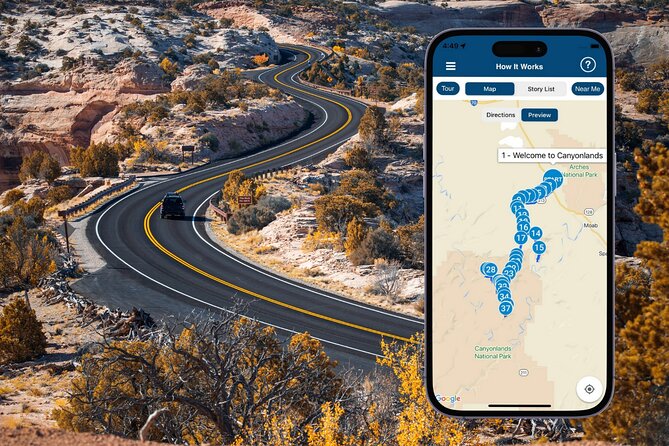
Canyonlands doesn’t offer the kind of constant coverage that makes apps carefree. This tour is designed for that. It includes offline maps, and after you download, it should work without cellular or Wi‑Fi.
Here’s the practical part: you must download the tour while you’re in strong Wi‑Fi/cellular, then you’re good offline afterward. If you try to rely on service inside the park, you’re rolling dice. One reviewer specifically ran into cut-outs and had trouble restarting when the audio failed earlier in the route.
For audio playback, you connect your phone to your car using Bluetooth, USB, or AUX. If you prefer less distraction on foot, headphones can help during walking sections. The tour also supports Apple CarPlay, with Android Auto on the way.
Timing reality: 1–2 hours on paper, longer when you hike
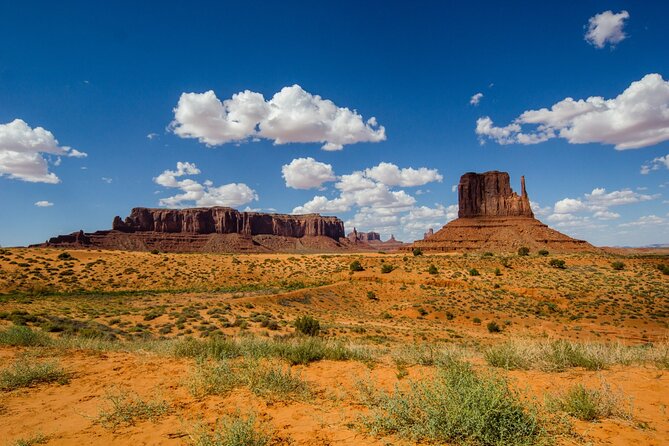
The tour is built to be flexible. You can start when you want and pause for photos, snacks, or a bathroom stop. That said, the route includes a few small but meaningful walks.
For example:
- Mesa Arch is a short walk once you park.
- Murphy Point Overlook includes an easy 3.5-mile roundtrip hike.
- The Whale Rock walk is about 1 mile up along the back of the whale form.
If you want a quicker drive, you can treat the walks as optional and focus on the overlooks you can reach easily. If you’re the type who likes to park and wander a bit, plan closer to half a day.
White Rim: stunning views with a serious off-trail warning
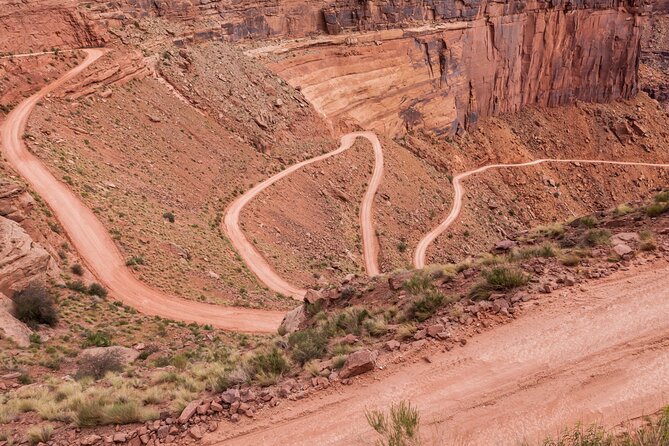
White Rim is where the park’s beauty tempts you to go “just a little off route.” The audio tour calls out a key issue that matters across Canyonlands, Arches, and Moab: biological soil crust. This isn’t just a scientific fact—it’s a real, fragile living layer that can be damaged by footsteps.
The practical takeaway is simple: stay on established paths and pullouts. The scenery is not going anywhere. Your job is to enjoy it without shortcutting through delicate ground.
Also, White Rim is part of the feeling of Canyonlands—the wide openness and the sense that you’re driving through a desert carved into dramatic forms. It’s the kind of start that puts you in the right mood for the rest of the day.
Cataract Canyon and the Colorado River story you’ll actually notice

As you move along, the narration frames Canyonlands as a park shaped by the Colorado River system. Cataract Canyon is highlighted as a long canyon—about 46 miles—within the park area and the Glen Canyon National Recreation Area.
Once you hear the story of how water cuts through rock over long periods, you start seeing the park differently. Instead of “cool cliffs,” you understand why the canyon walls look the way they do and why the river keeps rewriting the terrain.
Green River Overlook and the visitor-center reality check
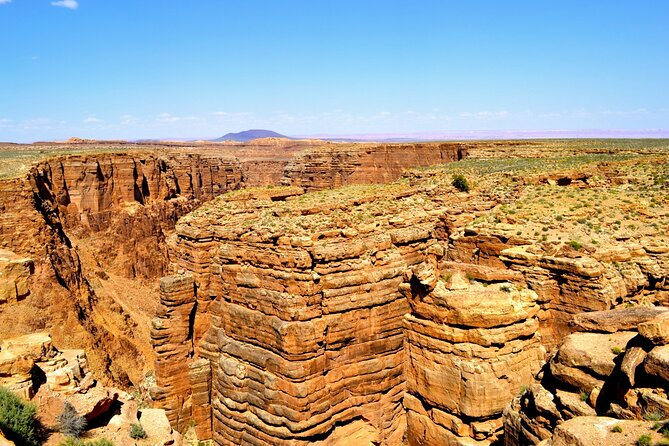
At the Green River Overlook, the tour focuses on views across the Island in the Sky district—specifically where you can see the Green River continuing its work on canyon walls. It also gives context on why the river’s name is tied to green soapstone found along its banks.
Then it nudges you to stop at the Visitor Center ahead. This is smart because Canyonlands has limited infrastructure. You’ll want bathroom breaks, water refills, and basic supplies before you feel committed to miles with almost nothing in between.
You can’t “wing it” on hydration here. The narration makes that point without exaggerating.
Corona Arch and viewpoint math for people who fear heights
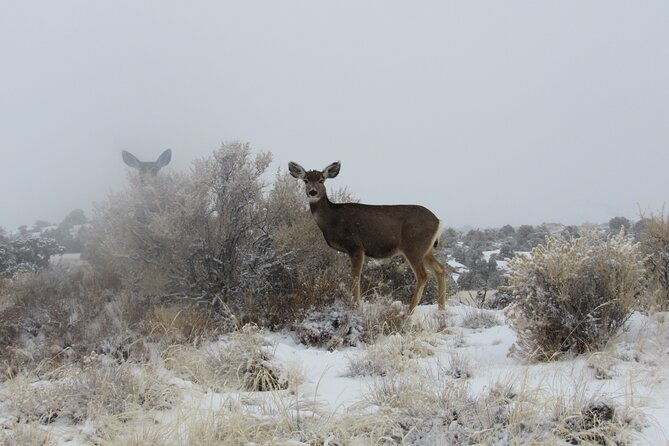
Corona Arch is a natural sandstone arch near Moab, and the tour connects it to its nearby arch neighbors—Pinto Arch and Bowtie Arch—so it doesn’t feel random. The story also helps you understand that these features are part of a larger rock formation, not isolated miracles.
Then comes the kind of overlook that makes your brain say: wait, there’s nothing between me and the canyon. The audio tour specifically warns that a three-sides view can feel daunting if you’re afraid of heights. In other words: don’t force yourself into a photo if you’re not comfortable. Skip to the safer overlooks and keep your day pleasant.
Plateau Viewpoint, accessible breaks, and a small anthropology lesson
Plateau Viewpoint is where you’ll want to pull over for photos. The tour notes there’s a handicap accessible toilet and an information panel about anthropological work in the area.
This is the kind of stop I appreciate because it checks multiple boxes. You get a view. You get a rest. And you get a little context so the park doesn’t feel like only geology and cowboys.
Dead Horse Point: the legend gives the viewpoint teeth
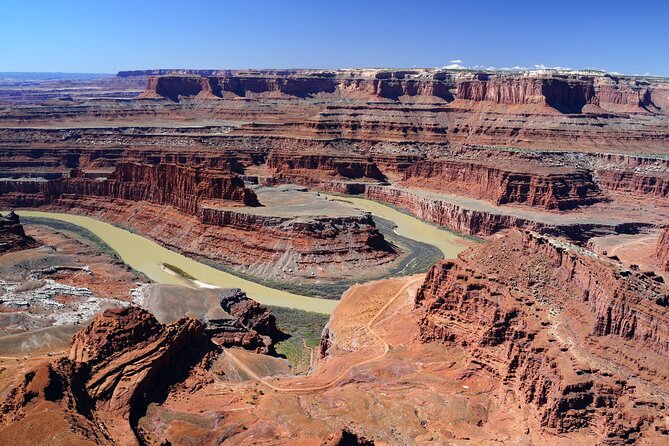
The name Dead Horse Point grabs your attention for a reason. The tour covers local legend: mustangs were corralled here to be broken in the early 1800s. The story explains what happened to the horses considered undesirable, which is why the name stuck.
Once you learn the legend, the overlook feels less like a blank postcard. The viewpoint becomes a place with human stories layered over the rock.
Sevenmile Canyon, Merrimac and Monitor: spot the distant shapes
Near the floor of Sevenmile Canyon, you may see mostly tall rock walls. That’s temporary. As you continue driving, you’ll emerge and be able to see two distinct features in the distance to the right: the Merrimac and the Monitor.
This is a nice example of why location-triggered audio helps. The scenery can change quickly with a turn or a gradual rise. Without guidance, you might miss the moment the distant shapes “pop” into view.
Murphy Point Overlook: easy hike, big payoff, and Green River context
The Murphy Point Overlook hike is described as quite easy, up to 3.5 miles roundtrip. The important part is what you’re trying to see from the top: views of Stillwater Canyon and the Green River.
If you’re trying to balance effort and reward, this is a good match. It’s not a technical trail day, but it’s long enough to stretch your legs and make the viewpoint feel earned.
Big Mesa Viewpoint and the granaries you have to look for
Big Mesa Viewpoint gets you a pause and a quick scan. The tour describes the mesa as huge and almost accidentally dropped into place, which fits the way Island in the Sky can feel both massive and oddly “clean” in its geometry.
Then it points out something important: granaries left by Native peoples. They’re visible from the base of the last hill if you keep your eyes open. And the tour warns you to be careful when approaching because these are hundreds of years old.
This is one of the tour’s strengths. It doesn’t treat human history as a side note—it makes you slow down enough to notice what’s already there.
Whale Rock and Upheaval Dome: a one-mile hike with a real view payoff
One of the most memorable moments on the route is the stop described as perhaps the world’s largest whale. The tour helps you find it by noting the whale’s head is on the left side of the rock.
Then you get the simple walking reward: an easy 1-mile hike up along the whale’s back. When you get on top, the big payoff is views of Upheaval Dome.
This stop is ideal if you want your audio tour to include at least one “get out and move” moment. The walk is short enough that you won’t feel trapped by it, but it’s long enough to make the viewpoint feel earned.
Mesa Arch and Candlestick Tower: the must-do pair
Mesa Arch is called out as a must-do. Park, walk the short trail, and let the arch frame the canyon scene. The narration also brings attention to the juniper and pinyon trees in the area, which helps you recognize that the park’s life shows up even in a desert.
Candlestick Tower is described as three layered “candles” sticking up—white at the bottom, reddish-brown in the middle, and red at the top. The birthday-cake image is silly on purpose, because it makes the shape easy to picture when you’re driving.
If you’re short on time, this is where you prioritize. Mesa Arch plus Candlestick Tower gives you iconic Canyonlands forms in a concentrated stretch.
Buck Canyon overlook and the cafe break with limited tables
There’s a point on the route where the narration turns practical again: a chance to reenergize at a cafe. The tour notes there are only eight tables, so if you want to sit down and eat, go in with that in mind.
The overlook itself focuses on views of Buck Canyon and the La Sal mountains. The trail is described as paved and one of the more accessible stops in the park. There’s also a rail between you and the canyon, which is a strong benefit if you’re nervous about heights.
This stop is worth it for your body as much as your eyes. Canyonlands can drain you without noticing. A planned meal break makes your viewpoints feel more fun and less stressful.
Orange Cliffs and the cowboy naming vibe
The tour doesn’t just list geological facts—it also explains how the park got its names. Orange Cliffs were used by cowboys, and they referred to an area as Under the Ledge, described as something that seemed like it was underneath a huge rocky ledge.
That kind of naming story may sound small, but it changes how you read the area. You start recognizing that people have been looking at these cliffs and naming them long before you arrived.
Grand View Point: wrap-up with big cliff views
The tour ends at Grand View Point, and the narration leaves you with the big “why it looks like this” geological reminder: Canyonlands rocks were formed in layers, and in much of the park those layers haven’t been disrupted since deposition.
If you’ve been listening through the day, that final comment lands. You’re seeing the park as a timeline, not just as a set of impressive overlooks.
The Neck: the thin connection that ties the mesa story together
Near the end, the tour highlights The Neck. The name makes sense when you understand the big picture: Island in the Sky is a huge mesa surrounded by lowlands, and The Neck is a strip that connects mesas like a natural bridge.
This is a nice close because it brings you back to the map logic. Instead of only “look at that,” you get “here’s how it connects.”
Who should book this Canyonlands audio tour?
This works best if you:
- Want a self-guided approach with the flexibility to pause for photos and walks.
- Prefer learning on the move instead of reading your way through every stop.
- Are traveling as a small group (up to 4) and want to split the cost per car.
- Like a guided day but don’t want to follow a bus schedule.
It may not be the best fit if you:
- Know you won’t be able to download offline content reliably before entering the park.
- Want a super-structured hike itinerary. Some stops include walking, but it’s not a guided ranger walk.
- Are prone to getting off route. The tour uses location-based cues, and the audio timing can get frustrating if you’re not matching the drive route.
Should you book this Canyonlands National Park self-guided audio drive?
If you’re visiting Canyonlands from Moab and you want to see the key highlights without doing a ton of research, I think this is a strong buy. The per-car pricing, the offline audio design, and the stop-by-stop storytelling make it feel like you packed a guide into your cup holder.
Just do two things before you start: download the tour on solid connection, and bring water/snacks because the park doesn’t hand them to you. If you can handle that, you’ll get a smart, flexible way to experience Island in the Sky—and actually understand what you’re looking at along the way.
FAQ
How long does the Canyonlands self-guided driving audio tour take?
It’s listed as about 1 to 2 hours to complete.
How much is it, and how many people can use one purchase?
The price is $16.99 per group (up to 4).
Does the tour work offline inside Canyonlands?
Yes, it’s designed to work offline after you download. The tour also uses offline maps, and you’re told to download while you have strong Wi‑Fi/cellular before you enter the park.
Are park passes included?
No. Park passes are not included, and you’ll need an entrance permit to visit Canyonlands.
What do I need to play the audio in my car?
You can connect your phone to your car using Bluetooth, USB, or AUX. The audio works with Apple CarPlay, and headphones can help for walking portions.
Where does the tour start and where does it end?
It starts at Moab Giants Cafe (112 UT-313, Moab, UT 84532) and ends at Grand View Point (Moab, UT 84532).