REVIEW · MADISON
Wisconsin’s Madtown: A Madison Self-Guided Walking Tour
Book on Viator →Operated by VoiceMap Audio Tours · Bookable on Viator
Madison moves fast, so this self-guided audio route helps you keep up. I like the clear voice directions paired with offline maps, and I love that you’re not locked into a museum schedule. One catch: the VoiceMap app can be a bit glitchy, and it may send you lost alerts if you try to run it in reverse.
This walk is designed for you to explore on your timing. You start at Monona Terrace and end at Memorial Union, with Lake views in both directions and a string of big-name landmarks (Capitol dome, State Street, UW architecture) plus human-scale stories (student protests, civil rights, and even women’s access at a historic restaurant).
Best part: it’s not just “here’s a building.” It’s a sequence of places tied to the city’s themes, and you can pause when you want to linger. The main consideration is that you’ll need your own smartphone (and headphones), and you won’t be guided inside museums or paid attractions mentioned along the way.
In This Review
- Key Highlights You’ll Actually Feel on the Walk
- Monona Terrace To Memorial Union: What This Self-Guided Madison Walk Really Gives You
- Price and Time: When $8.99 Is Good Value
- Using the VoiceMap App Like a Pro (Offline Audio, Pauses, and Headphones)
- Stop-by-Stop Walkthrough: Monona Terrace and the First Stories
- Wisconsin State Capitol Dome: The 187-Foot Landmark You Can’t Miss
- State Street: A Lively Stroll Where You Can Branch Off
- Dane County Farmer’s Market Spotting: Saturdays Matter
- Elizabeth Link Peace Park: 1960s Protests and Why Space Matters
- Der Rathskeller: Women Allowed In Back in the 1940s
- UW Madison Architectural Core: Seeing the Campus as a Timeline
- Memorial Union Terrace Chairs: The Meaning You’ll Understand On Site
- Lake Mendota Finish View: End Where Madison Feels Calm
- Who This Walking Tour Fits Best (and When to Skip)
- Should You Book This Madison Audio Walk?
- FAQ
- How long does the Wisconsin’s Madtown walking tour take?
- Where does the tour start and end?
- Is this a guided tour with a live person?
- What’s included with the tour?
- What do I need to bring?
- Are food or drinks included?
- Does the tour take you inside museums or attractions?
- Is the tour available in English?
- Can I cancel for a refund?
- When is the Dane County Farmer’s Market stop relevant?
Key Highlights You’ll Actually Feel on the Walk

- Voice-first navigation: you get audio cues and offline maps, so you can keep moving without constantly staring at your screen
- Monona Terrace to Lake Mendota finish: the route frames Madison’s lakes from two iconic terraces
- Wisconsin State Capitol dome (187 feet): a skyline landmark becomes an easy “mile marker” in the story
- Civil rights and 1960s protests: Elizabeth Link Peace Park adds a real-world activism timeline
- Der Rathskeller history: you’ll hear how gender access shifted in the 1940s
- UW Madison “chair meaning” moment: the Memorial Union Terrace chairs get explained right where you see them
Monona Terrace To Memorial Union: What This Self-Guided Madison Walk Really Gives You
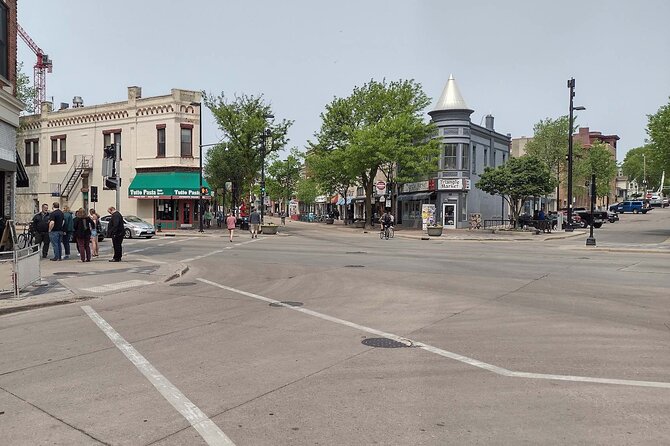
This tour is built around the idea that Madison’s best sightseeing is a mix of architecture, public space, and the stories that played out there. You’ll walk through the city core with audio that connects the dots between early inhabitants, the Civil War era, civil rights, and student activism in the 1960s. That makes the route feel more like a guided conversation than a random collection of stops.
What I like most for you: the pacing is under your control. It’s meant to take about 1 to 1.5 hours, and you can pause to take a longer look at something—or cut the walk short if your feet need a breather. It’s also private in the sense that it’s just your group using the tour, not a big shared crowd with a live guide herding everyone along.
The other big value is the setting. Starting at Monona Terrace gives you a lakeside “Madison intro,” while ending at Memorial Union brings you back to the waterfront at Lake Mendota, which is the perfect closing shot.
Price and Time: When $8.99 Is Good Value
At $8.99 per person, this is the kind of outing that’s easy to justify—even if you only have a small window in town. The reason the price works is not just the tour time; it’s the fact you get lifetime access in English. That means you can redo the walk on another trip, or repeat it later the same day if you missed a detail while taking photos.
If you’re comparing it to a traditional guided tour, the trade is simple: you won’t have a person answering questions on the spot. But in exchange, you’re paying for flexibility—pause whenever you want, move at your speed, and focus on the parts you care about most.
For best results, plan to spend closer to the upper end of the duration if you like to stop for views at terraces and read the room at major landmarks.
Using the VoiceMap App Like a Pro (Offline Audio, Pauses, and Headphones)

This experience runs through the VoiceMap app on Android or iOS, and the big practical win is offline access to audio, maps, and geodata. That matters in a city core where signal can be spotty, and it helps you keep your phone out of the way for long stretches.
You will need your own smartphone and headphones. The tour doesn’t provide them, so I’d pack or plan accordingly. Also, if you’re the type who hates being interrupted by tech, keep one mindset in place: treat the route as audio-guided walking, not a turn-by-turn driving system. When the audio cues are working, it feels smooth and easy.
One caution from real-world use: the app can be glitchy, and some people found that doing the tour in reverse led to lost alerts. If you want the least stress, follow the route order as designed.
Stop-by-Stop Walkthrough: Monona Terrace and the First Stories
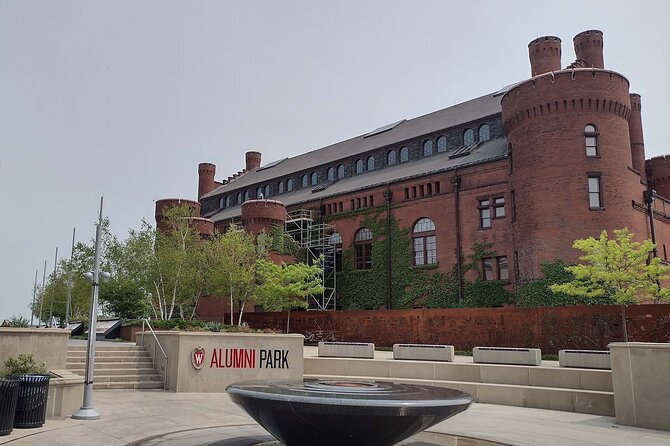
The tour starts at Monona Terrace Community and Convention Center, 1 John Nolen Dr. From the first moments, you’re looking out over Lake Monona—and that visual sets the tone for everything that comes next. The audio then steps back in time, covering themes like the first inhabitants of the area, then moving forward through major turning points such as the Civil War and civil rights.
This is a smart way to begin because it avoids the common problem with self-guided tours: you can feel disoriented right away. Here, the audio gives you a thread, so you know what kind of story you’re walking through.
What to watch for as you start: the terrace itself and the lake views. Even if you don’t plan to stop long, take 30 seconds to orient yourself—because later you’ll appreciate how the route keeps returning you to water and public space.
Wisconsin State Capitol Dome: The 187-Foot Landmark You Can’t Miss
Next up is the Wisconsin State Capitol, and the audio highlights a key visual fact: it’s Madison’s tallest building, topped by a dome that rises 187 feet. On a walk, that’s a gift. It gives you a clear landmark to aim toward, and it anchors the city skyline in your mind.
This stop is also about scale and symbolism. You’re not just looking at an impressive structure; you’re hearing the city’s historical narrative in the shadow of government power. If you like history that connects place to people, this one lands well.
Drawback to consider: this audio tour does not function like a museum guide. If you want to go inside, you’ll need to pay for that separately. The outside experience is still the main event, and the audio is designed for moving.
State Street: A Lively Stroll Where You Can Branch Off

From the Capitol area, you’ll stroll along State Street, described as a lively, busy stretch—and for good reason. This is where Madison’s energy shows up in storefronts, dining, and pedestrian flow.
For you, this stop works because it lets you balance “structured audio” with “free wandering.” You can keep walking with the story playing, or pause to check a restaurant, coffee spot, or shop when something catches your eye.
The best approach: don’t try to cram extra stops into your tight time window. Let State Street be your breathing zone. It’s the part of the route that makes the tour feel like you’re seeing a real city, not just moving between attractions.
Dane County Farmer’s Market Spotting: Saturdays Matter
You’ll also pass by the Dane County Farmer’s Market, which is mentioned as offering local goods and produce on Saturdays. That means the full flavor of this stop depends on the day you do the tour.
Even if it’s not Saturday, you’ll still get the context in the audio. But if you want the sensory payoff—colors, smells, and the bustle—schedule your walk for a Saturday if you can.
Practical tip: plan to pause if you see something you want. This is the part of Madison where “local food culture” shows up in a way you can feel.
Elizabeth Link Peace Park: 1960s Protests and Why Space Matters
At Elizabeth Link Peace Park, the audio shifts into activism. You’ll hear why the park is named after a prominent Madison peace activist and learn about mass student protests that took place there in the 1960s.
This stop is powerful because it’s specific. Rather than general “civil rights talk,” you’re given a place where those events left physical traces—and a named person tied to peace work.
What I think you’ll appreciate: the park setting gives the stories somewhere to land. You can stand in a real public space and understand how city planning, gathering areas, and youth movements can intersect.
Der Rathskeller: Women Allowed In Back in the 1940s
Another standout stop is Der Rathskeller, a historic restaurant that the audio connects to a striking milestone: it first allowed women inside in the 1940s.
That detail is exactly the kind of local history that makes an audio walk worth paying for. It turns a familiar-looking building into a lesson about social change in everyday life, not just big political speeches.
If you’re curious about the restaurant itself, remember the tour won’t guide you like a ticketed entry experience. You can choose to stop in if you want, but you’ll handle that separately.
UW Madison Architectural Core: Seeing the Campus as a Timeline
As you continue, the audio brings you through the historic architectural core of the University of Wisconsin–Madison campus. This is where the walking tour feels like it’s teaching you how to read buildings.
Instead of “pretty architecture,” the audio ties the campus setting to the story moving through the city. Even if you don’t take a classroom tour, you’re still walking through a space that shapes generations of people—and that’s the key connection.
A small consideration: if you start craving deeper campus exploration, resist the temptation to add detours unless you have time. This is a focused 1–1.5 hour route; treat UW as your “great overview” rather than a full campus day.
Memorial Union Terrace Chairs: The Meaning You’ll Understand On Site
Before the tour ends, you reach one of the most iconic UW-Madison spots: the Memorial Union Terrace, where you’ll discover the meaning behind the Memorial Union Terrace chairs.
This is the kind of detail that’s easy to miss when you walk past it like a photo opportunity. With audio running, the chairs become part of a bigger story about the place and the values it tries to express. It’s a good reminder that small, human-scale objects can carry meaning just as much as monuments do.
If you enjoy design, symbolism, or “why do things look like that,” you’ll likely spend extra time here.
Lake Mendota Finish View: End Where Madison Feels Calm
The tour finishes at Memorial Union, ending much like it started—by looking out onto a scenic lake terrace view. This time, it’s Lake Mendota, Madison’s largest lake.
That ending choice makes sense. It gives you closure in a way that doesn’t feel abrupt. You finish with a view, not a parking-lot scramble.
If you’re wondering what to do next, keep it simple: use the end point as a launchpad for an easy stroll or a sit-down break nearby. You’ve already done the “big story route,” so the rest of your time can be more flexible.
Who This Walking Tour Fits Best (and When to Skip)
This self-guided tour is a strong fit if you:
- want Madison highlights without committing to a fixed group schedule
- like walking with audio storytelling while still having freedom to pause
- are comfortable using your phone for navigation and listening
It’s also ideal for a first visit when you want to orient yourself fast. The route covers the Capitol area, downtown streets, a farmer’s market stop, activism-related public space, and UW core sights—so you get a well-rounded sense of the city in a short time.
I’d consider skipping it (or pairing it with another plan) if:
- you don’t want to rely on an app at all
- your schedule includes a day where you can’t tolerate tech glitches
- you only want museum-style indoor experiences, since the tour isn’t set up to guide you through paid interiors
Should You Book This Madison Audio Walk?
I’d book this if you want an easy, low-cost way to see Madison’s main landmarks and connect them to real local stories—without waiting on a live guide. The offline audio and maps make it especially practical, and the mix of civic sites (Capitol), street life (State Street), activism-related space (Elizabeth Link Peace Park), and UW details (Memorial Union chairs) gives the walk a sense of direction.
If you’re the kind of person who can’t stand app quirks, plan to follow the route order as designed and treat the tech as part of the experience. But if you’re okay with that, this is a smart way to get your bearings quickly and then keep exploring Madison your way.
FAQ
How long does the Wisconsin’s Madtown walking tour take?
It’s designed to take about 1 hour to 1 hour 30 minutes.
Where does the tour start and end?
It starts at Monona Terrace Community and Convention Center, 1 John Nolen Dr, Madison, WI 53703 and ends at Memorial Union, 800 Langdon St, Madison, WI 53706.
Is this a guided tour with a live person?
No. This is a self-guided audio experience through the VoiceMap app, and it’s private for your group.
What’s included with the tour?
Included is lifetime access to the tour in English, plus the VoiceMap app for Android and iOS. You also get offline access to audio, maps, and geodata.
What do I need to bring?
You should have your smartphone and headphones. The tour does not include those.
Are food or drinks included?
No. Food and drink are not included.
Does the tour take you inside museums or attractions?
You won’t be guided through any museums or other attractions mentioned en route. If you want to enter, you’ll need to pay independently.
Is the tour available in English?
Yes, the tour is offered in English.
Can I cancel for a refund?
Yes, there is free cancellation. You must cancel at least 24 hours in advance for a full refund.
When is the Dane County Farmer’s Market stop relevant?
The market stop references Saturday offerings, since it’s described as offering local goods and produce on Saturdays.